Forget Mars, SpaceX Is Becoming a Data Center Company
Reading time 4 minutes
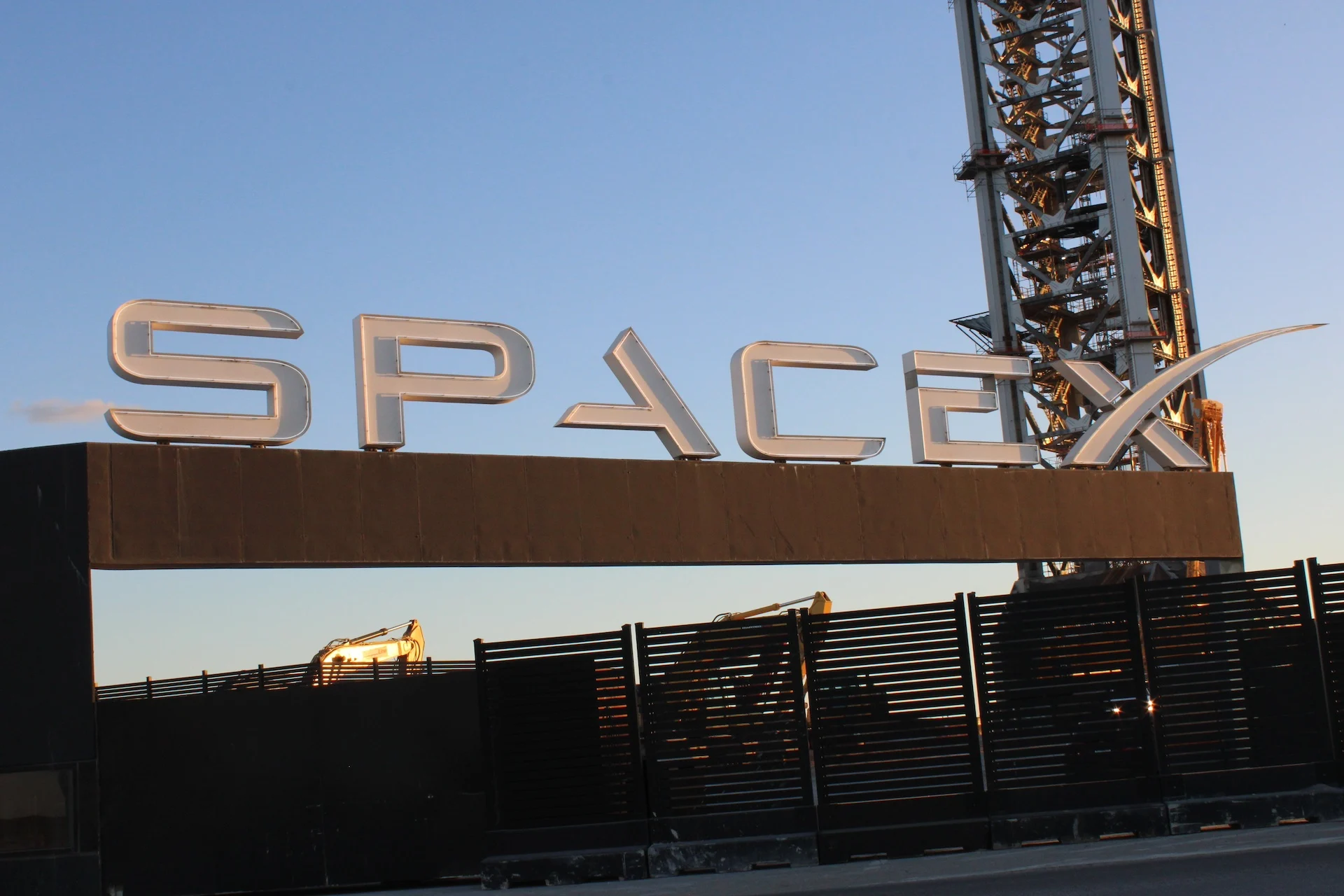
For all its talk of lunar colonies, missions to Mars, and data centers orbiting Earth, SpaceX’s real focus has been much more grounded.
Elon Musk’s crown jewel has signed a new deal with Reflection, a company building open-source AI. It’s the latest indication that SpaceX, best known for its rockets and extraterrestrial ambitions, has, in fact, first and foremost become a data center lending company.
Reflection will reportedly pay SpaceX $150 million per month for access to the latter’s Colossus data center, a hulking facility extending over one million square feet in Memphis, Tennessee. The partnership is slated to begin next month and extend through 2029, generating well over $6 billion in revenue for SpaceX (assuming both companies see the agreement through to the end of its term).
The deal arrives on the heels of similar deals SpaceX has landed with Anthropic and Google, two of the most powerful developers in the AI race, both of whom have likewise agreed to pay Musk’s company for access to its computing power. SpaceX also announced last week that it had acquired Cursor, a popular AI coding platform, which could give it an edge as it tries to attract users to Grok and away from Anthropic, OpenAI, and its other competitors in the AI industry.
Following its merger with Musk’s AI startup xAI in February, SpaceX began looking outward with its newly acquired fleet of data centers. Rather than harnessing the computing power generated by these facilities exclusively to train Grok or other proprietary models, the company has been pursuing deals with other developers. It’s become a central profit-driver for SpaceX, which went public earlier this month with the biggest IPO in history, while at the same time expanding access to critical compute for other companies that are expanding their own AI efforts.
It’s also added fuel to the circular dynamic that had already taken shape throughout the industry, as tech companies that are ostensibly competing increasingly do business with one another. Nvidia has been the primary connecting node in this phenomenon: The company has repeatedly poured billions into new AI startups, which, in turn, buy huge amounts of its graphics processing units, the chips that have become the cornerstone of the modern AI industry.
But SpaceX is also now an important nexus for money flowing through the AI sector. Through Colossus, for example, which according to the company houses more than 220,000 Nvidia GPUs, SpaceX has established itself as a link connecting AI developers with the infrastructure and compute needed to build new models. Nvidia has invested $800 million in Reflection, according to multiple reports.
Does the future belong to open source?
Founded in 2024, Reflection markets itself as a kind of democratic counterweight to an AI industry that’s largely beholden to investors and shareholders. The company—which was cofounded by a former Google DeepMind researcher who helped build AlphaGo—develops open-source AI models that are freely available for developers to access and build on.
“By remaining open we ensure that the power of superintelligence is not captured by a few, but becomes the foundation upon which society, builders, and dreamers everywhere can create the next era of progress,” the company writes on its website. “Reflection brings together researchers and engineers who pioneered breakthroughs at the frontier to ensure that the foundation of intelligence remains open, not captured.”
Interest in open-source AI skyrocketed with the public debut early last year of DeepSeek, a Chinese AI lab whose open-source models performed comparably to some of the most advanced “closed” (i.e., proprietary) models from American companies like OpenAI and Anthropic. In what was widely referred to as China’s “Sputnik moment,” DeepSeek seemed to demonstrate that frontier AI models could be developed with a much tighter budget than what the biggest AI labs had been spending to build ChatGPT, Claude, and other industry-leading chatbots.
DeepSeek’s success, however, was largely enabled by the fact that it trained its models using AI systems from other developers—a process known in the industry as distillation. Open-source models that don’t rely on distillation require much more compute, hence the necessity for Reflection to partner with a provider like SpaceX.
The growing appeal of open source models also has a political dimension. As the Trump administration continues to spar with Anthropic over the alleged cybersecurity risks posed by the company’s newest models—Fable 5 and Mythos 5—users could very well read the room and decide that perhaps the future belongs to open-source AI, rather than proprietary models.
One of the big selling points of open-source AI is that, in theory, any bugs in the model can be identified and worked out as a community of developers plays around with it; think of it like crowd-sourcing a model’s evolution. That could make it an easier sell in the midst of a political climate in which the president—as his ongoing clash with Anthropic makes clear—seems to be wary of companies having complete control over the development and deployment of advanced AI systems.
Meanwhile, users might be more inclined to use open-source models, which, by definition, are more immune to the whims of a central authority like the federal government. If federal officials can deploy legally dubious methods to shut down companies’ proprietary AI models, then perhaps open source models are a safer bet.
SpaceX’s stock price was down nearly 17% just before market close on Monday.
Explore more on these topics
Sign up for our newsletters
Subscribe and interact with our community, get up to date with our customised Newsletters and much more.
Related Articles



Source link