
EWA backers push for CFPB move
Supporters of earned wage access aim to update national oversight this year, backing a new law and seeking to confirm a Trump administration policy change.


Earned wage access proponents are seeking to confirm a new Consumer Financial Protection Bureau policy for their services in an attempt to further solidify national oversight of their expedited payments to workers.
Finalizing the existing CFPB policy with a full rulemaking may be a speedier path to industry-friendly national oversight for EWA service providers, employers and employees, than a bipartisan bill inching its way forward in Congress.
The American Fintech Council is one of the trade groups pursuing national regulation of the industry to preempt patchwork state oversight. The council was among proponents that helped push through an updated CFPB advisory opinion on the issue last December, but it’s looking for the agency to be fully compliant with the Administrative Procedures Act by issuing a public notice and allowing a public comment process.
“Our goal is to get a bill on the president's desk before the end of the year in order to create real, lasting clarity,” AFC’s CEO Phil Goldfeder said in an interview last week. “At the same time, we're still working with the CFPB and its new leadership to get a full-on rulemaking, and obviously, in the absence of both those things, we'll continue to work in the states.”
In December, the council worked with the CFPB on an updated advisory opinion on EWA that said the services weren’t lending, and therefore weren’t subject to laws such as the Truth in Lending Act. It also rescinded a 2024 agency proposal that EWA be treated like consumer credit.
Then last month, the House Financial Services Committee on June 30 approved the Earned Wage Access Consumer Protection Act proposal sponsored by Wisconsin Rep. Bryan Steil, which the Republican first introduced in 2024. Still, the bill doesn’t yet have a Senate companion so passage doesn’t look guaranteed this year.
Trade groups backed by earned wage access providers, including the council and the Financial Technology Association, support the Steil legislation, but are keeping their options open for achieving their preferred form of oversight.
Dozens of fintechs have begun offering earned wage access options, some through employers and others directly to consumers, with a variety of costs and fees associated with different variations on the services that offer workers their pay before a regular pay cycle.
The services have been controversial, raising concerns for some lawmakers and consumer advocates because of worries that fees related to the services may result in what are essentially expensive loans. As a result, proponents and opponents have raced to impose their form of oversight. Some states have sought to impose laws too, with consumer protection a top concern.
About a dozen states have passed EWA laws, including Connecticut, Maryland and Indiana.
The American Fintech Council, which represents members that include DailyPay, Payactiv and EarnIn, worked last year on an updated December 2025 agency advisory opinion with Geof Gradler, who was an assistant director and then a deputy director at the agency in 2025 before becoming chief of staff this year, according to his LinkedIn profile.
“Passage out of the committee last week in a bipartisan manner gives us optimism that legislation will continue to move forward,” Goldfeder said last week. “At the same time, you're seeing more activity at the CFPB in the last few weeks.”
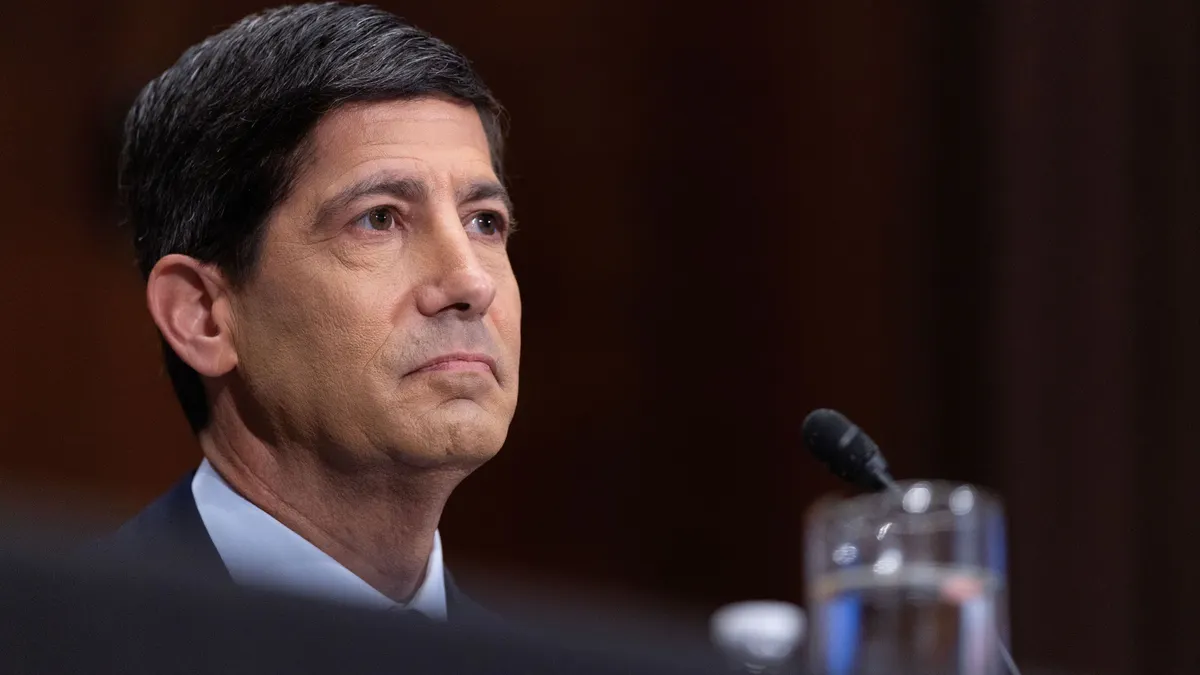
Now, the council has set its sights on working with Brian Johnson, who was nominated last month by President Donald Trump to lead the CFPB as director, if he’s confirmed by the Senate. Johnson would take over from Russell Vought, who has led the agency in an acting director role.
“We've already reached out to him as well to sort of continue those conversations about a potential rulemaking,” Goldfeder said.
Some consumer advocates continue to oppose the legislation, arguing that it gives too much leeway to earned wage access providers to impose fees and interest rates charges that make the pay distributions more expensive for employees than they should be.
“The bill is merely an effort to disguise a new form of payday loan that can cost workers hundreds of dollars a year, to shield them from cost apps, and to block states from protecting workers,” said National Consumer Law Center Senior Attorney Lauren Saunders. “I do not think it has much of a chance to pass in light of the strong opposition to it.”
The Center for Responsible Lending also opposed the bill last month, saying in a press release that if the legislation becomes law it would exempt some EWA services “from laws that help stop lenders from fleecing consumers.”
Steil reintroduced the bill last year when it didn’t pass the prior year. The FTA and AFC say the legislation shields consumers.
“This legislation protects consumers, provides much-needed regulatory certainty, and ensures families can access the wages they’ve already earned when they need them,” the FTA said in a statement the day the House committee approved the bill.
Steil’s bill lost some momentum after an initial Democratic co-sponsor, Rep. Ritchie Torres, a Democrat from New York City, backed off the bill, but it moved forward last month with support from a different Democrat, Rep. Sam Liccardo, whose California district includes much of the Silicon Valley.
To win Liccardo’s support, the bill was tweaked. For instance, it added a requirement that for EWA users who opt for a no-cost transfer of wages, the EWA provider must initiate that transfer within one business day, thereby giving the consumer a better no-cost option than a transfer that might not arrive for multiple days.
While Liccardo might have been at least partly persuaded to support the bill by fintechs in his district, Goldfeder contended it’s also hard for any Congress member to ignore the benefit of EWA to constituents, relative to other high interest rate loans. He believes other Democrats will come around to that thinking as well.
“I'm optimistic that as it continues to move forward in the process, we'll continue to pick up additional Democrats,” Goldfeder said.
Recommended Reading
- Maine, DC weigh EWA regulations By Lynne Marek • Feb. 2, 2026
- EWA chases regulatory clarity By Lynne Marek, Shaun Lucas, Julia Himmel • Oct. 27, 2025

Source link