U.S. consumers kept spending in June, but the mix shows why Walmart and Amazon are leaning harder into price as the back-to-school season begins. The Commerce Department’s June retail sales report showed sales rising 0.2% from May to $768.6 billion and 6.7% from a year earlier. A 5.3% drop at gasoline stations restrained the headline. Nonstore sales, including eCommerce, rose 1.9%, while core retail sales gained 0.5%. Because the figures are not adjusted for inflation, they show continued spending, not necessarily stronger unit demand. The June CPI report offered some relief: prices fell 0.4% from May, but remained 3.5% above year-ago levels, while food was up 3.0%.
“Consumers continue to prioritize value, respond to promotions and make deliberate trade-offs across discretionary categories, EY-Parthenon Americas Retail Sector Leader Will Auchincloss said. “Retailers that can convert spending into traffic, unit volume and repeat purchases, through the distinctive combination of value, convenience and experience, will be best positioned to win.”
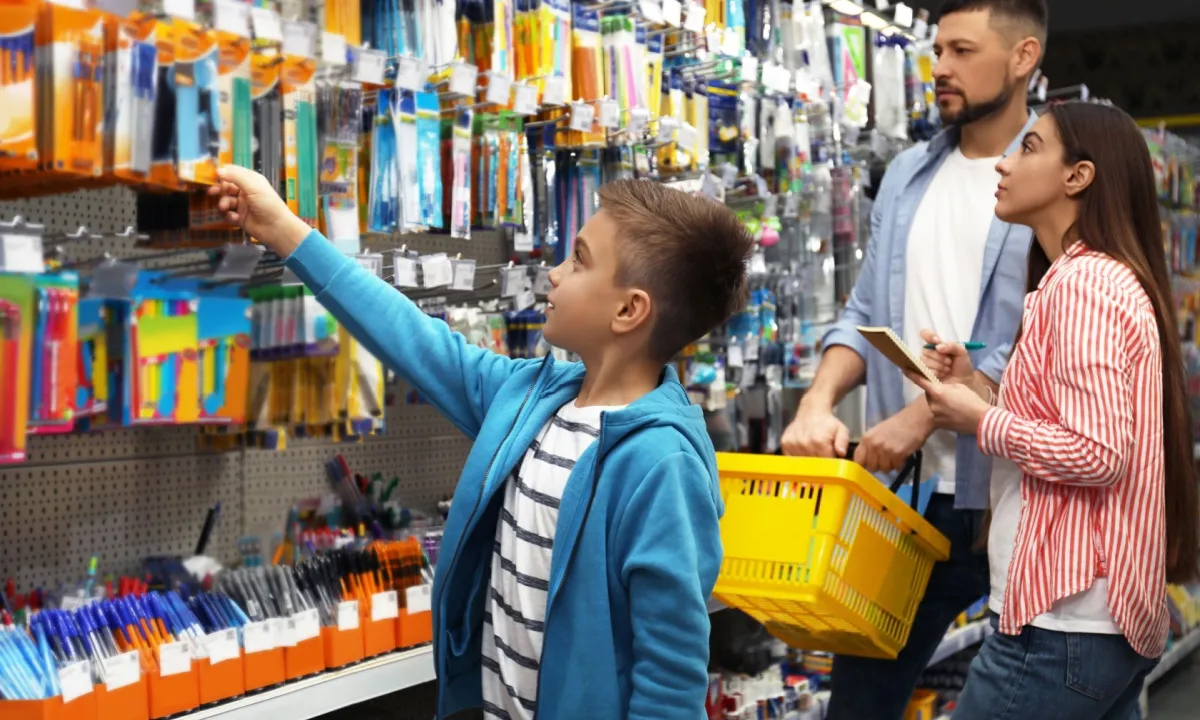
That’s music to the ears of Amazon and Walmart as they head into the back-to-school season. Walmart, for example, is making back-to-school value visible. The retailer said it has 1,300 more back-to-school items on rollback than last year and cut prices on 14 common supplies to their lowest level since 2019, with some starting at 25 cents. It is also promoting lunchbox options averaging $2 per meal and a “College Grocery Haul” below $35.
Those offers follow a broader July round of thousands of Walmart and Sam’s Club price cuts. Walmart CFO John David Rainey said in May that the company wanted to “invest in the customer and invest in price.”
Amazon is using broad discounts and digital discovery to compete for the same budget. A recent back-to-school roundup found markdowns of up to 60% across supplies, apparel, backpacks and lunch boxes. Amazon also centered its June Prime Day event on essentials and school needs. eMarketer analyst Sky Canaves told Reuters that shoppers wait for promotions to stock up on necessities and delayed big-ticket purchases; eToro analyst Bret Kenwell expected a “greater focus on value.”
Amazon CEO Andy Jassy said in January that tariffs were beginning to “creep into some prices,” with sellers choosing to absorb, pass through or split the added cost.
Household budgets remain constrained. The 2026 Deloitte Back-to-School Survey expects $30.4 billion of K-12 spending, or $557 per child. That is flat in nominal terms and down 6% after inflation. Parents plan to spend 22% more on clothing and accessories but 16% less on technology as upgrades are deferred. Fifty-seven percent expect the economy to worsen, and half plan to cut dining, entertainment or other expenses to make room.
PYMNTS Intelligence sees the same pressure beneath the totals. Its recent report, “The Inflation Mirage: What Rising Spending Hides About Consumer Demand,” found that April spending rose 0.5%, but higher prices accounted for roughly 0.4 percentage points and real purchase volume for only 0.1 point. Across financial groups, 84% to 87% said essentials cost more, while 53% of financially strained consumers cut nonessential spending. For retailers and payments providers, the signal is that shoppers remain active but are more selective and more dependent on tools that help manage timing and cash flow.
For the Walmart-Amazon rivalry, PYMNTS Intelligence’s “Basket Breakaway” report adds the strategic context. Amazon held 9.3% of U.S. consumer retail spending in the first quarter, versus Walmart’s 7.8%. Walmart leads food and beverage by nearly 18 percentage points, but Amazon leads the “considered order” categories shoppers research and ship. Back-to-school spans both: Walmart can attach supplies to grocery and lunch traffic, while Amazon can win apparel, electronics and backpacks.
For retail and payments executives, the contest is not only about lower shelf prices. It is about which retailer can turn value-seeking into checkout through memberships, wallets and financing without giving away too much margin.
The post Retail Sales Hold Up as Walmart and Amazon Go Back to School appeared first on PYMNTS.com.
Source link