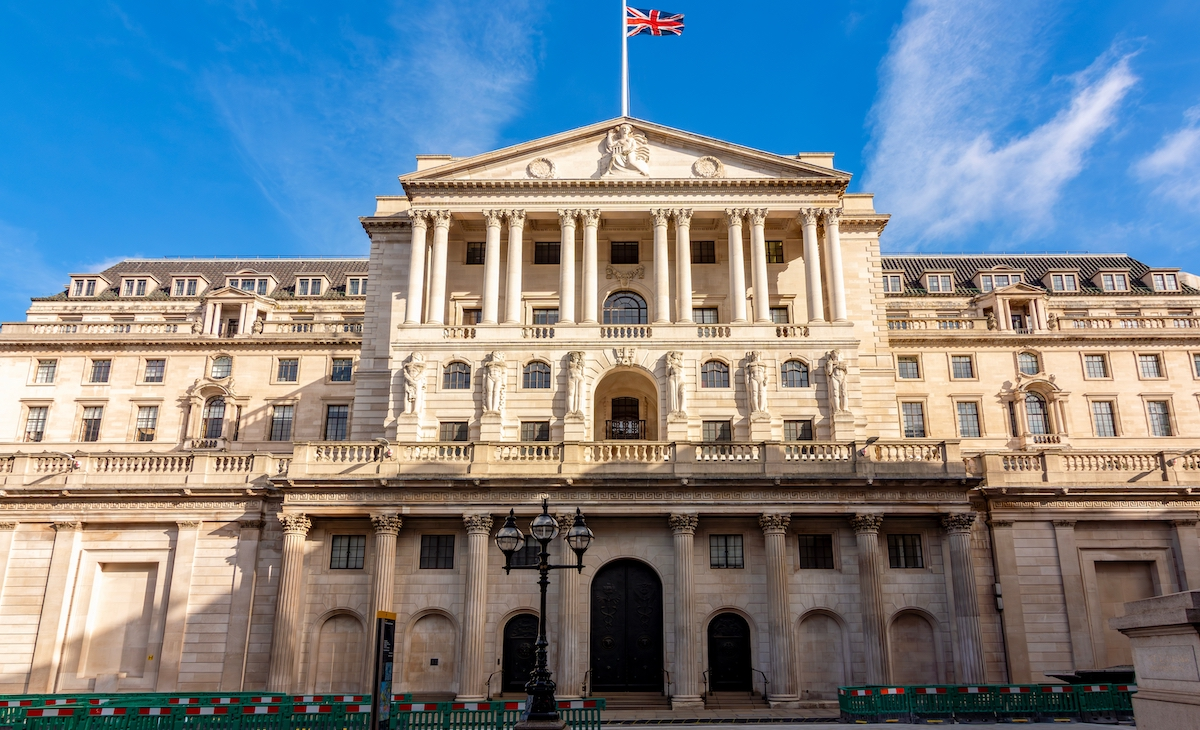
The United Kingdom’s largest banks are no longer the only companies facing direct scrutiny over the resilience of the nation’s financial system. The cloud providers running much of their technology are now inside the regulatory perimeter, too.
Starting Monday (July 13), the Bank of England, Prudential Regulation Authority (PRA) and Financial Conduct Authority (FCA) will jointly oversee Amazon Web Services, Google Cloud, Microsoft and Oracle as the U.K.’s first designated “critical third parties,” according to a Friday (July 10) news release.
The designation reflects how deeply a small group of technology companies has become embedded in banking, payments and insurance. A failure at one provider could interrupt services across many financial institutions at once, rather than remaining contained inside a single bank.
A major disruption could affect financial stability and services used by millions of consumers and businesses, the release said. Oversight will focus on the resilience of the systemic services the companies provide, rather than regulating their entire global businesses.
The new regime gives regulators the ability to set resilience standards, require scenario testing, review self-assessments and receive reports about serious incidents. The providers must identify threats to their critical services and communicate promptly with regulators and customers when significant problems arise.
The move shifts operational-resilience oversight closer to the source of potential disruption. Banks have long been responsible for assessing vendors, negotiating contracts and preparing backup plans. Those obligations remain in place. The new rules add direct supervision of the technology companies themselves, creating a second line of regulatory visibility.
For banks and payments firms, the practical effects could appear in technology contracts, audit rights and incident-notification procedures. Providers may face more requests for evidence that services can withstand outages, cyberattacks and other disruptions. Financial institutions may also need clearer plans for moving workloads, recovering data or operating during an extended loss of a major cloud service.
That could raise compliance and infrastructure costs, particularly for FinTechs that build quickly by relying heavily on a single provider. It could also make cloud adoption easier to defend to boards and regulators by establishing common resilience expectations for the largest suppliers.
“[When] the same providers serve thousands of firms, a single failure can reverberate across the financial system,” FCA CEO Nikhil Rathi said in the release. “Operationalizing this regime strengthens our ability to tackle those risks and improve overall resilience, ensuring the U.K. remains a safe and attractive place to do business.”
The next regulatory frontier may be artificial intelligence.
The Mills Review, published by the FCA in July, said banks’ ability to compete increasingly depends on access to AI models, computing capacity, cloud infrastructure, data and specialist vendors. It warned that concentration in those markets could leave financial companies facing higher prices, restricted access and weaker bargaining power.
The FCA has not announced plans to designate AI model developers as critical third parties. Still, the cloud decision establishes a framework that could potentially reach other technology suppliers when their services become sufficiently important to the financial system.
For financial firms, the message is that regulators are looking beyond the institution whose name appears on the customer’s account. Oversight is following the transaction, the data and the technology wherever they run.
For all PYMNTS digital transformation coverage, subscribe to the daily Digital Transformation Newsletter.
The post UK Regulators Put Big Cloud Under Bank-Style Oversight appeared first on PYMNTS.com.
Source link