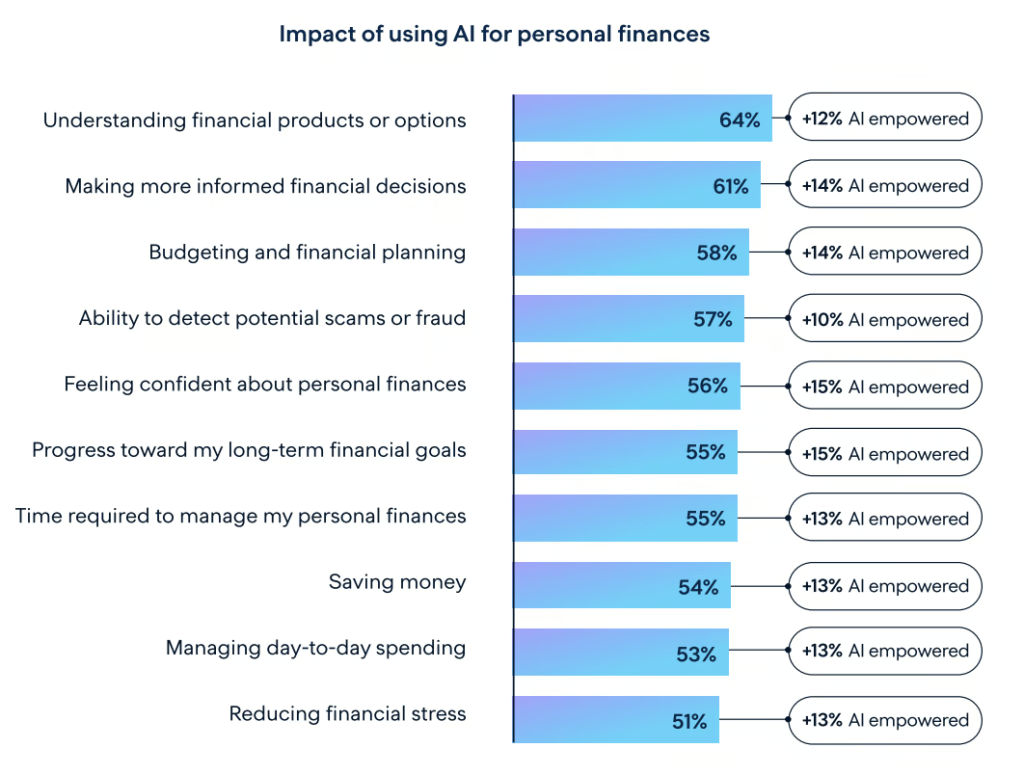
Americans are increasingly using artificial intelligence (AI) for finance, a shift expected to continue accelerating as younger generations show high openness to embracing the technology for financial decision-making, expecting specific, tangible improvements.
According to a new study by Plaid and the Harris Poll, 55% of Americans have used AI for financial tasks in the past 12 months, and 50% expect that managing money without AI will soon feel outdated. These figures signal how AI has become essential infrastructure for modern personal finance.
These findings also indicate that consumers are no longer satisfied with apps that simply display data, and now expect apps that alleviate the burden of money management by understanding that data, anticipating their needs, and taking action on their behalf.
This trend is especially pronounced among younger cohorts, for whom AI is inextricably linked to success. 62% of Millennials and Gen Zs, born between 1981 and 2012, believe that AI skills will be essential for financial well-being, framing AI as an essential skill set for navigating a complex economy.
Fear of technological exclusion is also accelerating adoption. 48% of Millennials and Gen Zs worry that they will fall behind financially if they don’t adopt AI tools, and 62% feel it will open up financial opportunities they don’t have today. The same is true for 50% of Gen X and Boomers, born between 1946 and 1980, suggesting broad acceptance of an AI-powered financial future across age groups.
Tangible improvements
The survey, conducted in February 2026, polled more than 2,000 adults in the US and found increased comfort in leveraging AI for finance, with half of all consumers reporting feeling more at ease using AI-driven financial tools compared to a year ago.
High expectations for AI are driving adoption as American consumers turn to the technology for tangible improvements to their financial well-being. 60% of respondents expect AI to save them time managing their financial life, 58% believe AI will make managing money feel less stressful, 56% expect AI to help them save money and invest more, and 53% expect AI to take the guesswork out of financial decisions.
Usage corroborates directly with value extraction. Compared to casual users, AI-empowered users revealed significant gains in financial confidence (+15%), progress toward long-term goals (+15%), and more informed financial decisions (+14%).
Expanding financial literacy
Beyond efficiency, AI is also democratizing financial understanding, with 64% of American consumers agreeing that AI is making financial advice more accessible.
This shift represents a change in trust, especially among younger generations. 52% of Millennials and Gen Zs reported feeling more comfortable sharing financial information with AI than explaining their finances to a human.
Accessibility and patience further drive adoption. 51% of American consumers are turning to AI over human advisors for its 24/7 availability, and 45% for its patience when explaining things.
Notably, 40% of consumers said that AI feels less judgmental than talking to a person, and 39% said they’re more comfortable asking so-called “dumb” or basic financial questions. This highlights AI’s unique role as an educational tool.
Additionally, AI is empowering those previously excluded from the financial system, transforming rejection into a roadmap. Among credit-denied Americans, AI is helping them master the very topics needed to regain financial access, including understanding credit scores (43%), investing basics (37%), budgeting (37%), and debt payoff strategies (32%).
Optimizing money in real time
Findings also reveal a rapid shift towards high-stakes financial agency. At the top of the pyramid, 63% of American consumers believe AI can react to market changes faster than human investors, while 57% expect AI agents to eventually outperform human traders.
This underscores growing consumer confidence in AI’s superior speed and analytical capabilities and signals that AI is steadily transitioning into becoming a trusted decision-maker in volatile markets.
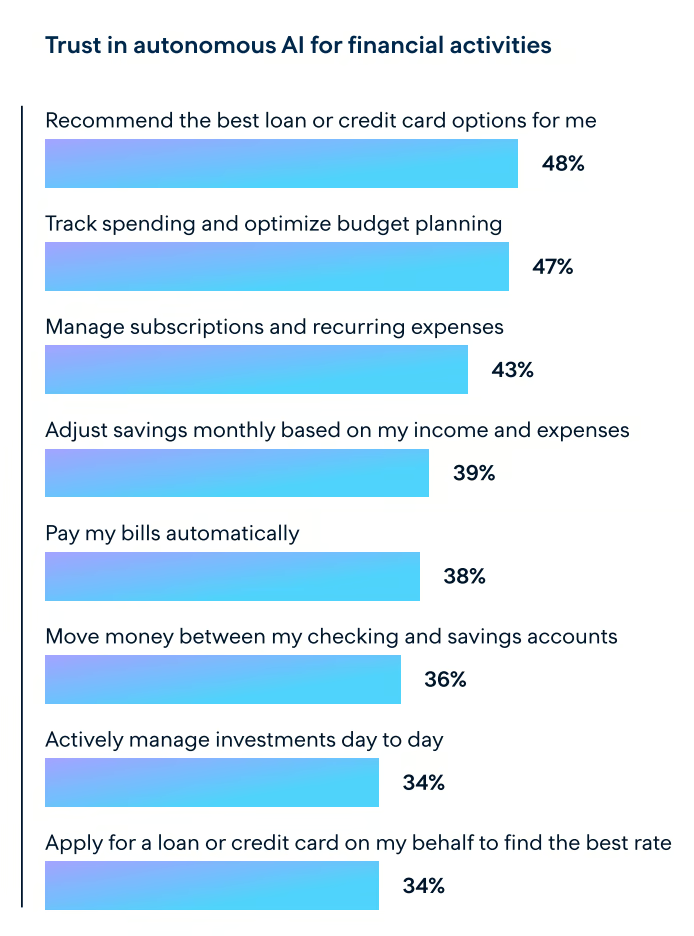
This sentiment is supported by a desire to automate the cognitive overhead of daily life, including tracking spending and budget planning (47%), managing recurring expenses (43%), and adjusting monthly savings based on fluctuating income (39%).
Human supervision remains essential
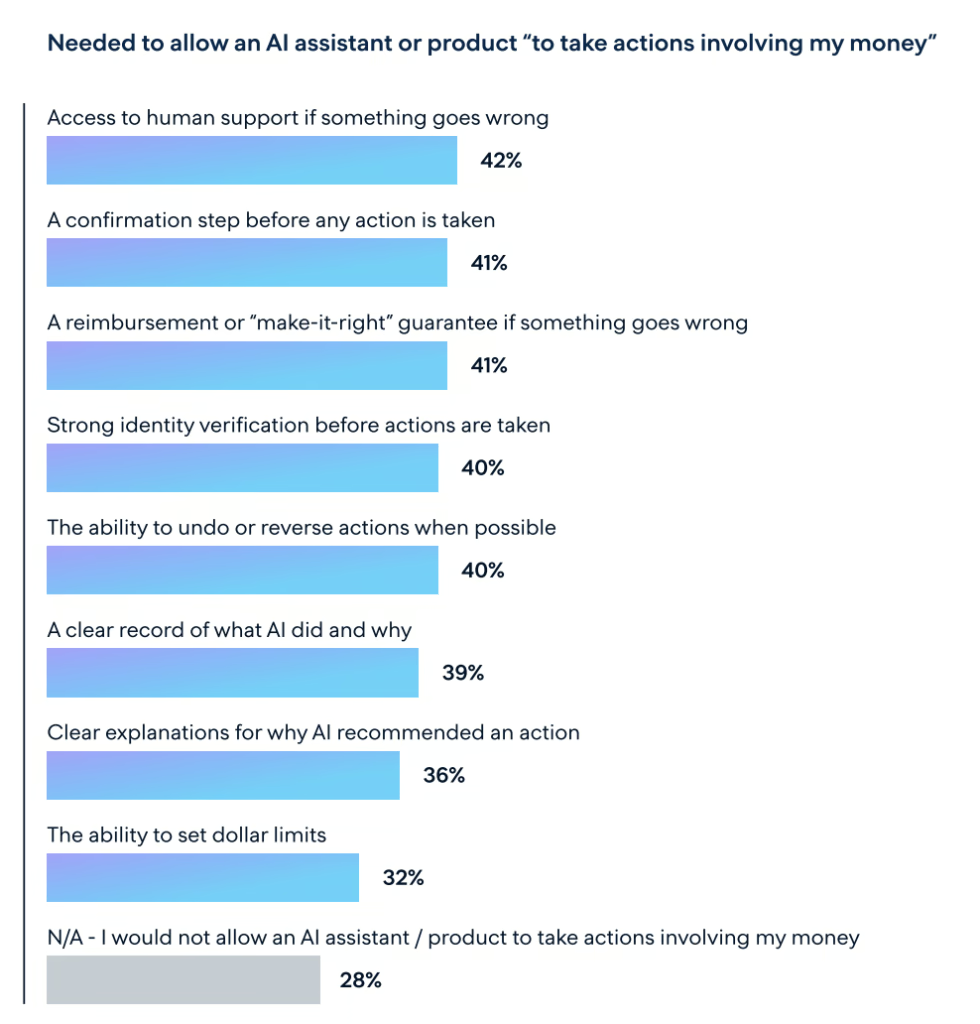
Despite enthusiasm for AI, Americans remain committed to supervised autonomy. Even among those ready to delegate to AI agents, 41% require a confirmation step before any action is taken, 40% need strong identity verification before actions are taken, and 40% want the ability to undo or reverse actions when possible.
These findings reveal that trust is directly tied to the user’s ability to oversee and, if necessary, override an action, suggesting that users are embracing AI as a collaborator rather than a replacement.
These results align with broader global trends. The 2026 EY Global AI Sentiment Survey, which polled more than 18,000 people across 23 countries, found that the adoption of AI in financial services has accelerated over the past six months, driven by growing consumer appetite for practical use cases.
49% of respondents said they have used AI to support savings and investment decisions, 21% reported using AI agents for financial product recommendations, and 18% said they have used AI for budgeting, household finance management and trading support.
Beyond usage, demand for personalized financial guidance is also driving adoption. 37% said they would find it “very” or “extremely” helpful for AI to provide personalized financial advice based on their data and preferences, or to automate claims, and financial decision-making processes.
Taking it one step further, over the last six months, 14% of respondents said they have allowed AI to select financial services providers on their behalf, while 11% said they have deferred to AI to manage their finances with little or no human intervention.
Featured image: Edited by Fintech News Singapore, based on image by rawpixel.com via Magnific
The post Use of AI in Finance Surges as Consumers Seek Accessible Financial Advice appeared first on Fintech Singapore.
Source link