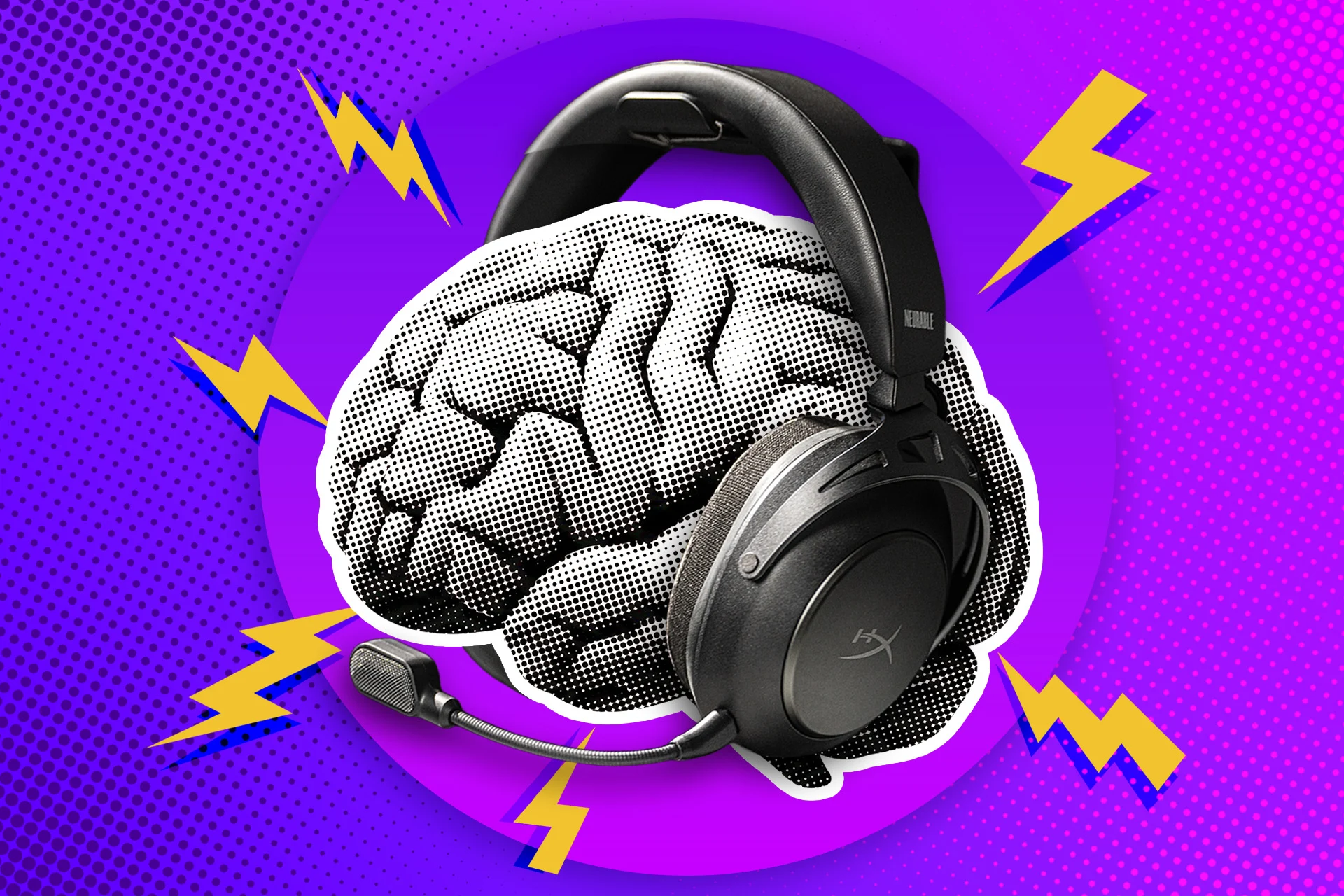
Flow. The fabled state of zen, where the world falls away save for the task directly in front of you. It’s a kind of euphoria-filled moment that’s so hard to attain and one you can only comprehend until after it’s over. There’s a reason competitive folk crave the flow state, and I’ve used one of the few gadgets that claim to actually help you get there—by literally using your brain.
The issue is how we can even measure “flow.” How do we know when we’re well and truly focused? It’s an issue the EEG technology company Neurable has been ironing out with a gaming headset developed alongside HP’s HyperX PC gaming brand. In its current iteration, the technology is clearly geared toward e-sports players or pro-level wannabes. Big picture, though, we may be on the brink of discovering yet another data point to add to the heap of health metrics we already track: your brain’s approximated level of focus.
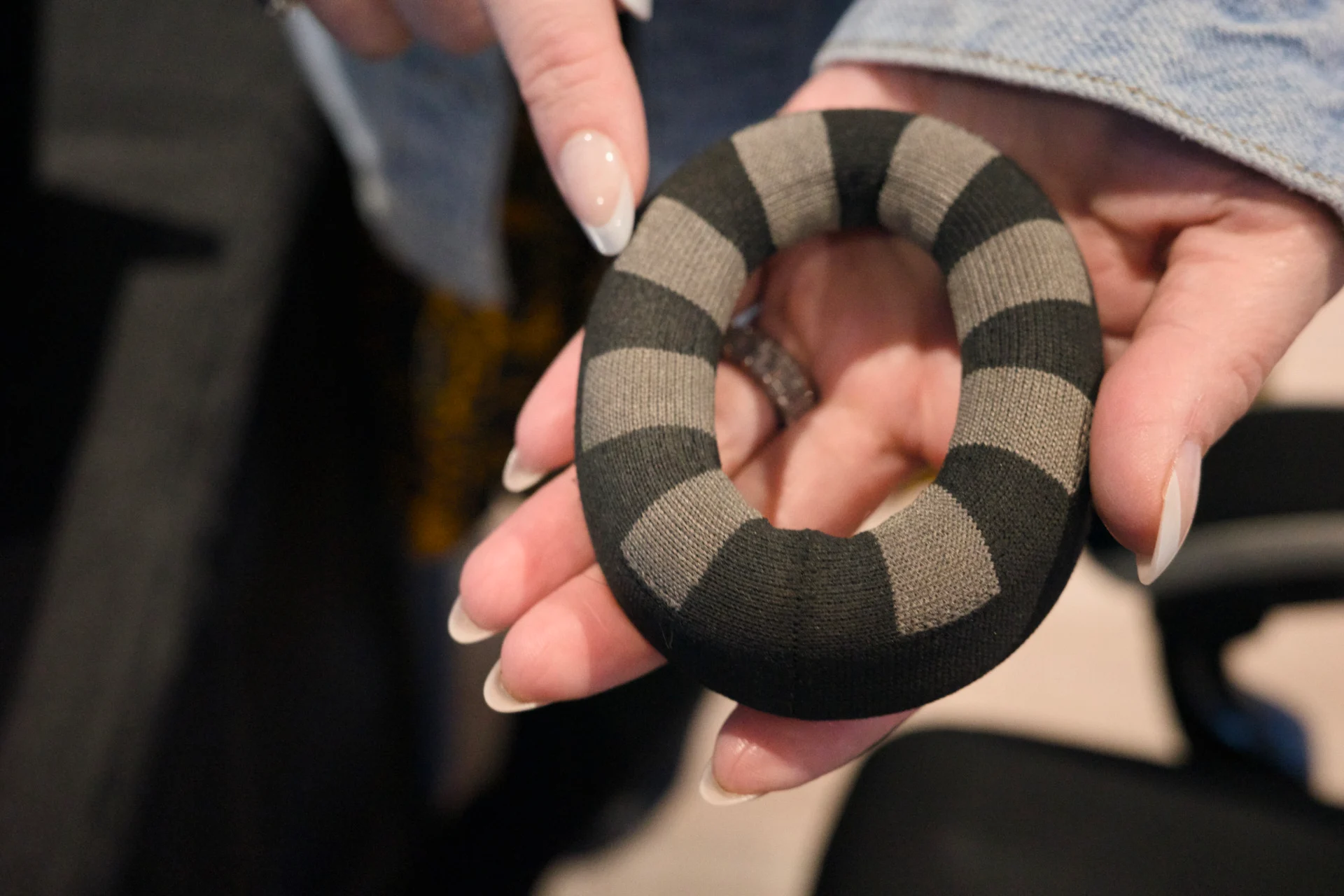
Essentially, the special earcups inside the HyperX Neurable headset contain a miniaturized set of electroencephalography sensors. This type of technology is normally built into a full cranium-spanning device full of small metal electrodes made to measure the minute electrical charges that spell out brain activity. In the HyperX Neurable headset, a set of two EEG sensors measure a user’s level of focus. Utilizing the data gathered from the brain’s feint electrical signals, Neurable uses a specialized app to guide users to an optimal focus state.
The actual headset isn’t available yet, though HP has promised we’ll know more later in the year. Even without an actual product in sight, the technology has left me wondering whether the next era of wearables will target areas beyond our wrists, fingers, and eyes. Future gadgets may try to peel the layers of our brains to gather personal data—figuratively, of course—to understand more about our physical or emotional state.
Feeling a little uncomfortable? That’s just the first morsel of this extra-large can of worms.
“Priming” your focus
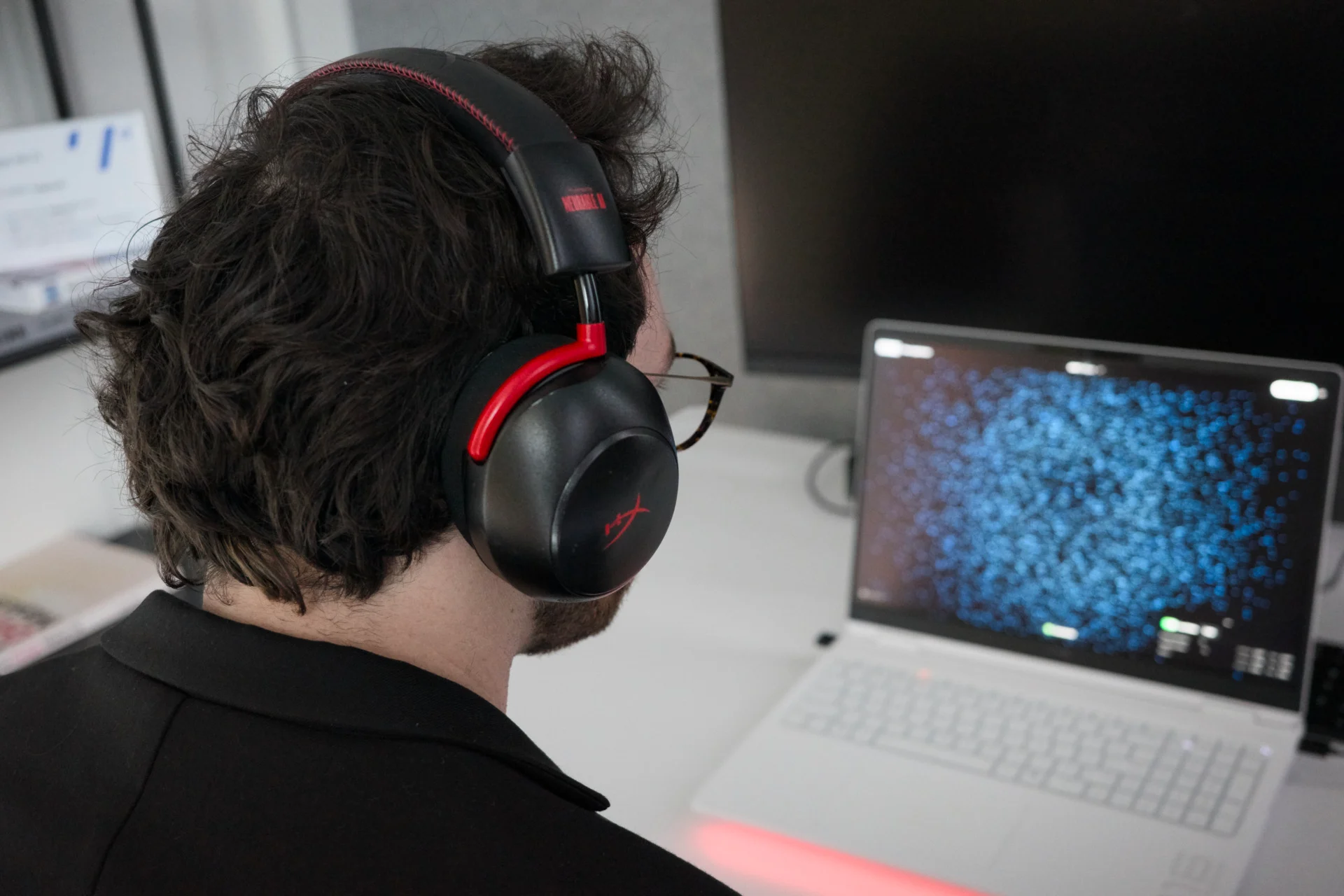
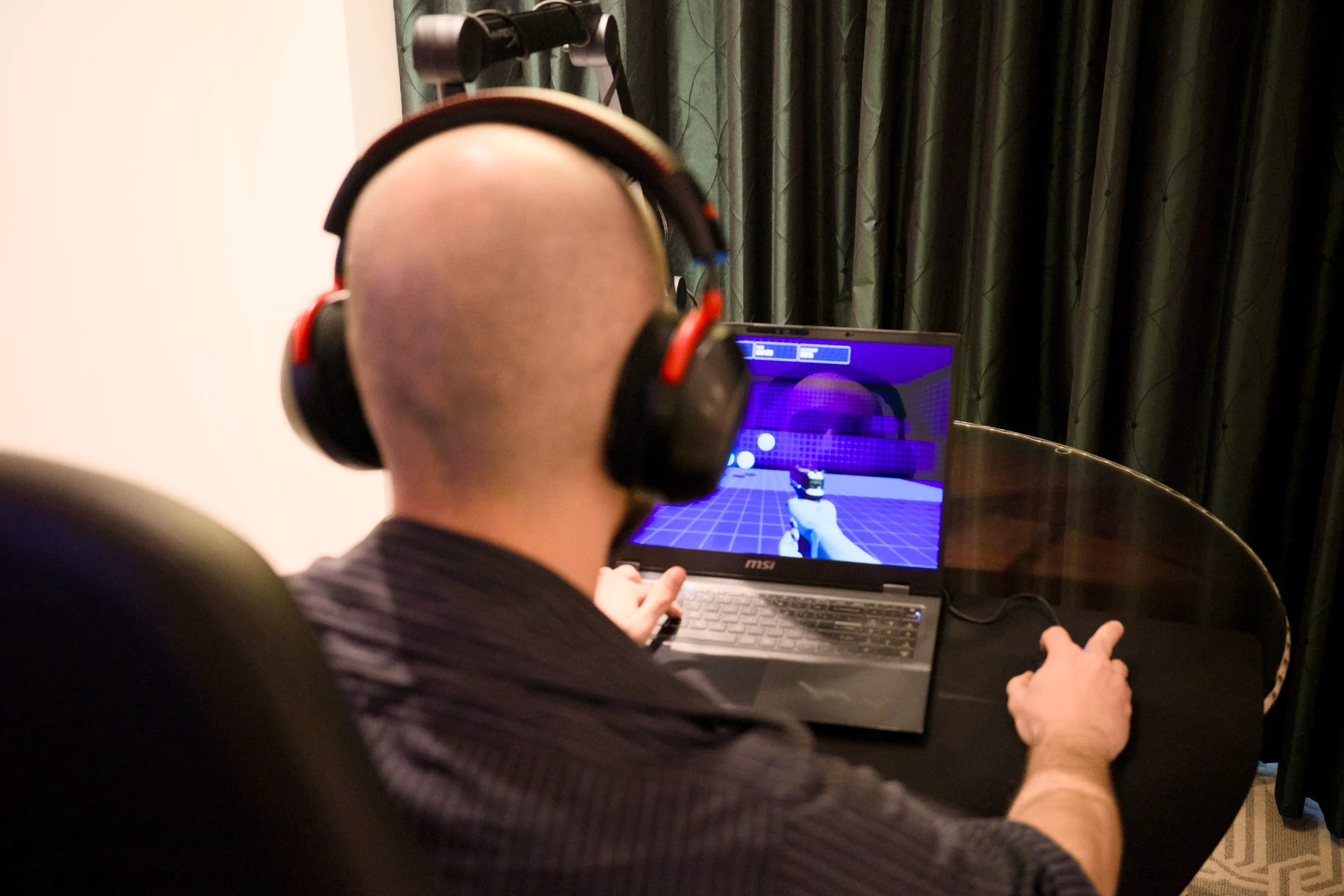
I’ve donned Neurable’s prototype HyperX headset twice, once on the ground at CES 2026 and again back in May during an HP showcase. Both times, I ran through a quick round of AimLab’s shooting gallery. The app measures how fast your reaction time and accuracy are, and Neurable was utilizing it as a means to gauge users’ first-person shooting abilities before and after using its tech.
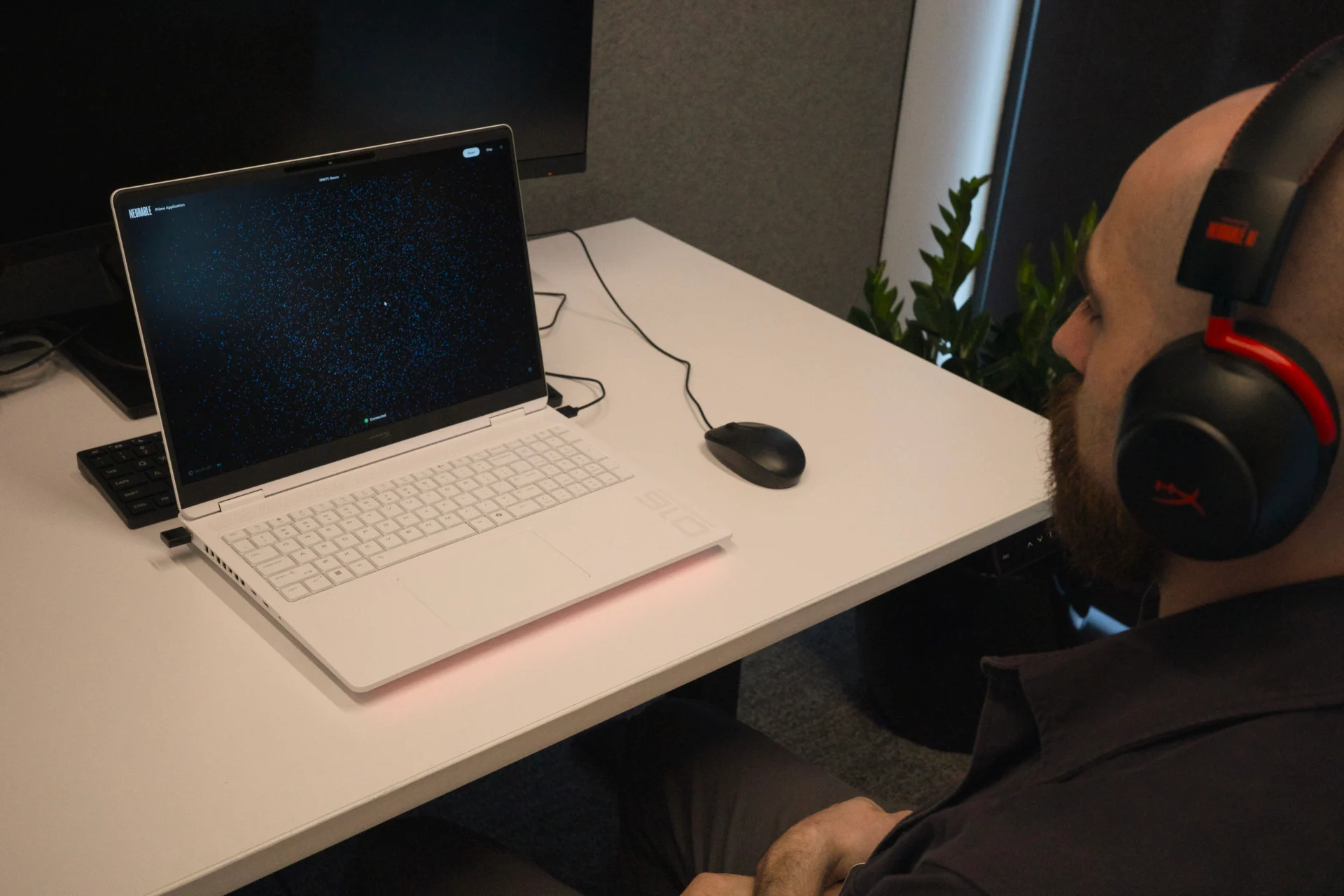
In its current iteration, Neurable tries to help users enter a flow state by telling them to concentrate on an odd vista—a digital constellation of glowing blue dots, evoking a field of stars. The dots are part of its Prime app, Neurable’s homegrown software that purports to induce focus and calm by using “short-duration, high-motion visual stimulation.” The more you let go of stray thoughts—which Neurable measures with the EEG sensors in the HyperX’s special earcups—the more the dots contract toward the center of the screen. When it works (the program glitched for me on my second try, requiring a restart), it takes between 30 seconds and five minutes to enter the purported focus state, depending on your level of stress.
With my initial AimLabs score in mind, I “primed” my brain. I let go of all thoughts—essentially letting my brain become a void full of nothing but elevator music—and then waited for the stars to coalesce into a single point. Going back into the same AimLab test, I found that my accuracy score was marginally better than before.
Was that result a mere bias stemming from extra practice? Maybe, but the stakes weren’t high for my personal aim score. I know what it’s like to be nervous in a competitive setting. I train in historical sword fighting on my off days, and I’ve attended longsword tournaments in the past. I learned years ago that I perform better when I stop obsessing about doing well. In these situations, I effectively “prime” my own brain by giving myself the room to fail, shifting my expectations from winning to simply focusing on looking good as I flash a length of steel in the air.
Neurable’s “priming” process is built to similarly relinquish all extraneous thoughts. Alicia Howell-Munson, a research scientist working at Neurable, told me in a video chat that staring at the screen full of floating blue dots is supposed to decrease “cognitive load,” which is essentially the mass of stray thoughts that are not tied to your current task.
Put another way, humans have a limited amount of bandwidth to process everything that’s going on in our lives. As such, you need to decrease the number of stray thoughts so your brain can access your imbued muscle memory, strengthened by years of practice. That means that if you’re already capable of popping heads on Counter-Strike, then your brain should be able to reliably refer back to its training during a stressful match rather than trying to process that awkward date you had last night.
The priming procedure I experienced is just the opening salvo of this specific technology. Eventually, Neurable hopes to make it more interactive and data-centric so users can reference the state of their own focus when needed. Howell-Munson said Neurable aims to develop a way for the system to “[help] you remove those thoughts that are intrusive [and] then lower your cognitive load.”
The neurotech company’s ambitions go even further than that, though. Neurable’s technology is still in its relative infancy, but Ramses Alcaide, the founder and CEO of Neurable, told Gizmodo that—eventually—the team wants to “overclock” the brain by taking players through tasks that help them focus. In Alcaide’s telling, this would involve an objective, data-based method of gaining focus—a solution that may be more appealing to analytical gamers than a round of meditation.
How does EEG in a headset even work?
Alcaide said that one of the main challenges with scaling EEG technology is signal-to-noise issues. Namely, the signal can get disrupted if a person wearing a brain-scanning apparatus moves their head. The cure was an AI algorithm that removes any “artifacts” (aka unusable or corrupted data) when the sensors or the user’s head shifts. Alcaide said Neurable’s small-scale EEG system was “equivalent” to a larger, full-head machine, but recreating medical-grade technology isn’t the point. Neurable only needs to gain the most cursory level of information about your current focus level for the sake of a gamer-ready headset.
Howell-Munson worked on the headset’s brain scanning system that calibrates itself depending on the user. She said EEG was akin to holding a strong microphone to a building full of signals from every direction. The strength of the signal depends on the location of your sensors.
“So through different types of AI and processing, we’re able to start differentiating those different signals that are coming from the different parts of the brain and at their different strengths and weeding them out to figure out which ones we’re really interested in,” she told me.
Every brain is different, but Neurable’s researchers claim its software manages to pick out where the “focus” part of our brain signals are most likely coming from. That means each headset still requires a small calibration period, but it shouldn’t demand as much waiting and a team of doctors standing behind you just to let you know if you’re focused or not.
Whether this all works exactly as described still remains to be seen. Neurable co-founder Adam Molnar and Howell-Munson co-authored a white paper earlier this year describing the priming process. The company tested its headset with 12 collegiate e-sports players and 13 regular gamers using AimLabs. All the participants had the chance to train until they stopped seeing perceptible improvement.
Overall, the semi-pros with more developed muscle memory got the most out of the “priming” process. Neurable’s researchers claimed the e-sports gamers were 3% more accurate in the shooting gallery tests with an overall speedier reaction time. The casual gamer didn’t get as much benefit, though they were doing marginally better with better reaction time and more targets hit.
The science behind flow
While the effect of the touted “flow” state—being wholly absorbed in a task—has been observed and studied in psychology fields for years, I needed to know what other scientists thought about Neurable’s work.
Dr. Dimitri van der Linden, a professor at Erasmus University Rotterdam in the Netherlands who has worked on multiple studies surrounding the brain in a “flow” state, told me that EEG has previously been used in research on the brain and focus levels. Van der Linden told Gizmodo via email that “in principle, it is possible to use neurofeedback (via a task or things on the screen) to alter one’s state. Thus, increasing focus and reducing distractions in that way seems plausible.”
Van der Linden added that he would like to see additional studies with more control groups who did not receive any treatment with a Neurable headset. Still, he proposed EEG may still offer a way to help induce flow. It all stems from something called the “default mode network,” which is a term used for a brain that is active even when the person is at rest.
“One key characteristic of flow is that one is fully focused on the task at hand and is not occupied with thinking about other things (distraction),” the professor said. “It is known that activity of the [DMN] is associated with daydreaming, thinking about oneself, and simulating/anticipating future scenarios. There are some known EEG markers of DMN activity. One can assume that if DMN activity is low, one is less likely distracted by task-irrelevant thoughts.”
EEG data isn’t just useful for gamers
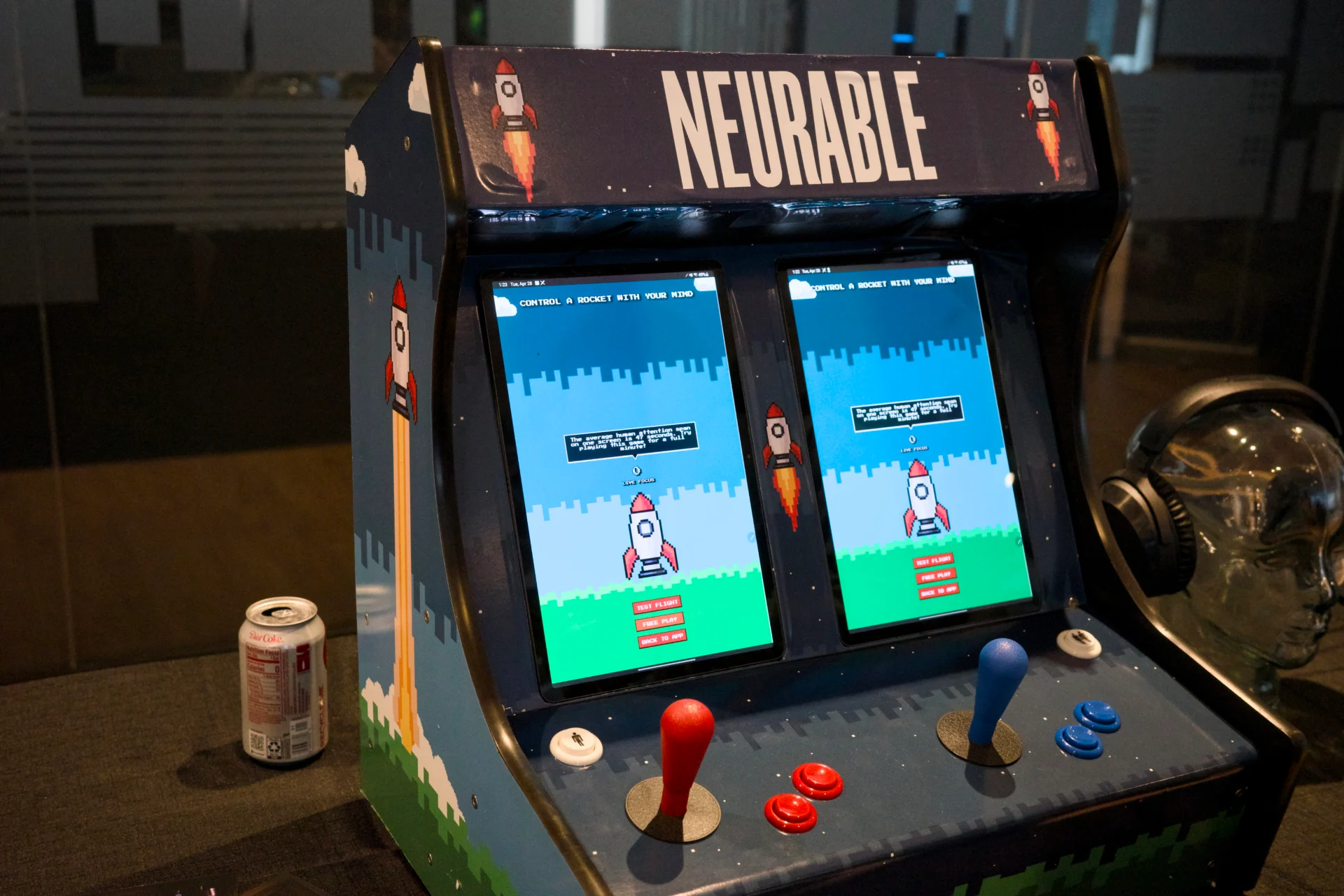
This isn’t Neurable’s first actual product. The company previously worked with Masters and Dyniamic on a pair of over-ear headphones. That device was billed more as an expensive “wellness” gadget that was also designed to assist with focus. The problem is a product like that doesn’t provide users with metrics so they know what to do to remain focused. The HyperX Neurable headset promises to get you straight to the flow state for when you’re about to jump into your next Valorant ranked match. Compared to its previous headphones, Neurable’s gaming headset possibly presents a more actionable promise, one where you can see real results.
If this technology works as intended, its use cases could easily outstrip just gaming. Neurable has worked with the U.S. military, though Howell-Munson said they had researched how to help soldiers address cognitive health, specifically surrounding the effects that concussive blasts from explosives can have on the brain. Alcaide said Neurable’s work on the military side was a “natural extension of where the technology can go.”
That said, we doubt soldiers will start wearing brain-sensing headsets alongside AR headsets and visors in the near future. Neurable’s ambition is to use this tech for traditional sports, not just e-sports, as well. In that case, it would become yet another way for athletes to pick apart every aspect of their health and fitness journey.
You likely already know somebody who bought a Whoop or newfangled Fitbit Air health tracker and became obsessed with their health metrics. They let their fitness apps catalog their eating habits and their sleep schedule and tune their bodies to live in an “optimal” way. In these scenarios, focus could become just another data point. However, once devices like the Neurable headset start collecting EEG data in an accessible format, what’s to stop companies from collating other data points on their brains?
That’s not even the most concerning question about devices that measure brain activity. What happens if advertisers get a hold of your brain data? EEG data, especially the kind of information that’s broken down into actionable metrics, is yet another potential goldmine for companies to turn people into the product. What if sites use it to feed you content based less on your clicking habits and more on what they know for a fact is providing the largest dopamine hit or distracts you the most?
For its part, Alcaide said Neurable was processing all data on-device and was anonymizing data that it sends to the cloud for processing. The CEO emphasized that privacy was a big sticking point for the entire company.
“We’re never going to use the technology for somebody to get marketing data off of you,” he said. Of course, that doesn’t mean some less academically scrupulous copycat won’t come along and decide to sell cheaper headsets while making money off people’s data.
So while Elon Musk’s Neuralink may be getting the bulk of the spotlight—inserting human-to-computer interfaces directly into brains generally has that effect—it’s not the only company with its sights set on our noggins. Brain-scanning technology is well on its way to becoming more accessible and much less invasive. It’s easy to see how, in just a few years, brain data could be just another health metric that will have the hypochondriacs among us even more obsessed with our health and fitness apps.
Explore more on these topics
Sign up for our newsletters
Subscribe and interact with our community, get up to date with our customised Newsletters and much more.
Related Articles

Source link