Santa Clara startup will grow sales, engineering and Viabot One deployments across US commercial properties.
Viabot, a Santa Clara, California startup building autonomous robots for outdoor property care, said it raised a $24 million Series A led by Walden International, with CDIB Capital, Stalwart Ventures, Baseline Ventures, Era Ventures, Morado Ventures and SOSV participating.
The new financing brings Viabot’s total funding to $43 million and will be used to expand sales and engineering, speed product development, and improve its robotics-as-a-service offering and flagship Viabot One platform.
Viabot said its Viabot One robots already service 25 million square feet of commercial property in the US, with software trained on more than 5 billion square feet of real-world multi-modal data.
The round comes as demand for commercial automation rises. Viabot cited International Federation of Robotics data saying robotics-as-a-service demand accelerated in 2024, while businesses spend an estimated $9.1 billion annually on litter cleanup, according to Keep America Beautiful’s “Litter in America” research cited by the company.
Viabot has raised a $24 million Series A as the autonomous outdoor maintenance startup pushes deeper into US commercial real estate, retail and campus operations. The round gives the Santa Clara company fresh capital to expand a robotics business aimed at keeping large outdoor properties clean and monitored.
Viabot said the financing reflects investor interest in robotics companies selling labor replacement and site upkeep tools to enterprise customers. The company says its machines are already deployed across 25 million square feet of commercial property, an operating footprint for a startup in outdoor autonomy.
Walden International led the round, with participation from CDIB Capital and Stalwart Ventures, alongside existing investors Baseline Ventures, Era Ventures, Morado Ventures and SOSV. Viabot said the financing brings its total capital raised to $43 million. Chief executive and co-founder Gregg Ratanaphanyarat said in a statement that the company was built around the idea that technology should perform useful tasks and give human teams time back, and described the new round as an important next phase for that mission.
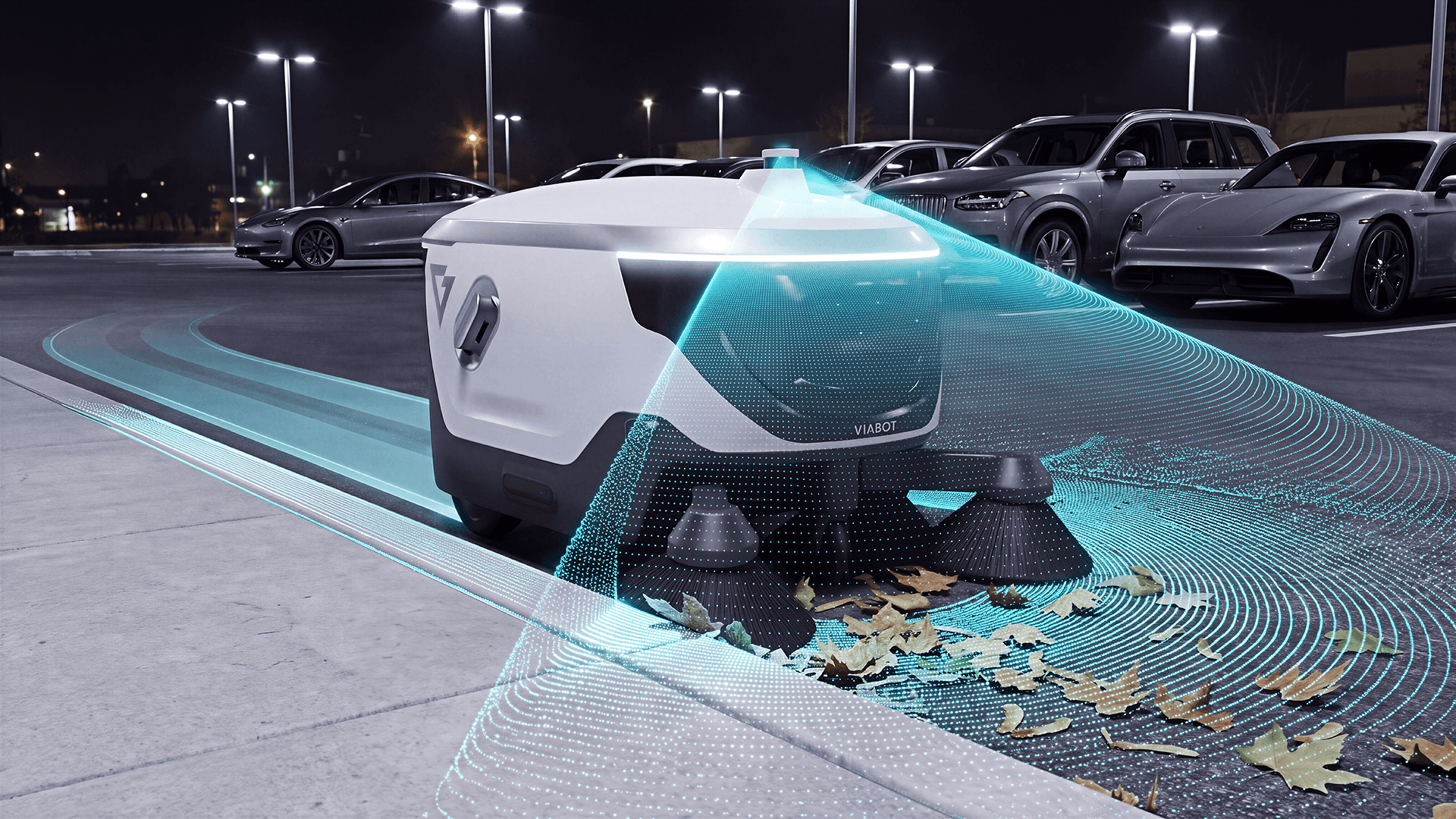
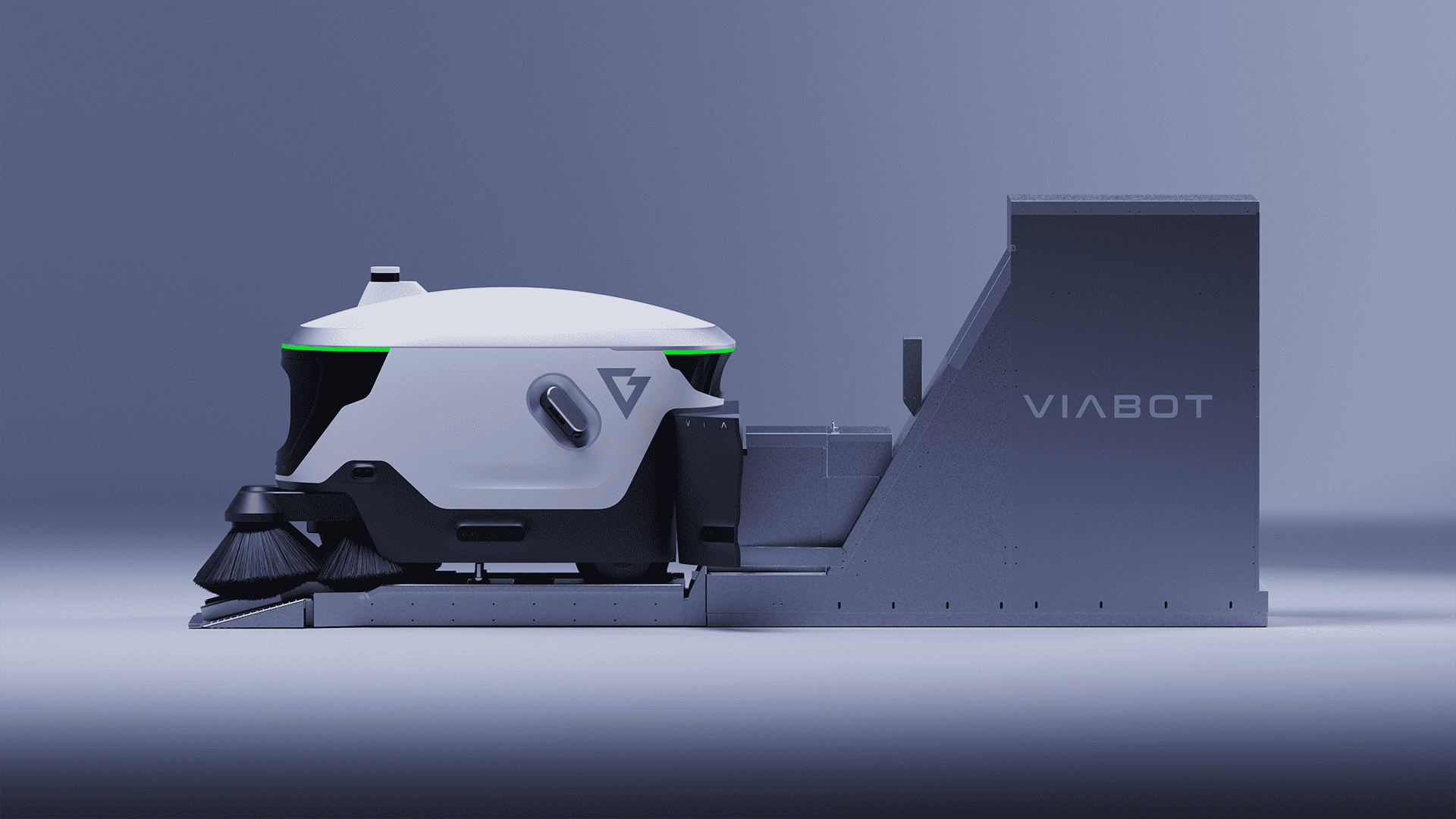
The pitch is straightforward. Viabot One is designed to sweep debris and provide site monitoring across large commercial properties using cameras, lidar, depth sensors, DGPS and what the company describes as dynamic path planning. After completing a run, the robot returns on its own to a docking station, recharges, and empties debris into standard trash bins. It runs on a standard 120V outlet, which affects deployment because retrofitting large properties for new hardware can raise costs.
That practical detail gets at why this category is attracting attention. Commercial property operators are under pressure to maintain cleaner, safer sites without adding headcount for repetitive outdoor work that is hard to staff and expensive to schedule. The job is not glamorous. It is, however, constant. For many buyers, a robot that can repeatedly sweep parking lots, walkways and perimeter areas may be easier to justify than a more general-purpose machine that still needs close supervision.
$24 million
Viabot’s Series A brings the company’s total funding to $43 million, according to the company.
Viabot said it will use the capital to hire across sales and engineering, accelerate new product development, and continue improving both Viabot One and its robotics-as-a-service model. That last point is important. In commercial robotics, selling hardware outright can produce uneven revenue and long procurement cycles. A service model can be more attractive to customers that want predictable operating expense and less maintenance burden, though it also means the vendor has to execute on field service and uptime.
The company’s operating claims suggest it has moved beyond a prototype phase. Viabot publicly launched in 2021 with $6.1 million in seed funding from Baseline Ventures, Morado Ventures and SOSV, after releasing a RUNO prototype in 2021. It said it then spent several years validating the current platform through real-world deployments, setting up a production line, and expanding service nationally across the South, Southeast, Mid-Atlantic, Midwest and Western United States. The startup also said those deployments have led to contract renewals and bigger customer orders, though it did not disclose revenue or customer counts.
Customers include Fortune 500 retailers, higher education institutions, multinational real estate owners, developers and property management firms, according to the company. It also cited use across retail, shopping, entertainment, Class A office buildings, healthcare and utility companies. That customer mix is telling. These are buyers with large footprints, repeatable maintenance workflows and increasing interest in automation, but they are also buyers that tend to demand reliability over novelty.
There is a broader market tailwind here, even if startup robotics investing has become more selective. Viabot cited International Federation of Robotics data saying robotics-as-a-service demand accelerated 42% in 2024. Viabot also pointed to Wiseguy Reports data saying the global autonomous sweeper market is expected to surpass $1.17 billion in 2025. Those figures should be treated as directional rather than definitive for any one company, but they help explain why investors are still writing checks for specialized robotics platforms with clearer commercial use cases.
US property care is also a large but fragmented expense category. Keep America Beautiful’s “Litter in America” research, cited by Viabot, estimates that businesses spend $9.1 billion annually on litter cleanup, and that 90% of Americans agree cleaning and greening the country should be a priority. For startups, this is the kind of market that looks dull from the outside and attractive on a spreadsheet. It is recurring work, visible to customers and employees, and increasingly tied to brand perception, safety and operational efficiency.
The background
Viabot’s bet is that outdoor autonomy can succeed where many robotics companies have struggled by staying narrow. Instead of trying to build a robot for every job, it is going after debris removal and soft security in well-defined commercial environments. That sounds less flashy than warehouse picking or humanoid assistants, but it may be the smarter wedge. Outdoor properties are large, often repetitive, and full of labor-intensive routines that do not necessarily require a human on every pass.
The challenge, of course, is that outdoors is messy. Lighting changes. Weather shifts. Layouts are irregular. Pedestrians, vehicles and carts introduce unpredictability. Viabot says its system draws on more than 5 billion square feet of real-world, multi-modal data, which is the kind of claim investors want to hear because autonomy tends to improve with deployment history and edge-case exposure. Still, the burden now is execution at scale. It is one thing to show a robot working in a controlled environment. It is another to keep fleets running across campuses, shopping centers and utility sites in multiple regions with limited downtime.
There is also a timing argument in Viabot’s favor. Real estate owners and operators have spent the past few years reevaluating labor allocation, physical security and service contracts. At the same time, enterprise buyers have become more comfortable with autonomous systems that do one job well, whether in warehouses, restaurants or last-mile delivery pilots. The winners in this cycle are likely to be companies that can install quickly, fit existing workflows and avoid requiring a full operational redesign. Viabot’s use of standard trash bins and standard power is not just a product detail. It is part of the sales strategy.
Baseline Ventures founder Steve Anderson, an existing investor, said in a statement that Viabot has combined technical depth with a focus on customer value, and described the company’s products as both capable and thoughtfully designed. Existing backers also participated in the round, and new investors joined.
What's next
The next marker is not another vision deck. It is deployment growth and retention. Viabot said the new money will go toward expanding teams and speeding product development, which means the market will be watching whether the company can turn its current 25 million square feet of serviced property into a larger installed base across the US, while proving that autonomous outdoor maintenance can become a durable line item in enterprise operating budgets rather than a pilot program that looked good for a quarter.
Frequently asked questions
What did Viabot announce in its latest funding round?
Viabot announced a $24 million Series A round led by Walden International, with participation from CDIB Capital, Stalwart Ventures and existing investors. The new financing brings the Santa Clara company's total capital raised to $43 million.
How will Viabot use the new Series A funding?
Viabot said it will use the money to expand its sales and engineering teams, speed up product development and improve its robotics-as-a-service platform. The funding is also intended to support broader deployment of the Viabot One across commercial properties.
What does the Viabot One robot do?
Viabot One is an autonomous outdoor property-care robot designed to sweep trash and debris while also supporting site monitoring. It uses cameras, lidar, depth sensors, DGPS and dynamic path planning to navigate large commercial environments and then returns to its dock to recharge and empty debris.
Where is Viabot operating today?
Viabot says its flagship robot is already servicing 25 million square feet of commercial property. The company has expanded service across the South, Southeast, Mid-Atlantic, Midwest and Western United States.
Who are Viabot's customers and target markets?
Viabot serves large commercial and institutional customers, including Fortune 500 retailers, higher education institutions, real estate owners, developers and property management firms. Its customer base also includes healthcare, utilities, entertainment venues and class-A office properties.
Why is there growing demand for autonomous outdoor property-care robots?
Demand is rising as businesses look for more efficient ways to manage litter, debris and site monitoring while reducing manual labor pressures. Viabot also points to stronger market demand for robotics-as-a-service and growing public concern about cleaner, safer commercial environments.