BenchmarksCLOSED
BenchmarksCLOSED


Meta in India doing what others can’t: Infrastructure head Santosh Janardhan


Synopsis
Meta Platforms is set to build significant AI data centre capacity in India. The company is already working on a large data centre in Jamnagar with Reliance Industries. Meta's Bengaluru engineering hub plays a crucial role in developing proprietary silicon, said Santosh Janardhan global head of infrastructure at Meta Platforms.

Listen to this article in summarized format
“We have an opportunity to build arguably the biggest infrastructure build-out in the history of the planet,” said Santosh Janardhan, global head of infrastructure at Meta Platforms, who is leading CEO Mark Zuckerberg's ambitious ‘Meta Compute’ initiative to build tens of gigawatts of AI data centre capacity over the next decade.
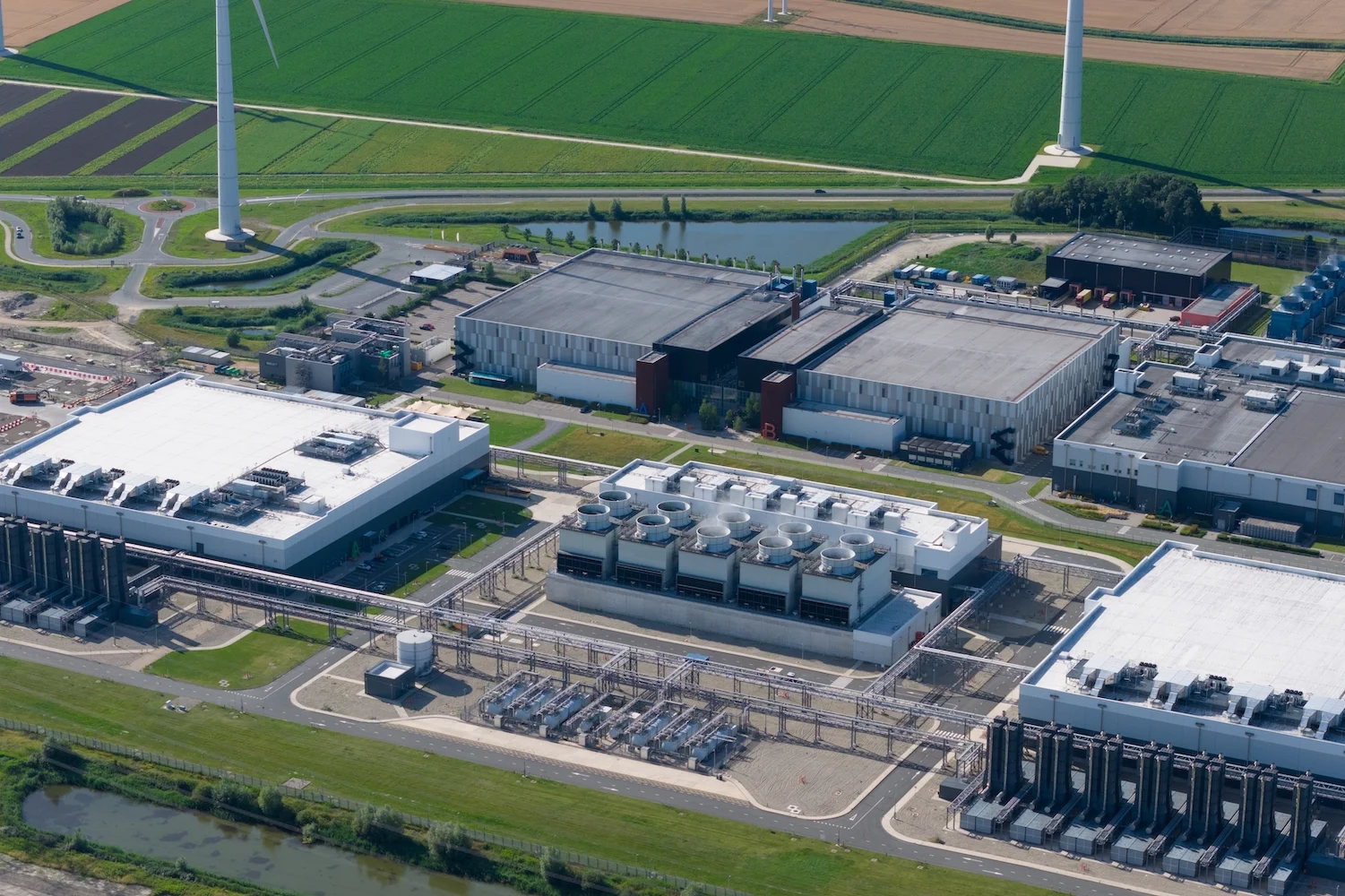
The executive, who oversees Meta’s $115-$135 billion annual spending on AI compute, told ET’s Himanshi Lohchab that the company has huge infrastructure plans for India. “I was in Jamnagar (Gujarat) yesterday with Aakash (Ambani) and the work there is underway at record speed,” he said referring to the 168 megawatts data centre deal with Reliance Industries.
Janardhan also highlighted the growing importance of Meta's Bengaluru engineering hub, revealing that teams there play a key role in developing the firm's proprietary silicon, undertaking highly specialised work that “the rest of the world frankly can't do.” Edited excerpts:
What is Meta’s infra plan for India?
Through our family of apps, we touch 3.5-4 billion people regularly. We are in a transformational era. We have the distribution, and when you look at what AI can enable on top of that distribution, the possibilities are extraordinary. India is a huge part of that story. We recently announced the data centre project in Jamnagar. I was there with Akash and the work is underway at record speed. But if you step back, there is a broader India narrative.
We have Project Waterworth, which is the world's longest and most sophisticated subsea cable system. India is a huge part of that. We also have a significant presence in Bengaluru where we build custom silicon. A meaningful portion of Meta's revenue comes from silicon that we design ourselves. A big part of that work happens in Bengaluru. We have engineers there doing highly specialised work that, frankly, the rest of the world cannot do. Our ambitions in India over the next 5-10 years are enormous.
What investments has Meta made in India over time?
About 5-10 years ago, our focus was on enabling traffic in India. India was one of many growing markets and we wanted to serve users locally rather than backhauling all traffic back to the US. What is unique about India is that Meta's growth and the country's digital growth happened simultaneously. The demographics shifted, internet adoption increased and demand kept rising. Almost all the graphs are going up and to the right. That's a rare phenomenon. We started with edge infrastructure and points of presence (PoPs). Then we moved to mega PoPs because the scale of content consumption in India required a different architecture. India is one of the few countries where we have mega PoPs in the sense that edge networks alone don't cut it. We needed to cache local content differently than the rest of the world.
What are the scaling plans for Jamnagar data centre?
It's still early days. This is our first foray. In AI, there is a term called "pipe cleaning." It means doing your first zero-to-one project, learning what works, getting all the ingredients right and then scaling. That's how we're approaching in this project. There are a lot of reasons to go very big in India, but you walk before you run.
Will the DC be used for AI training or inference?
I don't like to think of data centres as being built for one specific purpose. Can we train there? Yes. Can we do inference there? Yes. Can we serve the family of apps there? Yes. All of those are possibilities. I would encourage people to think about data centres as the factories of today. Today's data centres take in data and compute. The output is intelligence.
The executive, who oversees Meta’s $115-$135 billion annual spending on AI compute, told ET’s Himanshi Lohchab that the company has huge infrastructure plans for India. “I was in Jamnagar (Gujarat) yesterday with Aakash (Ambani) and the work there is underway at record speed,” he said referring to the 168 megawatts data centre deal with Reliance Industries.
Janardhan also highlighted the growing importance of Meta's Bengaluru engineering hub, revealing that teams there play a key role in developing the firm's proprietary silicon, undertaking highly specialised work that “the rest of the world frankly can't do.” Edited excerpts:
What is Meta’s infra plan for India?
Through our family of apps, we touch 3.5-4 billion people regularly. We are in a transformational era. We have the distribution, and when you look at what AI can enable on top of that distribution, the possibilities are extraordinary. India is a huge part of that story. We recently announced the data centre project in Jamnagar. I was there with Akash and the work is underway at record speed. But if you step back, there is a broader India narrative.
We have Project Waterworth, which is the world's longest and most sophisticated subsea cable system. India is a huge part of that. We also have a significant presence in Bengaluru where we build custom silicon. A meaningful portion of Meta's revenue comes from silicon that we design ourselves. A big part of that work happens in Bengaluru. We have engineers there doing highly specialised work that, frankly, the rest of the world cannot do. Our ambitions in India over the next 5-10 years are enormous.
What investments has Meta made in India over time?
About 5-10 years ago, our focus was on enabling traffic in India. India was one of many growing markets and we wanted to serve users locally rather than backhauling all traffic back to the US. What is unique about India is that Meta's growth and the country's digital growth happened simultaneously. The demographics shifted, internet adoption increased and demand kept rising. Almost all the graphs are going up and to the right. That's a rare phenomenon. We started with edge infrastructure and points of presence (PoPs). Then we moved to mega PoPs because the scale of content consumption in India required a different architecture. India is one of the few countries where we have mega PoPs in the sense that edge networks alone don't cut it. We needed to cache local content differently than the rest of the world.
What are the scaling plans for Jamnagar data centre?
It's still early days. This is our first foray. In AI, there is a term called "pipe cleaning." It means doing your first zero-to-one project, learning what works, getting all the ingredients right and then scaling. That's how we're approaching in this project. There are a lot of reasons to go very big in India, but you walk before you run.
Will the DC be used for AI training or inference?
I don't like to think of data centres as being built for one specific purpose. Can we train there? Yes. Can we do inference there? Yes. Can we serve the family of apps there? Yes. All of those are possibilities. I would encourage people to think about data centres as the factories of today. Today's data centres take in data and compute. The output is intelligence.
Add  as a Reliable and Trusted News Source
as a Reliable and Trusted News Source Add Now!
(Catch all the Technology News News, and Latest News Updates on The Economic Times.)
...more
Elevate your knowledge and leadership skills at a cost cheaper than your daily tea.

What will the NSE IPO price be? Unlisted market deals offer clues. 
She made baking an INR2k crore biz. Now comes the real heat. 
Market darling to drawdown: Why momentum stocks are losing steam 
Can targeted reforms at home save India from external shocks? 
Auditor red flagged Gymkhana land issue long before govt action 
Time for long-term investors to look at them again? 9 NBFC stocks with upside potential of up to 22% 
These mid-cap stocks with ‘Strong Buy’ & ‘Buy’ recos can rally over 25%, according to analysts 
Time to be selectively bullish again? 5 small-cap stocks from different sectors with upside potential of up to 29%
Subscribe Now
Now Playing
Source link