Burry ties the AI surge to US policy, arguing Washington and Big Tech now share the stakes
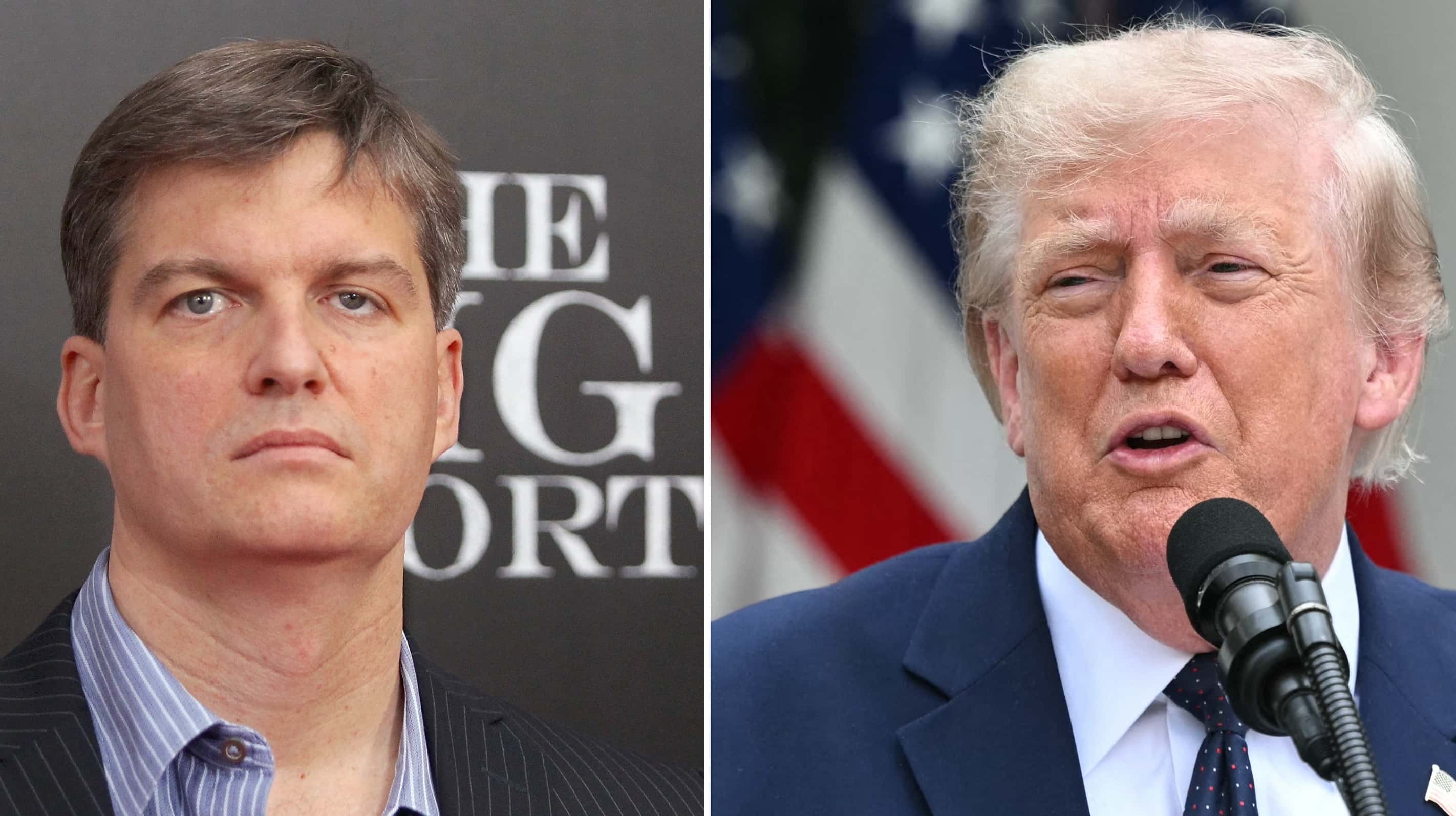
Michael Burry said the Trump administration cannot afford to let the artificial intelligence trade unwind because the sector's momentum now matters to both Big Tech and the U.S. government.
Burry's warning ties the AI boom to Washington as well as Silicon Valley, suggesting AI valuations are no longer just a market story but a policy and political one.
The comment extends Burry's long-running skepticism toward crowded trades, even as AI has become the defining capital-markets theme for U.S. tech stocks.
For U.S. investors and founders, Burry's point is straightforward: once a sector becomes strategically important in Washington, market discipline can get blurred by national-interest arguments.
Michael Burry is warning that the AI trade has grown too important for Washington to ignore. The investor, best known for "The Big Short," argued that the Trump administration cannot afford to let the sector stumble.
That matters because Burry is not just calling out another overheated pocket of the market. He is saying the U.S. government now has a stake in keeping the AI boom intact, a notable shift for a trade that was initially sold as a private-sector growth story led by the biggest tech companies.
The source material offers only a narrow slice of Burry's latest view, but the central idea is clear enough: AI's success is now just as vital to the U.S. government as it is to the tech giants driving the surge. In other words, the market's most crowded trade may also be the one Washington feels least able to see crack.
That is classic Burry in one sense. He has built his public reputation on identifying consensus narratives that run too far, too fast, then asking what happens when reality intrudes. What is different this time is the object of his skepticism. Housing in the mid-2000s was systemically important because of leverage and bank balance sheets. AI, in Burry's framing, is becoming systemically important because it sits at the intersection of equity-market leadership, national competitiveness and government ambition.
That is a more uncomfortable argument for U.S. markets than a simple call that AI stocks are expensive. If investors believe Washington has strategic reasons to support the sector, they may also believe downside is cushioned through procurement, lighter-touch regulation, export policy, infrastructure support or political signaling. That is one way bubbles get more durable than skeptics expect.
There is also a narrower political read here. Trump has repeatedly cast advanced manufacturing, energy dominance and technological leadership as pillars of U.S. strength. AI now touches all three. The companies building models and chips need vast computing infrastructure and power. They are also central to the narrative that the U.S. must outbuild rivals rather than cede the next computing platform. In that setup, a sharp unwind in AI would not just hit portfolios. It would challenge a broader message about American industrial and technological primacy.
Burry's comment lands at a moment when AI has become the market's organizing story. A small group of U.S. technology companies has absorbed much of the investor excitement, much of the capital spending and a striking share of the public-market narrative around growth. That concentration is precisely why his argument deserves attention. When one theme carries this much weight, it stops being just another sector bet.
For founders, the practical takeaway is less about whether Burry is right on timing and more about what kind of market they are operating in. If AI is now seen as strategically necessary, capital may continue to chase category leaders and infrastructure providers even when near-term economics look stretched. That can keep private valuations elevated, distort customer expectations and make it harder for startups outside the AI stack to command attention.
Public investors, meanwhile, should hear Burry's warning as a reminder that policy and market structure are becoming harder to separate. The U.S. has already spent years treating semiconductors, cloud infrastructure and advanced computing as strategic assets rather than ordinary business lines. AI compresses those debates into a single trade. The result is a market where national-interest logic can reinforce valuation momentum instead of cooling it.
Still, Burry's framing cuts both ways. If Washington becomes more visibly invested in AI's success, scrutiny could rise alongside support. The same administration that wants U.S. leadership could demand domestic buildouts, tighter control over foreign access, or more explicit alignment between private AI labs and government priorities. Tech investors usually cheer strategic importance right up until it starts to look like dependency.
The background
Burry's skepticism arrives after a period in which AI has moved from product story to statecraft issue. In the U.S., the technology is increasingly discussed alongside chips, data centers, energy supply and defense capability. That broadens the circle of stakeholders well beyond software buyers and venture firms. It also means any meaningful slowdown in AI spending would ripple through far more than one corner of tech.
There is a historical pattern here. Once Washington decides a technology domain is critical to economic or geopolitical standing, market outcomes rarely remain purely market-driven. Semiconductors are the obvious recent example. AI looks even more expansive because it reaches into cloud computing, labor productivity, military applications and information control all at once. Burry's point, stripped down, is that this strategic framing may keep capital flowing longer than fundamentals alone would justify.
That does not mean the AI trade is immune to correction. It means any correction may be contested. Policymakers can tolerate a lot of things. They are usually less relaxed when a flagship national-competitiveness story starts to break.
What's next
The open question is whether Burry's warning turns into a more explicit market call or remains a broader critique of the AI boom's political insulation. For now, his core message is the headline: if AI has become a Washington priority as much as a Wall Street obsession, investors should assume the U.S. policy backdrop will matter almost as much as earnings in determining how long this trade can run.
Frequently asked questions
What did Michael Burry say about Trump and the AI boom?
Michael Burry said the Trump administration cannot afford to let the AI boom fail. His point is that artificial intelligence now matters not only to major tech companies but also to US economic and political interests.
Why does Burry think AI is now a policy issue and not just a market story?
Burry argues that AI valuations have become tied to Washington as well as Silicon Valley. That means a sharp unwind in AI stocks could carry political consequences, not just losses for investors.
Is Michael Burry bearish on AI stocks overall?
Burry has long been known for skepticism around crowded trades and stretched valuations, and his latest comment fits that pattern. He is signaling that AI enthusiasm may be vulnerable, even if policymakers are motivated to support the sector.
How is Trump connected to the AI trade according to Burry?
Burry suggests Trump cannot ignore the AI rally because it has become strategically important for the US. In that view, AI leadership affects markets, national competitiveness, and the administration's broader economic message.
What could happen if the AI boom unwinds?
If the AI trade loses momentum, Big Tech shares and broader market sentiment could come under pressure. Burry's warning implies that such a reversal could also create policy headaches for Washington because AI has become a national priority.
Why are investors paying attention to Michael Burry's AI warning?
Investors follow Burry closely because of his history of identifying major market risks before they become obvious. His comments on AI stand out because they frame the sector as both a valuation story and a political one.