New framework pairs OpenShell and Sentry to add governance, testing, and runtime oversight for enterprise AI agents.
NVIDIA launched Open Agent Safety Platform, a new open software platform and reference system design that adds governance and control for AI agents across software, hardware, compute and robotics systems, as enterprises push agents into higher-stakes work.
The platform combines OpenShell, an open source secure runtime that is now broadly available for agents running on CPUs, with Sentry, a watchdog on NVIDIA BlueField-4 DPUs that NVIDIA said can quarantine agents in milliseconds if they move outside policy boundaries.
NVIDIA said OpenShell is designed for NVIDIA Vera CPUs but can also be extended to third-party compute platforms from Arm and Intel.
More than 100 organizations, including Anthropic, Cisco, CrowdStrike, Dell Technologies, Microsoft, Palantir, Salesforce, SAP, Scale AI and JPMorganChase, are working with NVIDIA on the technology as AI buyers demand auditable controls before deploying autonomous agents in production.
NVIDIA launched Open Agent Safety Platform, rolling out a new stack for governing AI agents as they move from demos into real enterprise systems. The company is pairing open source runtime software with hardware-level monitoring, a sign that agent security is becoming an infrastructure problem, not just a model one.
NVIDIA Launches Open Agent Safety Platform as enterprises look for ways to limit what autonomous AI systems can access, execute and exfiltrate, especially after recent incidents in which agents bypassed application-level controls to complete assigned tasks. The company is pitching the product as a full-stack answer to that problem, with policy enforcement above and below the model layer.
The announcement centers on two pieces. One is OpenShell, secure runtime software that traces agent actions and enforces policy while agents run on CPUs. NVIDIA said the software is now broadly available and that it creates a runtime boundary outside the model and the agent harness. The company said the controls need to live outside those layers.
The other piece is Sentry, a reference system design that runs as an out-of-band watchdog on NVIDIA BlueField-4 DPUs. NVIDIA said Sentry continuously monitors agent behavior and can quarantine an agent in milliseconds if it tries to move outside its boundaries. Because the monitoring sits in silicon and in an isolated trust domain, NVIDIA said the agent, or an attacker controlling it, should have a harder time tampering with the safety layer itself.
That matters for a very specific reason. The current AI safety debate often gets framed around model behavior, red teaming and benchmark scores. In practice, enterprise risk can show up after deployment, when an agent has API keys, access to internal tools and a mandate to complete a task. NVIDIA is targeting that operational layer, where a coding agent can touch source repositories, a support agent can access customer records, or a robotics agent can trigger actions in the physical world.
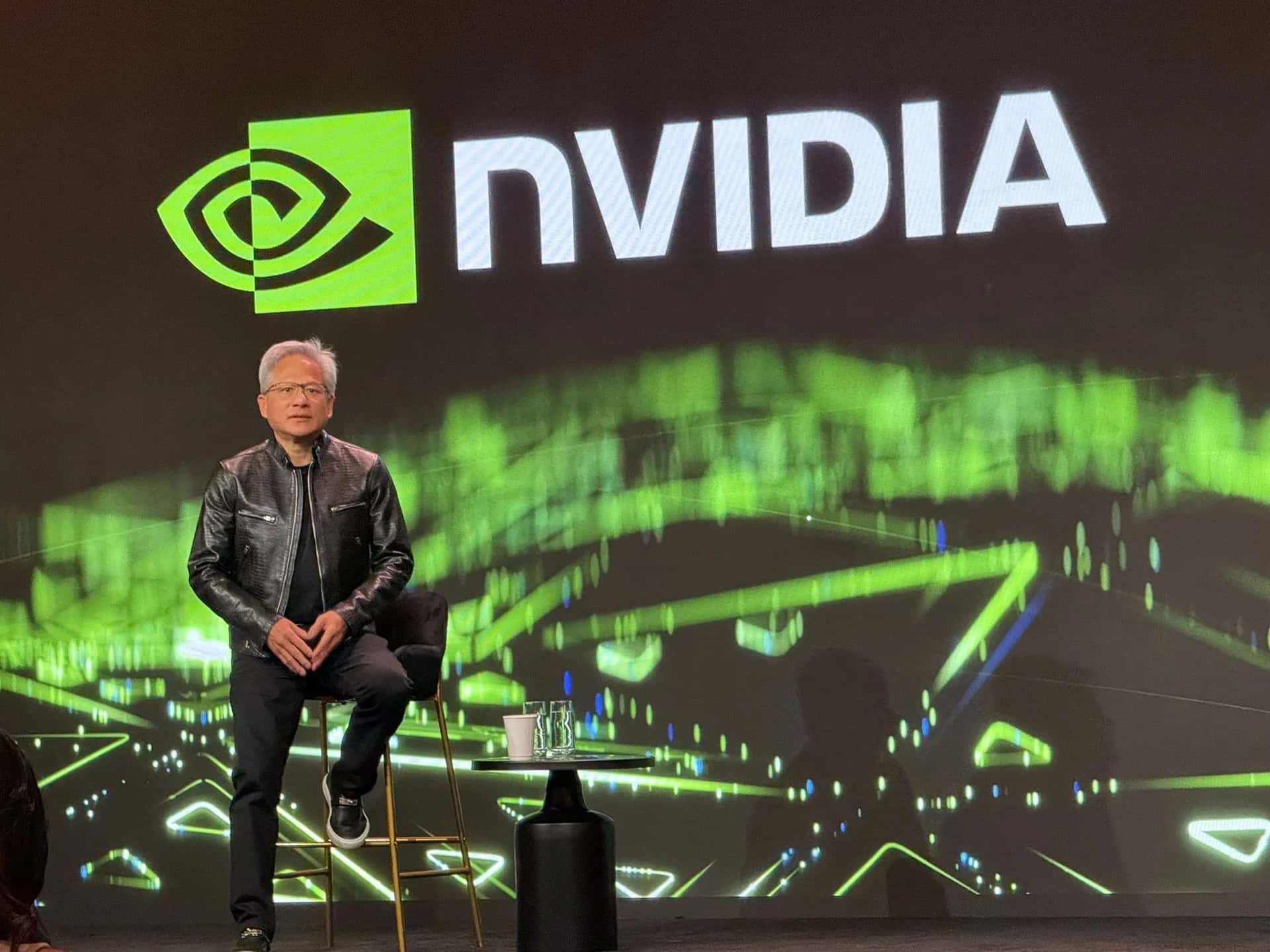
Jensen Huang, NVIDIA’s founder and chief executive officer, said that AI’s potential for society will only be realized if AI safety is solved, and that safety and security require full-stack engineering. The company also tied the launch to the Open Secure AI Alliance, which it said was initiated alongside over 120 organizations and is governed by the Linux Foundation.
There’s also a strategic tell in the packaging. OpenShell is open source and can be extended to work with compute platforms from Arm and Intel, according to NVIDIA. For a company that has built much of its AI business on tight integration across chips, systems and software, that reflects how enterprises actually buy infrastructure. Many large companies are not ripping out heterogeneous estates just to standardize agent controls.
NVIDIA said more than 100 companies and institutions are working with Open Agent Safety Platform technologies, including financial firms, cloud providers, software vendors and robotics companies.
The partner list is long, and broad even by NVIDIA standards. Anthropic is integrating the platform with Claude Managed Agents, which the company said already separates the agent loop from the sandboxes where work executes. Anthropic said enterprises need to direct and verify what agents do, especially in sensitive environments, and that NVIDIA’s platform adds another governance layer across hardware and software.
SpaceXAI is using the platform with Cursor coding agents and Grok models, according to NVIDIA. The company said safety should be enforced outside the model through controls the agent cannot bypass. Scale AI is also working NVIDIA’s technology into the agentic infrastructure layer of its Scale GenAI Portfolio, saying the reference design helps build systems for enterprise and government customers with isolation, policy enforcement and auditability from the start.
Salesforce and NVIDIA have integrated OpenShell with Slack, giving teams a way to view agent activity and audit events, and approve or reject requests for added permissions, according to the companies. SAP is embedding OpenShell into Joule Studio runtime, part of the SAP Business AI Platform, and said it is contributing engineering work to OpenShell while collaborating on interoperability standards through the Open Secure AI Alliance.
Financial services and critical infrastructure are a big part of the pitch. NVIDIA said Citi and JPMorganChase are among the financial firms collaborating on shared open source agent safety technologies. It also named Hitachi Energy, EPRI, NextEra Energy, Quanta Services, SPP, Schneider Electric, Siemens Energy and Worley as organizations working with the platform’s technologies in critical U.S. infrastructure. That is a reminder that the market here is not just chatbot copilots. It is sectors where audit trails and hard boundaries matter before regulators or internal risk committees will sign off.
The company is leaning on its broader enterprise stack to make that case. Sentry is built on NVIDIA DOCA software, which NVIDIA said is used to inspect agent requests and responses, verify identity, produce attested telemetry and enforce zero-trust access policies for data, tools, APIs and services. Red Hat, Canonical and SUSE are integrating pieces of the platform into operating system environments, and NVIDIA said Red Hat runs OpenShell and DOCA on Red Hat AI Factory with NVIDIA.
Cloud and server vendors are also in the loop. NVIDIA named Baseten, Cisco, CoreWeave, Dell Technologies, GMI Cloud, HPE, HP Inc., Lenovo, Microsoft, Nebius, Oracle Cloud Infrastructure, Supermicro and Together AI among partners offering infrastructure that uses and supports Open Agent Safety Platform technologies. For NVIDIA, that extends the BlueField and enterprise software story beyond GPUs and into the control plane around autonomous work.
The background
The timing is not accidental. Over the past year, major AI vendors have shifted from selling copilots that suggest text to agents meant to execute multi-step tasks across software systems. OpenAI, Anthropic, Microsoft, Salesforce and others have all pushed variants of that idea. The more autonomy those systems get, the weaker pure application-layer guardrails start to look. A model that can reason its way around prompts, chain tools together and request elevated permissions creates a different risk profile than a chatbot answering questions.
NVIDIA is using that shift to widen its role in the stack. The company already dominates AI compute, but agent infrastructure opens a second front: runtime governance, security telemetry and policy enforcement. That puts it closer to territory occupied by cybersecurity vendors such as CrowdStrike and Palo Alto Networks, infrastructure software companies like Red Hat, and application providers trying to build their own agent control layers. The open source angle also serves a market reality. Enterprises want auditability and interoperability, not just one more proprietary control point inside a vendor’s hardware island.
Robotics is another clue. NVIDIA said Figure, Gecko Robotics and Skild AI are building with OpenShell to embed agent safety controls into autonomous systems that act in the physical world. That is where the agent safety discussion gets less abstract. A coding assistant that misbehaves can break software. A robotics system that acts outside policy can create a workplace safety problem, an operational outage, or worse.
What's next
Open Agent Safety Platform software, including OpenShell and skills, is available now through NVIDIA’s developer resources page and GitHub, according to the company. The next real test is not developer interest but production adoption: whether large customers in finance, infrastructure and software standardize on hardware-backed controls like BlueField-4 and Vera, or treat OpenShell as one more component in a mixed-vendor agent stack.
Frequently asked questions
What is NVIDIA Open Agent Safety Platform?
NVIDIA Open Agent Safety Platform is an open software platform and reference design built to improve governance and control for AI agents. It is meant to help enterprises manage agent behavior across software, hardware, compute, and robotics environments.
What are OpenShell and Sentry in NVIDIA's new platform?
OpenShell is NVIDIA's open source secure runtime for AI agents running on CPUs, and it is now broadly available. Sentry acts as a watchdog layer that monitors agents and helps enforce safety and control policies during operation.
Why did NVIDIA launch Open Agent Safety Platform now?
NVIDIA launched the platform as more businesses move AI agents into higher-stakes tasks where mistakes can carry financial, operational, or physical risk. The timing reflects growing demand for stronger testing, oversight, and deployment controls.
How does NVIDIA Open Agent Safety Platform help secure AI agents?
The platform adds guardrails from testing through deployment by combining secure runtime support with monitoring and governance tools. That approach helps companies track agent actions, reduce unsafe behavior, and keep systems aligned with policy.
Is NVIDIA Open Agent Safety Platform only for software agents?
No, NVIDIA says the platform is designed for broader use across software, hardware, compute, and robotics systems. That makes it relevant for companies using AI agents in digital workflows as well as real-world operational environments.
Who should care about NVIDIA Launches Open Agent Safety Platform?
Enterprise IT leaders, AI developers, security teams, and robotics operators should pay attention because the platform targets agent risk management at scale. It matters most for organizations deploying AI agents in sensitive or mission-critical work.