

- Industry
- 5 min read
Decathlon at 50: The India play
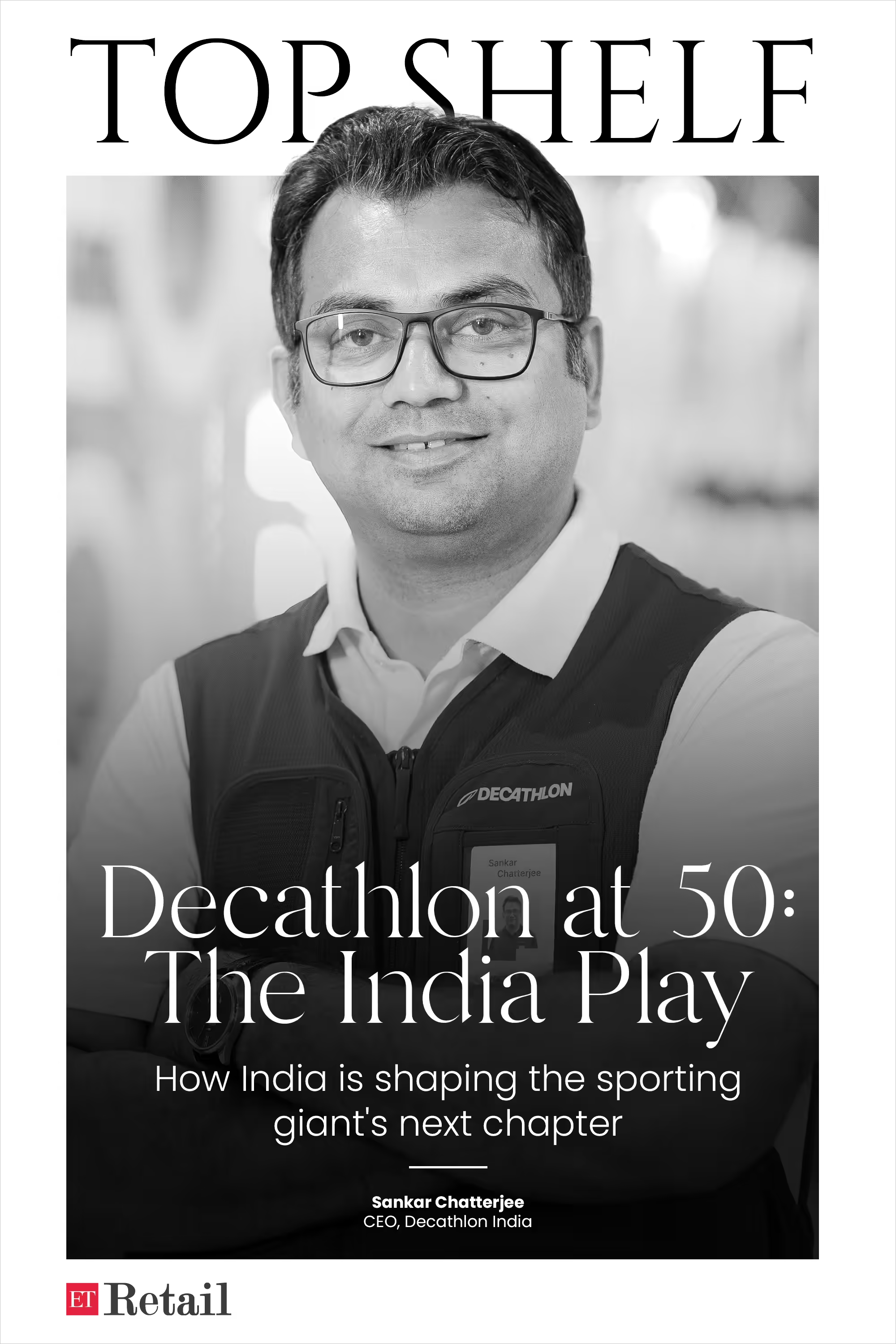
In this exclusive conversation for the latest edition of ETRetail’s signature Digital Cover Story - TOPSHELF, Decathlon India CEO Sankar Chatterjee discusses India's expanding role in the group's global strategy, why the company continues to invest despite a challenging retail environment, and how it is preparing for the next era of sports retail. Joining the conversation, Global CEO Javier López shares how India fits into Decathlon's worldwide ambitions and why the future of the company extends beyond sport itself.



The next chapter is about building an ecosystem around movement, wellbeing and community - one where products, services, digital experiences and physical retail come together to encourage people to live healthier lives. Few markets illustrate that evolution better than India.
In just over a decade of retail operations, India has grown beyond being a consumer market. It has become one of Decathlon's most strategic manufacturing and sourcing hubs, with nearly 68 per cent of products sold locally now made in India. The country is expanding its role in footwear, bicycles, plastics and metal manufacturing, while also emerging as a capability centre for finance and operations across Asia. For Decathlon, India is no longer simply a market where products are sold; it is increasingly a market where the company's future is being built.
In this exclusive conversation with Pallavi Goel for the latest edition of ETRetail’s signature Digital Cover Story - TOPSHELF, Decathlon India CEO Sankar Chatterjee discusses India's expanding role in the group's global strategy, why the company continues to invest despite a challenging retail environment, and how it is preparing for the next era of sports retail. Joining the conversation, Global CEO Javier López shares how India fits into Decathlon's worldwide ambitions and why the future of the company extends beyond sport itself.
PG: Decathlon turns 50 this year. Looking back, what does this milestone mean for the organisation, and what role has India played in that journey?
Sankar Chatterjee: It is a proud moment for everyone at Decathlon. I was fortunate to be in France during the global celebrations with our founder and teammates from across the world. What struck me most was that, even after 50 years, two things remain unchanged: our people and our products.
Those have always been the foundation of Decathlon.
India has been part of that journey for a long time. We've been manufacturing here since 1999 and have completed over 17 years of retail operations. Today, India contributes not only through retail but also through sourcing, manufacturing and capability building for the entire group. That makes this milestone even more meaningful for our teams here.
PG: India has steadily become much more than a retail market for Decathlon. How important is the country to the company's global strategy today?
Sankar Chatterjee: India today is far more than a country where we generate retail revenue. Last year, we sourced products worth over ₹4,200 crore from India, with roughly half catering to exports and the rest serving the domestic market. We've also established our Centre of Excellence for Accounting for Asia in India, which supports production accounting across the region.
Beyond textiles, we've invested heavily in developing capabilities in footwear, plastics, composites and metal products. These are entirely new capabilities that strengthen India's position within the global organisation. Nearly 68% of the products sold in India are now manufactured locally, and our ambition is to increase that further.
PG: Manufacturing has become a major pillar of your India strategy. How has that journey evolved?
Sankar Chatterjee: India has traditionally been known for textiles, but our journey is now much broader. Nearly 98% of the bicycles we sell in India are manufactured locally. We've significantly increased local footwear production, and today around half the footwear we sell is made in India. We've also begun manufacturing products in plastics, composites and metal, opening up entirely new export opportunities. The objective is to continue building capabilities rather than limiting ourselves to traditional manufacturing categories.
PG: Retail itself is changing rapidly. Consumers now discover products through creators, shop across multiple channels and increasingly expect faster fulfilment. How is Decathlon adapting?
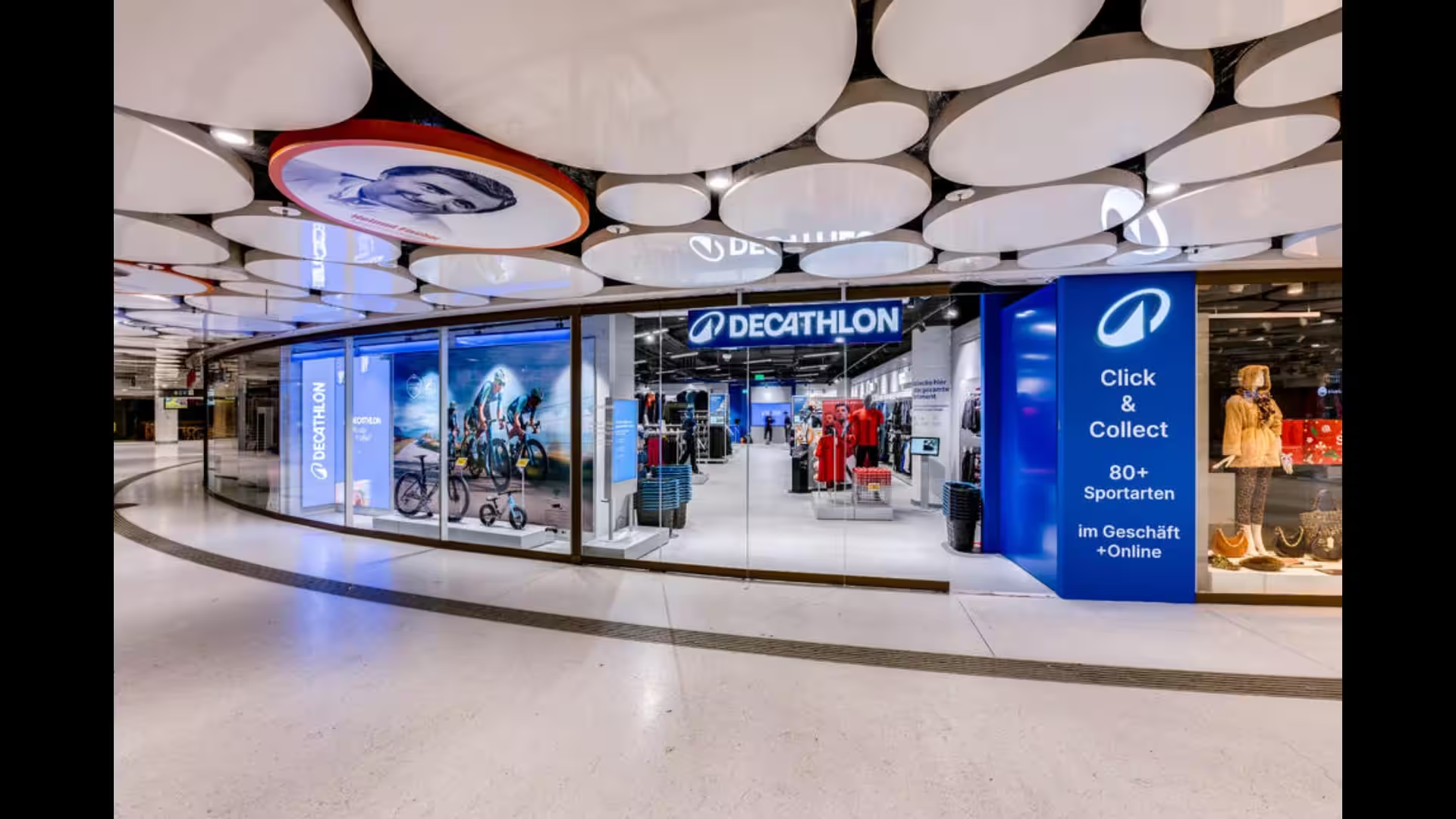
Sankar Chatterjee: The future is omnichannel. Our stores remain our biggest experience centres, and we continue to expand them. We currently operate 132 stores and expect to reach around 200 by 2030. Alongside that, we've expanded into marketplaces, quick commerce and institutional partnerships.
Quick commerce has exceeded our expectations. Customers increasingly expect convenience, especially for products such as swimming accessories, shuttlecocks and cricket balls. The response has validated our decision to build that capability. Ultimately, consumers don't think in channels anymore. They simply expect Decathlon to be available wherever they choose to shop.
Sankar Chatterjee: Our approach remains consistent. We believe growth and profitability go together. We're continuing to invest—in flagship stores, manufacturing capabilities and customer experience—because we believe India's sporting culture still has tremendous room to grow. Fifteen years ago, around 5% of Indians actively played sports. Today, that number is about 12%. That tells us the opportunity is still expanding.
PG: As CEO, what is the biggest challenge you're solving today?
Sankar Chatterjee: Maintaining our value proposition. Customers trust Decathlon because we offer technically strong products at accessible prices. That means building resilient supply chains, increasing local manufacturing and ensuring availability, even as global conditions become more uncertain. Our focus is to keep delivering value without compromising on quality.
PG: The first 50 years were about making sport accessible. What will define the next 50?
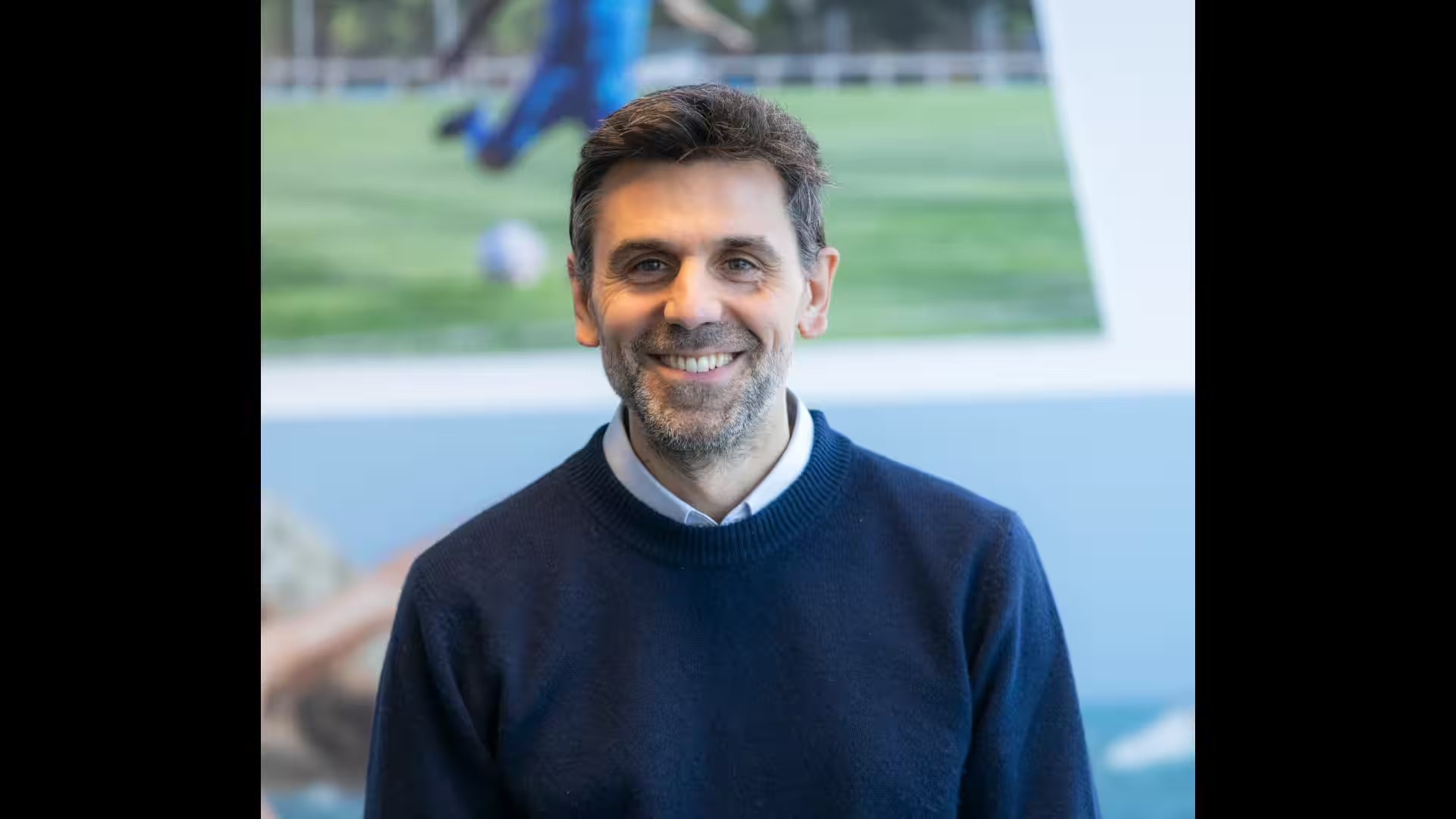
Javier López: The first 50 years were about democratising sport. The next 50 years are about helping people live healthier and happier lives through movement. We don't simply want to be remembered as a retailer. We want to become a lifelong partner in people's wellbeing journeys while continuing to bring communities together through sport.

Source link


Comments
All Comments
By commenting, you agree to the Prohibited Content Policy
PostBy commenting, you agree to the Prohibited Content Policy
PostFind this Comment Offensive?
Choose your reason below and click on the submit button. This will alert our moderators to take actions