

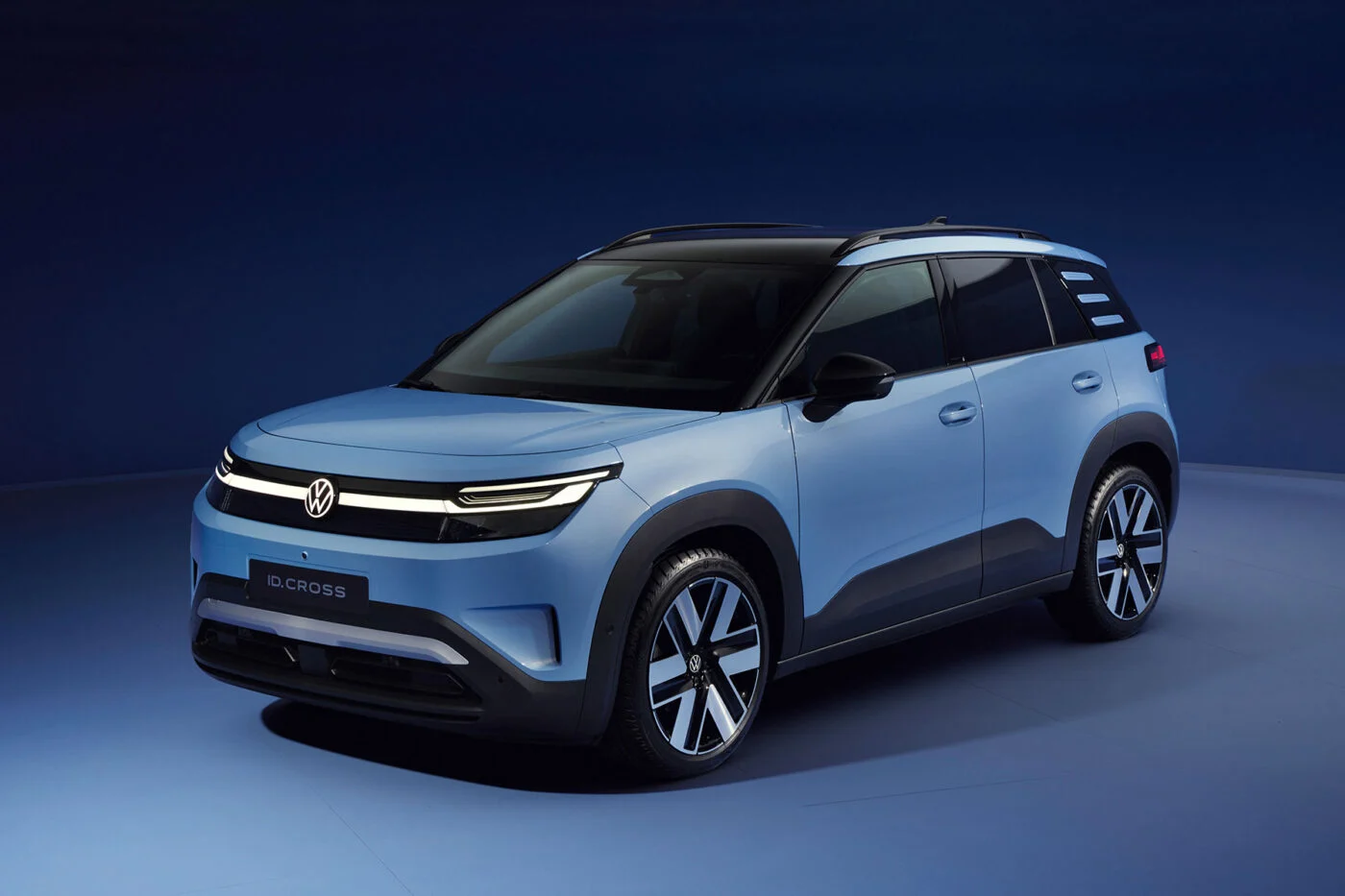
ID. Cross to become Volkswagen’s electric SUV entry model
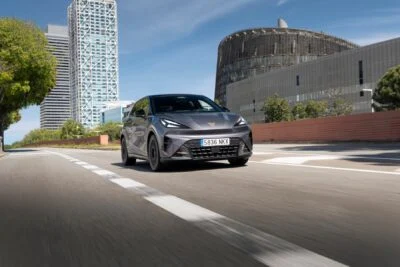
Since spring, Volkswagen, Škoda and Cupra have gradually unveiled their new electric compact models. While all four vehicles share the same technical foundation, each targets a different customer group. Within the line-up, the VW ID. Cross takes on the role of the SUV variant alongside the new ID. Polo.
Volkswagen positions the ID. Cross as an electric alternative to the T-Cross, targeting buyers who want the manoeuvrability of a city car combined with greater practicality and interior space. With the model, the manufacturer is strengthening its presence in the electric small-car and compact SUV segments. The ID. Cross is scheduled to launch this autumn, with prices starting at €28,000.
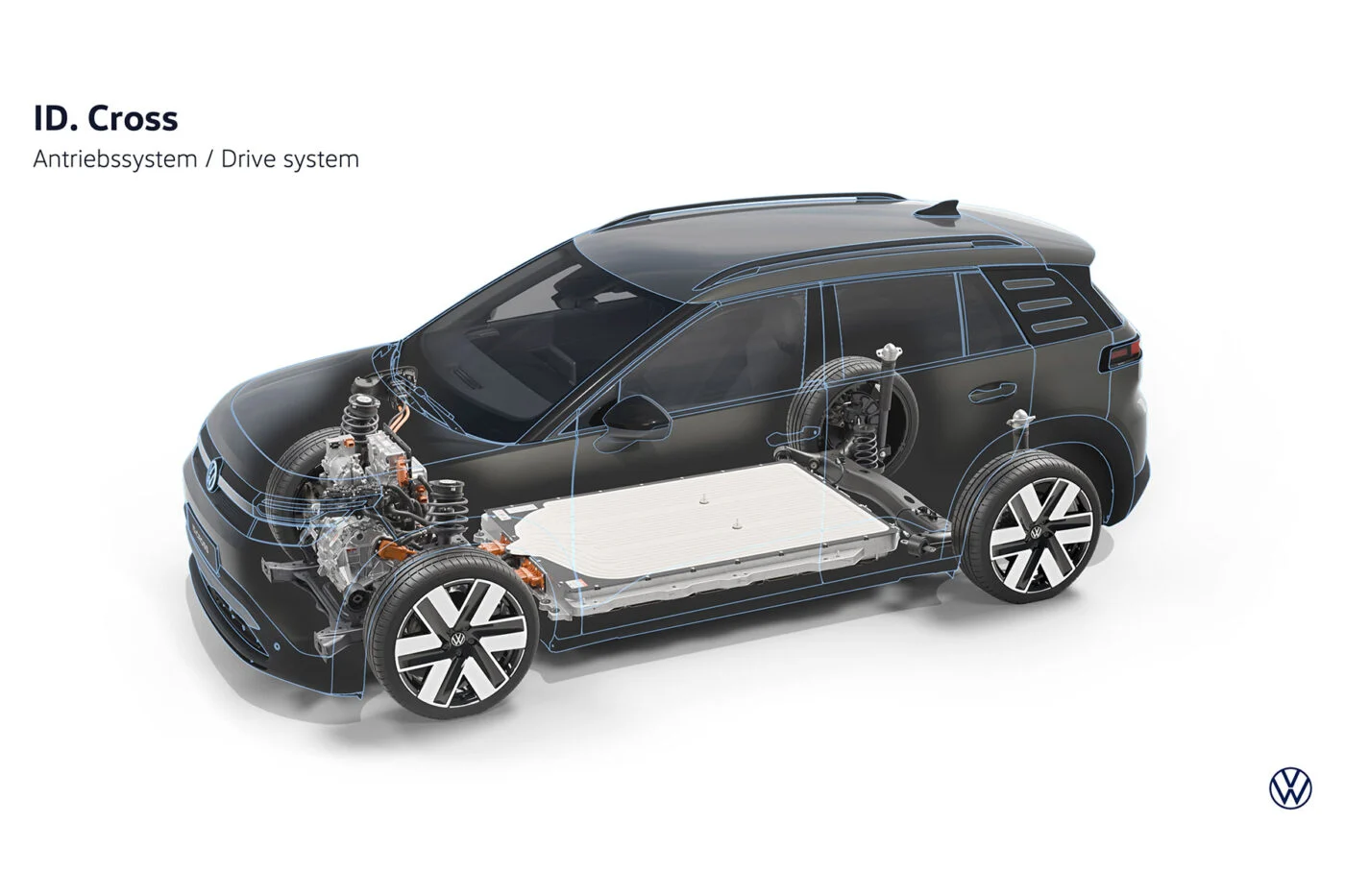
At the entry price of €28,000, customers receive the ID. Cross Trend, which combines an 85 kW electric motor with the smaller 37 kWh (net) battery. The powertrain is already familiar from Volkswagen Group’s new MEB+ platform.
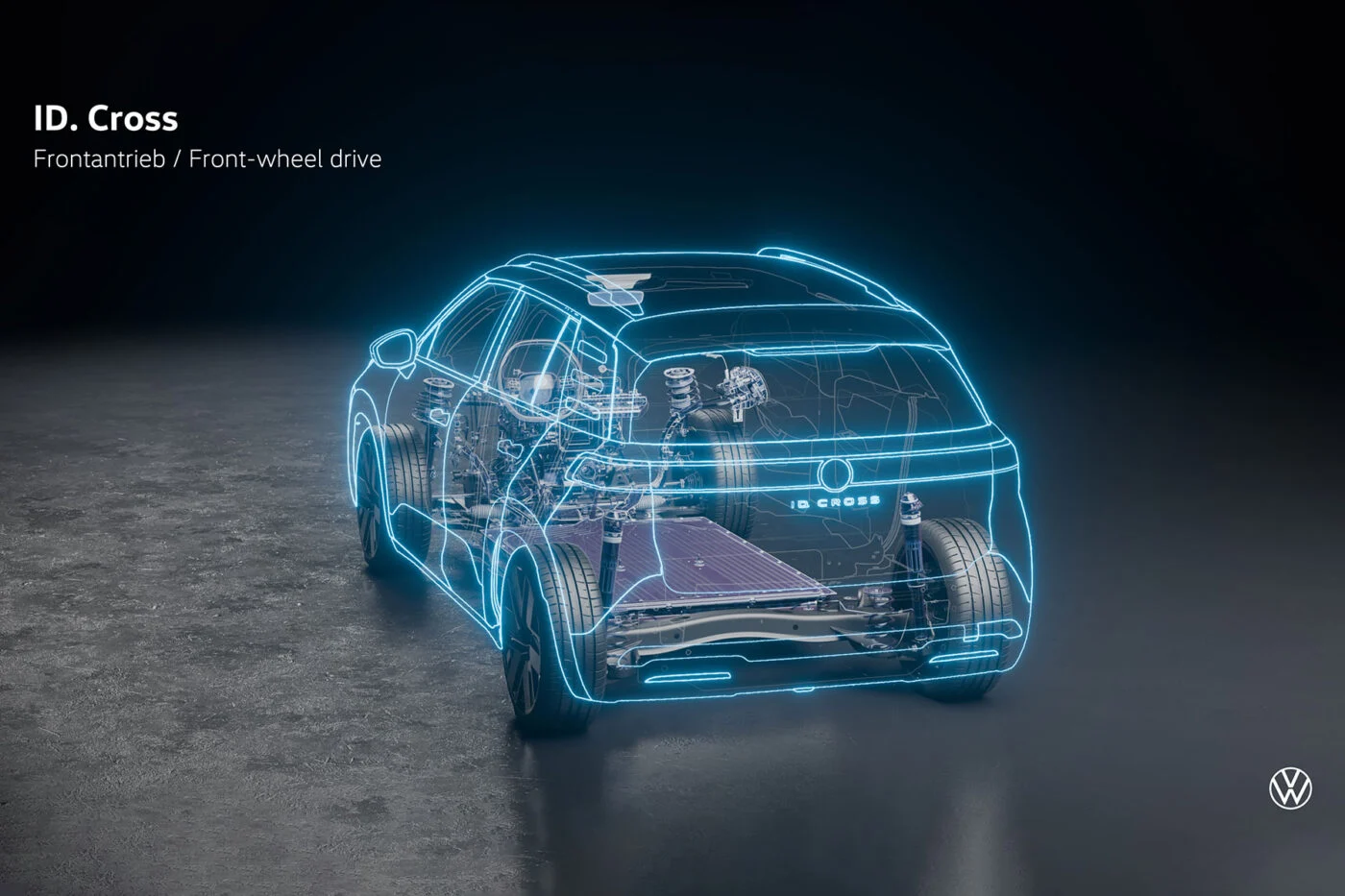
Like the VW ID. Polo, Škoda Epiq and Cupra Raval, the ID. Cross is based on the updated MEB+ architecture and features front-wheel drive. However, unlike its sister models, which are available with up to four power outputs, the ID. Cross will be offered with three drivetrain options: 85 kW, 99 kW and 155 kW. Customers can choose between two battery sizes with net capacities of 37 kWh and 52 kWh.
Spotlight on the Group’s Unified Cell
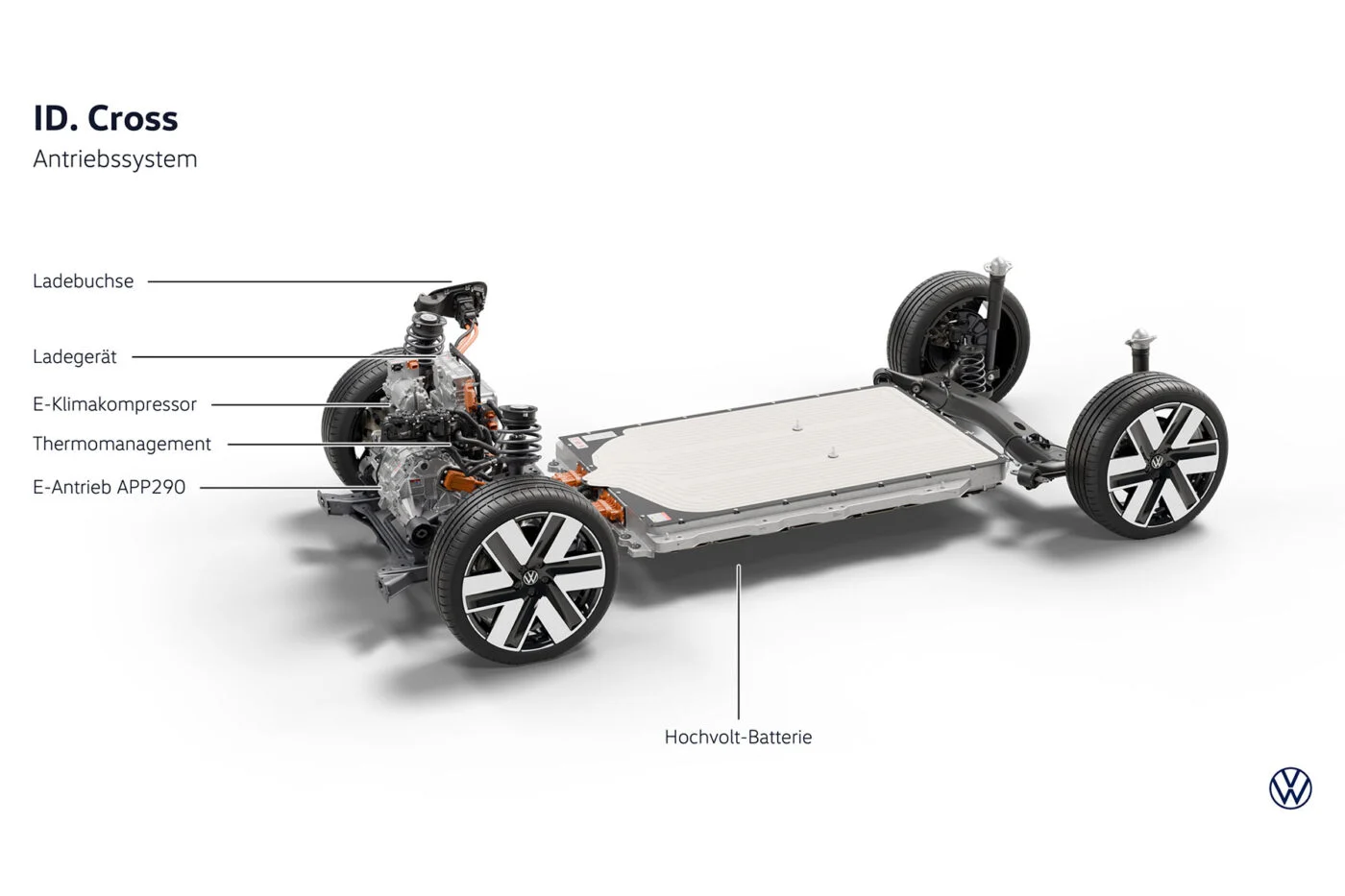
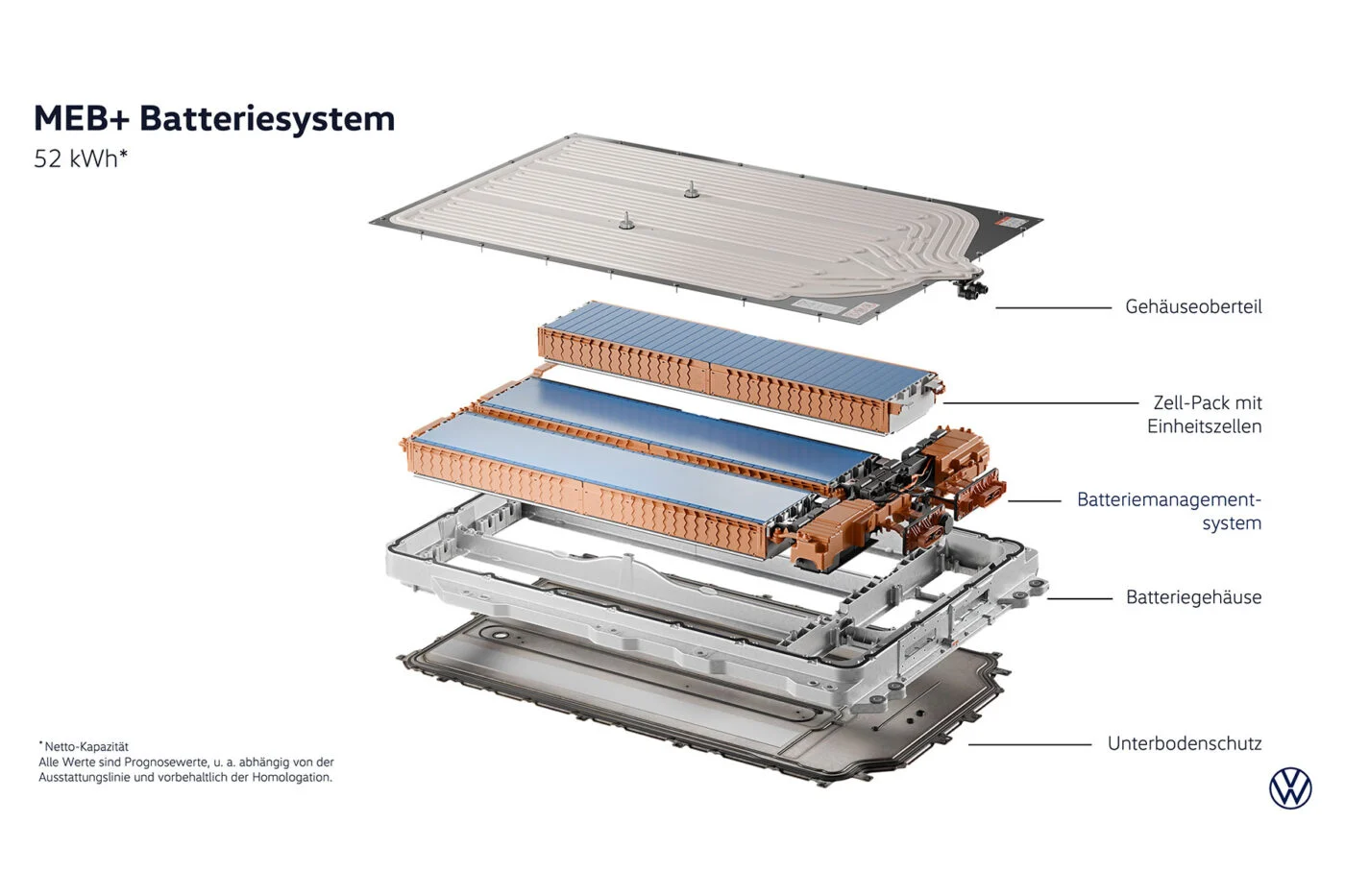
The new electric compact-car family incorporates several technologies Volkswagen has introduced in recent years. For the first time in the Urban Car Family, the Group is using its newly developed Unified Cell, which can accommodate different battery chemistries. Volkswagen integrates these cells in a cell-to-pack architecture, making the battery a structural part of the vehicle’s underbody.
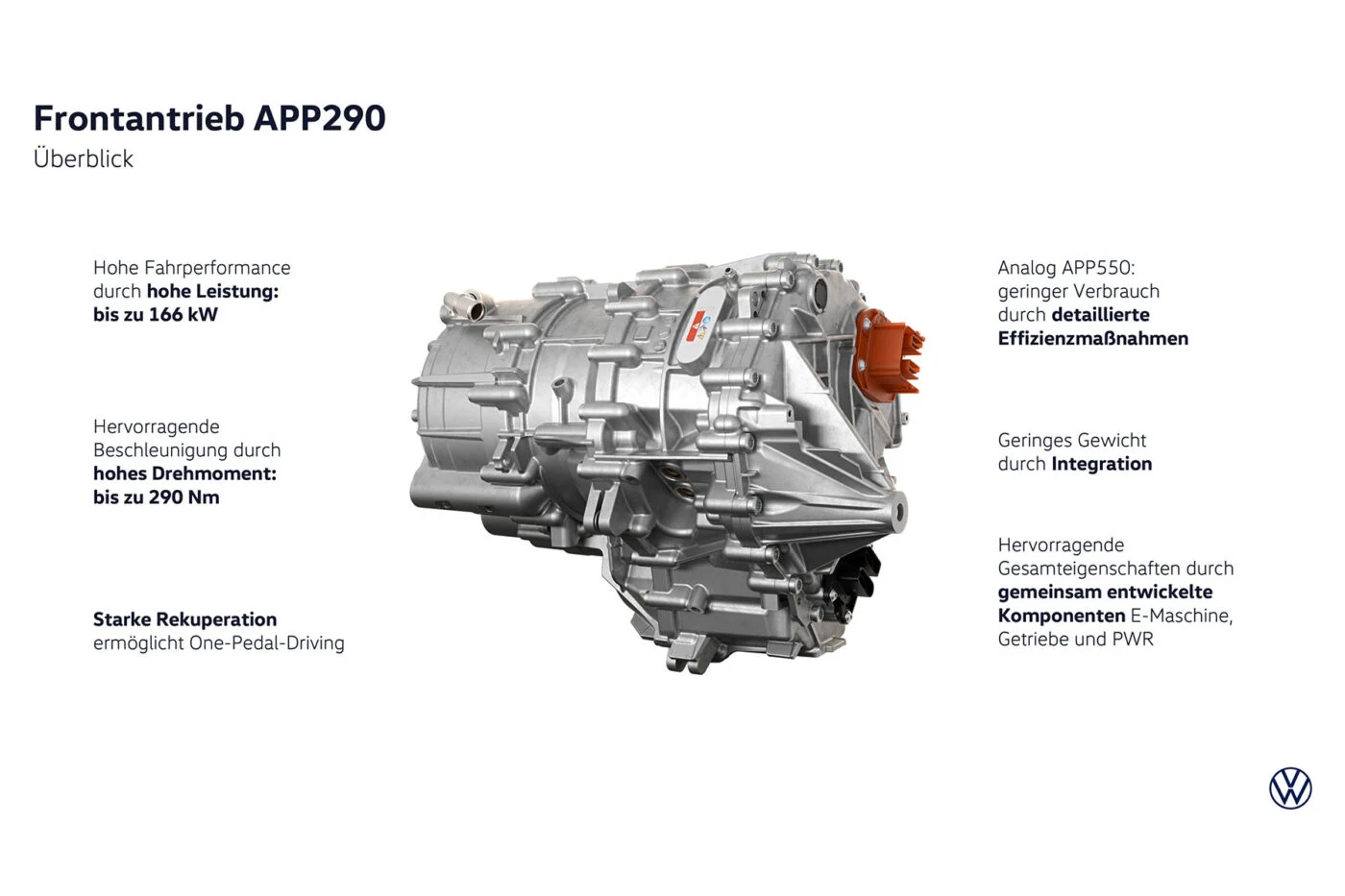
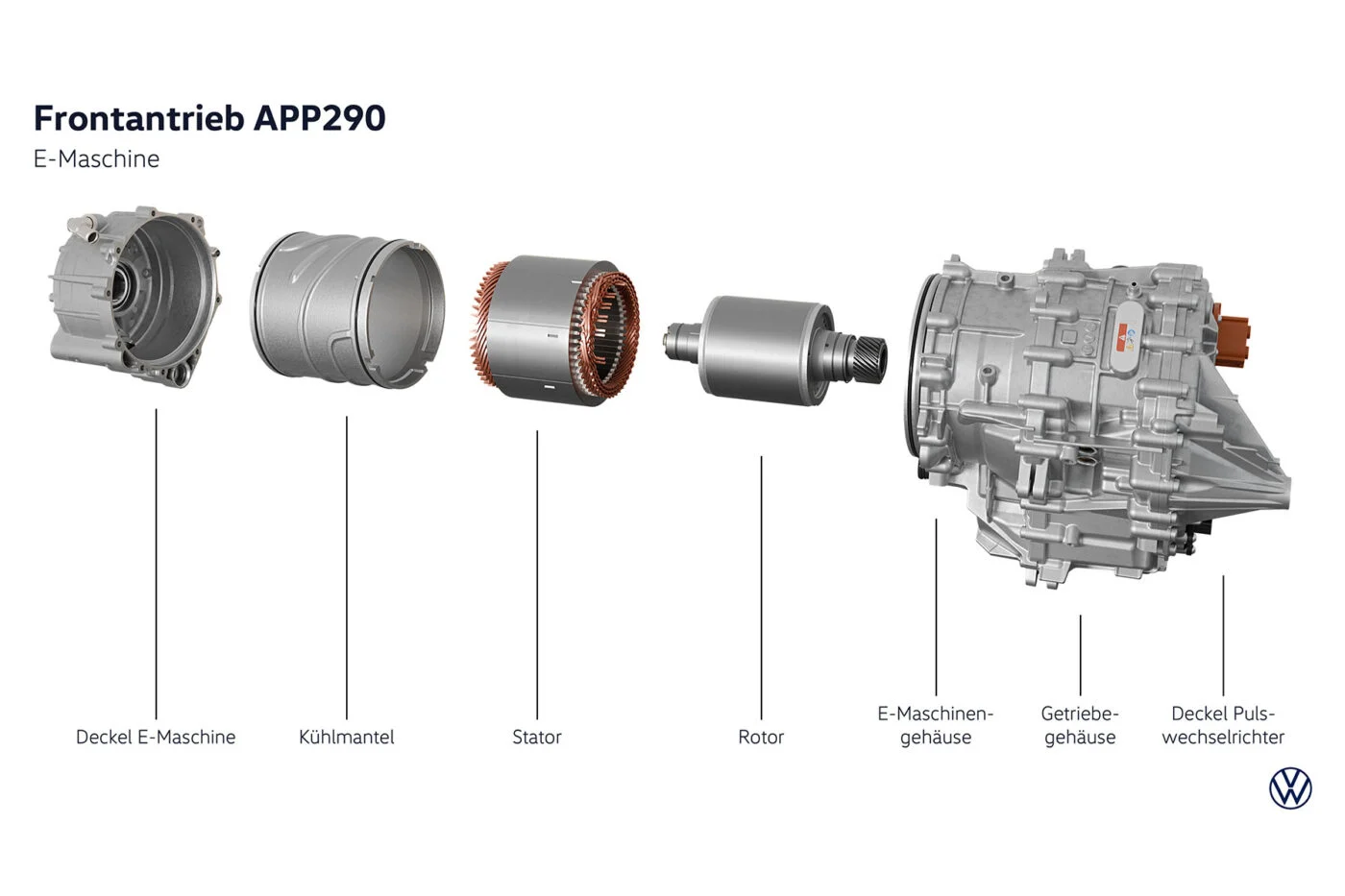
The drivetrain uses the APP290 electric motor, which Volkswagen developed specifically for front-wheel-drive applications. As the name suggests, the motor delivers 290 Nm of torque. Another new component is the inverter, which Volkswagen refers to as the ‘pulse inverter.’ The Group also developed this unit in-house and now manufactures it internally.
A closer look at the technical platform reveals the battery and charging differences within the ID. Cross range. The standard 37 kWh (net) LFP battery supports DC charging at up to 90 kW and can be charged from 10 to 80 per cent in 27 minutes, matching the figures of the ID. Polo. AC charging is possible at up to 11 kW, allowing a full charge in less than four hours. Volkswagen quotes a preliminary range of up to 316 kilometres.
The 99 kW motor is also paired with the 37 kWh battery and offers the same charging performance, while providing improved driving dynamics. The 155 kW motor is exclusively available with the larger 52 kWh (net) NMC battery. Unlike the ID. Polo, the ID. Cross will not be offered with the 166 kW GTI drivetrain.
With the larger battery, the range increases to up to 436 kilometres. DC charging power rises to 105 kW, while the charging time from 10 to 80 per cent state of charge falls slightly to 24 minutes.
| ID. Cross | |
|---|---|
| Drive | MEB+, front-wheel drive |
| Battery | 37 kWh/ 52 kWh net |
| Power | 85 kW and 99 kW / 155 kW |
| DC charging power | 90 kW and 105 kW |
| AC charging power | 11 kW |
| Top speed | 150 km/h / 160 km/h |
| Curb weight | from 1,539 kg (37 kWh), from 1,548 kg (52 kWh) |
| Range | 316 km / 436 km |
Volkswagen markets the entry-level model as the ID. Cross Trend, while the two higher-output variants are available in the Life and Style trim levels. More on the equipment differences later. First, a look at pricing and positioning.
While the ID. Polo starts at €24,990 in entry-level specification, Volkswagen quotes a ‘starting price of around €28,000’ for the ID. Cross. The SUV therefore carries a premium of roughly €3,000 over the hatchback, suggesting a likely starting price of €27,990. Beyond this entry point, Volkswagen has not yet released pricing details for the remaining variants.
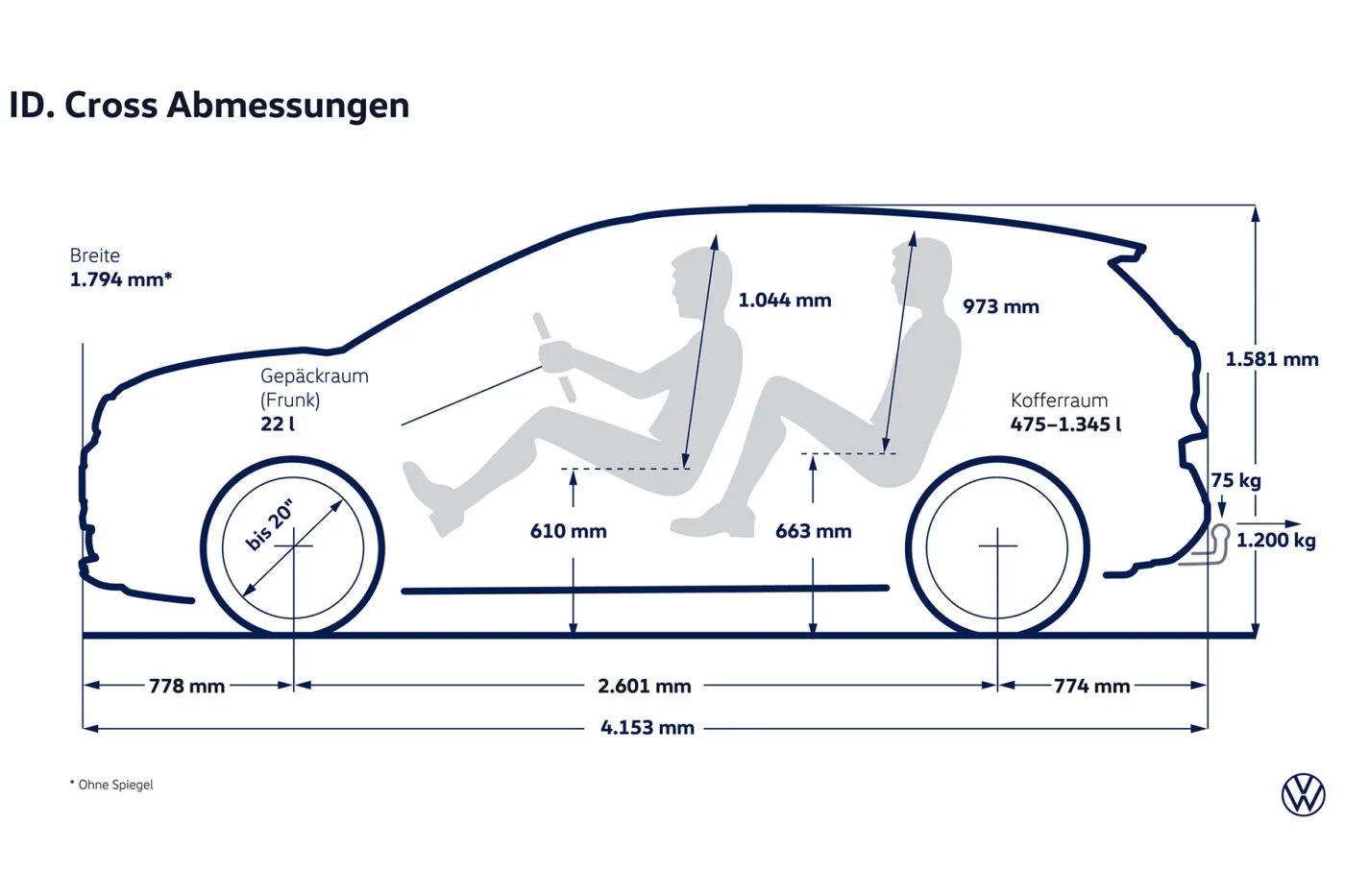
One thing is clear: within Volkswagen Group’s electric portfolio, the ID. Cross takes on the role of a practical five-seater with an elevated seating position and a strong focus on interior space. Volkswagen quotes dimensions of 4.15 metres in length, 1.79 metres in width and 1.58 metres in height, combined with a wheelbase of 2.60 metres.
Emphasising its SUV character, the model offers 14 centimetres of ground clearance and rides on wheels ranging from 17 to 20 inches. The boot provides 475 litres of luggage capacity, exceeding that of the Golf. Despite its front-wheel-drive layout, Volkswagen has also integrated a 22-litre front storage compartment under the bonnet, offering space for items such as charging cables.
More spacious than the T-Cross
Volkswagen highlights the packaging advantages of the MEB+ platform compared with the combustion-powered T-Cross. The ID. Cross is not only slightly larger on the outside, but also offers more interior space than the T-Cross, which is based on the MQB architecture.
“On the one hand, there is a 38 mm longer wheelbase; on the other, the MEB+’s conceptual advantages over the MQB provide the driver and up to four passengers with additional centimetres in length, height, and width,” Volkswagen states. The ID. Cross also offers a larger luggage compartment, with 475 litres of boot space compared with 455 litres in the T-Cross.
Volkswagen has deliberately avoided polarising design elements with the ID. Cross in order to appeal to a broad customer base. The model adopts the brand’s new ‘Pure Positive’ design language, which Volkswagen describes as featuring ‘clear lines, balanced proportions, and a premium appearance.’ The result is a deliberately restrained design approach that aligns with the manufacturer’s long-standing philosophy.
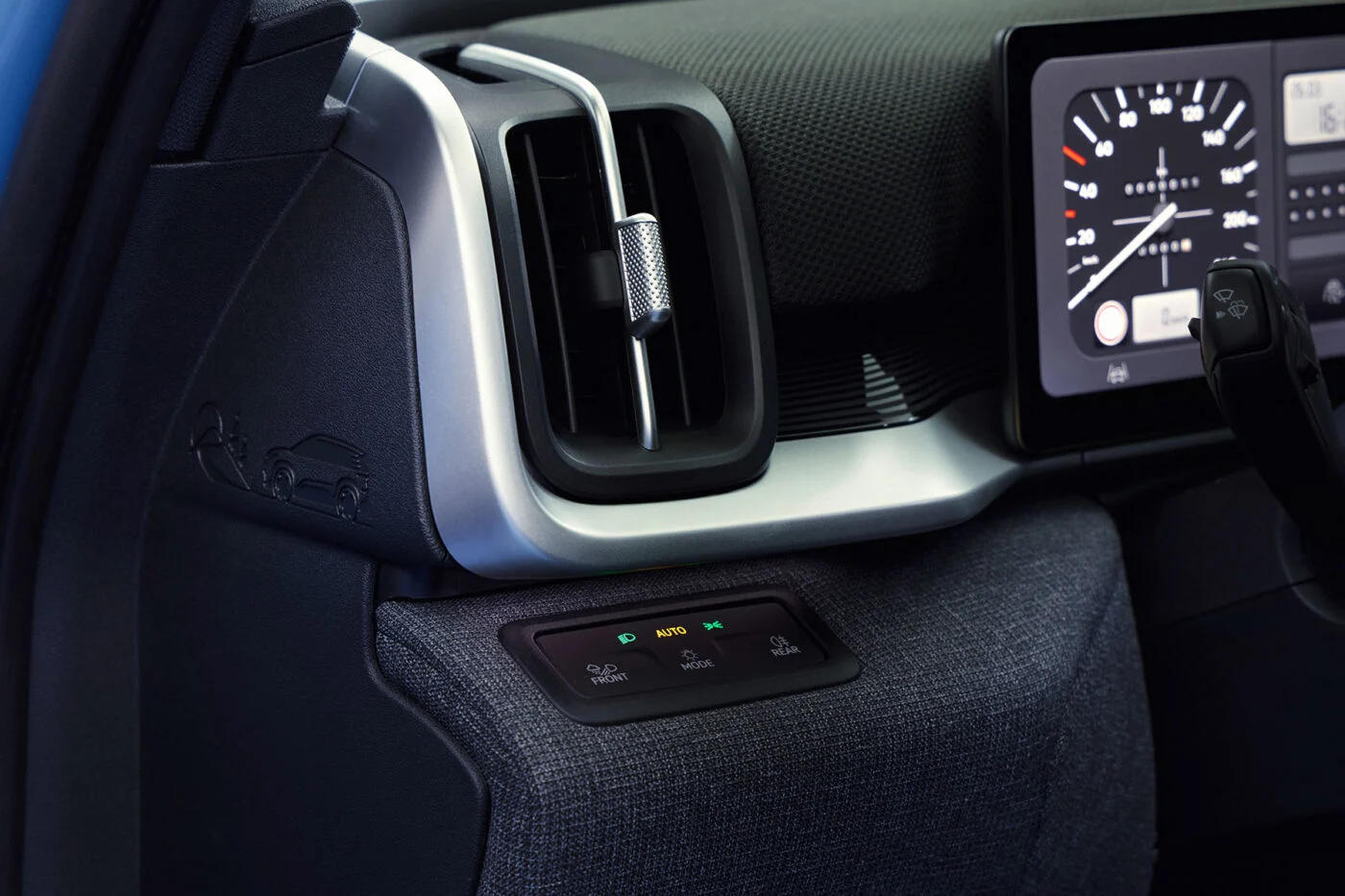
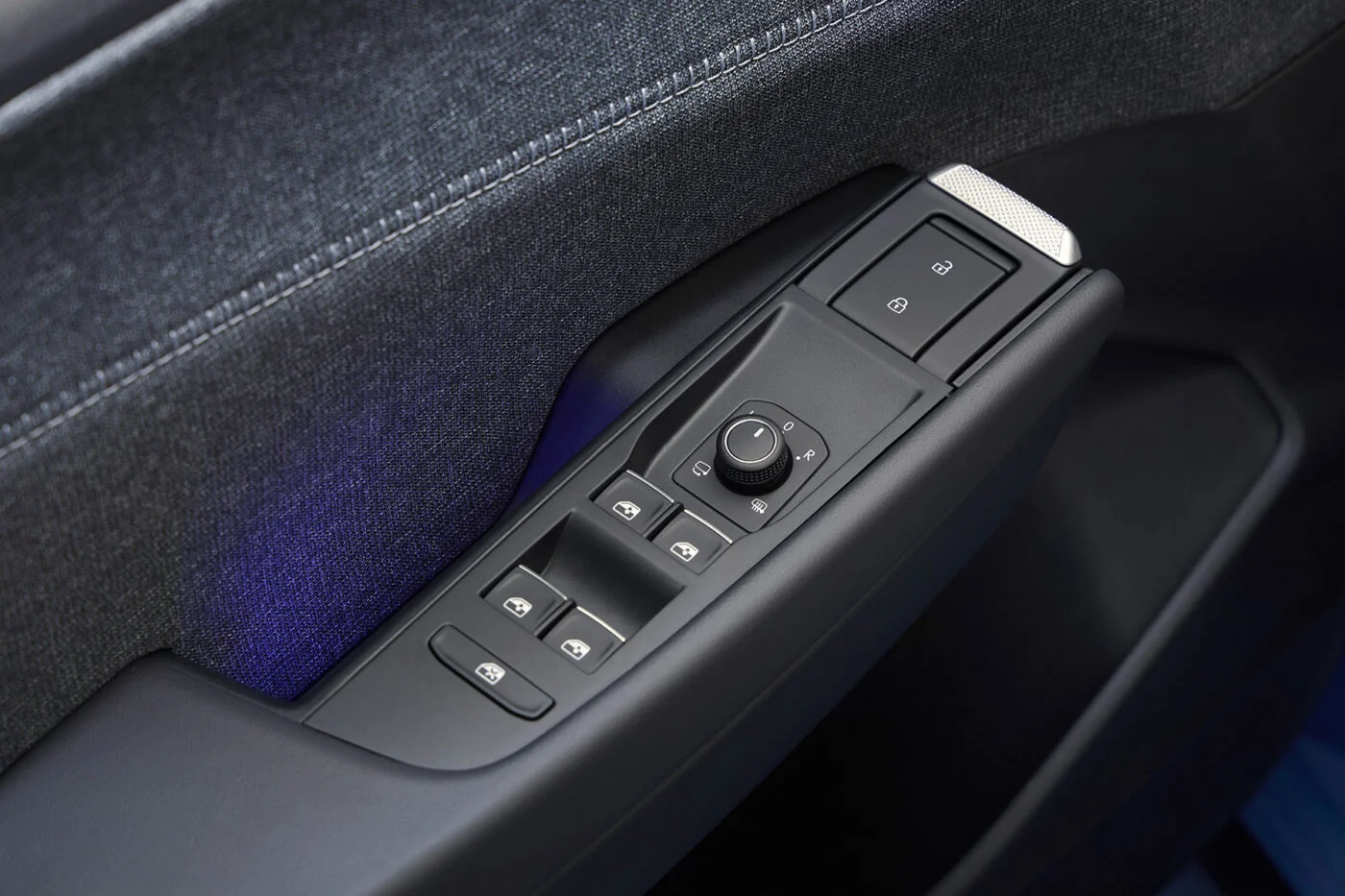
Inside, Volkswagen has addressed criticism of the first-generation MEB models by placing greater emphasis on material quality and perceived craftsmanship. The company has also removed touch-sensitive controls on the steering wheel and dispensed with touch sliders.
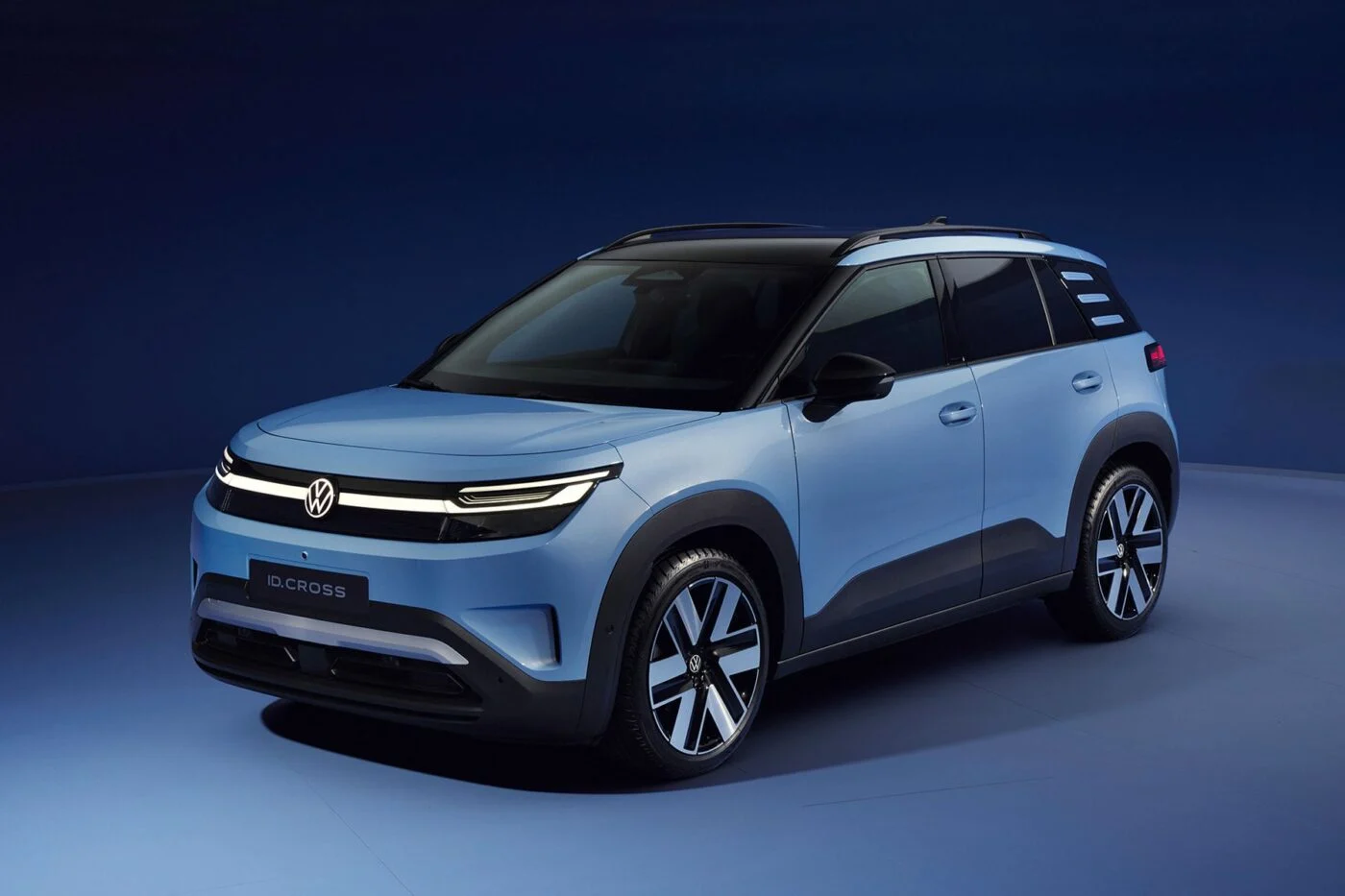
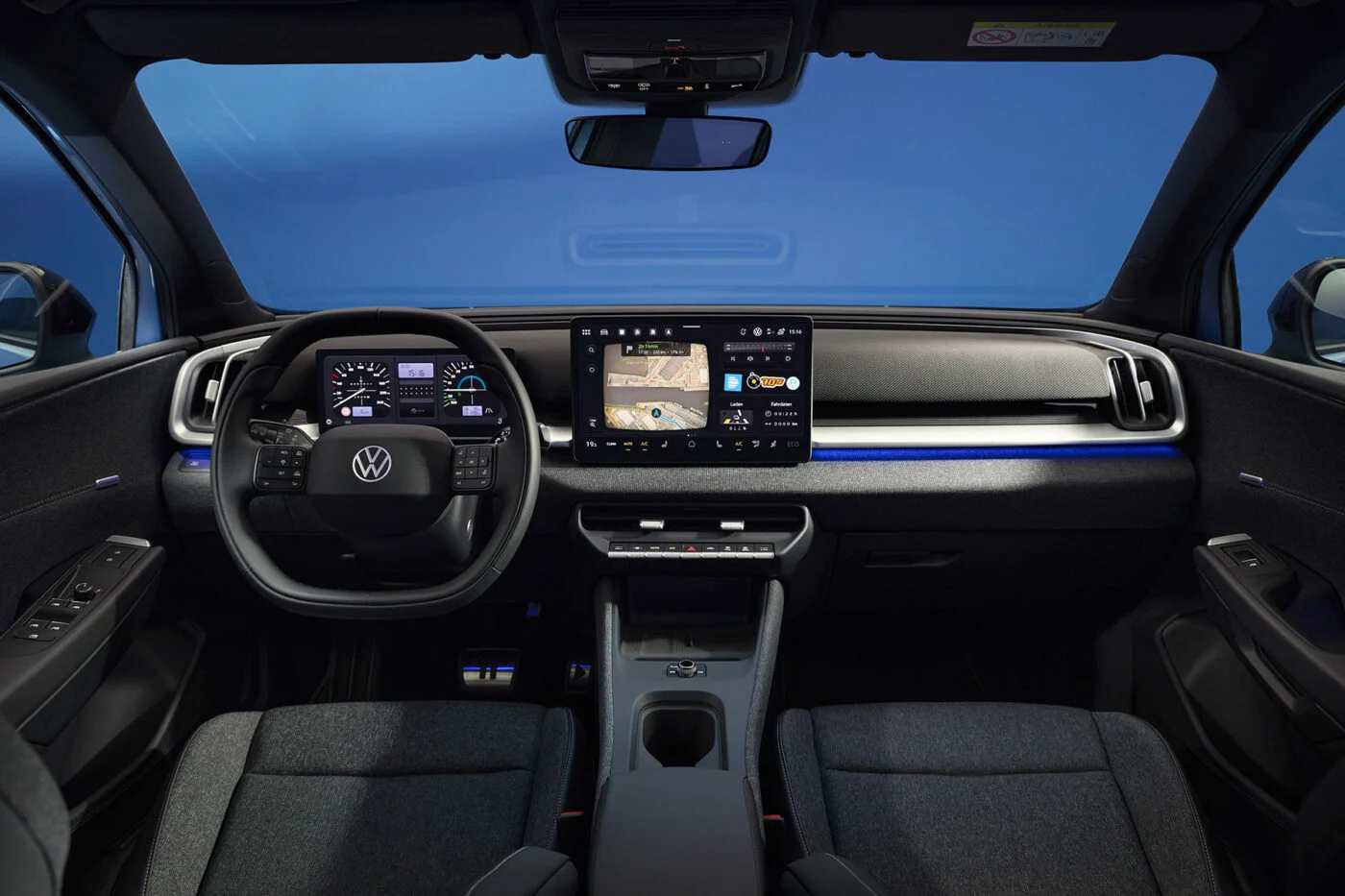
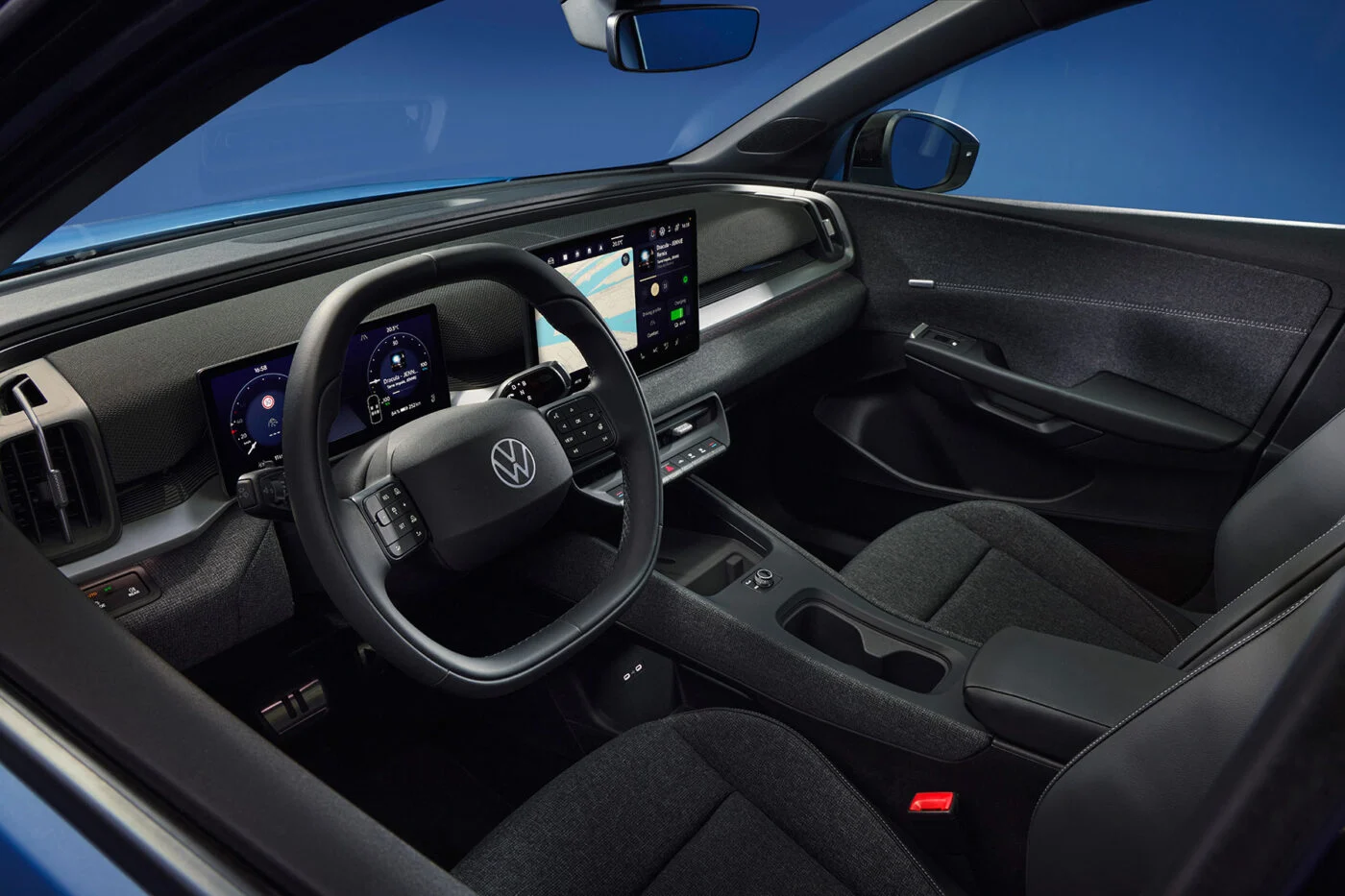
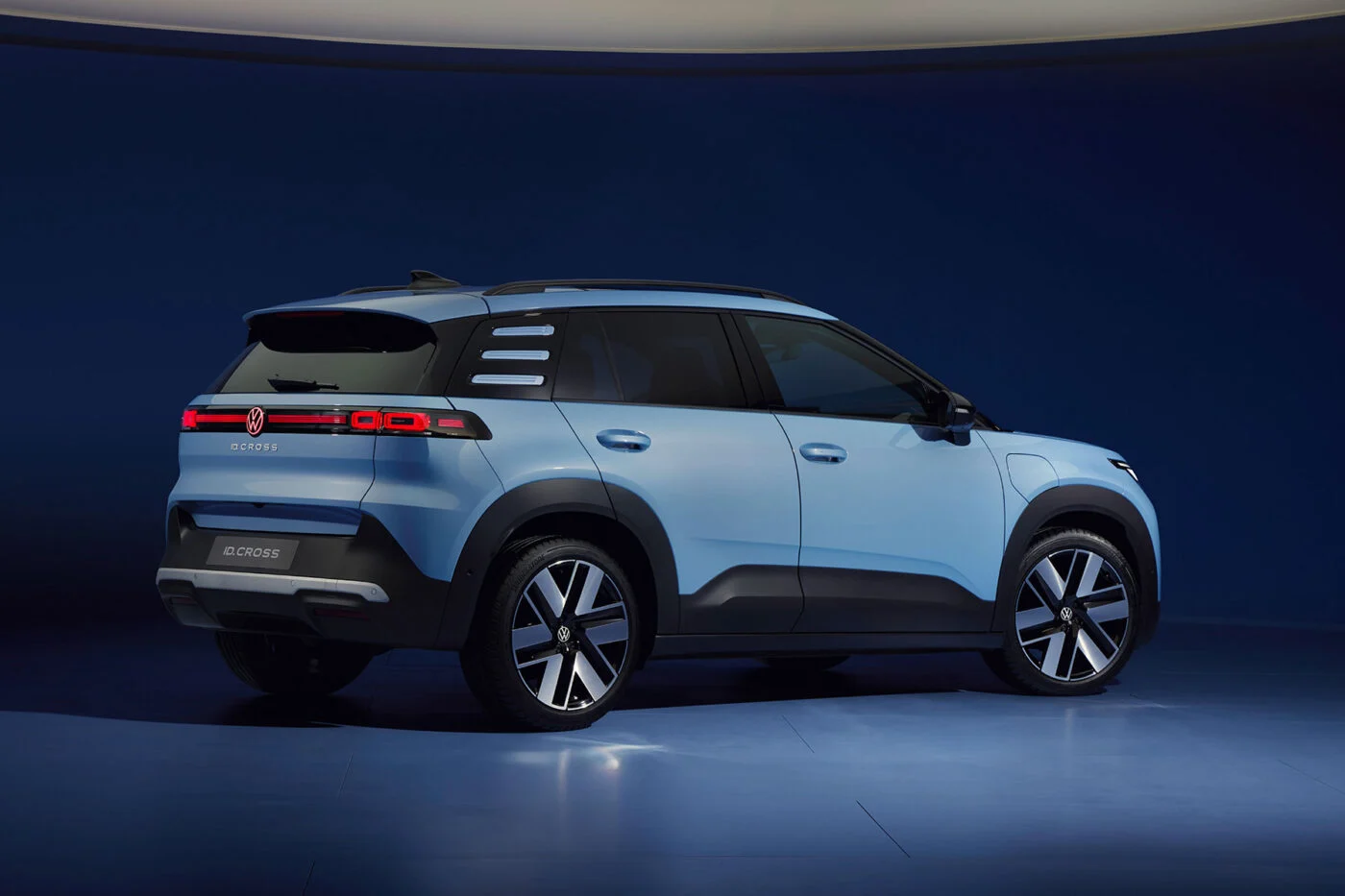
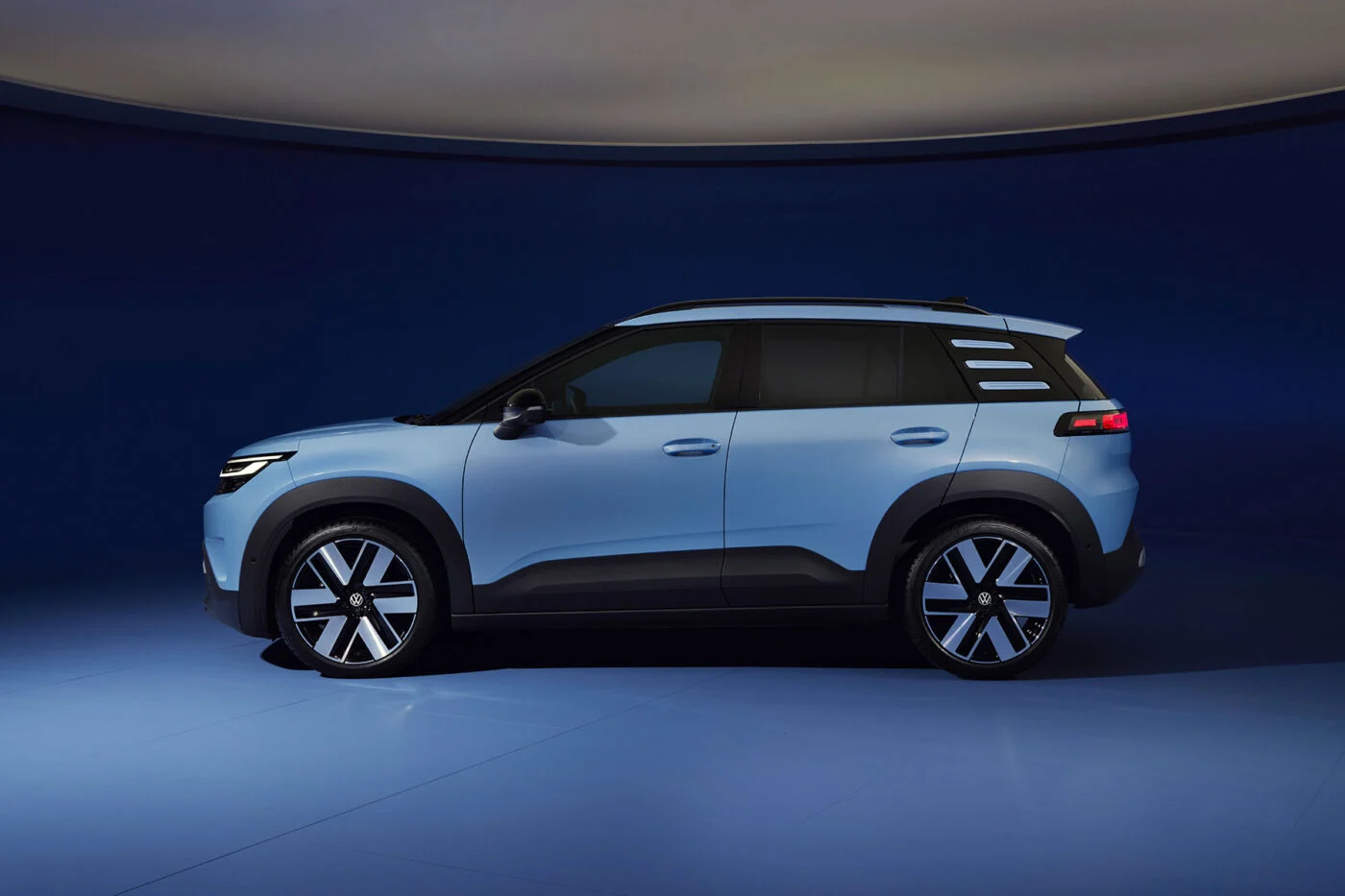
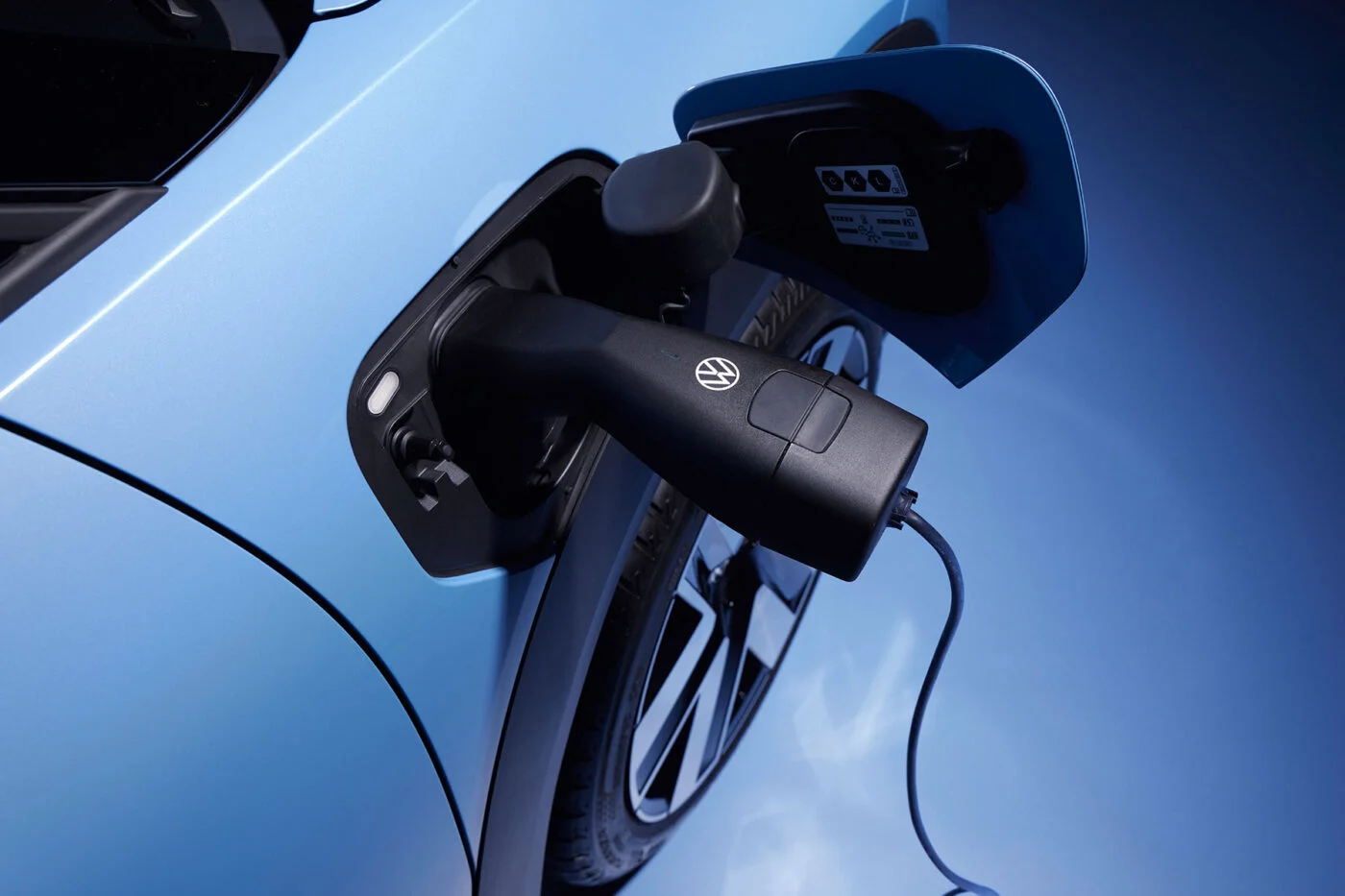
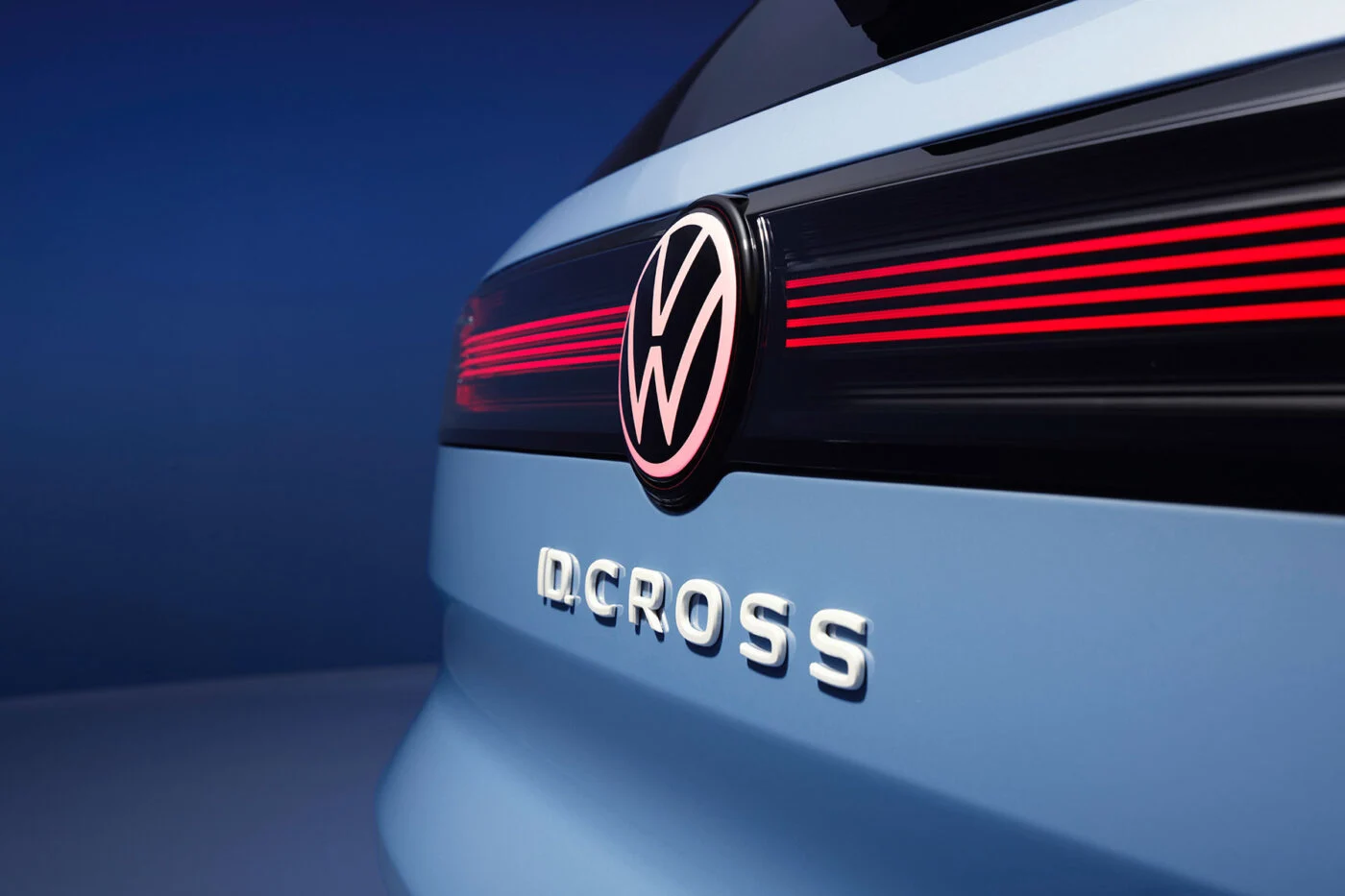
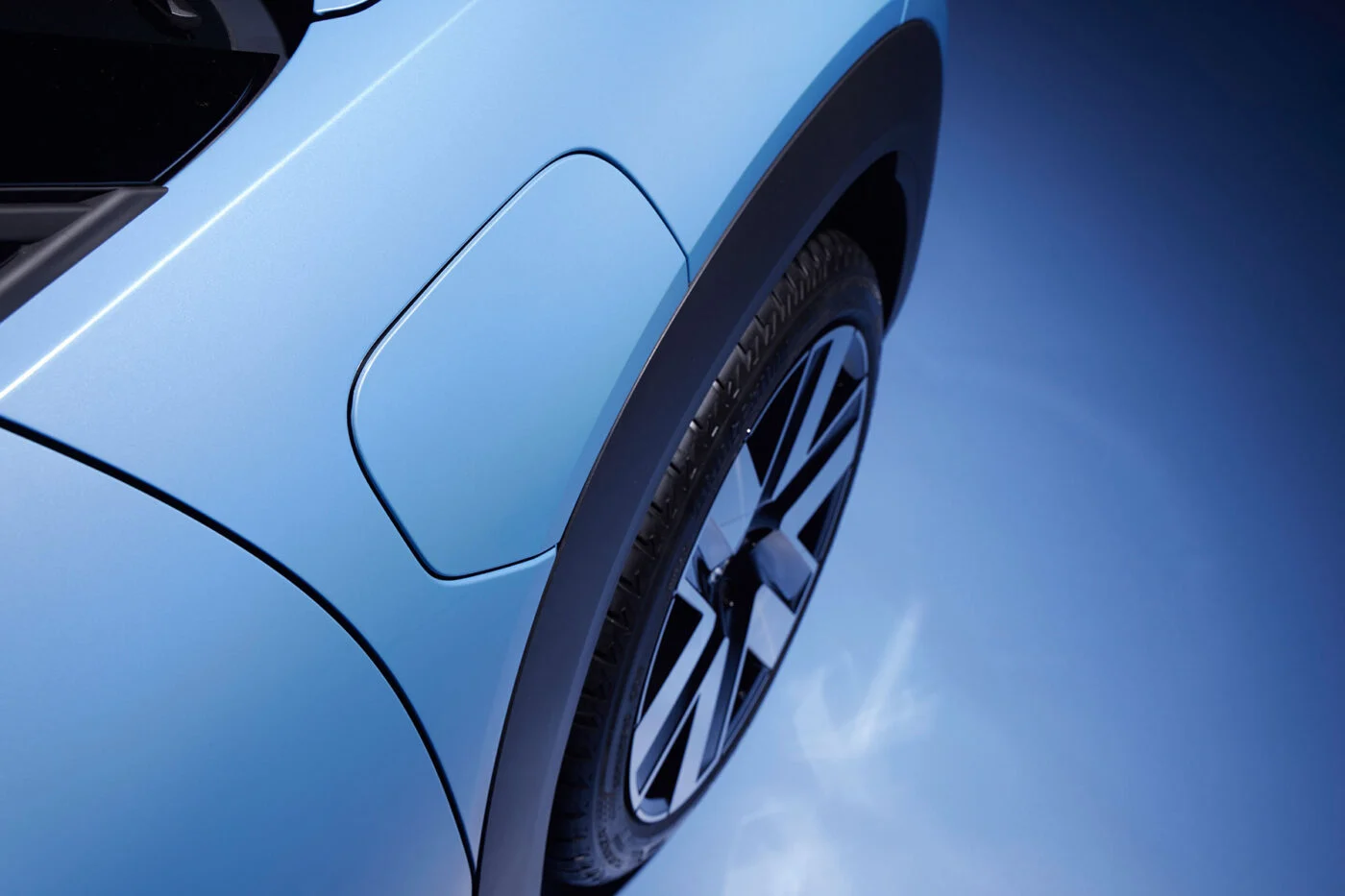
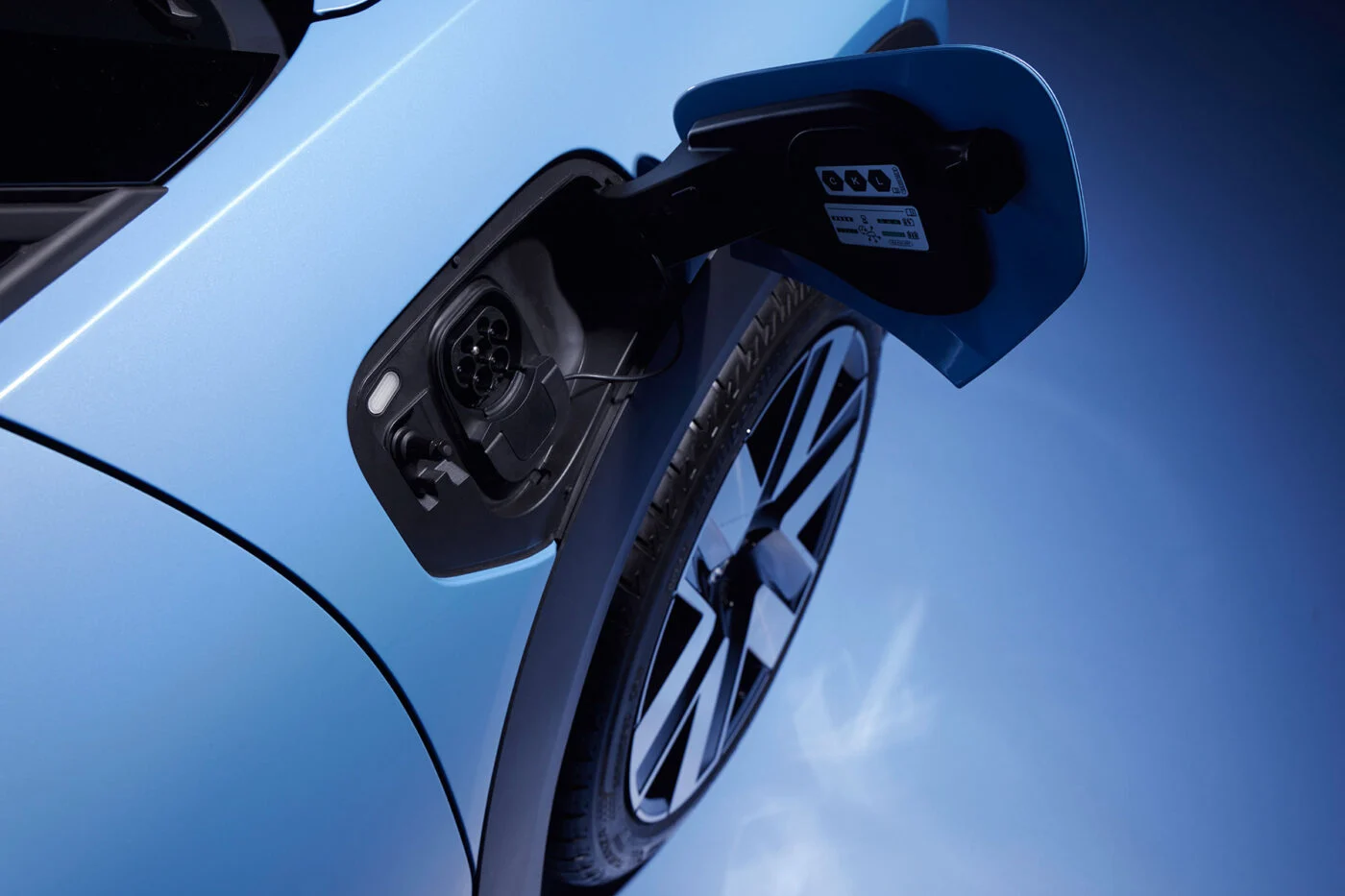
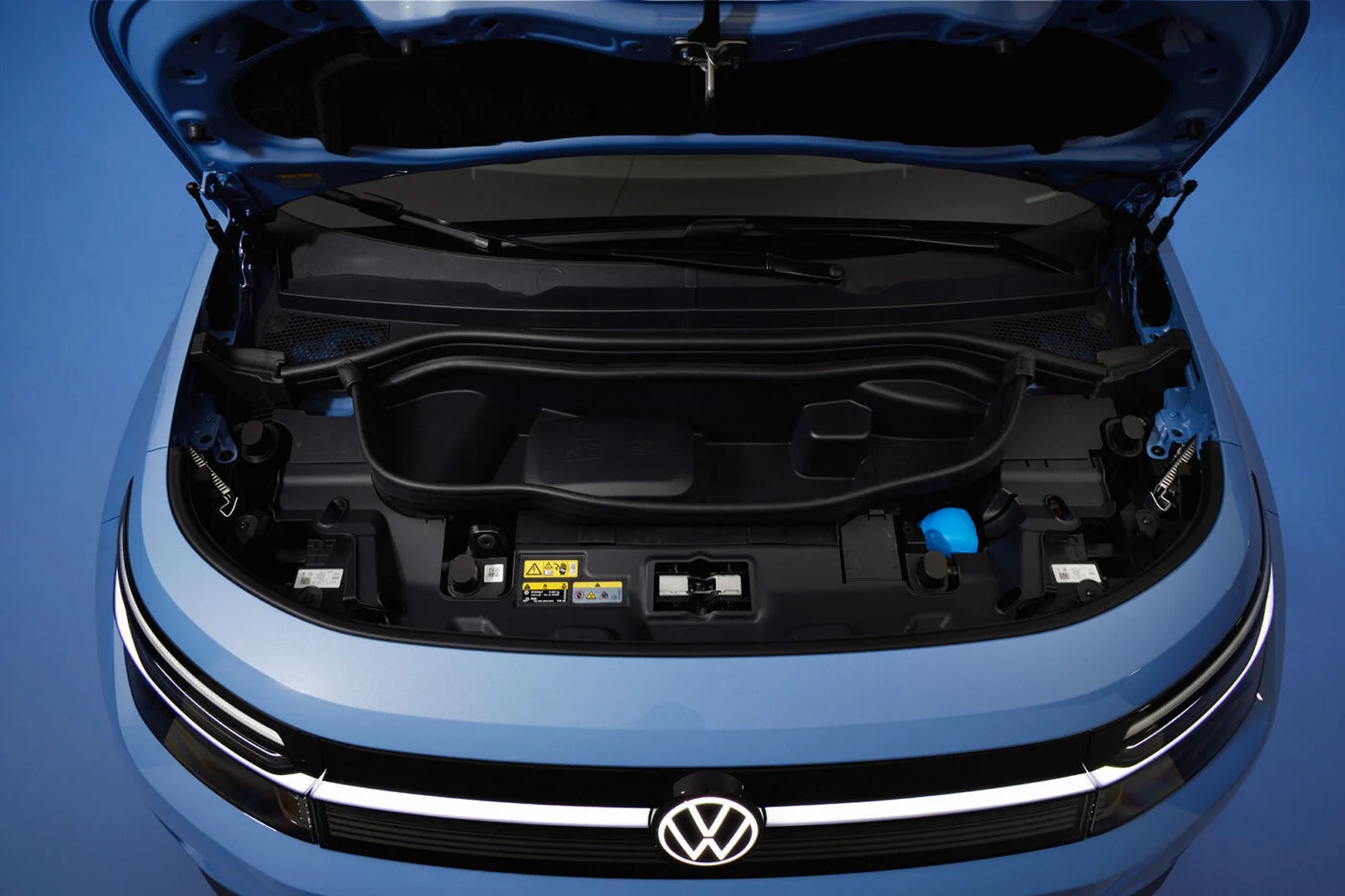
Returning to the ‘Pure Positive’ design language, Volkswagen describes the ID. Cross as featuring a ‘sympathetic and confident front end.’ The design is characterised by smooth surfaces and an absence of sharp edges, while the headlights merge into a full-width light strip with an illuminated VW logo at its centre.
Pronounced wheel arches give the compact SUV a broader visual stance. A shallow windscreen angle and gently sloping rear roofline add a degree of dynamism to the silhouette. Volkswagen also presents the design of the C-pillar as a tribute to both the original Golf and the VW Bus, introducing a subtle nostalgic element reminiscent of the approach Renault has taken with the Renault 5.
Additional optional features include a roof rail with a dynamic load capacity of 75 kg and the Vehicle-to-Load function (3.6 kW) for charging external devices. There is also a detachable tow bar with a 75 kg vertical load capacity. According to the Group, the new ID. Cross with a 52 kWh battery can tow trailers weighing up to 1,200 kg (on an 8% incline).
Equipment logic: trend, life, and style
As for equipment, Volkswagen will offer the ID. Cross in three trim levels: Trend, Life and Style. The entry-level Trend version comes with features including 17-inch wheels, automatic climate control and standard driver assistance systems.
However, it remains unclear whether the Trend version will be available from launch. Volkswagen has not offered the equivalent entry-level variant for the ID. Polo so far.
The next higher trim level, ‘Life,’ adds 18-inch alloy wheels, a two-zone automatic climate control system, assistance systems like adaptive cruise control (ACC), and a rear-view camera (“Rear View”) as standard. The ‘Style’ trim includes features such as LED matrix headlights with an illuminated LED light strip, 3D LED rear lights, and illuminated VW logos at the front and rear. It also comes with a keyless start and entry system.
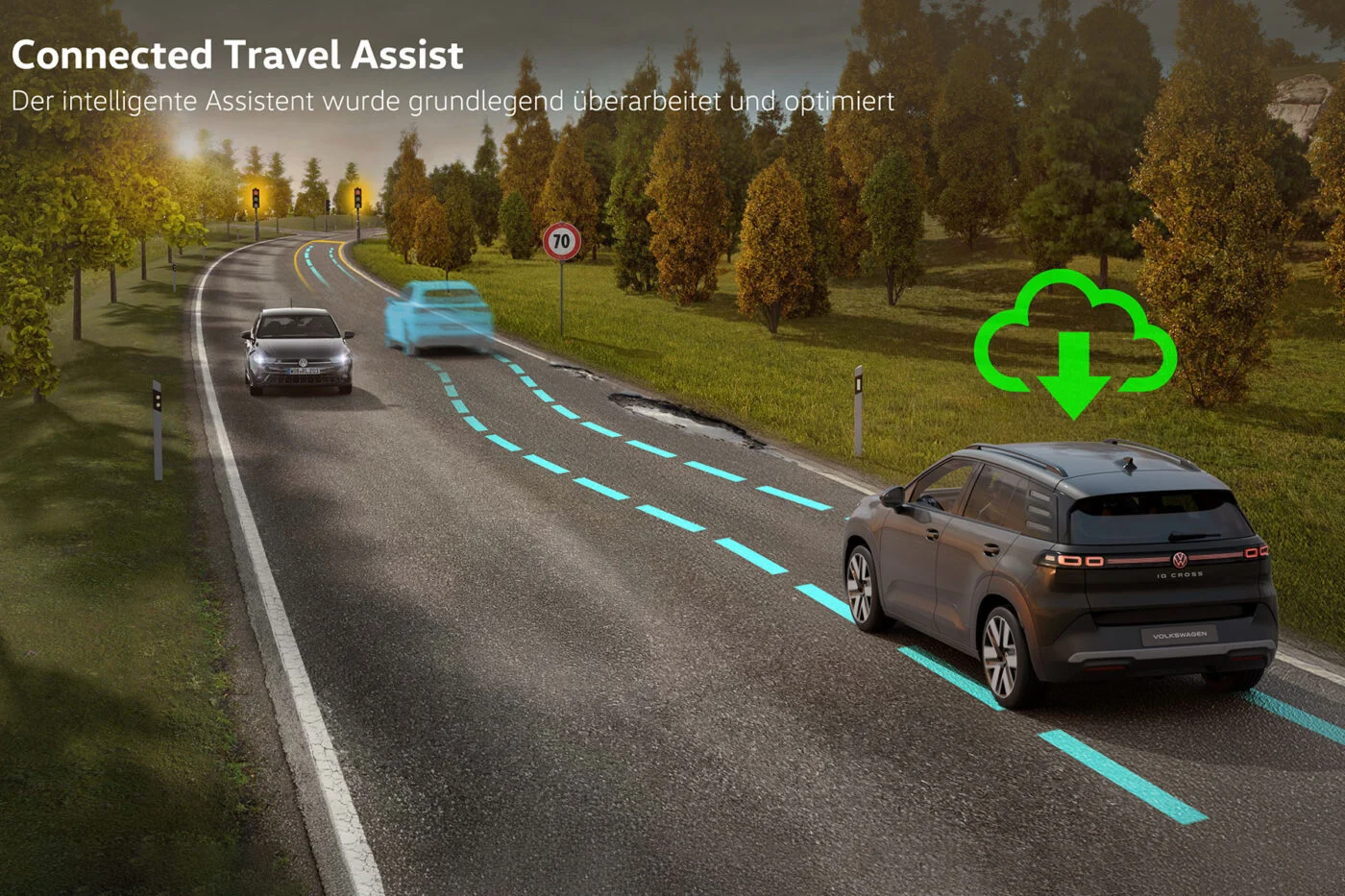
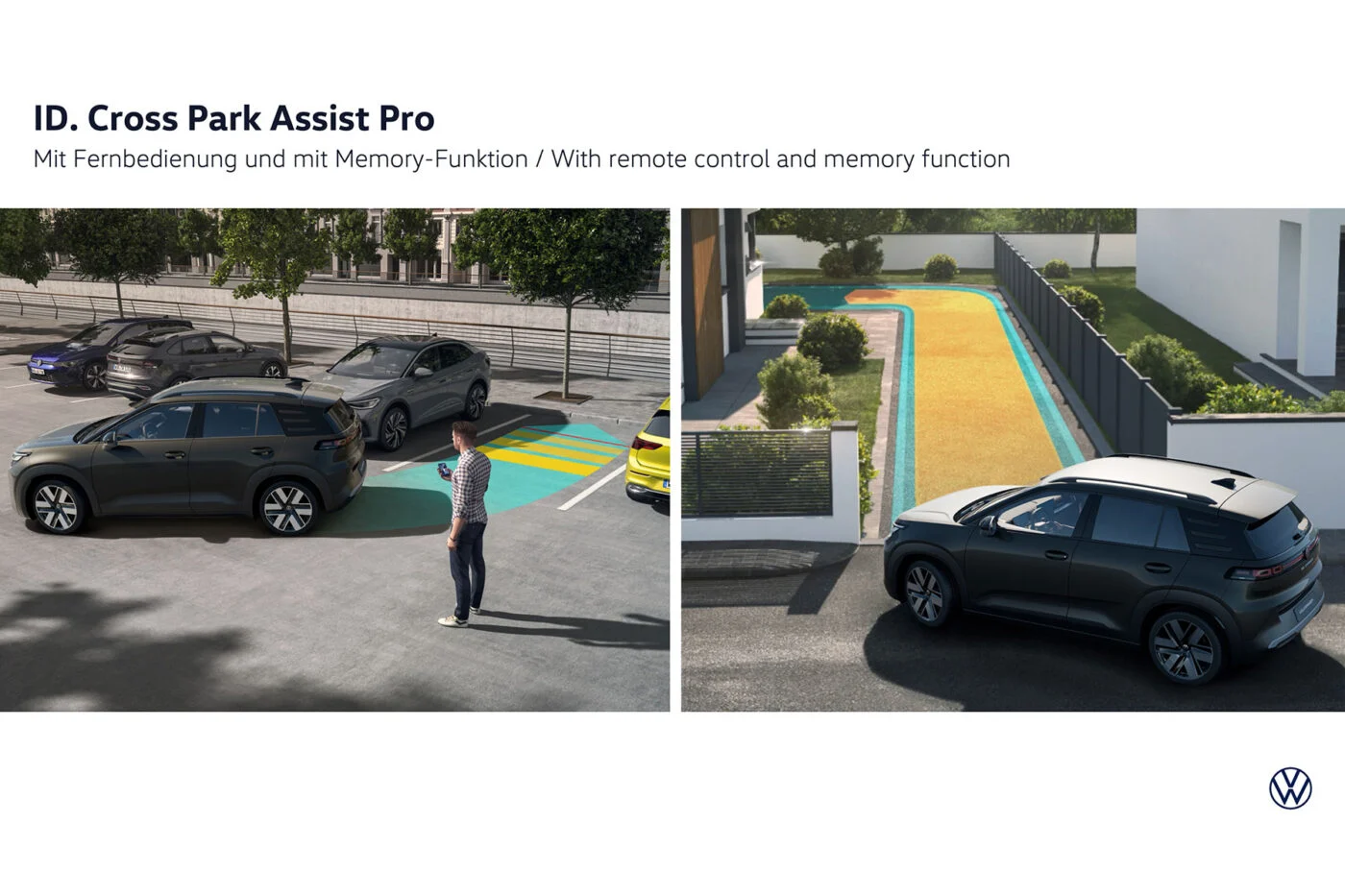
More broadly, the combination of the MEB+ platform and Volkswagen’s latest software enables a wide range of driver assistance systems, some included as standard and others offered as optional extras. The ID. Cross will also feature the next generation of Travel Assist.
Because the system incorporates various online data sources, Volkswagen refers to it as ‘Connected Travel Assist’ in the ID. Cross. The assisted longitudinal and lateral guidance system can now also react to traffic lights. If it detects a red signal, it automatically slows and stops the vehicle within the limits of the system. Another new feature is one-pedal driving.
Volkswagen will also offer a range of optional extras across all three trim levels. These include a Harman Kardon audio system with an output of 425 watts and ten speakers, a pneumatic massage function for the electrically adjustable front seats, and a panoramic glass roof measuring 74 by 90.5 centimetres. The manufacturer has not yet disclosed pricing for these options.
One final detail concerns the trim and powertrain combinations. Customers choosing the entry-level drivetrain with the 37 kWh battery and 85 kW motor can only order the ID. Cross in Trend specification, although additional features can be added through the configurator. Buyers opting for the higher Life or Style trims can choose either the 99 kW version with the 37 kWh battery or the range-topping 155 kW variant paired with the 52 kWh battery.
For Thomas Schäfer, CEO of the Volkswagen brand and head of the Core brand group, the ID. Cross combines ‘technological competence, clear design, convincing details, and true all-round qualities into an excellent price-performance ratio.’ In his view, these characteristics provide the foundation for the model to become Volkswagen’s next success story.
Under Schäfer’s leadership, the brand aims to place a stronger emphasis on its traditional strengths and on customer needs. “Models like the Golf, Passat, or Tiguan became global successes because they offered technological excellence, quality, intuitive operation, and spatial efficiency—consistently designed with the customer in mind,” Schäfer emphasises. “These are our core virtues. This is ‘True Volkswagen.’ We are now placing these strengths at the forefront once again to ensure a strong and successful future for Volkswagen and future vehicles like the ID. Cross.”
Source: Information via e-mail (in German)


0 Comments