

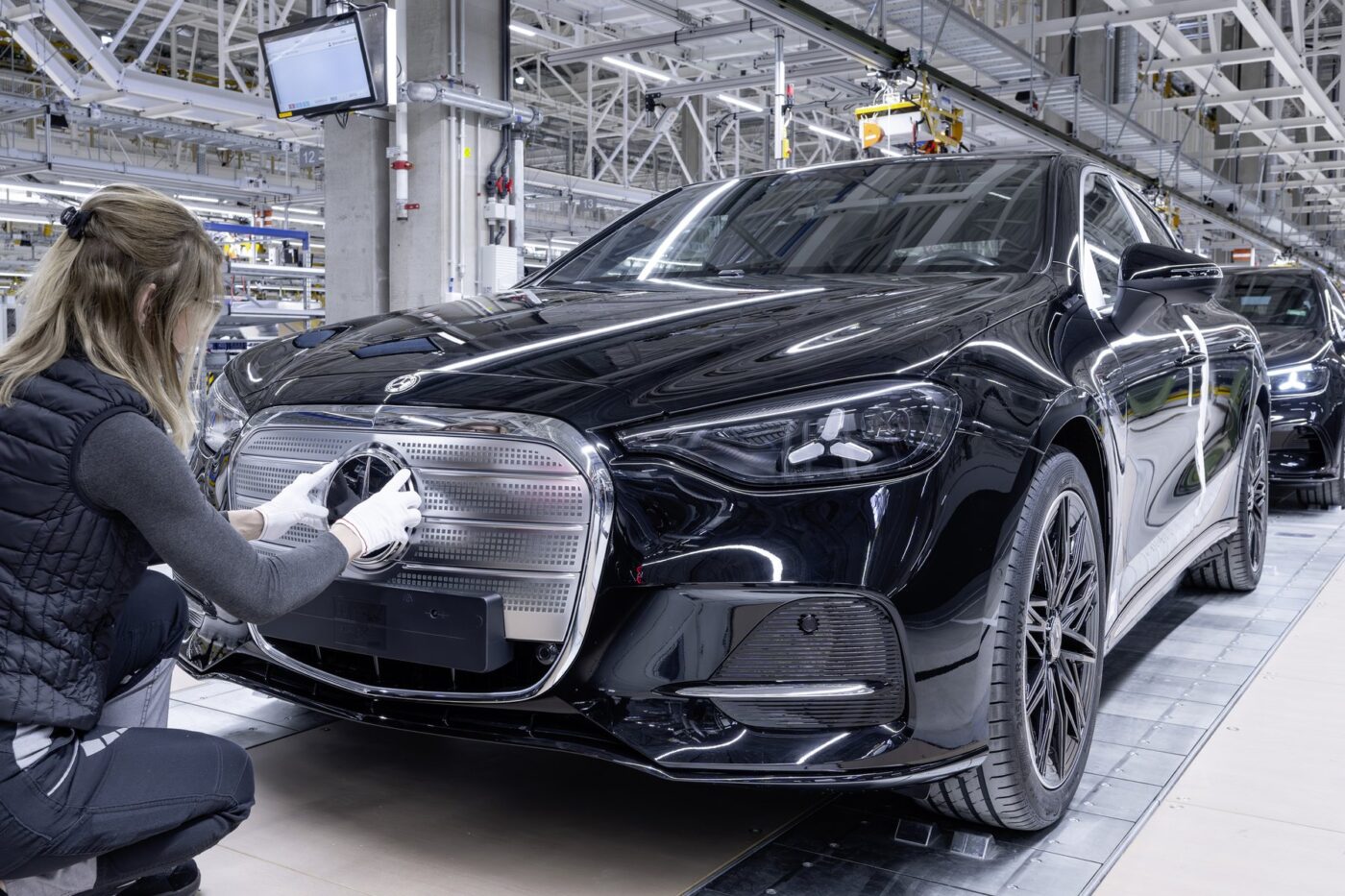
Mercedes celebrates plant expansion in Hungary – and the production launch of the electric C-Class
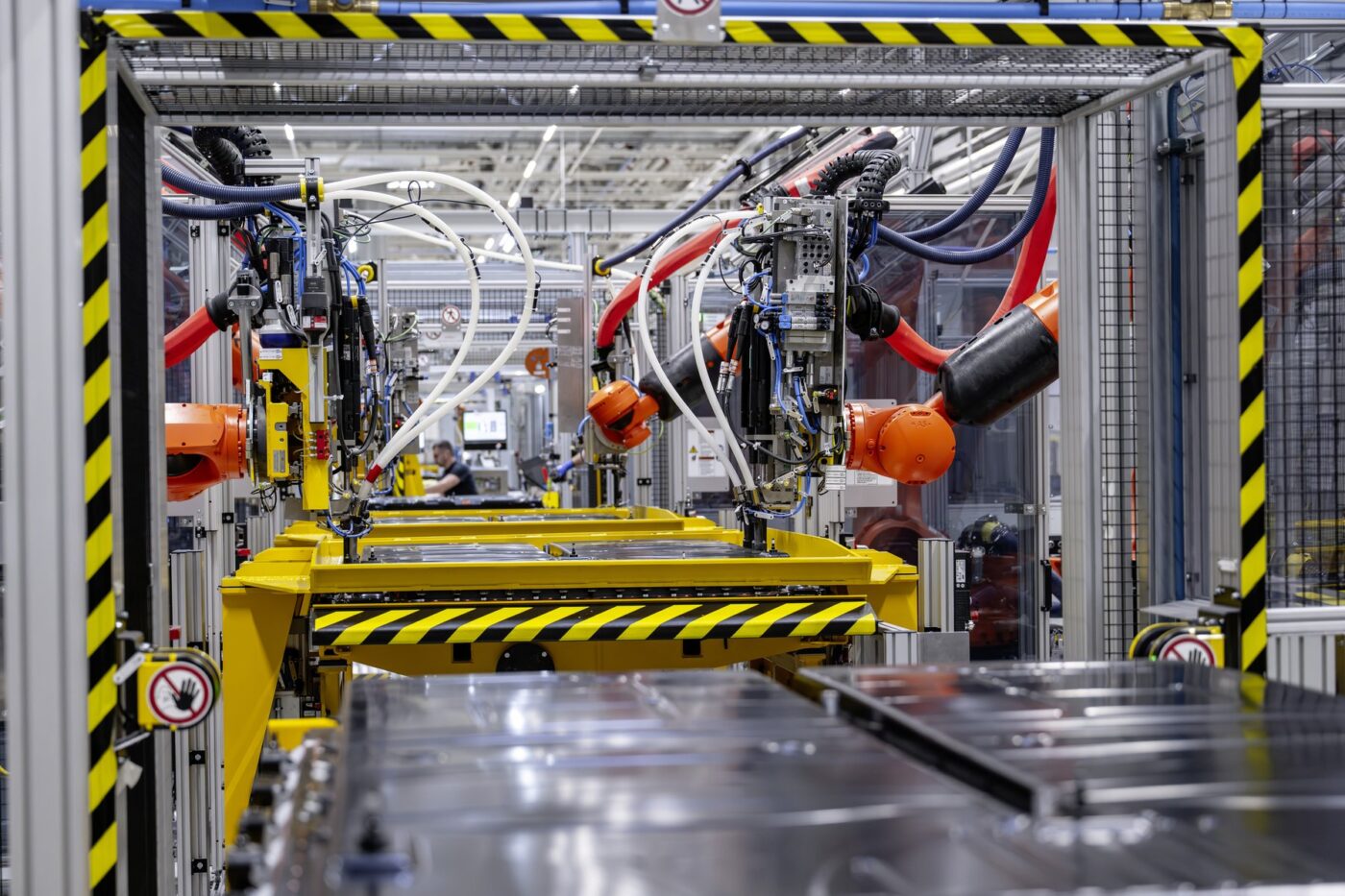
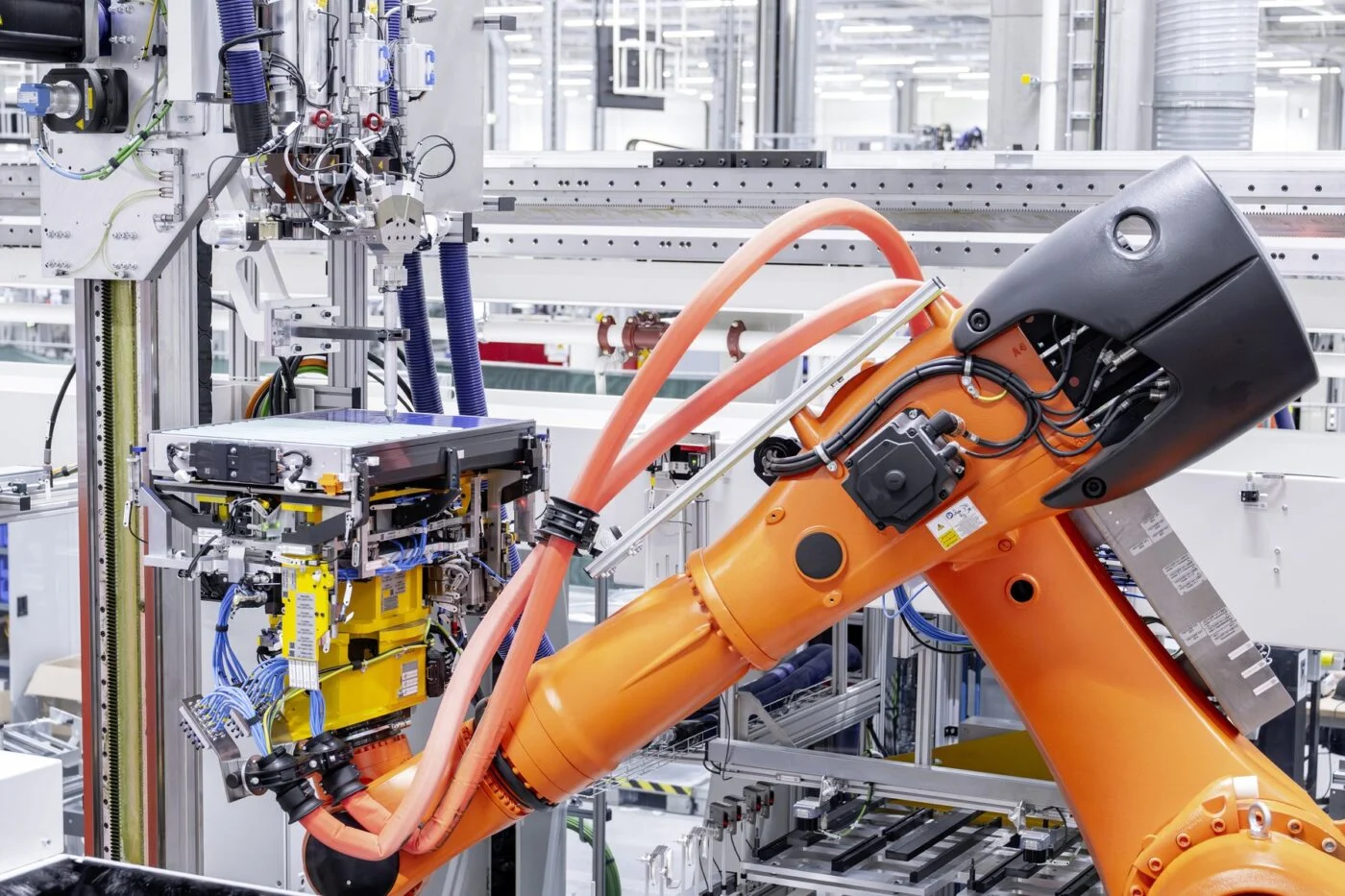
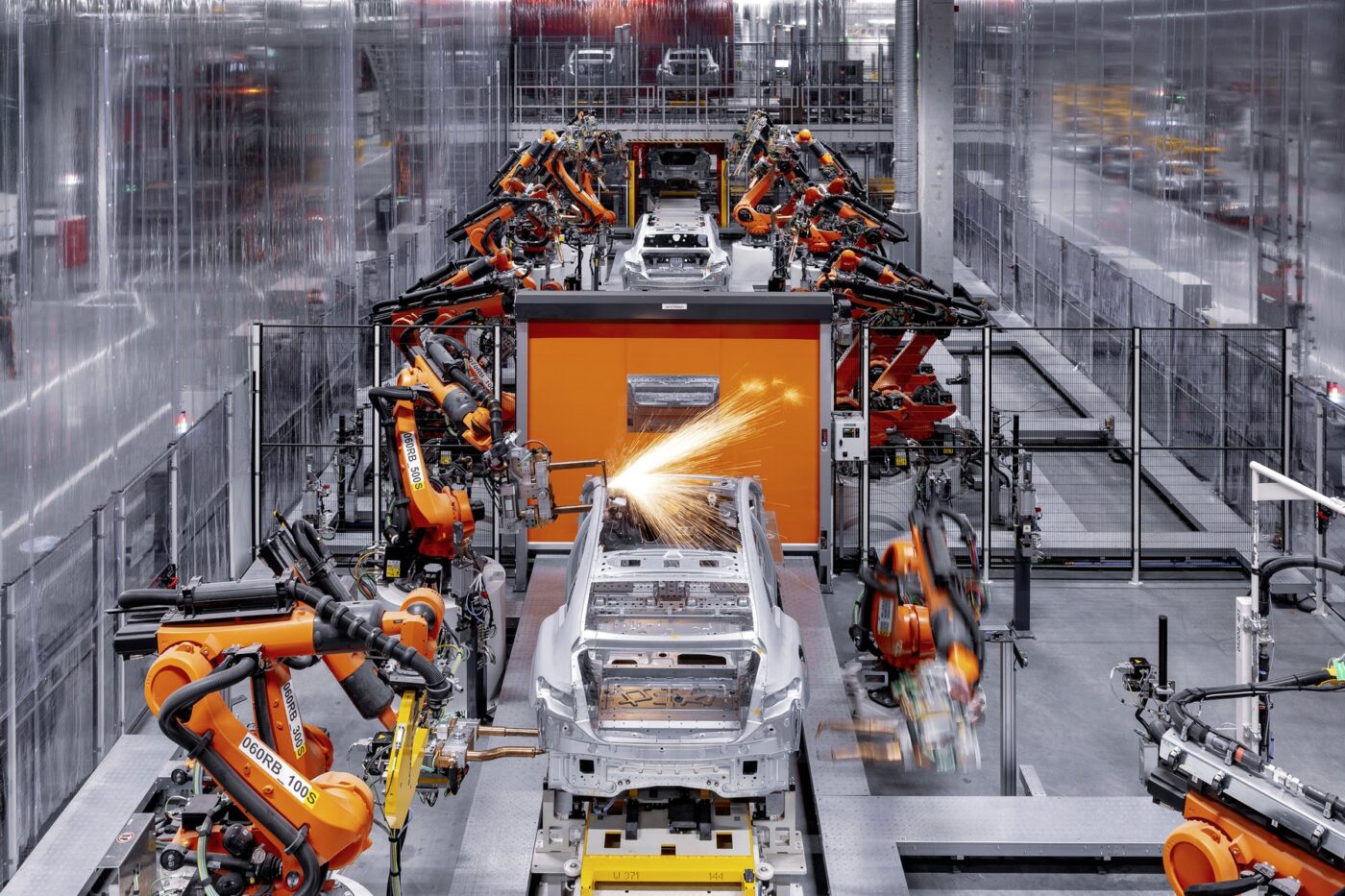
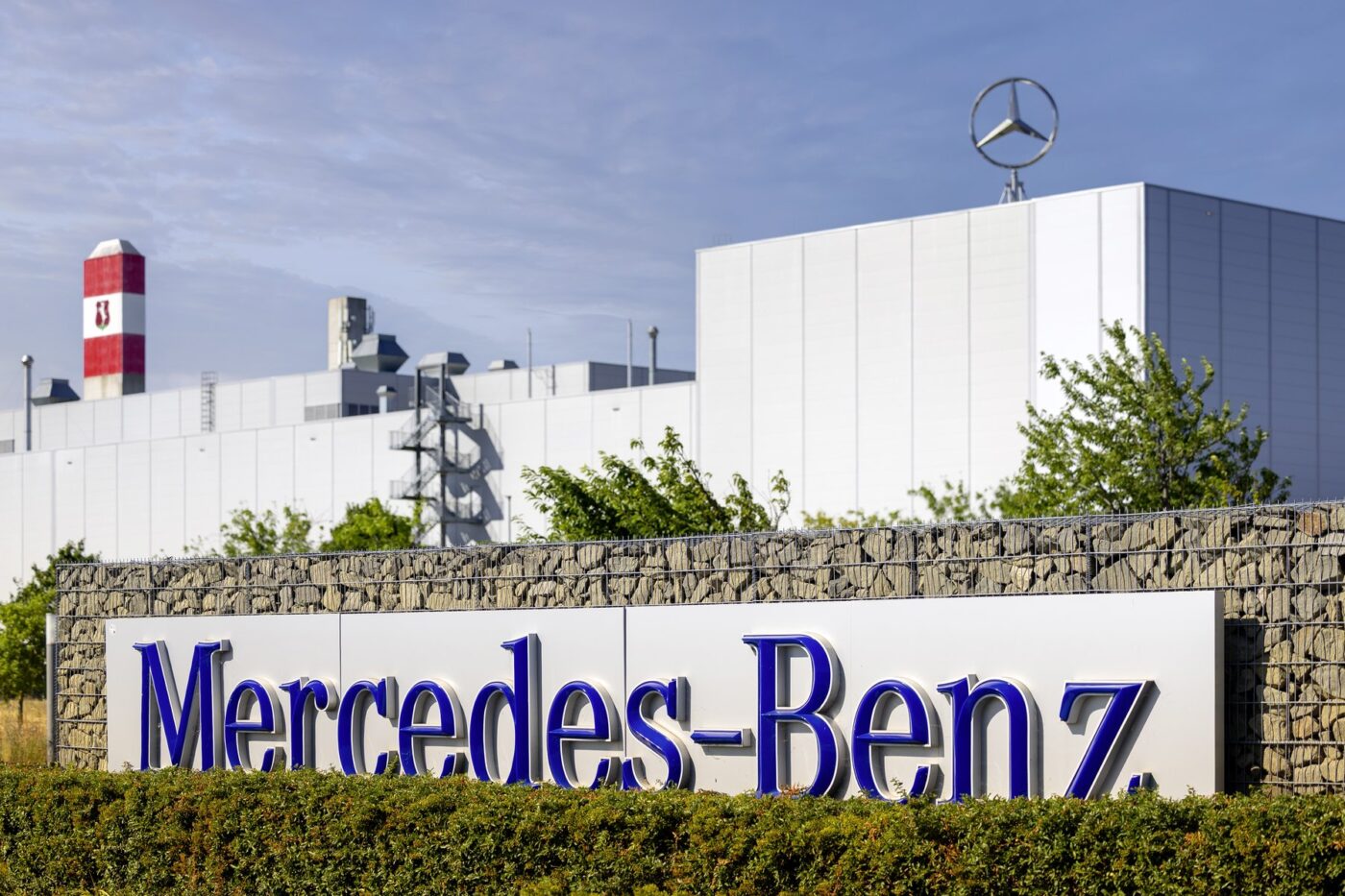
With the recent completion of its expansion, Kecskemét has become the largest Mercedes plant in Europe within the manufacturer’s global production network. Specifically, the Stuttgart-based company has more than doubled the site’s area from 200 to 440 hectares. Two entirely new halls for bodywork and assembly lines are now available, designed to significantly increase production capacity. Additionally, a second press shop, a new state-of-the-art paint shop, and a battery assembly facility have been established at the site. According to the company, the entire project required an investment of around one billion euros. Hungarian Prime Minister Péter Magyar attended the opening of the new plant section in person.
Michael Schiebe, Member of the Board of Management of Mercedes-Benz Group AG, responsible for Production, Quality and Supply Chain Management, commented on the opening: “With the plant extension in Kecskemét, we are increasing the resilience and flexibility of our global production network. This site defines the future of our manufacturing: intelligent, connected, digital and consistently focused on efficiency, quality and sustainability. This enables us to competitively produce models such as the GLB and the new electric C-Class while at the same time strengthening the entire production network.”
First core model for Hungary
Currently, around 5,000 employees work at the Kecskemét plant. The site produces the internal combustion engine A-Class as well as the aforementioned battery-electric GLB. With the expansion, production of the electric C-Class will also be brought to Hungary. This marks the first time a larger model from Mercedes’ volume segment (‘Core’) will be manufactured in Kecskemét. To celebrate the launch, Mercedes-Benz held a ‘symbolic start of production’ for the new model this week. In future, the electric C-Class, including derivatives such as AMG versions with axial flux motors, will roll off the production line in Hungary.
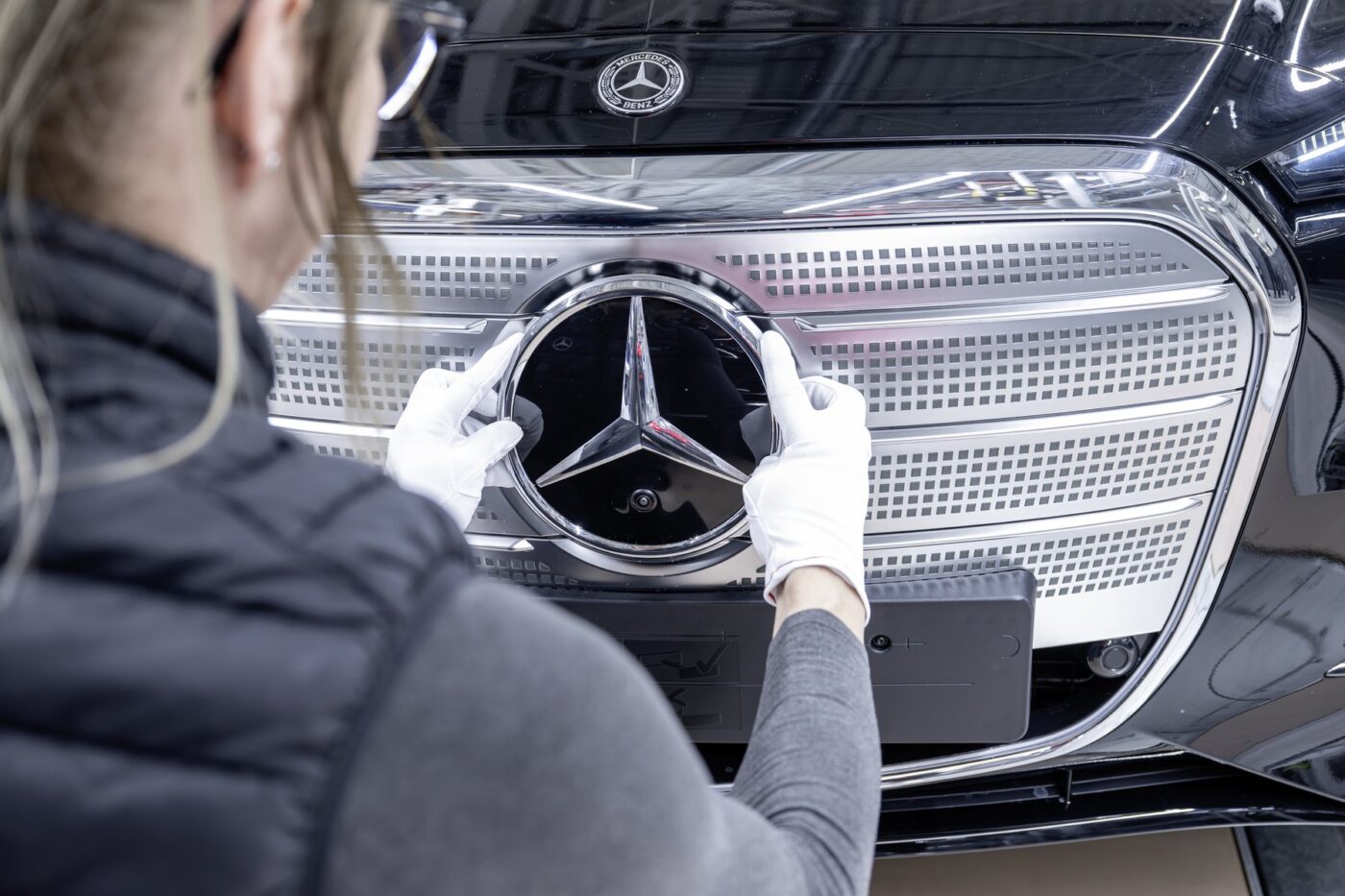
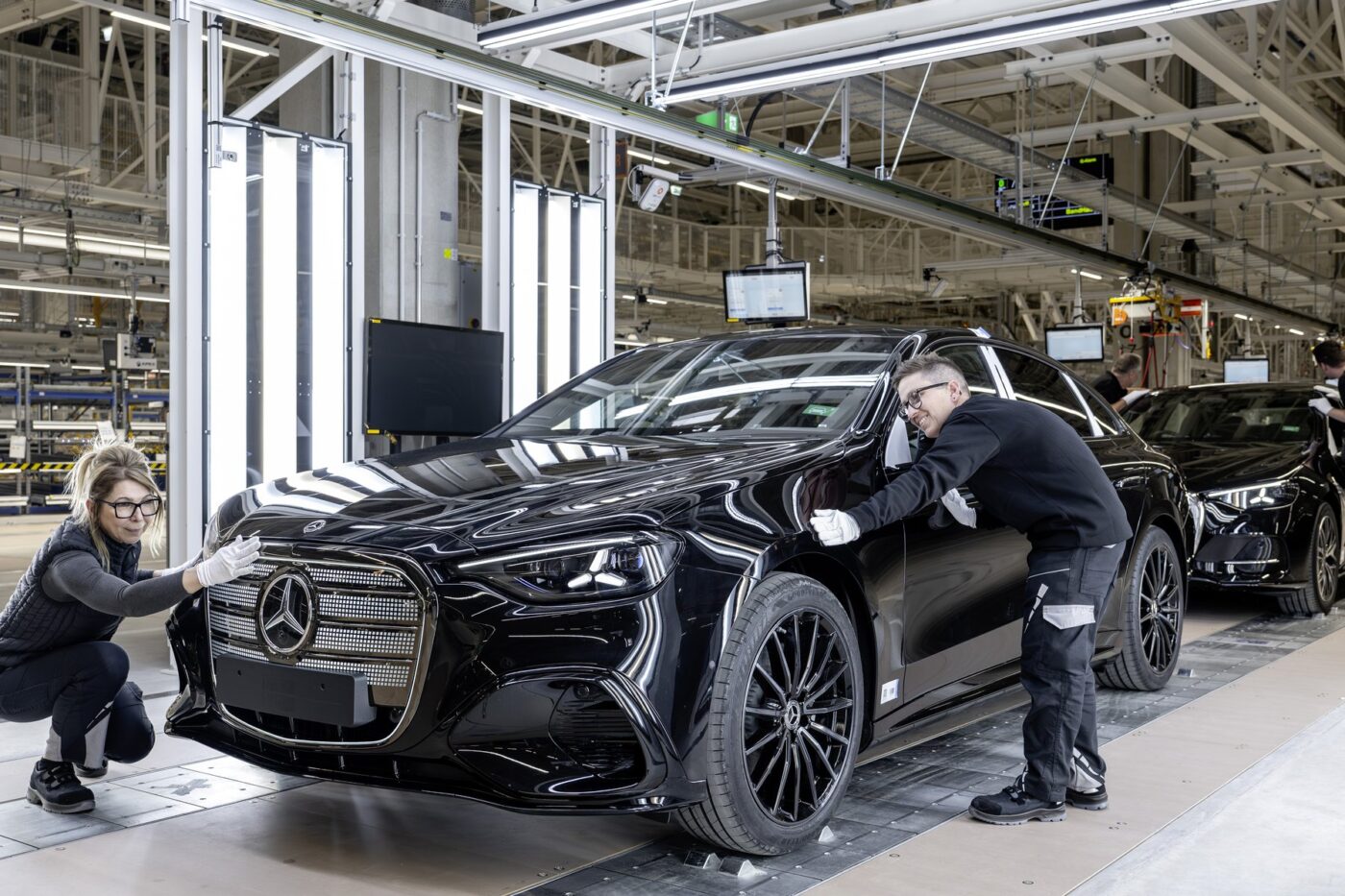
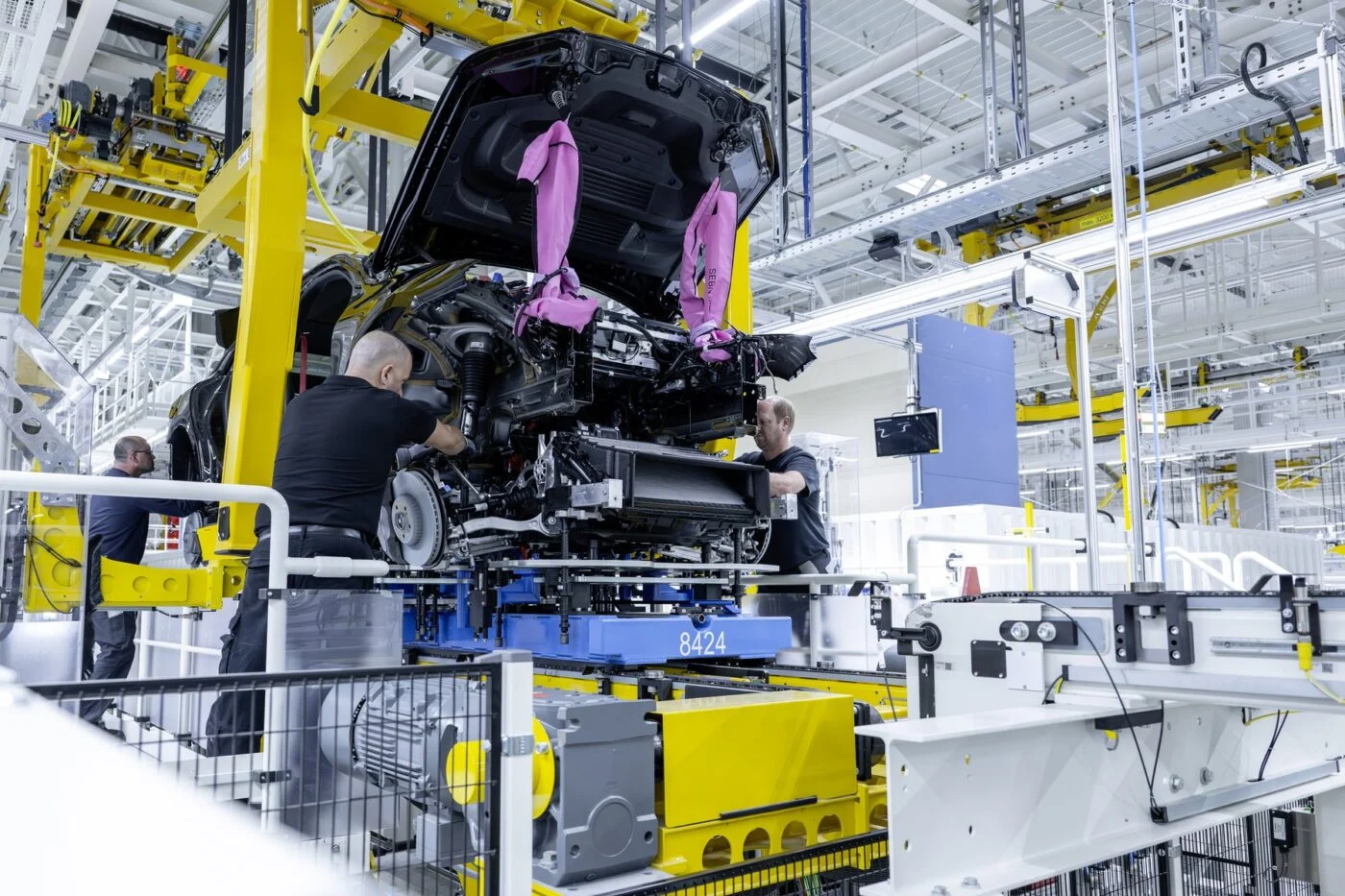
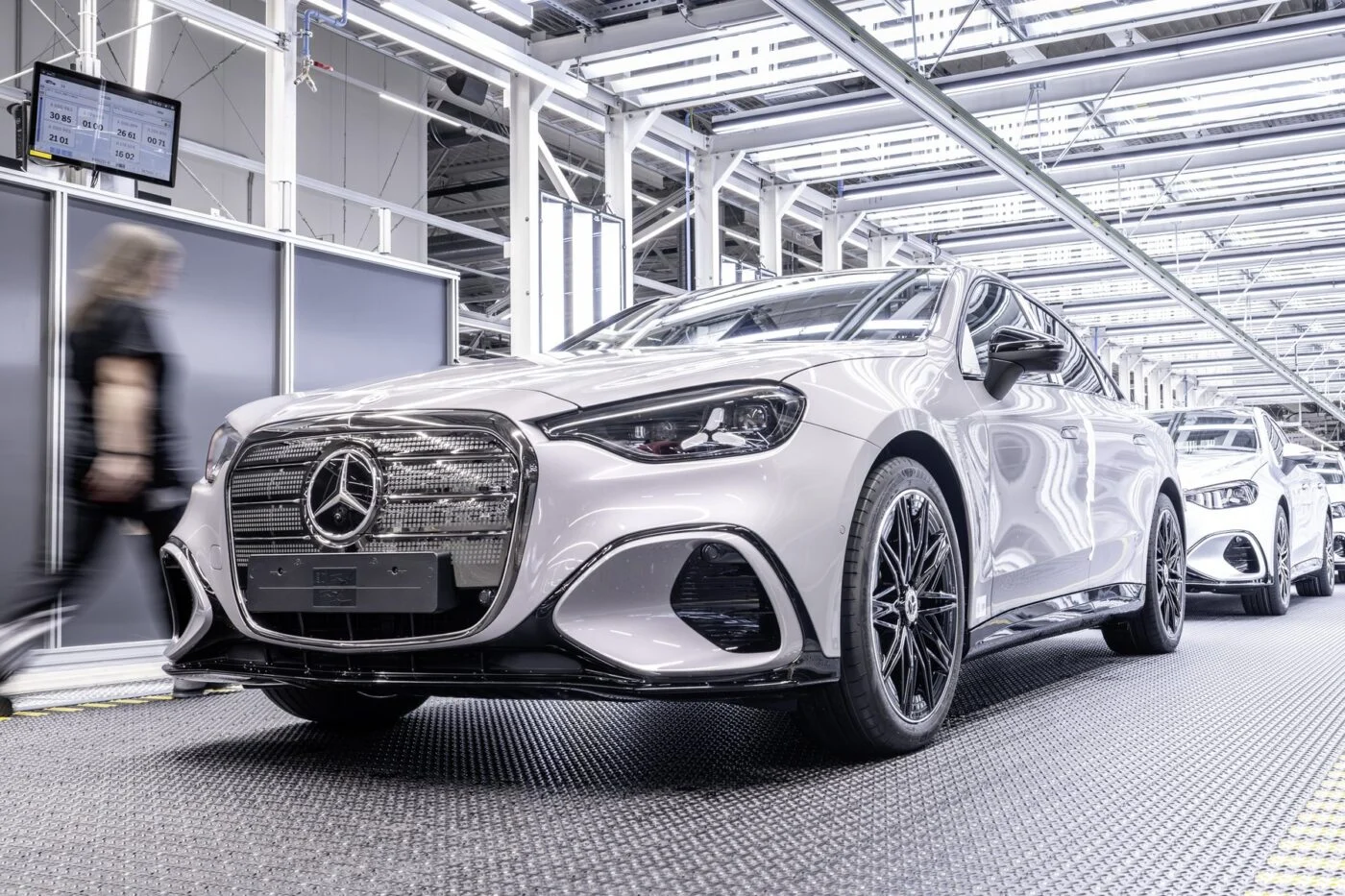
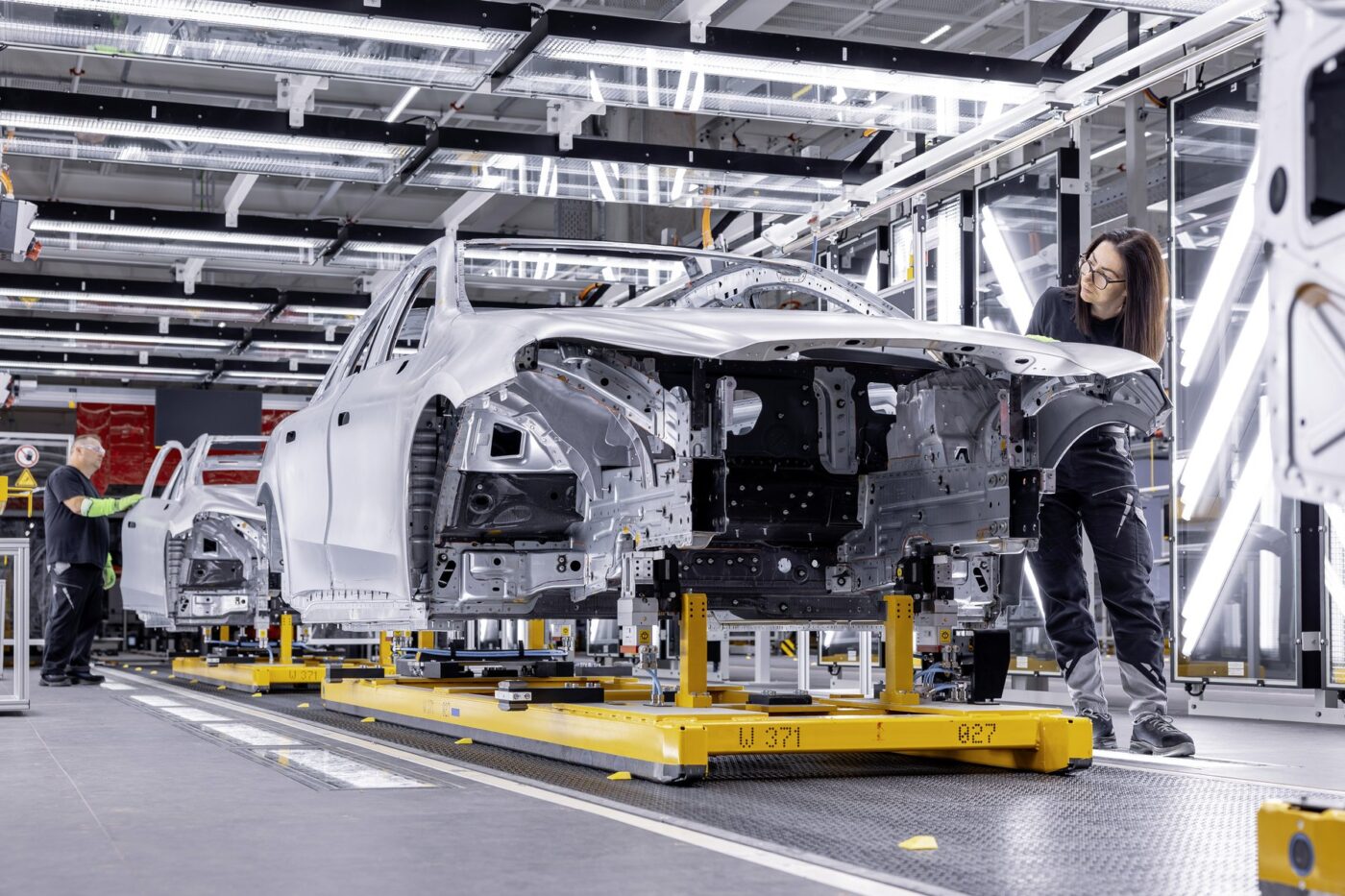
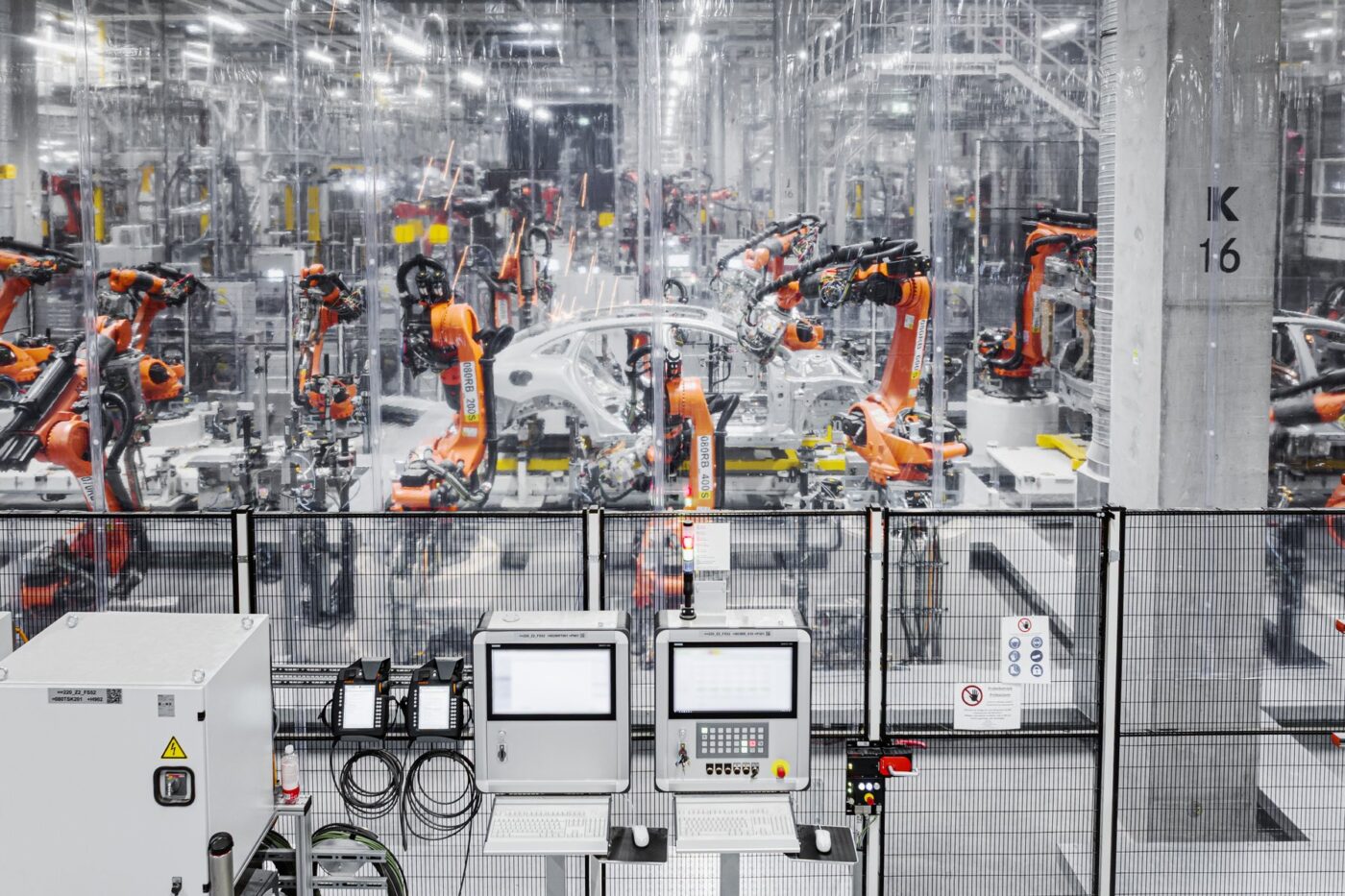
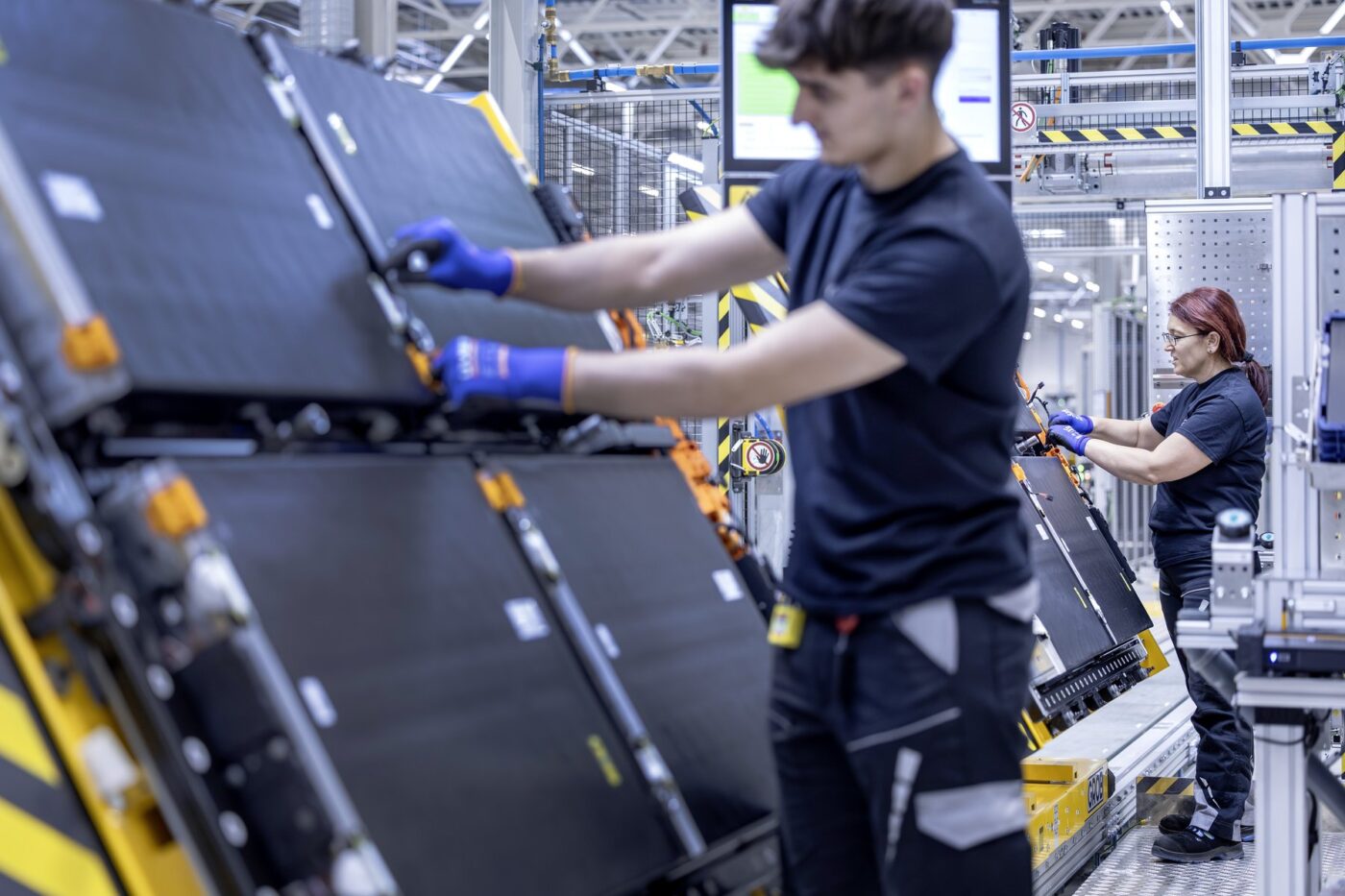
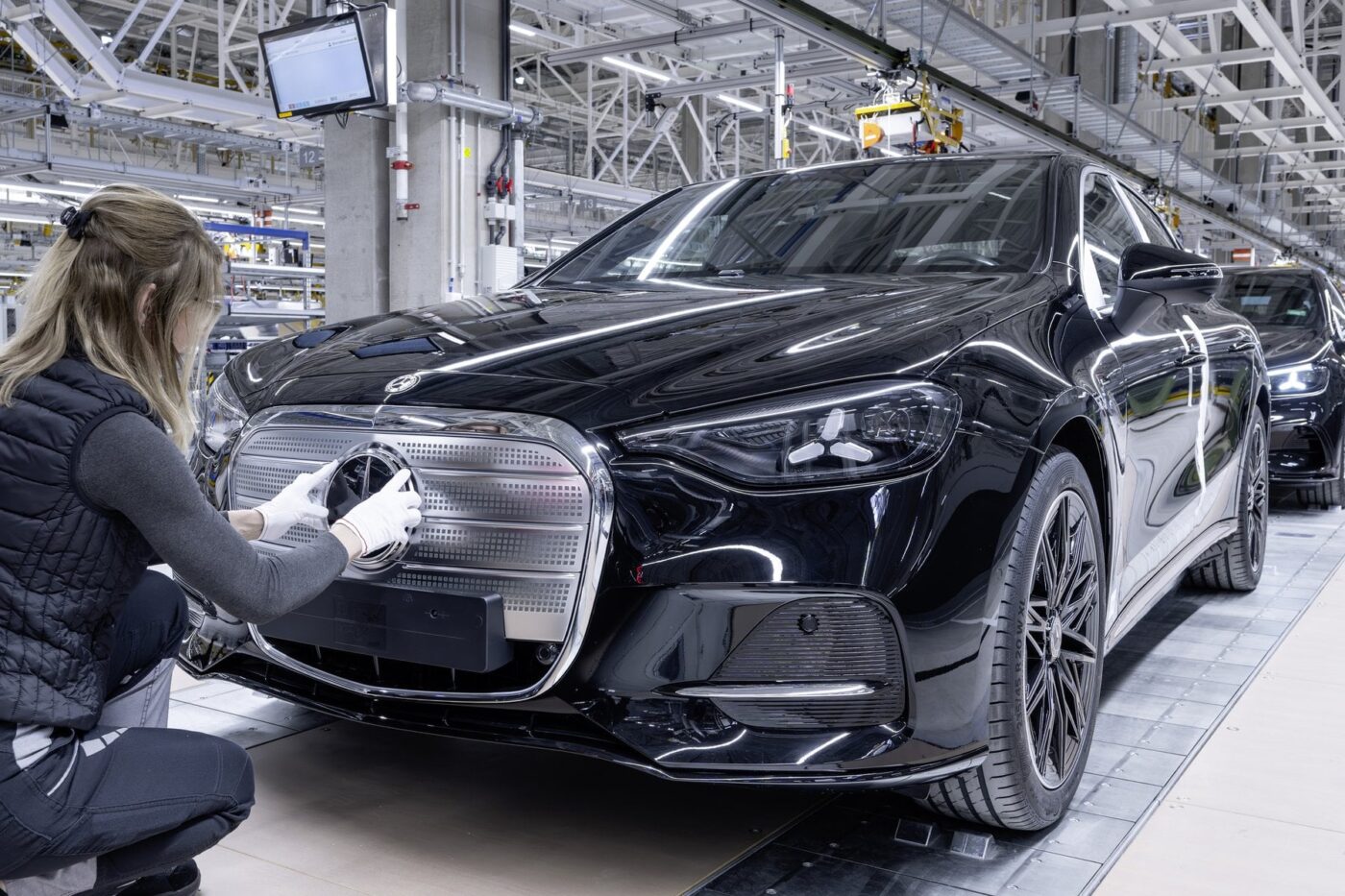
For context: the world premiere of the battery-electric C-Class took place in April. With this saloon, Mercedes is introducing a lower-profile alternative to the SUV model GLC 400 4MATIC. The drivetrain technology is identical, and distinctive design elements, such as the large front grille, have been more or less directly adopted from the GLC. Both models use the new MB.EA-M platform with an 800-volt system voltage. As the C400 4MATIC, the electric saloon features a 94 kWh battery, 330 kW charging power, and 360 kW drive power. Its range is up to 762 kilometres under the WLTP cycle. The rear axle is powered by the electric motor with a two-speed transmission, which is also used in the CLA.
For the production of the electric C-Class and the GLB, Mercedes emphasises that “key components – including body parts and high-quality drive batteries” are manufactured directly on-site in Hungary. These shortened supply chains are intended to enhance production ‘flexibility and efficiency while further strengthening our responsiveness to market demands and external influences.’
New plant section dedicated to electric vehicles
Production in Kecskemét follows a dual approach: while the existing hall allows for flexible production of internal combustion engine vehicles and battery-electric models on a single line, the newly built hall is exclusively dedicated to the production of fully electric vehicles. Furthermore, similar to the southern German site in Rastatt – which already operates within a European MMA production network alongside the Kecskemét plant – Mercedes plans to implement ‘flexible production links’ between Hungary and other German plants. For example, the electric GLC can be produced at both the Bremen and Kecskemét plants in future.
Recently, Automobilwoche reported that a portion of GLC production could shift to Kecskemét if Mercedes relocates the SUV model from Bremen to its US plant in Tuscaloosa, as previously announced. The GLC is Mercedes’ best-selling model worldwide. This possibility is due to the increasing integration within the Mercedes plant network. The carmaker itself emphasises that this enhances flexibility and efficiency while strengthening responsiveness to market demands and external influences.
Compact G-Class to be exclusively produced in Hungary
In a side note during the opening of the new plant section, Mercedes confirmed that the upcoming compact version of the G-Class will be exclusively manufactured in Kecskemét. This decision had already leaked in advance. The compact G-Class will be based on the MMA platform for compact vehicles and may be named the ‘G-Class.’ It is intended to complement the larger G-Class, which is one of Mercedes’ most profitable model lines but appears to be struggling as an electric version.
Mercedes has not officially disclosed the new production capacity following the plant expansion. However, Automobilwoche, citing sources within the company, reports that capacity will double to between 300,000 and 400,000 units. “This will bring us to a 30 per cent share of our production in Europe,” an insider recently told the German magazine, up from the previous 15 per cent. Interestingly, the source added: “In Germany, with Sindelfingen, Rastatt, and Bremen, around 900,000 units will theoretically remain – 100,000 fewer than before. Current production is closer to 200,000 units per plant.”
media.mercedes-benz.com

0 Comments