AI agents have moved from the wish list to the shopping cart. The next test is simple: Can merchants keep control when software starts acting like a customer?
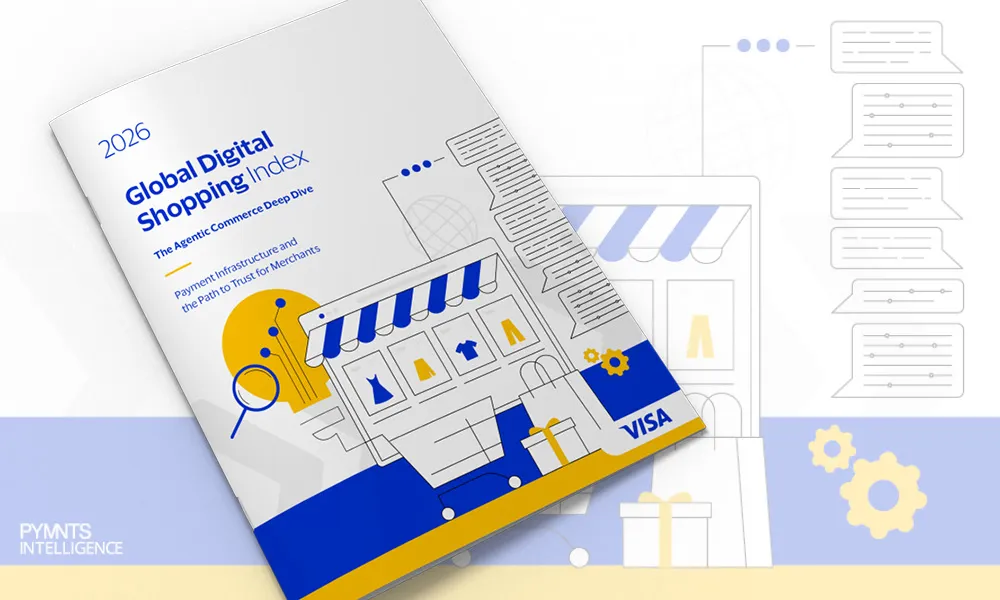
“The Agentic Commerce Deep Dive: Payment Infrastructure and the Path to Trust for Merchants,” a collaboration between PYMNTS Intelligence and Visa Acceptance Solutions, examines how AI agents could reshape digital shopping. It focuses on payments and trust across consumers, merchants and acquirers. The report draws on three surveys fielded in early 2026 across the U.S., Brazil and the UAE. The sample includes 5,241 consumers, 1,185 merchants and 150 acquirers.
The findings show that AI is already becoming a front door to commerce. Nearly half of online shoppers used AI to research their most recent purchase. Many will let AI agents search across merchants. They will let agents compare products. They will also let agents manage loyalty programs and surface deals. But trust drops when the agent gets closer to payment. Consumers want approval rights. They want human support, data protection and clear ways to cancel or reverse a purchase.
Merchants see the upside. AI agents could help personalize offers. They could improve loyalty, increase repeat purchases and make shopping more efficient. But merchants draw firm lines around pricing. They are cautious of fraud, want clear liability rules and want to protect customer data and prevent agents from steering shoppers to competitors.
That puts the payments layer at the center of the next phase of AI shopping. Acquirers report high confidence in adapting current infrastructure. Yet they also cite regulatory uncertainty as the top barrier. Fraud concerns remain high. Standards are still unclear. Risk frameworks still need work. The report shows that agentic commerce will grow only as fast as trust allows.
Download the Index The Global Digital Shopping Index: The Agentic Commerce Deep Dive
In the “Global Digital Shopping Index: The Agentic Commerce Deep Dive,” learn how:
- Consumers divide trust between AI discovery, AI recommendations and AI-led payments.
- Merchants are deciding which agentic commerce use cases deserve investment now and which still carry too much risk.
- Payment networks, banks, processors and acquirers can help set the rules for agent identity, consent, fraud controls and liability.
Download the report to see where agentic commerce is headed next and how merchants can prepare before AI agents become a larger share of digital sales.
About the report
“The Agentic Commerce Deep Dive: Payment Infrastructure and the Path to Trust for Merchants,” the July edition of the Global Digital Shopping Index, examines how AI agents are poised to reshape payments, trust, and the transaction layer across consumers, merchants and acquirers. It draws on three surveys fielded in early 2026 across the U.S., Brazil and the UAE.
- Consumers: 5,241 respondents surveyed in March 2026. Country samples are weighted to reflect the national adult population.
- Merchants: 1,185 respondents surveyed in March 2026. Sample includes both SMBs and large merchants across the three countries.
- Acquirers: 150 respondents surveyed in January 2026. All countries combined.
Key segmentations include country (U.S., Brazil and UAE), generation (Gen Z, millennials, Gen X, and baby boomers and seniors), and merchant size (SMB and large). PYMNTS Intelligence retains full editorial control over all content, findings, methodology and data analysis.
The post 48% of Online Shoppers Now Use AI Before Buying appeared first on PYMNTS.com.
Source link