Zurich startup pairs MRI, blood testing, and AI to expand preventive care across Germany and Europe
Aeon, a Zurich-founded preventive health startup, said Monday, Sept. 14, 2026, that it closed a seed extension taking total seed funding to more than USD 14 million and acquired the core assets of Aware Health, which it described as Germany's leading consumer blood diagnostics platform.
The deal gives Aeon Aware Health's technology platform, key contracts and equipment, customer relationships, core team, live laboratory integrations, and a network of more than 45 blood-draw locations, accelerating Aeon's expansion in Germany, its fastest-growing market since early 2026.
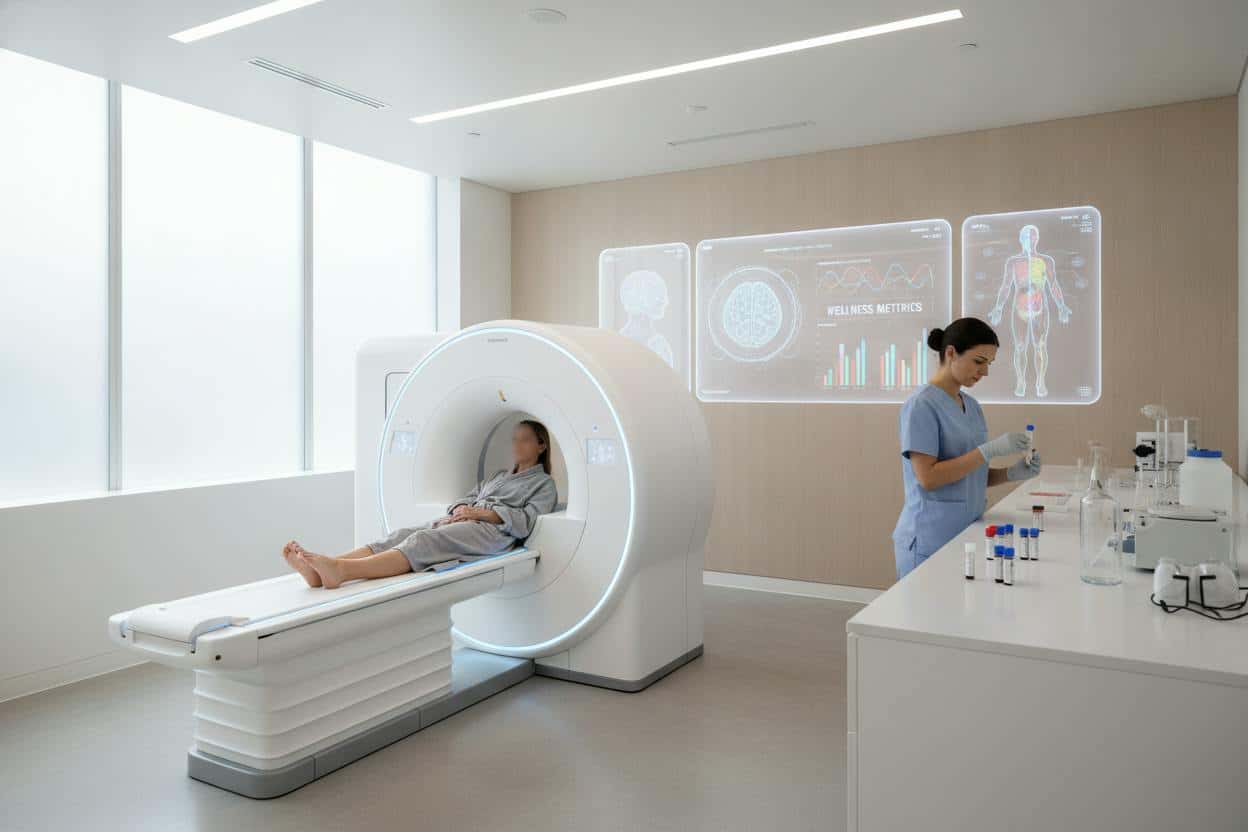
Aeon said the combination of whole-body MRI, recurring blood diagnostics covering more than 100 biomarkers, and AI-based risk prediction makes it the first European platform offering a continuous longitudinal health record, a model aimed at moving preventive care from one-time detection to ongoing prediction.
The acquisition also brings Aeon a recurring biomarker dataset from Aware Health, which said it served close to 10,000 active customers, while Aeon said more than 90 percent of its check-ups already surface actionable findings and 15.4 percent reveal significant findings.
Aeon isn't just raising more seed money. It's using the round to buy a diagnostics platform in Germany, betting that routine blood testing, not just whole-body MRI scans, is what turns preventive medicine into a software business.
The Zurich-founded startup said Monday it closed a seed extension that brings total seed funding to more than USD 14 million and acquired the core assets of Aware Health, which Aeon described as Germany's leading consumer blood diagnostics platform.
What happened with Aeon is straightforward: the company paired a seed extension with an acquisition of Aware Health to combine whole-body imaging, recurring blood diagnostics, and AI-driven risk prediction in a single European preventive-health product, a move that matters because longitudinal data is the raw material these companies need if they want to sell prediction rather than one-off screening.
The seed extension was co-led by Araya Ventures, with participation from existing investors Concentric, GoHub Ventures, Kadmos Capital, Calm/Storm Ventures, N&V Capital, and Bigwave Capital, according to the company. Aeon said the new money will fund the integration of Aware Health's technology and team and support a faster European rollout.
That combination is the heart of the pitch. Whole-body MRI can catch anomalies across the brain, organs, and vessels, but it's episodic. Blood work is much easier to repeat. Aeon is trying to stitch those streams together, then use AI models to analyze imaging, biomarkers, and genetic data over time so it can flag changes before they become disease.
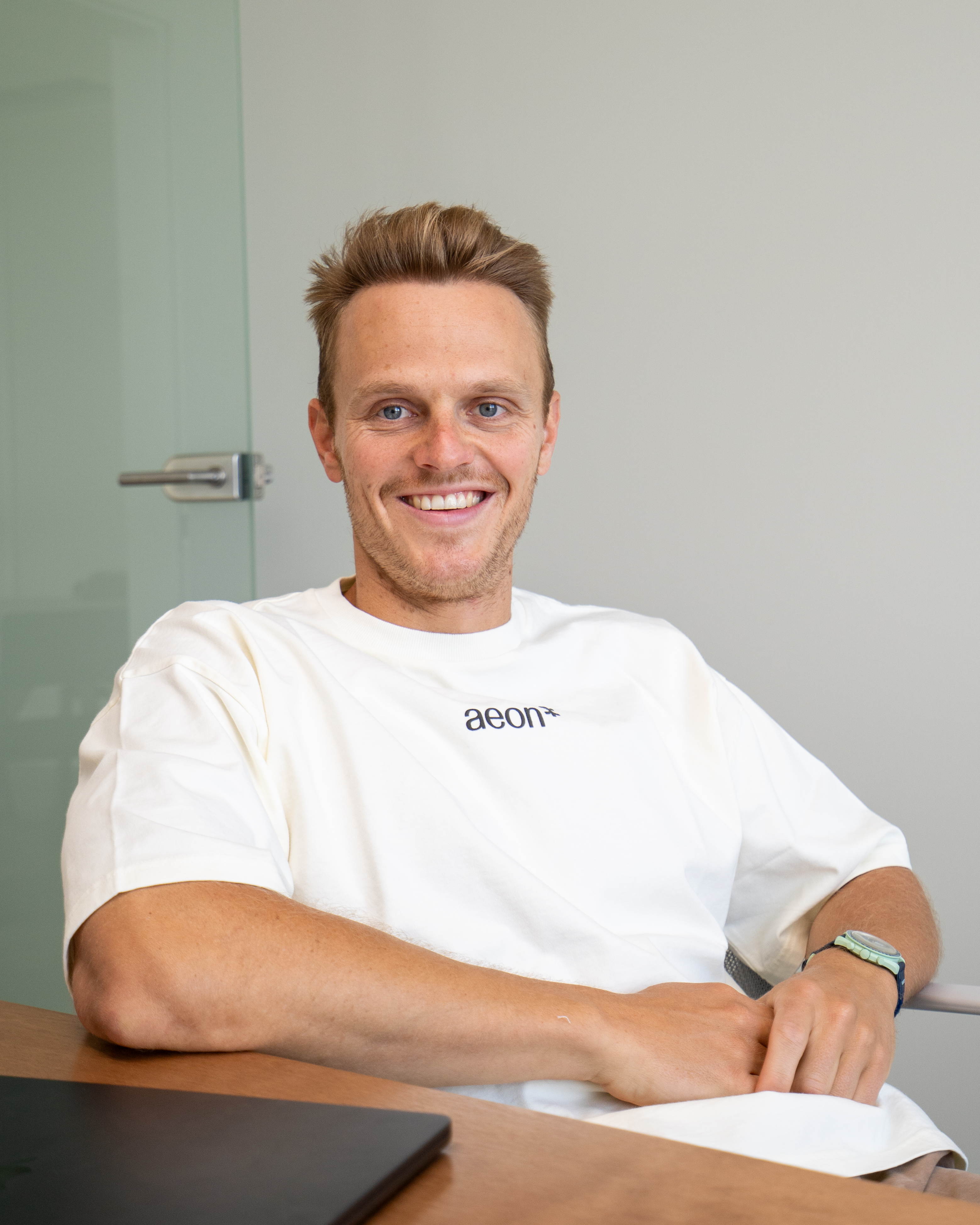
Tim Seithe, Aeon's founder and CEO, said in a statement that imaging shows where a person is now, blood diagnostics show where that person is heading, and AI connects the two into prediction. He said the acquisition of Aware Health accelerates that plan by two years.
For U.S. readers, the setup will sound familiar. Startups on both sides of the Atlantic have spent the past few years trying to package high-end preventive screening into a consumer subscription or membership. But the harder part has always been repeat engagement. A scan every so often makes for good marketing. A quarterly blood panel creates a habit, a dataset, and eventually, if the science holds up, a basis for software-like margins around monitoring and recommendations.
Aware Health gives Aeon pieces that are difficult to build from scratch, especially in a regulated market like Germany. The acquired assets include the full technology platform, key contracts and equipment, customer relationships, and the core team. The Berlin team will continue under the Aeon brand, the company said, with no interruption for customers.
Just as important, Aware Health had already built a regulated diagnostics stack with live laboratory integrations and a network of more than 45 blood-draw locations. It offered test panels spanning more than 100 biomarkers and served close to 10,000 active customers, according to Aeon. For a startup still in seed mode, buying that kind of operating infrastructure can be faster and cheaper than assembling it piecemeal market by market.
USD 14 million+
Aeon said its total seed funding now exceeds USD 14 million after the extension co-led by Araya Ventures.
There is also a data angle here that investors tend to like more than consumers do. Aeon said the deal adds a longitudinal biomarker dataset generated from recurring testing. That's a critical asset if the company wants to train models that can detect deviations over time, rather than simply compare a customer to a population baseline. In health tech, distribution matters, but proprietary data accumulated across repeated interactions matters more.
Aeon is already leaning hard into that framing. The company said more than 90 percent of its check-ups surface findings customers can act on, and that its significant finding rate is 15.4 percent. Those figures come from the company, and they are likely to draw scrutiny, because preventive health startups often have to walk a narrow line between surfacing useful insights and creating anxiety around incidental findings. Still, the numbers are striking, especially for a business built around premium screening.
The AI buildout is moving in parallel with the acquisition. Aeon said Pablo Tano has joined as AI Lead. The company described Tano as a researcher who has published in Nature on reinforcement learning in the brain, co-authored work with Peter Dayan and Alexandre Pouget, and was part of the winning team in Meta's MyoChallenge. At Aeon, he is set to lead work on models that analyze imaging, blood biomarkers, and genetic data to generate personalized risk predictions and health interventions.
Rupa Popat, general partner at Araya Ventures, said in a statement that Aeon is building a longitudinal health picture that no other platform in Europe offers. That's the investor version of the thesis, and it's not hard to see why it resonates right now. Health tech investors have grown more cautious around point solutions. Platforms with recurring data and a clearer path to retention are getting a warmer hearing.
The background
Aeon launched in Germany in early 2026 and said the country is already its fastest-growing market. That matters beyond local expansion. Germany is Europe's largest healthcare economy, but it is also a difficult place to operate if you're trying to blend consumer health, diagnostics, and software. By acquiring Aware Health's core assets, Aeon gets a shortcut into a market where regulatory plumbing and lab integrations can take years to stand up.
The bigger industry question is whether companies like Aeon can make preventive care feel less like a luxury checkup and more like an ongoing product. In the U.S., consumers have seen versions of this movie before, with startups offering blood testing, imaging, genetics, or concierge-style monitoring, usually as separate products. Aeon is arguing that the winner in Europe won't be the company with the most eye-catching test, but the one that can combine modalities into a single record that updates quarter after quarter. That's a more ambitious claim, and a harder one to execute.
There are real constraints. AI in healthcare still runs into trust, evidence, and regulation problems long before it runs into model-performance limits. Aeon said customer data from Aware Health will transfer only with each customer's explicit individual consent and in accordance with GDPR. That's not a footnote. It's central to whether the company can actually realize the value of the acquisition, because predictive systems are only as good as the continuity of the data flowing into them.
Ferdinand Schmidt-Thomé, co-founder of Aware Health, said in a statement that the company had built a trusted consumer health brand and a platform designed to make advanced diagnostics accessible and easier to understand. He said folding that into Aeon's broader offering changes what preventive health can look like in Europe.
My read is that the deal says as much about the economics of health tech as it does about the promise of AI. If imaging is the top of funnel and blood diagnostics is the retention layer, then the acquisition gives Aeon both a customer acquisition story and a repeat-usage story. That's usually what seed investors want to see before a company tries to grow into a much larger category narrative.
What's next
The next concrete test is integration. Aeon now has fresh capital, a Berlin team, a diagnostics network, and a larger dataset, all at once. What investors will want to see over the coming quarters is whether the company can convert those pieces into a unified product in Germany without losing customer consent, clinical credibility, or operating speed as it pushes deeper into Europe.
Frequently asked questions
What did Aeon announce on September 14, 2026?
Aeon said it closed a seed extension that brings total seed funding to more than $14 million and acquired the core assets of Aware Health. The move expands Aeon's preventive health platform by adding recurring blood diagnostics to its whole-body MRI and AI capabilities.
Why is Aeon's acquisition of Aware Health important?
The acquisition gives Aeon a regulated diagnostics stack, live lab integrations, more than 45 blood-draw locations, and an existing customer base in Germany. It also adds longitudinal biomarker data that can help train AI models for earlier and more personalized health-risk prediction.
How does Aeon's platform work after the Aware Health deal?
Aeon combines whole-body MRI, recurring blood tests, and AI analysis into one preventive health platform. The company says this creates a continuous health picture that can track trends over time instead of relying on one-time snapshots.
How much funding has Aeon raised, and who backed the round?
Aeon said its total seed funding now exceeds $14 million. The seed extension was co-led by Araya Ventures, with participation from Concentric, GoHub Ventures, Kadmos Capital, Calm/Storm Ventures, N&V Capital, and Bigwave Capital.
What does the deal mean for Aeon's growth in Germany?
Germany is already Aeon's fastest-growing market, and the acquisition gives it infrastructure that would have taken years to build internally. That includes nationwide diagnostics operations, customer relationships, and a Berlin-based team continuing under the Aeon brand.
Will Aware Health customer data automatically move to Aeon?
No. Aeon said customer data will be transferred only with each customer's explicit individual consent and in compliance with GDPR rules. That means data movement is not automatic and depends on customer approval.