Groq secures $350M at a $3.5B valuation, shifting from AI chips to a 'neocloud' provider in the competitive AI infrastructure market.
Groq, the startup known for its ambitions in AI chips, has successfully closed a $350 million funding round, accelerating its strategic shift from a pure AI chipmaker to a "neocloud" provider of powerful GPU and AI infrastructure services. This capital injection now pegs the company's valuation at $3.5 billion. Groq’s pivot is a high-stakes move in the fiercely competitive AI infrastructure market, a clear response to the realities of building custom silicon. This isn't an isolated incident; there is a consistent pattern where hardware-first AI startups face immense pressure to either scale impossibly fast, get acquired by giants, or pivot their models. The cost and complexity of competing with hyperscalers and Nvidia's entrenched ecosystem often prove too high.
Groq originally aimed to challenge Nvidia directly in inference, developing its own Language Processing Units (LPUs) for real-time AI workloads. Following its strategic shift, the company has recalibrated, now focusing on operating Nvidia systems as a cloud and data center provider. It's a pragmatic shift from building the engine to becoming a gas station for it.
Groq’s $350 million raise and pivot into a "neocloud" provider is the ultimate admission of a brutal industry truth: you cannot beat Nvidia at the silicon game. By abandoning its primary ambition to challenge Nvidia with custom Language Processing Units and choosing instead to build data centers packed with Nvidia GPUs, Groq is pivoting from building the engine to operating the gas station. It is a staggering retreat from their original thesis, but undeniably a shrewd survival tactic. The AI infrastructure market is starving for compute. Instead of burning billions trying to convince developers to abandon Nvidia's entrenched CUDA ecosystem for a novel architecture, Groq is choosing the path of least resistance. They are leveraging their deep expertise in AI inference to optimize and sell access to the hardware everyone actually wants. For the broader startup ecosystem, Groq’s $3.5 billion valuation underscores a massive reality check. Hardware-first AI startups are realizing that the capital requirements and ecosystem lock-in of incumbent giants are virtually insurmountable. The next wave of AI infrastructure unicorns won't be the ones trying to kill Nvidia; they will be the ones making Nvidia's hardware easier to access and deploy.
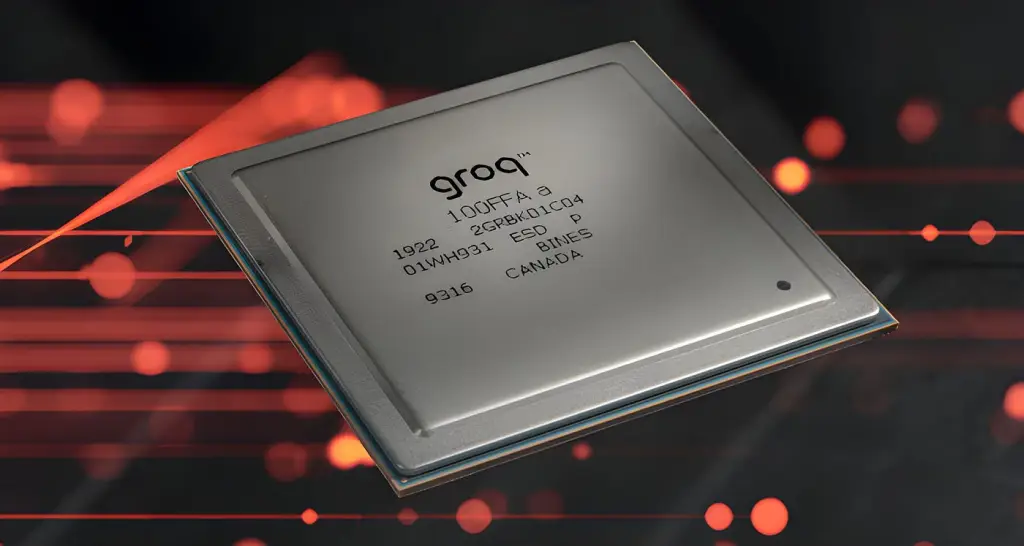
My read is that this pivot, while perhaps a concession of original ambition, is a shrewd move in a market starving for compute. The demand for Nvidia's accelerated computing for both training and inference is insatiable. Groq's strategy to expand its data center footprint directly addresses this bottleneck. This shift makes Groq less of a competitor and more of an enabler within the Nvidia universe. They are essentially betting on the enduring dominance of Nvidia's architecture, leveraging their deep understanding of AI workloads to optimize deployment and access for a massive developer and enterprise base. The opportunity lies in inference becoming a critical layer of AI infrastructure. The real challenge now is execution and securing profitable margins in a capital-intensive, highly competitive cloud services landscape.
For founders and VCs watching the AI infrastructure space, Groq’s journey offers a potent lesson. Direct confrontation with an entrenched giant like Nvidia through custom silicon is an exceedingly difficult path. Pivoting to leverage existing dominant platforms, even if it means altering the original vision, can be a viable strategy for survival and growth, provided the market demand remains strong. The AI infrastructure race is far from over, but the lines of engagement are constantly shifting. Groq's new capital infusion allows it to stake a significant claim in the crucial, yet demanding, business of delivering scaled AI compute to the masses.
Frequently asked questions
What is Groq's recent funding announcement?
Groq has successfully closed a $350 million funding round. This significant capital injection is intended to accelerate its strategic shift and fuel its growth in the AI infrastructure market.
How much is Groq now valued at?
Following its latest funding round, Groq's valuation has reached $3.5 billion, reflecting investor confidence in its new strategic direction.
What is Groq pivoting to from AI chips?
Groq is strategically pivoting from being a pure AI chipmaker to a "neocloud" provider. This involves offering powerful GPU and AI infrastructure services directly.
What kind of services will Groq's "neocloud" offer?
Groq's "neocloud" aims to provide advanced GPU and AI infrastructure services, catering to the growing demand for high-performance computing in the artificial intelligence sector.
Why is Groq making this strategic pivot?
Groq's pivot is a high-stakes move designed to compete more effectively in the fiercely competitive AI infrastructure market, leveraging its unique technology for broader service delivery.
Who are Groq's main competitors in the AI infrastructure market?
While not explicitly named, Groq is entering a market with established players like NVIDIA, AWS, Google Cloud, and Microsoft Azure, alongside other specialized AI infrastructure companies.