Apptopia data shows Muse leading ChatGPT’s first 12 days on iOS downloads and daily active users in the U.S. and Canada
Meta’s Muse app has generated more early mobile traction in the U.S. and Canada than ChatGPT did after its debut, with 1.8 million iOS downloads in the first 12 days versus 1.3 million for ChatGPT, according to Apptopia estimates.
Muse is also ahead on engagement, with 642,000 U.S. daily active users on mobile versus 231,000 for ChatGPT at the same point after launch, and it still led on iOS alone with 359,000 daily active users, according to Apptopia.
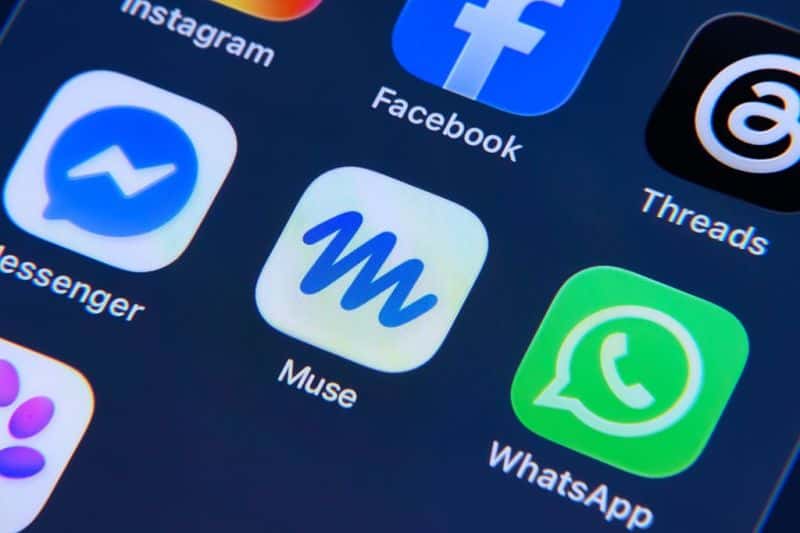
Meta’s distribution advantage matters: Muse launched on both Apple’s App Store and Google Play in the U.S. and Canada, can connect to Facebook and Instagram, and also works inside WhatsApp, giving Meta a built-in funnel that OpenAI did not have at ChatGPT’s mobile debut.
Third-party app intelligence firms, not Meta, supplied the early numbers, and Meta has not publicly disclosed Muse adoption data, which means the figures should be read as directional evidence that Muse could become another major Meta app rather than as company-reported results.
Meta’s latest AI app is off to a faster mobile start than ChatGPT did. New third-party estimates suggest Muse has pulled in more downloads and more daily active users in its first 12 days in the U.S. and Canada than OpenAI’s chatbot managed over the same window.
Meta’s Muse is outpacing ChatGPT’s early mobile launch, according to Apptopia estimates, a notable signal because this is not just another AI app launch. It is an early test of whether Meta can turn its giant consumer distribution machine into a durable lead in AI assistants.
The cleanest comparison comes from narrowing both apps to the same place and platform. Apptopia looked at iOS downloads in the U.S. and Canada during each app’s first 12 days and found Muse reached 1.8 million downloads, compared with 1.3 million for ChatGPT over the same period. That matters because the original launches were not identical: ChatGPT’s app debuted globally but only on iOS, while Muse launched on both iOS and Android, but only in the U.S. and Canada.
Across all markets and platforms available to it, Muse reached 2.8 million total installs in its first 12 days, according to Apptopia. Another app intelligence firm, Appfigures, separately said Muse had crossed 1 million downloads and had climbed from No. 2 overall on the U.S. App Store immediately after launch to No. 1. For Meta, that ranking jump is almost as telling as the install count. It suggests demand did not flatten right after the launch-day spike.
642,000 U.S. daily active users
That is Muse’s U.S. mobile daily active user count in its early launch window, versus 231,000 for ChatGPT at the same point, according to Apptopia.
Engagement is where the story gets more interesting. Apptopia estimated Muse had 642,000 U.S. daily active users on mobile, compared with 231,000 for ChatGPT at the same point after launch. To account for the fact that Muse launched on Android as well as iOS, the firm also narrowed the view to iOS only. Muse still came out ahead there, with 359,000 daily active users on iOS, above ChatGPT’s comparable figure from its launch period.
That is a striking number for a company this size, but it is also where Meta should be strong. Consumer AI on mobile is no longer a novelty category. The real battle is distribution, retention, and habit formation. Meta has spent years building the pipes for all three through Facebook, Instagram, and WhatsApp, and Muse appears to be plugging directly into that network effect.
Apptopia said more than 95% of Muse’s users are also Facebook users and 63% are Instagram users. The firm said it does not have visibility into Meta’s cross-promotion efforts or ads directly, but the overlap figures tell part of the story. Muse is not growing in a vacuum. It is drawing from one of the biggest existing consumer graphs in tech, which is the same playbook Meta used to help push Threads to more than 500 million users.
That comparison to Threads is hard to ignore. When Meta launched that app, the company did not need to invent demand from scratch. It redirected attention from products consumers already opened every day. Muse looks similar, except the addressable opportunity may be larger. AI assistants are increasingly treated like utility software, not just social products, and utility software can travel further if users build daily habits around search, writing, planning, and messaging.
There is also a timing advantage here. ChatGPT’s mobile debut happened earlier in the AI cycle, when users were still figuring out what a dedicated chatbot app should be. Muse is entering a more mature market, which cuts both ways. Competition is tougher, but consumer behavior is more established. People now understand the category, which can make acquisition easier if the product is placed in their attention stream every time they open Instagram or WhatsApp.
Still, the caveat matters. These figures come from app intelligence firms, not from Meta’s internal reporting. Apptopia can estimate downloads and active users, but it does not have direct access to company data, and Meta has not released public numbers for Muse. The safest read is that the app is performing strongly enough for outside firms to detect a meaningful lead over ChatGPT’s early mobile trajectory, not that Meta has already won the consumer AI race.
The competitive context is broader than OpenAI. Apple, Google, Microsoft, and Meta are all trying to become the default consumer layer for AI, and mobile remains the stickiest place to do it. Meta’s edge is that it does not need users to start from a blank home screen. If Muse can sit inside or alongside Facebook, Instagram, and WhatsApp, its cost of acquiring mainstream users is likely lower than that of standalone rivals that depend on brand pull, word of mouth, or paid installs.
That said, fast downloads do not guarantee a durable product. Consumer apps often surge on curiosity and sink on repeat use. The more useful signal over the next few weeks will be whether Muse keeps holding top App Store positions and whether daily active use grows rather than simply tracks install velocity. So far, the available data suggests growth has not stagnated. For an AI app, that is the number to watch.
What's next
The next concrete test is whether Meta discloses official adoption figures or discusses Muse on its next public earnings cycle. In the near term, the open question is simpler: can Muse sustain its No. 1 U.S. App Store ranking and turn Meta’s cross-app distribution advantage into long-term retention, not just a strong first 12 days.
Frequently asked questions
Is Meta’s Muse really growing faster than ChatGPT did on mobile?
Yes. According to Apptopia estimates cited by TechCrunch, Muse reached 1.8 million iOS downloads in its first 12 days, compared with 1.3 million for ChatGPT at the same stage. Muse also posted higher mobile daily active users in the U.S. during that early window.
How many downloads did Meta’s Muse get after launch?
Apptopia estimates that Meta’s Muse recorded 1.8 million iOS downloads across the U.S. and Canada in its first 12 days. That total puts it ahead of ChatGPT’s early mobile launch pace on the same platform.
What engagement numbers does Muse have versus ChatGPT?
Muse is reportedly ahead on early engagement as well as downloads. The app reached about 642,000 U.S. mobile daily active users, while ChatGPT had about 231,000 at the comparable point after launch.
Is this comparison based on iPhone users only?
The download comparison highlighted in the report focuses on iOS installs in the U.S. and Canada. TechCrunch also notes that Muse still led on iOS alone, reinforcing the strength of its Apple mobile debut.
Who provided the data comparing Muse and ChatGPT?
The figures come from Apptopia estimates reported by TechCrunch. That means the numbers are third-party app intelligence estimates, not official company disclosures from Meta or OpenAI.
Why does Muse’s early lead matter for the AI app market?
A faster start in downloads and daily active users suggests strong consumer curiosity and solid initial retention. For the broader AI app market, it signals that new entrants can still break through even after ChatGPT established the category.