Microsoft's escalating competition with OpenAI and Anthropic marks a strategic pivot, reshaping the AI landscape for businesses and consumers.
Microsoft is openly escalating its competition with its own AI partners, OpenAI and Anthropic, a significant strategic pivot that could reshape the artificial intelligence landscape for businesses and consumers alike.
This move signals that even the deepest partnerships in the fast-evolving AI sector are subject to the cutthroat demands of market dominance and financial growth. For companies relying on AI, this means more choices but also a more complex vendor ecosystem to navigate.
The tech giant recently posted strong financial results, allowing it to pursue continued growth.
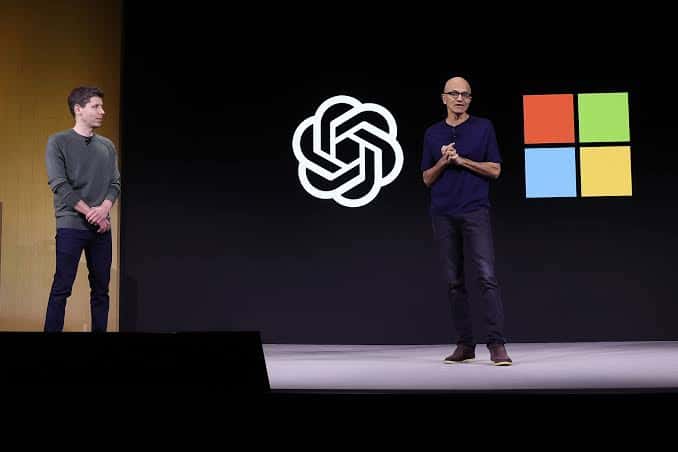
This immense profitability empowers CEO Satya Nadella to aggressively pursue growth, even if it means directly challenging companies like OpenAI and Anthropic, where Microsoft holds substantial investments. Nadella has been consistently advising enterprises to diversify their AI model usage and avoid over-reliance on a single provider for the "agentic harness/app layer," which handles how AI models interact with data and users.
His reasoning centers on practical enterprise concerns: preventing data leaks and avoiding vendor lock-in. Nadella understands that businesses are inherently cautious about sharing proprietary information with model developers who could become competitors or exert undue control. During a recent quarterly conference call, he told Wall Street analysts that this dynamic presents a prime opportunity for Microsoft to offer its own homegrown AI models, agentic services, AI security tools, and even specialized hardware to customers, promising lower costs and greater control.
This is a clear declaration that Microsoft is positioning itself as a comprehensive alternative to the advanced services and application layers that OpenAI and Anthropic are developing for their own expansion. The company emphasized the importance of firms maintaining control over their own destiny in the AI landscape.
Why Microsoft's AI strategy is a game-changer
Microsoft's shift isn't just about competing with its partners; it reflects a broader trend among major cloud providers to control more of the AI value chain. Companies like Google Cloud and Amazon Web Services (AWS) are also heavily investing in their own foundational models and AI infrastructure, recognizing that AI will drive the next wave of enterprise spending.
For Microsoft, a company deeply embedded in enterprise software and cloud services through Azure, offering its own AI stack alongside partner models is a strategic imperative. It ensures that as AI applications become more sophisticated, customers continue to rely on Microsoft's platforms for everything from processing power to application deployment, rather than migrating to third-party ecosystems built by model providers.
This strategy also allows Microsoft to cater to different enterprise needs. Some businesses might prefer the cutting-edge capabilities of a frontier model from OpenAI or Anthropic, while others, particularly those with stringent data privacy or regulatory requirements, might opt for Microsoft's in-house solutions that offer more control and security. It's about providing choice and reducing the perceived risks associated with external AI providers.
What this means for businesses and consumers
The intensified competition stemming from Microsoft's move will likely benefit enterprise customers in North America and beyond. More options typically lead to better pricing, greater innovation, and enhanced flexibility. Companies will be able to mix and match AI services, leveraging the strengths of different models and platforms to suit specific workloads and security postures.
For businesses, this means critically evaluating their AI strategy to determine the right balance between powerful, general-purpose models from specialized labs and more controlled, potentially tailored solutions from cloud providers. The emphasis on "agentic infrastructure" — software layers that allow AI models to perform complex tasks and interact autonomously with other systems — is particularly important, as this is where much of the value and data sensitivity lies.
Microsoft's push also extends to hardware, as indicated by its reference to a "Mythos competitor." This suggests the company is developing or promoting its own specialized AI chips to power its models and services, further integrating its offerings from the silicon level up. This vertical integration is a classic move for tech giants aiming for efficiency and cost control, allowing them to optimize performance and reduce reliance on external chip manufacturers for their AI ambitions.
Ultimately, this strategic pivot by Microsoft highlights the complex and often fluid nature of partnerships in the rapidly evolving AI sector. While collaboration remains crucial for innovation, the lines between partners and competitors are increasingly blurring. As AI continues to integrate into every aspect of business and daily life, controlling the foundational layers and application infrastructure will be key to long-term success, and Microsoft is making a clear play for that control.
The coming years will see an even more dynamic AI market, with cloud providers, model developers, and application builders all vying for position. For users, this could usher in an era of more diverse, secure, and cost-effective AI solutions, as companies like Microsoft push the boundaries of what's possible while offering greater control over how that power is harnessed.
Frequently asked questions
Why is Microsoft competing with OpenAI and Anthropic?
Microsoft is escalating competition to secure market dominance and drive financial growth in the rapidly evolving AI sector, even with its strategic partners. This move reflects the intense race for leadership in artificial intelligence.
What does Microsoft's competition mean for AI businesses?
It signifies a potential reshaping of the AI landscape, forcing businesses to re-evaluate their AI strategies and potentially choose between competing platforms or leverage diversified solutions.
How does this impact consumers?
Consumers could see an acceleration of AI innovation and potentially more diverse or specialized AI products and services as companies vie for market share.
Is this a common strategy for tech giants?
While partnerships are common, directly competing with strategic partners is a more aggressive move, often seen in highly competitive and fast-growing markets like AI.
What are the core AI products involved?
This competition primarily involves large language models, AI development platforms, and cloud-based AI services offered by these companies.
Will this lead to better or worse AI innovation?
Increased competition often spurs innovation as companies strive to differentiate their offerings, potentially leading to more advanced and efficient AI solutions.