OpenAI democratizes advanced AI with Luna for all and Sol for subscribers, empowering India's creators and marketers with unprecedented tools for innovation and strategic content.
OpenAI's introduction of GPT-5.6 Luna for free users and Sol for paid subscribers democratizes advanced AI, offering unprecedented tools for content creation and strategic marketing.
This strategic release empowers India's burgeoning creator economy and digital marketing landscape, fostering innovation and making sophisticated AI accessible to a broader entrepreneurial base.
For countless digital creators, budding entrepreneurs, and agile marketers across India, the moment a new, powerful AI model becomes accessible feels like a fresh wave washing over the digital landscape. It’s not just an update; it's a recalibration of what's possible, a spark that ignites new ideas and strategies. When OpenAI, a name synonymous with pushing the boundaries of artificial intelligence, announced the rollout of its latest models, GPT-5.6 Luna and Sol, it wasn't merely a tech headline. It signaled a profound shift, especially with Luna now reaching free users, promising to democratize advanced AI capabilities for a global audience, with significant implications for India’s vibrant digital ecosystem.
What started as a complex technological pursuit, confined to research labs and high-end enterprises, has steadily evolved into an indispensable tool for everyday digital commerce and communication. The journey of AI has been one of gradual integration, moving from automating backend processes to actively shaping front-facing content and customer interactions. With GPT-5.6 Luna, OpenAI continues its mission to make cutting-edge AI available to a wider base, providing powerful language understanding and generation capabilities without a subscription barrier. This move is particularly impactful for the millions of aspiring creators and small businesses in India who operate with lean budgets but possess immense creative potential. Luna offers them a robust foundation for brainstorming, content generation, summarization, and basic reasoning, effectively lowering the entry barrier to sophisticated AI assistance.
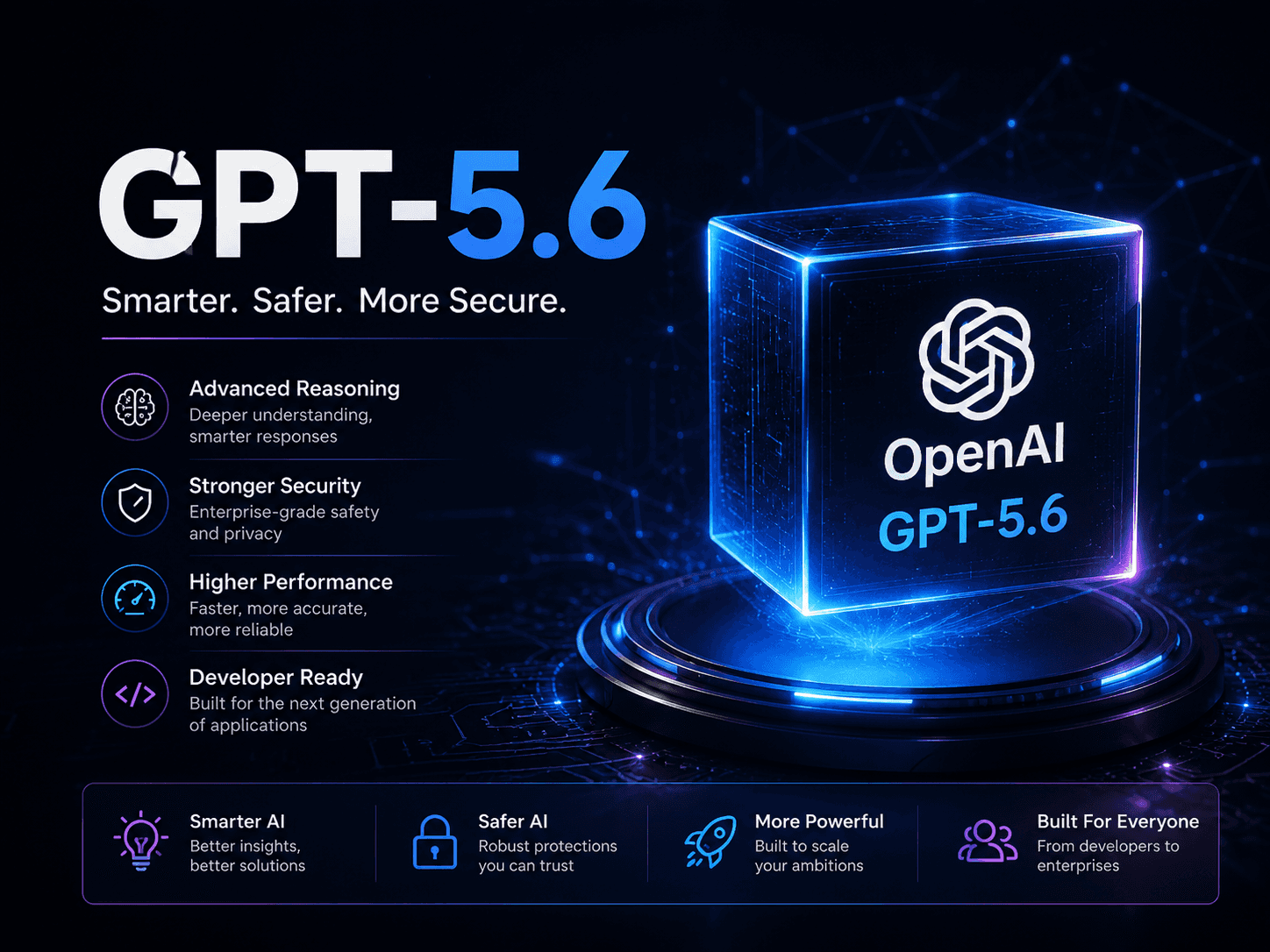
For those operating at a more advanced level, or requiring greater precision and strategic depth, GPT-5.6 Sol, available to paid subscribers, steps in. Sol introduces "reasoning controls," a feature that elevates AI from a content generator to a strategic partner. This capability allows users to guide the model's thought process, ensuring outputs are not just creative, but also logically sound, contextually relevant, and aligned with complex strategic objectives. Imagine a digital marketing agency crafting a multi-channel campaign, where every piece of content needs to align with a nuanced brand message and target specific audience segments. Sol's reasoning controls enable marketers to instruct the AI on the underlying logic, brand guidelines, and desired emotional tone, leading to outputs that are not only efficient but also highly effective and brand-consistent. This is a game-changer for sophisticated content strategy and marketing execution, allowing for deeper dives into audience sentiment analysis, predictive trend forecasting, and the iterative refinement of campaign narratives.
This dual-tier release fundamentally transforms the competitive landscape of the AI industry. While giants like Google continue to innovate with models like Gemini, and Anthropic makes strides with Claude, OpenAI’s aggressive push to democratize its latest advancements with Luna sets a new benchmark. It forces competitors to consider not just the power of their models, but also their accessibility and utility for the mass market. My read is that this move accelerates the 'consumerization of AI,' where advanced tools are no longer exclusive to tech elites but become standard equipment for anyone with an internet connection and a creative spark. This trend is incredibly significant for the Indian market, where entrepreneurial spirit thrives on access to affordable, powerful tools. Indian startups, often built on lean models, can now leverage Luna to prototype ideas, generate initial content, and even automate customer service aspects without significant upfront investment. This fosters an environment where innovation isn't limited by capital, but by imagination.
GPT-5.6 Expands AI Capability, but the “Free Luna” Narrative Needs Correction OpenAI’s GPT-5.6 family could meaningfully expand what creators, marketers and developers can build, particularly through Luna’s lower-cost positioning and Sol’s stronger reasoning capabilities. However, the article overstates their availability. GPT-5.6 Luna is not the default model for free ChatGPT users and cannot currently be selected in standard ChatGPT conversations. GPT-5.5 Instant remains the default everyday model, while GPT-5.6 Sol is available on eligible paid plans and Luna is accessible through products such as the API, Codex and Work depending on plan. In our view, the bigger opportunity for India is falling access costs rather than simply “free AI.” Cheaper capable models can empower agencies, creators and startups to automate production and experimentation—but competitive advantage will still come from original ideas, proprietary data and human judgment, not model access alone.
The impact on the creator economy, a vibrant and rapidly expanding sector in India, cannot be overstated. From social media influencers to independent journalists, podcasters, and educators, creators are constantly seeking ways to produce high-quality, engaging content at scale. Luna offers a powerful co-pilot for these endeavors, assisting with scriptwriting, content ideation, social media caption generation, and even basic video script outlines. This enables creators to focus more on their unique voice and vision, offloading repetitive or time-consuming tasks to AI. For brands and marketers, the implications are equally profound. The ability to generate hyper-personalized content for diverse audience segments, run A/B tests on ad copy with greater efficiency, and even simulate customer interactions for strategic planning, opens up new avenues for audience engagement and conversion optimization. It means less time spent on manual content creation and more time dedicated to strategic analysis and creative direction.
This evolution also connects directly to the broader trend of AI-powered personalization and the demand for authentic, yet scalable, digital interactions. As consumers become more discerning, generic content falls flat. Luna and Sol, with their enhanced capabilities, allow brands and creators to maintain a personal touch even when addressing millions. For India, a market characterized by its diversity in languages, cultures, and consumption habits, these models offer a powerful way to localize content effectively, breaking down communication barriers and fostering deeper connections with audiences across various demographics. The ability to understand subtle cultural nuances and generate appropriate responses or content variations is where AI truly moves from a utility to a strategic asset for growth and brand building.
Ultimately, OpenAI's latest releases represent more than just incremental improvements in AI; they signify a deepening commitment to making advanced technology a catalyst for global innovation. For India, this means an even stronger foundation for its digital economy, empowering a new generation of entrepreneurs, creators, and marketers to build, scale, and thrive in an increasingly AI-first world. It’s an exciting time, where the boundaries of digital creativity and business growth are being redefined by the very tools we once thought were science fiction, promising a future where cutting-edge intelligence is a partner in every creative and strategic endeavor.
Frequently asked questions
What is OpenAI's GPT-5.6 Luna?
GPT-5.6 Luna is OpenAI's latest AI model, made available for free users to democratize access to advanced generative AI capabilities for content creation and various digital tasks.
Who can use GPT-5.6 Luna?
GPT-5.6 Luna is available to all free users, providing broad access to its advanced features, while GPT-5.6 Sol is designed for paid subscribers with additional enhanced controls.
How will GPT-5.6 Luna benefit India's creator economy?
GPT-5.6 Luna empowers India's burgeoning creator economy by providing free, advanced AI tools for content generation, idea ideation, and digital asset creation, fostering innovation and efficiency.
What is GPT-5.6 Sol?
GPT-5.6 Sol is OpenAI's premium AI model for paid subscribers, offering enhanced capabilities, including advanced reasoning controls, to provide more precise and nuanced AI outputs.
What are reasoning controls in GPT-5.6 Sol?
Reasoning controls in GPT-5.6 Sol allow paid subscribers to guide the AI's thought process, enabling more sophisticated problem-solving, logical structuring, and targeted output generation for complex tasks.
How do these new models impact India's digital marketing landscape?
These new OpenAI models significantly impact India's digital marketing by offering advanced AI for personalized campaigns, content optimization, market analysis, and strategic planning, driving growth and innovation for marketers.