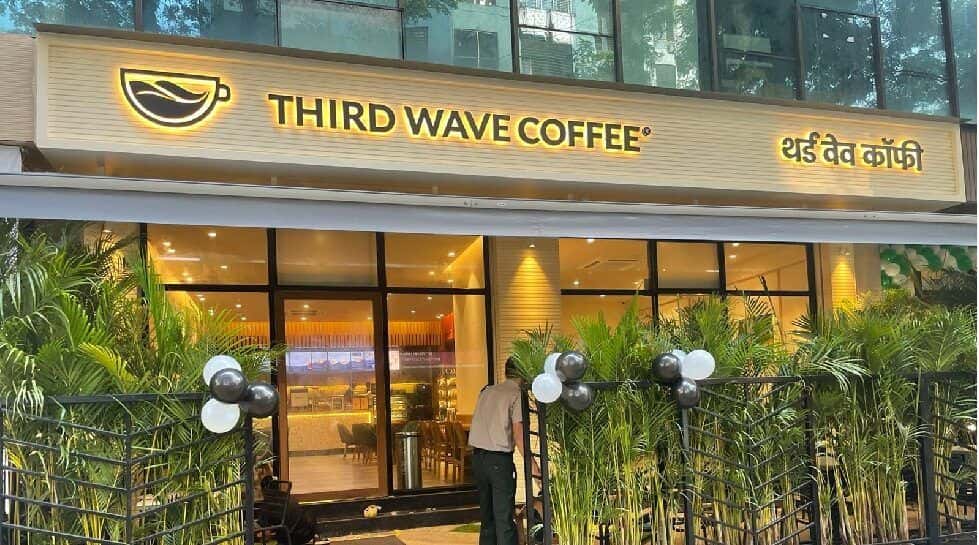
Bengaluru-based specialty coffee chain Third Wave Coffee raises $43M Series C round, backed by WestBridge Capital and Creaegis for aggressive expansion.
Third Wave Coffee, the specialty coffee chain based in Bengaluru, has closed a Rs 408 crore ($43 million) funding round, primarily led by existing investor WestBridge Capital. The capital infusion also saw participation from Creaegis, another returning investor, and a clutch of angel investors, showing continued belief in the brand's aggressive growth trajectory. This latest raise is earmarked to accelerate Third Wave’s store expansion across India, a strategic move in an increasingly crowded and competitive premium café market. The company, which has positioned itself as a purveyor of artisanal coffee experiences, is betting on capturing a larger slice of a rapidly evolving consumer market.
The company plans to deploy the fresh capital to intensify its presence in existing markets, venture into new cities, and expand into complementary categories, including its recently launched Third Rush Desserts line. Currently operating over 240 cafes nationwide, Third Wave aims to boost its store count to 320 by the close of the current financial year and targets adding approximately 100 new cafes annually thereafter.
What remains opaque, however, is the company's latest valuation, which was not disclosed, nor the precise split between primary capital and secondary share sales. This comes after a period of significant internal change for Third Wave, including a management reset in 2024 where former KFC India and Nepal head Rajat Luthra took the helm as CEO, replacing co-founder Sushant Goel who transitioned to the board. The company also undertook a restructuring late last year, impacting less than 10% of its workforce. The broader Indian coffee market is experiencing a surge, fueled by rising disposable incomes, urbanization, and a notable shift in consumer preferences towards premium, experiential F&B options. This has ignited a fierce battle for market share among established players and a new wave of challengers, all vying for prime real estate and customer loyalty.
Third Wave's aggressive expansion strategy, which has seen it enter cities like Ahmedabad, Mangaluru, and Agra, and solidify its footprint in major metros, mirrors that of its rivals. Blue Tokai, a direct competitor, operates a similar number of outlets and plans to add 120 cafes this financial year, targeting 800 by 2030. Meanwhile, Tata Starbucks, a joint venture, maintains a strong presence with over 500 stores and aims to add 50-100 annually. This density play signals a belief that physical presence and accessibility are paramount in capturing the nascent market.
My read on this funding round, particularly its composition, suggests a double-edged sword. On one hand, securing follow-on capital from existing investors like WestBridge and Creaegis demonstrates confidence from those most familiar with the company’s operations and financials. This isn't a fresh vote of confidence from a new institutional player, though, which often signals a new level of validation and strategic insight from outside the existing cap table. The lack of a new lead investor in this round, following two previous substantial raises, is a detail worth noting. The company’s financial performance presents a compelling tension. Third Wave’s operating revenue saw a 67% increase to Rs 241 crore in FY24, showing its market penetration and brand appeal. Yet, its net loss nearly doubled to Rs 110 crore in the same period, driven largely by the escalating costs associated with this rapid store expansion, including employee, material, and rental expenses. This reflects a common challenge for high-growth consumer retail businesses: balancing aggressive expansion with the path to profitability.
Third Wave Coffee must strike between aggressive physical expansion and the imperative for sustainable unit economics. The Rs 408 crore ($43 million) capital infusion provides a substantial war chest for the ongoing premium coffee turf war in India, but the structural mechanics of the round reveal deeper strategic realities.
The Insider-Led Dynamic
The fact that this round was driven entirely by existing investors (WestBridge Capital and Creaegis) is the most telling detail. In late-stage growth equity, an "insider-led" round typically signals one of two scenarios:
Deep Conviction: Existing backers see highly promising cohort data and store-level economics, opting to double down to retain ownership and maximize future upside.
Valuation Friction: The company may have struggled to attract a new lead investor willing to accept a premium valuation in a cautious macroeconomic environment, forcing existing cap-table members to bridge the gap to sustain the growth engine.
While recent reports indicate a valuation bump to roughly $210 million, the absence of a new institutional validator places the burden of proof squarely on the new management team to demonstrate operational efficiency.
The Realities of the "Density Play"
Third Wave is executing a classic density strategy, saturating premium real estate to block competitors like Blue Tokai and Tata Starbucks while building daily habituation among consumers. However, this playbook is notoriously capital-intensive.
Real Estate & Capex: High-street retail and premium mall locations in Indian metros command exorbitant rents, which immediately pressure store-level EBITDA.
The Profitability Lag: The reported widening of net losses underscores the friction of scaling physical infrastructure. The recent workforce restructuring and the appointment of a seasoned QSR executive (Rajat Luthra) suggest a necessary pivot from "growth at all costs" to rigorous operational discipline and supply chain optimization.
The Menu as a Margin Lever
The expansion into the Third Rush Desserts line is not merely a brand extension; it is a critical margin defense. Food items and premium desserts typically carry higher gross margins and drive significantly higher average order values (AOV) than standalone beverages. To achieve corporate-level profitability while opening 100 stores annually, Third Wave must successfully transition from a "coffee stop" to a comprehensive F&B destination, increasing its share of the consumer's wallet across multiple dayparts. Ultimately, this funding round buys Third Wave the runway to execute its territory grab. The true test will be proving that its premium positioning can yield sustainable profits before the market consolidates.
The professionalization of the leadership team under Rajat Luthra, combined with a workforce restructuring, indicates a concerted effort to streamline operations and enhance unit economics. However, scaling a brick-and-mortar business sustainably requires meticulous operational discipline, especially when losses are widening alongside revenue. The ambition to add 100 cafes a year is significant and will test the efficiency of the new management and supply chain.
Third Wave Coffee Expansion:
Current Cafes: 240+
Target by FY end: 320
Long-term goal: ~100 new cafes annually
The competition is not just from other specialty coffee chains. The broader F&B market, including international entrants like Tim Hortons and Pret A Manger, alongside local agile players like Subko and AbCoffee, highlights the intensity. The market is increasingly fragmented, and innovation in menu, store experience, and consumption occasions beyond traditional coffee will be critical for differentiation. Third Wave’s push into desserts is one such attempt.
Ultimately, Third Wave Coffee’s latest funding round is less about signaling a new phase of market disruption and more about sustaining an existing, aggressive growth strategy. It’s a bet on capturing a critical mass in a burgeoning market before it consolidates. The challenge ahead will be to demonstrate that rapid scale can translate into sustainable profitability, not just increasing market share. The coming years will be a crucial test of whether the Indian consumer market for premium coffee can support such expansive, capital-intensive growth from multiple players without significant margin erosion.
Frequently asked questions
What is Third Wave Coffee?
Third Wave Coffee is a specialty coffee chain founded in Bengaluru, India. It focuses on providing high-quality coffee experiences and has been rapidly expanding its presence in the Indian market.
How much funding did Third Wave Coffee recently raise?
Third Wave Coffee recently closed a funding round totaling Rs 408 crore, which translates to approximately $43 million. This significant capital infusion will support its ongoing growth initiatives.
Which investors participated in Third Wave Coffee's latest funding round?
The latest funding round for Third Wave Coffee was primarily led by existing investor WestBridge Capital. Returning investor Creaegis also participated, alongside several angel investors, demonstrating strong confidence in the brand.
Where is Third Wave Coffee based?
Third Wave Coffee is based in Bengaluru, India. This city is a major hub for technology and startups, making it a strategic location for a rapidly growing coffee chain like Third Wave Coffee.
What is Third Wave Coffee's growth strategy?
Third Wave Coffee is pursuing an aggressive growth trajectory, aiming for significant expansion. The recently secured $43 million funding is specifically earmarked to fuel these ambitious growth and scaling plans.
What is WestBridge Capital's role in Third Wave Coffee?
WestBridge Capital is a key existing investor in Third Wave Coffee and primarily led its latest $43 million funding round. Their continued investment underscores their belief in the company's potential and market strategy.