

Clean Motion trials battery swapping for solar delivery vans
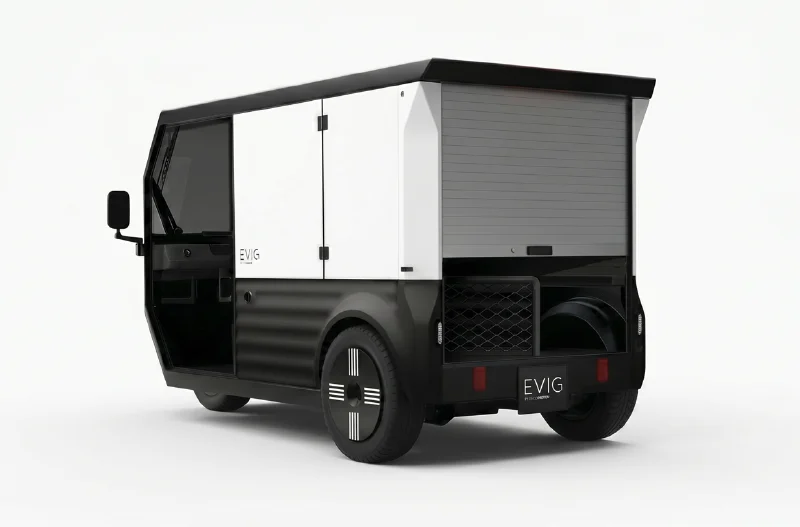
The first EVIG vehicles are now being deployed in Stockholm as part of the STOLT research project, which aims to demonstrate their suitability for everyday use in Foodora’s delivery operations. The project seeks to adapt the existing battery-swapping infrastructure of Swedish provider GoCimo for use across a wider range of vehicle types.
Until now, GoCimo’s swappable batteries have primarily powered electric scooters. By integrating the technology into the EVIG, the partners are extending the battery-swapping concept to light electric commercial vehicles.
To prepare the vehicle for this application, the project initiators spent the past twelve months adapting it technically. The battery, mechanics, and interfaces were modified to enable the EVIG to use the same swappable batteries as other vehicles in the GoCimo network. The battery swap is designed to eliminate charging breaks entirely, enabling almost uninterrupted operation.
Background: The EVIG is a lightweight vehicle developed in Sweden for delivery and service operations. Depending on the configuration, Clean Motion specifies a range of 100 to 150 kilometres. The solar module integrated into the vehicle’s roof is expected to provide an additional 40 to 50 kilometres of range per day under favourable weather conditions.
The trial is being conducted in collaboration with the City of Stockholm, Lund University, GoCimo, and the delivery service Foodora. The vehicles will operate in Stockholm’s Old Town and low-emission zones. The focus is on testing the practicality of battery swapping and determining whether a shared battery infrastructure for different vehicle classes can be operated economically.
The project is part of a broader trend towards lightweight electric vehicles. In the EU research project GIANTS, Clean Motion, Renault, and Toyota, among others, recently worked on modular platforms for vehicles in classes L5 to L7. In addition to standardised drivetrain components, the focus included integrated solar modules and portable battery systems. The goal was to develop lightweight electric vehicles more cost-effectively and facilitate their use, particularly in urban delivery and service operations. The practical test now underway in Stockholm demonstrates how such concepts can be further developed through battery swapping and solar support under real-world conditions.




0 Comments