- Exclusive
- Two Wheelers
- 5 min read
Indian two-wheeler market faces El Nino threat amid rural slowdown
As rural buyers adopt a wait-and-watch approach amid patchy rains, rising prices and uncertain geopolitical conditions, automakers are bracing for another challenging year in the entry-level segment.



Highlights
- Delayed monsoon, persistent inflation and geopolitical tensions are threatening the recovery in rural two-wheeler demand, even as urban sales remain robust.
- Entry-level motorcycle sales, which are heavily dependent on rural markets, face the biggest risk as OEMs warn that weak farm incomes and El Niño could dampen consumer sentiment.
- Despite near-term headwinds from commodity costs and crude oil prices, Hero, TVS and Bajaj remain cautiously optimistic, banking on replacement demand, premiumisation and export growth.
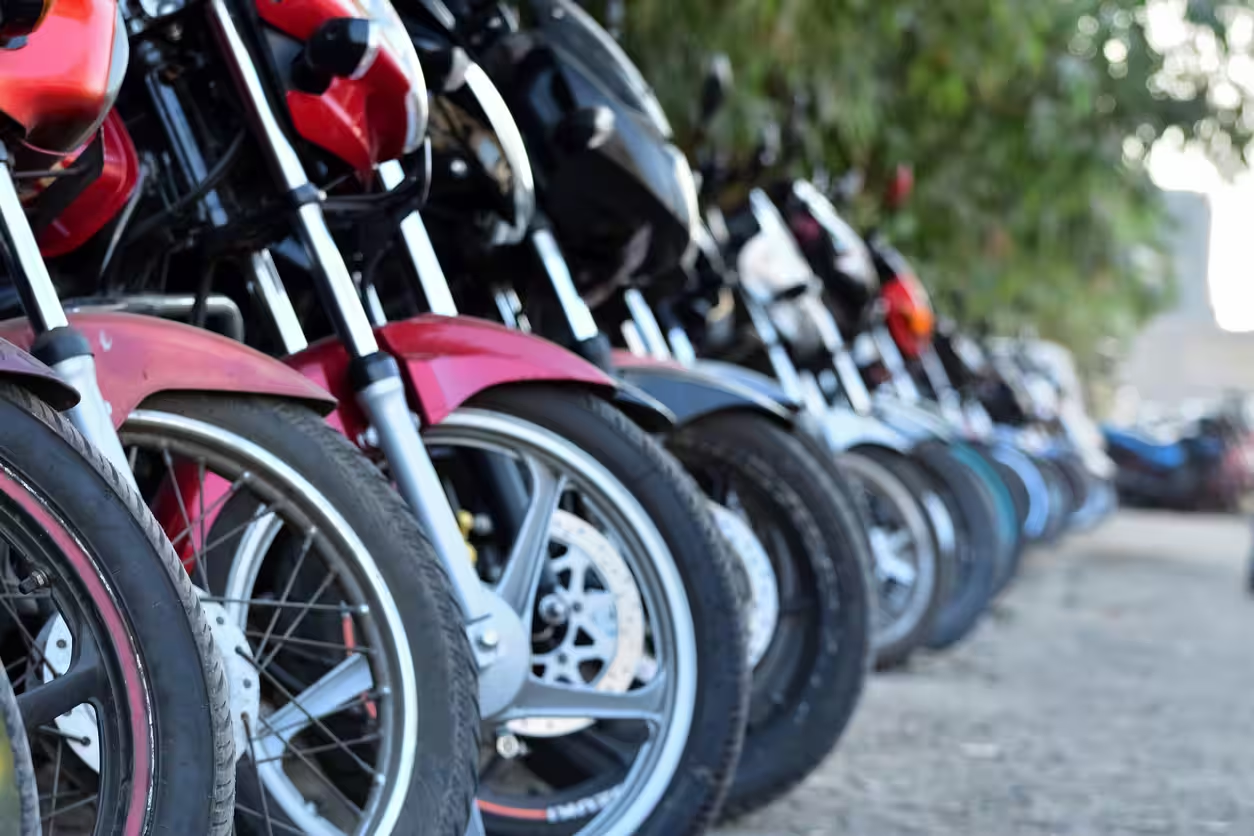
The sector is battling three distinct pressures. An uneven and delayed southwest monsoon has left rain-dependent agricultural markets in a cautious "wait-and-watch" stance. The IMD forecast for July says monthly average rainfall “is most likely to be below normal (<94 per cent of long period average).”
And rising food prices amid general inflation are draining disposable incomes, directly hitting the pockets of price-sensitive rural buyers. As per latest data, retail inflation rose to 4.38 per cent in June, breaching the RBI’s 4 per cent target for the first time in 17 months. Then, geopolitical tensions in West Asia – which eased in June and led to improved vehicle supplies to dealerships alongside benign oil prices – are back up as are crude prices.
Rural decline
Data from the Federation of Automobile Dealers Associations (FADA) highlights a stark contrast: Urban buyers are powering record-breaking volumes, while rural buyers are pulling back on the throttle since at least last fiscal. FADA data showed that while June was the best ever month at 18.28 lakh units retailed, up 21.22 per cent from the same month last fiscal, the retail numbers were lower by 4.25 per cent compared to May this year due to a slowdown in rural demand.FADA attributed this slowdown to “the late onset and uneven progress of the south-west monsoon, which kept rain-fed markets in a wait-and-watch mode.” But dealers reported strong entry-level demand, improved OEM supplies after the West Asia crisis eased in June, the association said. In 2025-26 too, FADA numbers showed that industry-wide retail growth for two-wheelers in rural areas was 12.11 per cent, lower than the 15.21 per cent registered in urban areas.
Entry-level vulnerability
Back-of-the-envelope calculations show that rural India accounts for more than 50 per cent of all entry-level motorcycle sales. For market giants like Hero MotoCorp and TVS Motor Company, this entry-level segment makes up nearly two-thirds of their entire sales portfolio.Ultimately, the trajectory of this fiscal year rests on the sky: A strong, late-stage monsoon recovery will put cash back in farmers' hands and rev up rural showrooms; a weak one will likely leave entry-level sales plateauing in the slow lane.Hero MotoCorp, TVS Motor Company and Bajaj Auto – the three biggest two-wheeler OEMs – have all noted in their latest annual reports that rural demand is heavily influenced by the performance of the monsoon and agricultural productivity.
Hero has pointed towards the emerging risk of El Nino conditions on agricultural output and the resulting impact on rural incomes to underline a possible dampening of demand for two-wheelers.
And for Bajaj Auto, a rainfall deficit could prove to be a double whammy since it has already lost share in the domestic market last fiscal. The company said in its annual report that domestic motorcycle sales registered just 0.6 per cent growth in FY2026 to about two million units and the company’s share in the domestic motorcycle market declined by 100 basis points, from 16.6 per cent in FY2025 to 15.6 per cent in FY2026.
This decline, it said, was driven by varying growth dynamics across segments and heightened competitive intensity, particularly in the entry and mid-commuter categories. Now, as El Nino looms, Bajaj has said that this could weigh on monsoon patterns and may have broader implications for India’s economy through its impact on agricultural output, rural incomes, and overall consumption sentiment.
Inflation and war
And not just scanty rains, continuously elevated crude oil prices due to the West Asia crisis, coupled with commodity inflation are expected to continue putting pressure on companies’ margins. Commodity inflation is of particular concern for steel and aluminium, putting pressure on manufacturing margins and necessitating price increases that could further dampen consumer demand.The OEMs have also flagged tighter liquidity conditions and a "wait and watch" stance on interest rate cuts by the RBI, saying this could affect the affordability of vehicle financing.
Optimism intact
In their latest annual reports, Hero, TVS and Bajaj Auto, have generally maintained an optimistic but cautious outlook for their ICE two-wheeler portfolio for the current fiscal year. They’ve alluded to structural demand, the "premiumisation" trend and a recovery in the replacement cycle.Hero has said it is optimistic about the long-term prospects of the industry, citing rising mobility needs and consumer aspirations. The company expects a steady recovery in the 100cc/110cc segment, driven by "replacement demand" as aging vehicles reach the end of their operational life and consumers focus on mileage due to rising fuel costs.
TVS has said it expects two-wheeler demand to broadly track the previous year’s performance, but with a caveat: no major external shocks. The company remains "cautiously optimistic" given projected India GDP growth above 6 per cent. And citing an analysis by CRISIL Ratings, TVS has said that industry volumes are expected to reach 29 million units this fiscal, a 7-9 per cent year-on-year growth.
And as for Bajaj, its ICE strategy for the year ahead remains focused on "deepening competitiveness" in the strategically important 125cc+ domestic motorcycle segment. Unlike its domestic-heavy competitors, Bajaj has emphasised a sustained rebound in overseas markets, expecting export momentum to sustain as macro-economic conditions improve across 100+ countries.

Source link