Spanish startup Liux's Big microcar secures Europe-wide homologation. Production ramps up, betting on sustainability against Chinese EVs.
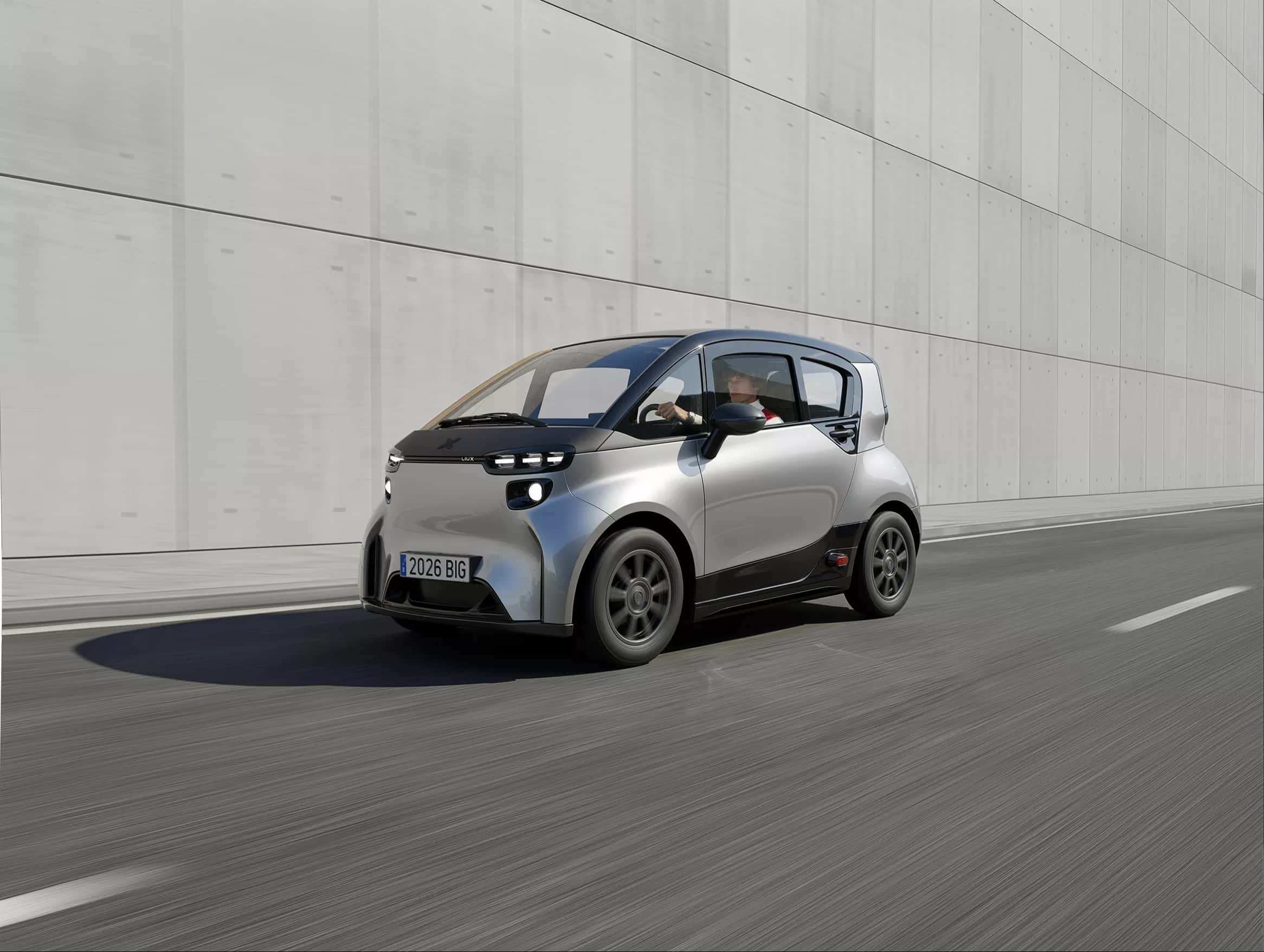
Liux, the Spanish electric vehicle startup, has secured Europe-wide homologation for its microcar, the Liux Big, according to media reports.
Liux’s €16 million funding round and successful European homologation of the Liux Big represents a calculated counter-offensive against the influx of Chinese-manufactured compact EVs. By securing approval in the L7e "heavy quadricycle" category, the Spanish startup is bypassing the crushing capital requirements of traditional automotive manufacturing to exploit a highly specific regulatory and materials arbitrage.
The Physics of the L7e Arbitrage
The entire business model of the Liux Big hinges on stripping out mass. In the EV sector, weight is the enemy of margin; a heavier car requires a larger, more expensive battery to achieve acceptable range.By targeting the L7e classification, Liux operates under different regulatory crash-testing and weight constraints than standard passenger cars. This allows them to achieve compounding efficiencies:
Battery Unit Economics: Because the vehicle is drastically lighter, Liux can achieve a verified range of 215 km using a remarkably small 15 kWh battery pack.
Hyper-Efficiency: The vehicle boasts a homologated consumption of just 7 kWh/100 km, allowing it to be recharged rapidly via a standard domestic wall socket without requiring expensive fast-charging infrastructure.
Addressable Market Expansion: The L7e classification legally permits 16-year-olds with a B1 license to drive the vehicle in Europe, opening up a youth demographic entirely inaccessible to standard automakers.
The Biocomposite Supply Chain Moat
To achieve these weight reductions without compromising structural integrity, co-founders Antonio Espinosa de los Monteros and David Sancho are utilizing a proprietary linen/flax-fiber biocomposite for the chassis and bodywork. This is a structural differentiator, not just a marketing sustainability play. The flax-based composite yields structures up to 50% lighter than traditional steel or aluminum, directly enabling the vehicle's high efficiency. From a manufacturing perspective, this circular model allows Liux to recover up to 98% of the resin and 100% of the flax fabric, theoretically insulating the company from the volatile global pricing of traditional automotive metals.
The Modular Assembly Strategy
Rather than burning billions on a massive gigafactory, Liux is employing a decentralized, low-capex manufacturing strategy. The initial production run is centered at a 6,000-square-meter facility in Azuqueca de Henares (Guadalajara, Spain).
Capital Efficiency: The company plans a localized investment of roughly €30 million over five years to reach a target capacity of 15,000 to 20,000 vehicles annually by 2028.
Pricing Power: With over 7,500 early reservations, Liux is targeting a retail price of under €18,000 before government subsidies. This positions the Big at the premium end of the microcar segment, above the utilitarian Citroën Ami, but highly competitive against premium L7e entrants like the Microlino.
Ultimately, Liux is betting that localized, low-mass, plant-based manufacturing can yield better unit economics in the urban mobility sector than simply importing standard steel and lithium from Asia.
The company is set to commence sales in the first half of next year and has expanded its team to 65 employees, as per media reports. Production is currently ramping up across three facilities in Spain, including its plant in Azuqueca de Henares, with a stated capacity target of 20,000 cars annually by 2030, as per media reports. Liux has raised €16 million, or approximately $18.5 million, in total funding to date, including European funding, according to media reports.
Co-founded by Antonio Espinosa de los Monteros and David Sancho, Liux operates within the electric microcar segment, emphasizing sustainable transportation. Its business model centers on manufacturing small electric vehicles using a novel linen-based biocomposite for the fiber body, designed for future material extraction and recycling, as detailed by co-founder Espinosa in media reports. This commitment to real circularity aims to mitigate the rapid obsolescence cycles often seen in modern automotive production.
The European microcar market has increasingly seen a rise in compact Chinese EVs, with even established brands like Smart moving manufacturing to China, as noted in media reports. Liux, by prioritizing sustainability in its 'made in Spain' approach, aims to differentiate itself in this competitive landscape, much like Switzerland's Microlino.
Frequently asked questions
What is the Liux Big microcar?
The Liux Big is an electric microcar developed by the Spanish startup Liux. It has recently secured Europe-wide homologation and is designed for sustainable urban mobility. Sales are expected to begin in the first half of next year.
When will the Liux Big microcar be available for purchase?
Liux plans to commence sales of its Big microcar in the first half of next year. Production is currently ramping up in three facilities across Spain to meet the anticipated demand.
Where is the Liux Big microcar produced?
Production of the Liux Big microcar is ramping up across three facilities in Spain. One of the primary plants is located in Azuqueca de Henares, indicating a strong European manufacturing base.
What is Liux's strategy to compete with Chinese EV manufacturers?
Liux is betting on sustainability and localized European production to differentiate itself from Chinese EV manufacturers. Its microcar is designed to offer an eco-friendly and practical mobility solution for urban environments.
Has the Liux Big microcar received regulatory approval for Europe?
Yes, the Liux Big microcar has secured Europe-wide homologation, a critical regulatory approval. This certification allows the Spanish startup to commence sales across the entire European market.
How many employees does Liux have?
Liux has expanded its team to 65 employees as it prepares for the launch and increased production of the Liux Big microcar. This growth supports their operational and sales goals for the upcoming year.