New draft CAFE III norms reward E20 and biofuel vehicles with emission benefits
The proposed norms introduce a ‘Carbon Neutrality Factor’ for ethanol, compressed biogas and other biofuels for the first time, while also retaining incentives for hybrids and electric vehicles through super credits and credit trading mechanisms.



Highlights
- Draft CAFE III norms introduce Carbon Neutrality Factors (CNFs) for ethanol, biofuels and compressed biogas, allowing automakers to claim lower CO₂ emissions for compliance.
- Battery electric vehicles receive the highest super credit multiplier of 3 under the proposed norms, reinforcing the government's push for zero-emission mobility.
- The draft allows OEMs to bank, trade or purchase emission compliance credits from the Bureau of Energy Efficiency (BEE), offering greater flexibility in meeting fleet-wide CO₂ targets.
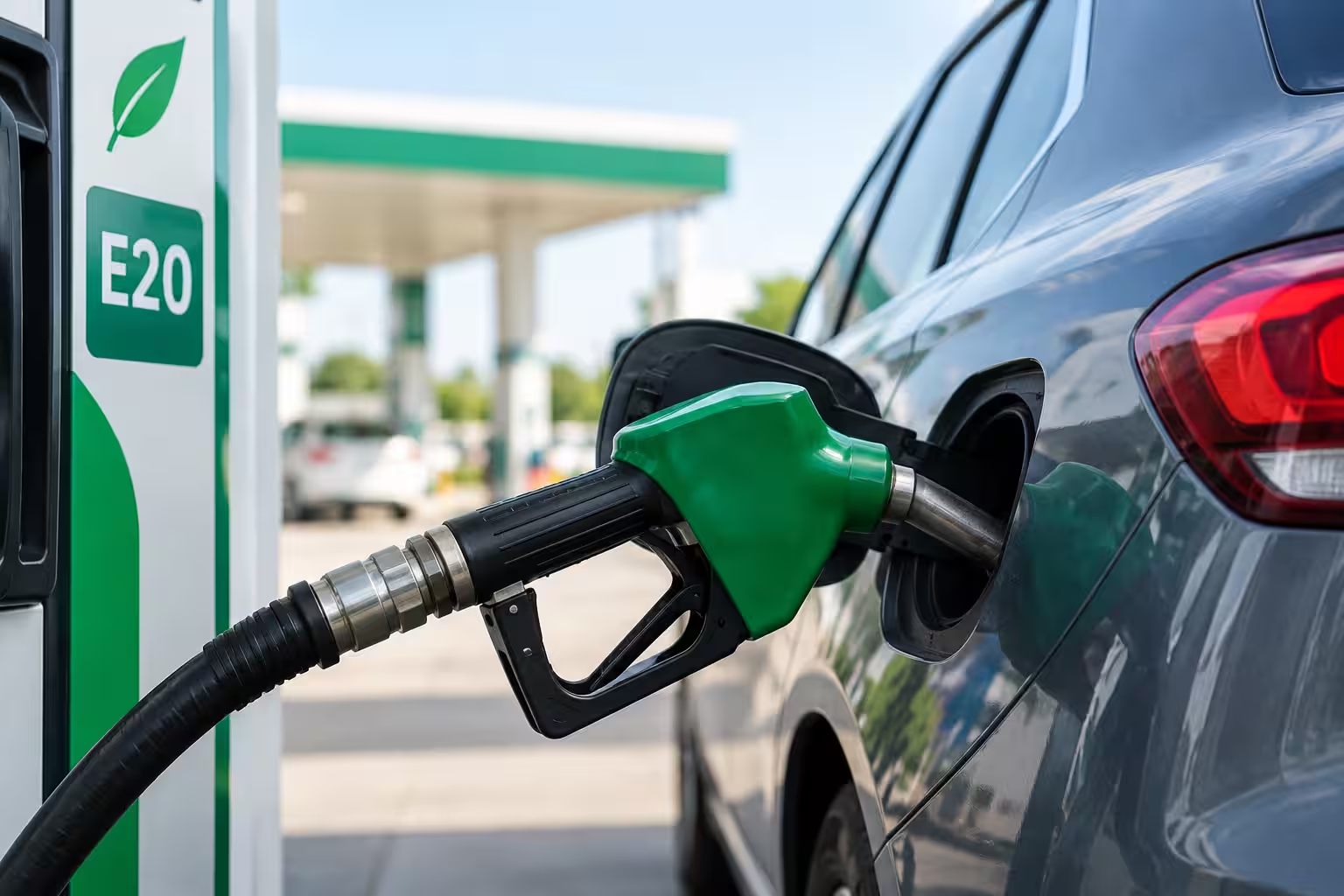
Ethanol, along with other biofuels and compressed biogas have made an appearance in the draft norms for Corporate Average Fuel Efficiency (CAFE) III, which were notified by the Ministry of Power on Thursday.
The norms propose a ‘Carbon Neutrality Factor’ or CNF for these fuels for the first time; their mention comes just when the ethanol blending programme of the government is under intense public debate. Already, E20 (20 per cent ethanol) fuel has become the mono fuel to be dispensed across India’s pumps.
CNF is a regulatory metric used to recognise and discount the "net" carbon-neutral properties of alternative fuels, such as biofuels and compressed biogas (CBG), in tailpipe emissions.
It allows automakers to deduct a specific percentage of declared carbon-dioxide emissions before compliance is assessed. The latest CAFE III draft proposes an 8 per cent carbon reduction factor for E20 and higher blends of ethanol in petrol, and this goes up to 22.3 per cent for strong hybrids and flex fuel vehicles.
In other words, fleet wide emissions from petrol vehicles could be counted lower now due to mandatory ethanol blending in petrol and OEMs will be able to claim higher benefits through vehicles which are either flex fuel vehicles or strong hybrids.
Compared to the initial draft which BEE released in September 2025, the emission slope has now been made flatter, which means that against the initial 0.002 value for all five years of CAFE III, the new proposal is 0.00158 for year one and then reducing annually to reach 0.00131 in the fifth yearAn industry executive
April draft largely intact
In April this year, the stakeholders had given their unequivocal nod to much of what has been notified today, after months of bitter acrimony. This set of proposals seemingly bridged the earlier divide between small car makers and those OEMs which sell bigger vehicles.
This happened because after many back-and-forth consultations, the BEE proposed a flatter emission curve while easing penalty norms for OEMs which fail to meet the emission criteria.
The option of carbon credit trading and pooling among vehicle manufacturers was also seen as an olive branch. Most importantly, the April draft of proposals shifted the focus away from the small versus large car debate, towards overall fleet emissions. The five-year CAFE III norms will be valid till 2031-32.
Good benefits for lighter vehicles, much more than 3g per litre given in the earlier proposalIndustry executive
What changed
Compared to earlier draft proposals, the new notification allows total emission targets to be higher for OEMs which sell heavier vehicles (since emission curve has been flattened) while for cars which are below the industry average weight of 1,229 kg also, targets will be easier. The fleet wide emission targets have been relaxed by about 21 per cent compared to the initial proposal which was shared in September last year.
“Compared to the initial draft which BEE released in September 2025, the emission slope has now been made flatter, which means that against the initial 0.002 value for all five years of CAFE III, the new proposal is 0.00158 for year one and then reducing annually to reach 0.00131 in the fifth year. BEE’s logic is that the adjustment in the emission slope reduces the CO2 emission target allowance for heavier vehicles, forcing faster adoption of hybrids/EVs, while also providing relief to manufacturers of smaller, lighter cars,” an industry executive had said earlier.
Another executive had said that the latest BEE draft offers “good” benefits for lighter vehicles, “much more than 3g per litre given in the earlier proposal” by flattening the slope instead of offering any special treatment.
Battery electrics win
Another important amendment in the latest BEE draft notification versus the September proposal is about super credits allowed for vehicles based on their fuel. Super credits are a form of regulatory adjustment allowing an OEM to count the sale of one low-emission vehicle as multiple vehicles in fleet-average carbon dioxide emission calculation, making it easier for the OEM to meet overall emission targets.
One of the industry executives quoted earlier said that battery electric vehicles have been allowed the maximum super credits at 3, showing government’s “unequivocal” support to these vehicles which have zero tailpipe emissions. The super credits for strong hybrids have been reduced to 1.6 from 2 proposed earlier. Range Extender Electric Vehicles (REEVs) remain at 3 super credits. Strong hybrids which are flex fuel ethanol vehicles will be allowed 2.5 super credits, similar to plug-in hybrids.
The latest notification specifies the pooling mechanism too. Not only can OEMs enter into pooling arrangements with competitors which have extra credits for lower fleet wide emissions, they can also buy credits for a fee from the Bureau of Energy Efficiency (BEE).
This last proposal echoes what BEE has now retrospectively proposed for the CAFE II period, which ends in March next fiscal. The retrospective amendment to CAFE II norms has already elicited objections from some OEMs which have surpassed emission targets during the CAFE II period.
The pooling mechanism allows OEMs to trade credits in case one falls short of the target for CO2 emissions, thus allowing OEMs with extra credits to benefit. And under the provision for OEMs to buy credits from the BEE itself, the price per g CO2/km of such credits shall be as prescribed for each reporting period: FY2028 at ₹2,500; FY2029 at ₹3,000; FY2030 at ₹3,500; FY31 at ₹4,000 and FY32 at ₹4,500.
This proposal, which allows BEE to sell credits and which has been now proposed under CAFE II itself, remains contentious. Of course, penalties have also been prescribed if an OEM fails to meet the annual emission fleet wide target.

Source link