EV giant Tesla eyes massive Fort Bend County plant for vertical ingot-to-module production, targeting Q1 2029 commercial operations.
Tesla is planning its largest US manufacturing investment to date, a USD 10.1 billion solar cell factory in Fort Bend County, Texas, codenamed "Project Crystal Sun."
The proposed facility aims for full vertical integration, encompassing ingot-to-module production, and eyes commercial operations by Q1 2029.
The Electric Vehicle (EV) and Renewable Energy (RE) giant has applied for a 10-year property tax break under Texas's JETI program, arguing competitiveness against other US states hinges on these incentives.
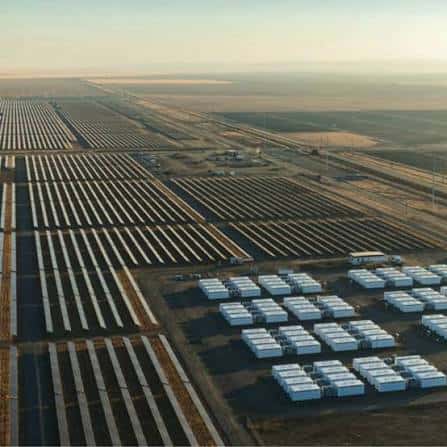
Tesla, the global electric vehicle and renewable energy pioneer founded in 2003, has filed an application for a monumental USD 10.1 billion solar cell factory in Fort Bend County, Texas. This proposed facility, operating under the codename "Project Crystal Sun," represents the largest US manufacturing investment the company has publicly outlined, aiming to dramatically scale its domestic solar production capabilities. The filing details plans for 9,712 permanent jobs across a vast 3,050-acre campus, with commercial production slated to commence in the first quarter of 2029. The application, submitted for a 10-year property tax abatement through Texas's Jobs, Energy, Technology and Innovation (JETI) Act, underscores the critical role of incentives in attracting large-scale industrial projects. Prepared by consulting firm Kroll and signed by a Tesla tax attorney, the document became public on August 6, revealing an investment breakdown of approximately USD 1.5 billion in real property and USD 8.6 billion in equipment. This substantial capital infusion is projected to occur over three years, from 2026 through 2028. What truly sets "Project Crystal Sun" apart is its ambition for complete vertical integration within the Solar Technology sector. The equipment list in the filing describes a plant capable of handling the entire manufacturing process: from ingot and wafer production to coating, metallization, printing lines, and final cell testing, all within state-of-the-art cleanrooms. This "raw polysilicon in one end and finished cells and modules out the other" approach is a significant departure from typical US solar manufacturing, which often relies on imported cells for module assembly.
**Project Crystal Sun's Proposed Investment:** * **Total Capital Outlay:** USD 10.116 billion * **Real Property Investment:** USD 1.5 billion * **Equipment Investment:** USD 8.6 billion
This move towards deep vertical integration by a major player like Tesla is a potent signal in the ongoing global energy transition. My read is that this isn't merely about cost efficiency; it's a strategic response to geopolitical tensions and the imperative to de-risk supply chains. The pandemic and subsequent disruptions highlighted the vulnerabilities of over-reliance on a single region for critical components, a lesson many nations are actively integrating into their industrial policies. This project, if realized, would significantly bolster US domestic capacity, creating a self-sufficient ecosystem for solar manufacturing, a trend we are seeing across advanced manufacturing sectors globally.
What is the Strategic Significance of Tesla’s Vertical Integration in Solar?
The filing's emphasis on a fully vertically integrated plant reflects a broader strategic shift in advanced manufacturing, moving away from fragmented global supply chains towards more localized and controlled production. This model, while capital-intensive, offers greater control over quality, intellectual property, and resilience against external shocks. For Tesla, it means bringing critical solar cell production in-house, aligning with their overarching vision of sustainable energy generation and storage. The sheer scale of the proposed 3,050-acre greenfield campus in Fort Bend County near Richmond further underscores the long-term vision behind "Project Crystal Sun."
Tesla's proposed $10.1 billion solar cell factory in Texas, codenamed "Project Crystal Sun," is a massive pivot for American manufacturing. At StartupNews.fyi, we see this as far more than just another gigafactory. By proposing a fully vertically integrated plant—taking raw polysilicon all the way to finished cells and modules under one roof—Tesla is fundamentally challenging the global supply chain. Right now, the US relies heavily on imported solar cells for domestic module assembly. Project Crystal Sun aims to change that narrative by onshoring the entire process to a massive 3,050-acre campus in Fort Bend County, projecting over 9,700 permanent jobs by 2029. But the reality of deep tech infrastructure is that domestic manufacturing of this scale requires serious government backing. Tesla's application for a 10-year property tax break under Texas's JETI program proves that securing local incentives remains a critical deciding factor for these industrial mega-projects. This $10 billion bet is a calculated strategic move to de-risk supply chains and secure true energy independence. The clean energy transition has officially entered its heavy industrial phase, and the ultimate winners will be those who control the entire hardware stack.
Why Are Government Incentives Critical for Such Mega-Projects?
Tesla's application openly states that the Fort Bend site's economics are "worse than a competing site in another state" without the requested tax breaks and local abatements. This is a standard, albeit effective, tactic in corporate site selection, where large manufacturers leverage potential investments to secure the most favourable financial terms. Property tax, as Tesla highlights, represents one of the largest operating costs for a facility of this magnitude, making tax relief a significant factor in the final decision. State property tax breaks play a critical role in making a USD 10.1 billion investment financially viable, demonstrating the critical role of public policy in de-risking and incentivizing strategic industries. What strikes me here is the confluence of corporate ambition and governmental strategic imperative. Governments worldwide are actively using fiscal policies to reshore and bolster domestic manufacturing, especially in green technologies. This project is a clear manifestation of that trend, where the private sector's drive for scale meets the public sector's desire for economic growth, job creation, and energy independence.
Frequently asked questions
What is 'Project Crystal Sun'?
'Project Crystal Sun' is the codename for Tesla's planned $10.1 billion solar cell factory in Fort Bend County, Texas. It represents Tesla's largest US manufacturing investment to date.
Where will Tesla's new solar factory be located?
Tesla's new 'Project Crystal Sun' solar factory will be located in Fort Bend County, Texas. This facility aims for full vertical integration in solar cell production.
How much is Tesla investing in 'Project Crystal Sun'?
Tesla is investing an estimated $10.1 billion in 'Project Crystal Sun.' This substantial investment underscores its commitment to expanding renewable energy manufacturing.
What will 'Project Crystal Sun' produce?
'Project Crystal Sun' will focus on full vertical integration, encompassing ingot-to-module production for advanced solar cells. The factory aims to streamline the entire manufacturing process.
When is 'Project Crystal Sun' expected to begin operations?
Commercial operations for Tesla's 'Project Crystal Sun' solar factory are targeted to commence by the first quarter of 2029. This timeline allows for significant development and setup.
Has Tesla applied for any incentives for the factory?
Yes, Tesla has applied for a 10-year property tax abatement for the 'Project Crystal Sun' solar factory. This incentive package is common for large-scale manufacturing investments.