Texas Instruments' new TMCS2100-Q1 coreless Hall-effect sensor promises to enhance electric vehicle efficiency, offering OEMs a critical path to extended range and smoother operation.
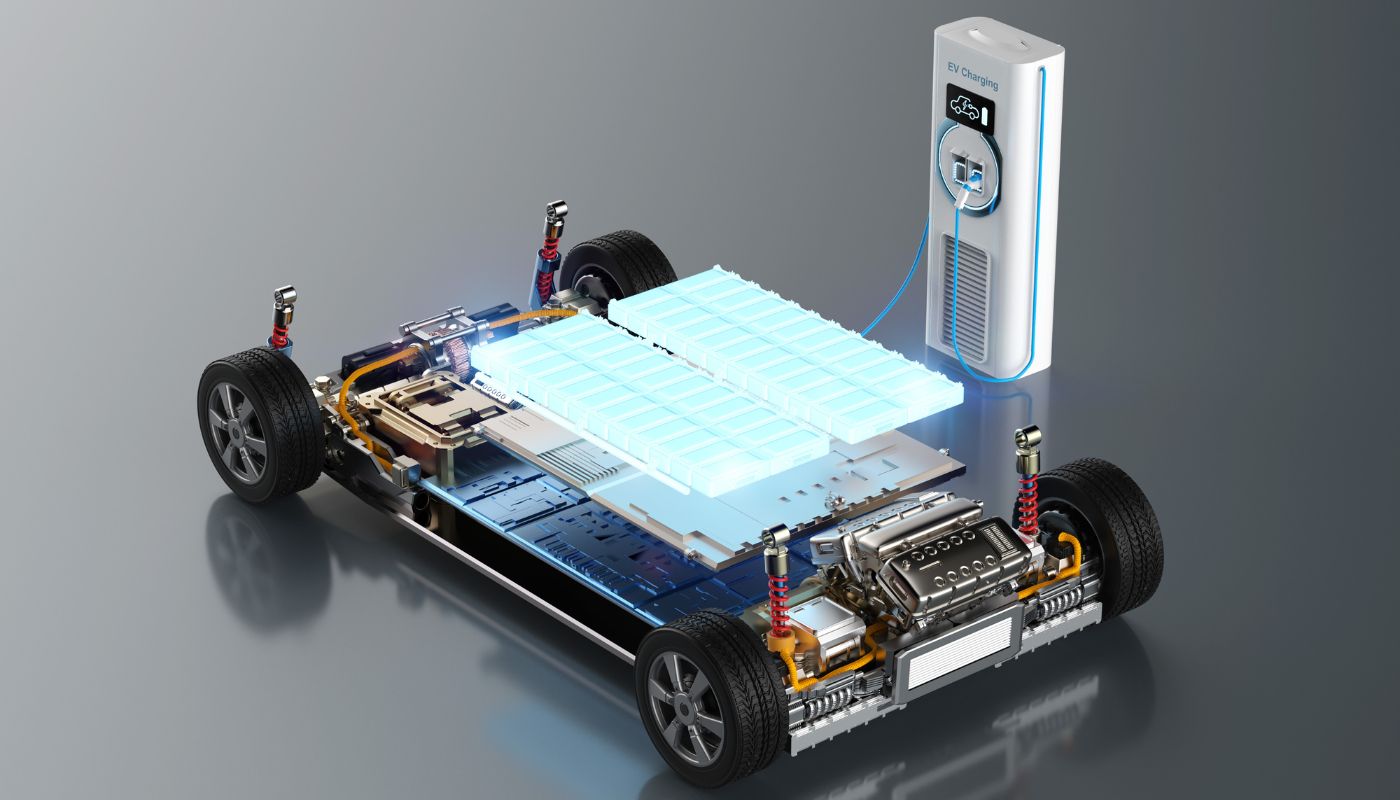
Texas Instruments has unveiled a new multiaxial coreless Hall-effect current sensor, the TMCS2100-Q1, designed to enhance electric vehicle efficiency and range, signaling a critical advancement for automotive original equipment manufacturers seeking performance gains. This innovation addresses longstanding compromises in power management, offering a pathway to smoother vehicle operation and potentially lighter drivetrain components, with tangible implications for the burgeoning EV market's profitability and competitive dynamics. The sensor is engineered for integration within the traction inverter, the core component managing electricity flow from an EV's battery to its motor.
Precise control over this power delivery is paramount, as even minor measurement inaccuracies can lead to torque ripple, manifesting as suboptimal acceleration and energy loss through heat and noise. The market has long sought a solution that balances accuracy with compact design. Traditional sensor designs often force automakers into a trade-off: magnetic core sensors offer high accuracy but are larger and heavier, while smaller coreless alternatives are susceptible to vibrations that compromise their readings. TI's new offering circumvents this by simultaneously measuring the magnetic field around the electrical current in both horizontal and vertical directions. This dual-axis measurement allows the sensor to dynamically compensate for vibrational shifts, maintaining measurement integrity even under dynamic driving conditions.
What It Means
This seemingly incremental component upgrade represents a foundational shift in how power electronics will enable the next generation of electric vehicles. For the global tech and automotive ecosystems, it highlights the continued importance of fundamental semiconductor innovation in driving the overarching electrification trend. OEMs face relentless pressure to improve range and performance while managing costs, and enabling technologies like the TMCS2100-Q1 provide crucial tools. The ability to maintain measurement errors below 1% even with a 0.4-millimeter positional shift is particularly salient for modern EV architectures.
As high-power 800-volt systems become more prevalent, the demand for extremely precise control of electricity intensifies, where even minuscule inefficiencies can compound significantly. My read is that this precision will allow automakers to fine-tune motor control algorithms with greater confidence, leading to optimized energy consumption and extended battery life, without necessarily increasing battery pack size.
Texas Instruments' TMCS2100-Q1 sensor is reported to be **20 times more accurate** than current single-direction coreless sensors, significantly improving EV power management.
The Context
Texas Instruments has historically been a bedrock supplier in the semiconductor industry, underpinning innovation across diverse sectors, and its entry into this specialized EV sensor segment is noteworthy. The company's deep expertise in analog and embedded processing solutions positions it well to deliver critical components for complex automotive systems. This development fits squarely within a broader industry trend of achieving efficiency gains through "marginal improvements" across the entire EV powertrain. We have seen similar dynamics play out with advancements in silicon carbide (SiC) power electronics and sophisticated battery management systems (BMS), where iterative refinements at the component level collectively yield substantial overall performance enhancements. Just as SiC inverters have reduced losses and allowed for faster charging, and advanced BMS platforms have optimized cell utilization, this new sensor improves the fidelity of the motor's power input. This ongoing focus on optimizing every electron's journey from battery to wheel is defining the competitive environment.
The Coreless Breakthrough: How TI is Re-Architecting the Traction Inverter
Texas Instruments' introduction of the TMCS2100-Q1 multiaxial coreless Hall-effect current sensor is a prime example of how micro-level semiconductor engineering dictates macro-level automotive economics. While battery chemistry dominates the EV range conversation, the traction inverter—the critical bridge converting DC battery power into the AC power that drives the motor—is where actual driving efficiency is won or lost.
The Physics of Multiaxial Measurement
For years, automotive engineers have faced a brutal physical trade-off when designing current sensors for traction inverters:
Magnetic Core Sensors: Highly accurate and immune to vibration, but massive, heavy, and expensive.
Traditional Coreless Sensors (Single-Axis): Compact and lightweight, but highly susceptible to "displacement error." Because a moving EV vibrates violently, a standard coreless sensor shifts slightly relative to the busbar (the conductor carrying the current), throwing off its single-axis magnetic field reading.
TI's Kilby Labs bypassed this trade-off entirely by engineering the TMCS2100-Q1 to measure the magnetic field in both the horizontal and vertical axes simultaneously. By utilizing a proprietary algorithm to compare both vectors, the sensor can mathematically compensate for physical movement. The result is a coreless sensor that maintains a displacement error of less than 1% even when shifted by 0.4 millimeters—effectively making it 20 times more accurate than existing single-axis coreless solutions.
System-Level Economic Impact
In the context of modern 800-volt EV architectures, this seemingly marginal component upgrade has massive downstream implications for OEMs:
Eliminating Torque Ripple: Inaccurate current sensing causes "torque ripple"—micro-fluctuations in motor power that translate into jerky acceleration, whining motor noise, and wasted thermal energy. The precision of the TMCS2100-Q1 smooths this out, converting more battery energy directly into forward momentum.
Chassis Weight Reduction: By achieving magnetic-core accuracy in a coreless form factor, OEMs can dramatically shrink the physical footprint and weight of the traction inverter. Furthermore, because the sensor doesn't require physical notches or holes to be cut into the busbar, engineers can optimize thermal management and circuit board space.
The CapEx Leverage: The ultimate goal of these component-level efficiency gains is to allow automakers to extend vehicle range without relying on the brute-force, capital-intensive method of simply adding more lithium-ion cells to the battery pack.
The Stakes
For venture-backed startups and established players in the power electronics space, this TI launch sets a new benchmark for sensor performance and integration. The confidence that OEMs can gain from such robust current sensing could accelerate the adoption of more complex motor designs or higher-voltage battery architectures, directly influencing the design cycle for future EV platforms. The implications extend to the supply chain, as those capable of integrating such advanced components will gain a strategic advantage. The shift towards highly accurate, vibration-resistant coreless sensors suggests a future where traction inverters can become even more compact and lightweight, contributing to overall vehicle mass reduction.
What strikes me here is that these seemingly small engineering victories are what truly move the needle in the capital-intensive automotive sector, paving the way for further innovation in areas like integrated powertrain modules and vehicle-to-grid (V2G) capabilities. The immediate watchpoints include how quickly major global automotive OEMs announce their intention to integrate this technology into upcoming models, particularly for their 800-volt platforms. Observe announcements around 2027 and 2028 model year vehicles, as design cycles typically allow for such component integration. The market will also be keen to see if competing sensor manufacturers respond with comparable innovations, potentially sparking a new wave of competition in power management components that will ultimately benefit consumers through more efficient and higher-performing electric vehicles.
Frequently asked questions
What is the TMCS2100-Q1 sensor, and how does it improve EV range?
The TMCS2100-Q1 is Texas Instruments' new multiaxial coreless Hall-effect current sensor. It enhances electric vehicle range by improving power management efficiency and reducing losses, leading to smoother operation and extended battery life.
Which company developed the TMCS2100-Q1 sensor?
The TMCS2100-Q1 sensor was developed and unveiled by Texas Instruments (TI). This innovation underscores TI's commitment to advancing automotive technology and electric vehicle performance.
How does a coreless Hall-effect sensor benefit electric vehicles?
A coreless Hall-effect sensor eliminates magnetic core saturation, improving linearity and accuracy in current measurements. This precision allows for more efficient power control and management within EVs, directly contributing to increased range and reliability.
What problem does the TMCS2100-Q1 sensor solve for EV manufacturers?
The TMCS2100-Q1 sensor addresses longstanding compromises in EV power management by offering superior accuracy and efficiency. It enables automotive OEMs to achieve significant performance gains, overcoming traditional limitations in extending vehicle range.
Will this new sensor be available in all future electric vehicles?
While the TMCS2100-Q1 is a critical advancement, its adoption will depend on individual automotive manufacturers. It offers a pathway for OEMs to enhance future EV models with improved efficiency and range.
What are the key advantages of the TMCS2100-Q1 for EV efficiency?
The TMCS2100-Q1 offers enhanced current measurement accuracy and reduced power loss, leading to greater overall EV efficiency. These benefits translate into longer driving ranges and improved system reliability for electric vehicles.