Uber plans a global workforce reset, cutting 10% of staff to simplify management and focus on rides, delivery, and robotaxis.
Uber Technologies has moved to cut about 3,300 roles globally, or 10% of its workforce, in a restructuring aimed at reducing management layers and redirecting spending toward its ride-sharing, delivery, and robotaxi operations. The move marks one of the company’s largest workforce resets since the Covid-19 period, and comes after it had largely avoided the broad job reductions seen across large technology companies in recent years.
Chief Executive Officer Dara Khosrowshahi informed employees of the changes in a companywide email, saying the company had added too many layers and coordination points as it expanded. The overhaul will reduce the number of managers at Uber by 20%, with some managers shifted into individual contributor roles, while cuts will also affect non-managerial staff, according to an Uber spokesperson. Khosrowshahi said the company is reducing nearly 50% of teams with only 1 or 2 members and trimming the number of employees who sit more than 7 layers below the CEO. Uber is also combining 3 delivery operations teams across restaurants, retail, and its white-label delivery business, and merging core services engineering and science teams. As part of the same reset, only about 1% of employees will be allowed to remain remote going forward, with Uber concentrating global teams in New York and San Francisco, regional teams in designated regional hubs, and local teams in country hubs. Wednesday’s cuts take Uber’s total headcount to just under 30,000, around where it stood in 2021.
Founded in 2009, Uber is a US-based mobility and delivery company that connects riders with drivers, consumers with merchants, and businesses with logistics services through its app-based platform. Khosrowshahi said in the email that Uber’s top line had nearly tripled over the last 5+ years, but that the resulting growth had also produced fragmented ownership and slower decision-making. That explanation matters because the cuts are not framed as a demand problem. They are being framed as an operating model problem, where a company that grew across multiple products is now trying to behave more like a single system than a set of adjacent businesses. Uber has also said it will reinvest savings into growth, innovation, drivers, couriers, merchants, core product upgrades, and what Khosrowshahi described as an autonomous future. The company has committed more than $10 billion to robotaxi partnerships in the coming years and has reallocated capital through investments in Avride Inc., Lucid Group Inc., Nuro Inc., and Rivian Automotive Inc.
The Bureaucracy Purge: Uber’s Shift from Middle Management to Machine Mobility
Your analysis correctly identifies that this is not a cyclical contraction driven by a drop in consumer demand. Uber’s 10% workforce reduction, specifically targeting middle management, is a textbook execution of organizational flattening designed to fund its next existential transition: the autonomous robotaxi network.
Flattening the Matrix
Dara Khosrowshahi’s restructuring highlights a classic vulnerability of hyper-growth tech companies: matrix bloat. As Uber expanded globally across rides, eats, groceries, and white-label delivery, it created a sprawling management structure where decision-making became bogged down in coordination.
By specifically targeting employees who sit "more than 7 layers below the CEO" and eliminating micro-teams of 1 to 2 people, Uber is ruthlessly pruning the middle management layer. The consolidation of its delivery units and the strict mandate that only 1% of the company can remain fully remote signals a permanent end to pandemic-era distributed work, forcing a return to centralized, hub-based execution in cities like San Francisco and New York.
The Capital Reallocation: Funding the Autonomous Fleet
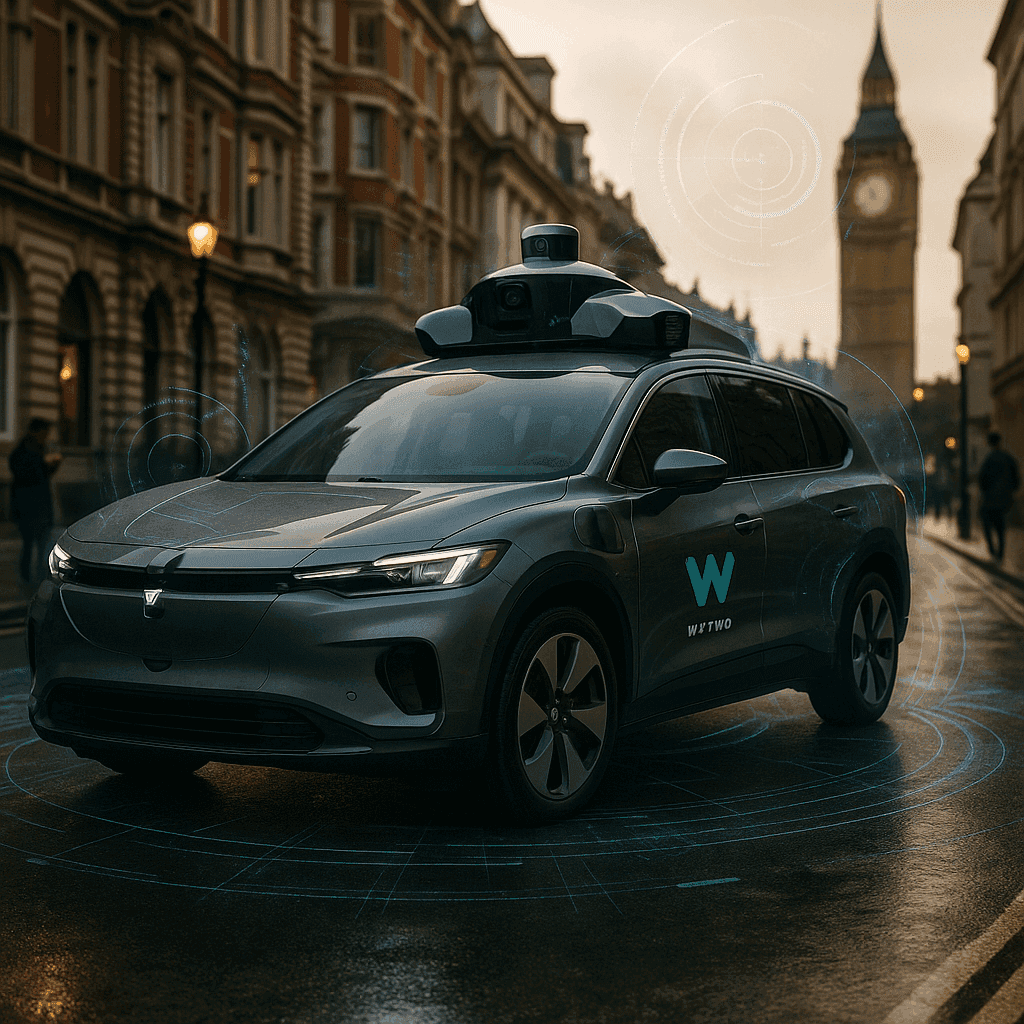
The most critical aspect of this restructuring is where the saved capital is being deployed. Uber is aggressively funneling its operational savings into a $10 billion war chest for its "autonomous future".
Uber's strategy for autonomous vehicles (AVs) is fundamentally different today than it was a few years ago. After selling off its in-house self-driving division (Advanced Technologies Group) in 2020, Uber pivoted from trying to build the autonomous vehicle to becoming the indispensable dispatch network for everyone else's AVs.
By reallocating capital into strategic partnerships and investments such as Avride, Nuro, Rivian, and Lucid, Uber is positioning its app as the default demand aggregator for the coming wave of robotaxis and autonomous delivery pods.
The Platform Moat
This restructuring reflects a harsh reality for mobility platforms: human drivers are the highest variable cost, and middle managers are a massive fixed cost. By reducing headcount to pre-2022 levels and funneling those savings into autonomous infrastructure, Uber is securing its long-term moat. If Uber can control the routing, pricing, and consumer demand for robotaxis, it extracts the platform rent regardless of which hardware company actually manufactures the car.
The decision places Uber alongside a broader efficiency push across technology and platform companies, though the trigger here appears to be organizational simplification rather than a single cyclical shock. In practical terms, Uber’s move suggests that the next phase of competition in mobility and delivery may be less about adding new teams and more about concentrating capital behind fewer priorities, especially autonomous vehicle partnerships and core marketplace execution. That matters across Asia as well, where app-based transport and delivery companies still operate large, multi-country organizations that can become slow and expensive as they scale, a pattern visible across regional super apps and on-demand platforms.
Frequently asked questions
Why is Uber cutting 3,300 jobs right now?
Uber is cutting about 3,300 roles as part of a restructuring meant to reduce management layers and streamline decision-making. The company is also redirecting spending toward core growth areas such as ride-sharing, delivery, and robotaxi operations.
How many employees is Uber laying off in this overhaul?
Uber plans to cut roughly 3,300 jobs globally, which is about 10% of its workforce. That makes this one of the company's biggest workforce resets since the Covid-19 period.
Which parts of Uber's business will get more investment after the job cuts?
Uber is shifting more resources toward its ride-sharing and delivery businesses, along with robotaxi and autonomous mobility efforts. The restructuring suggests the company wants to focus capital on operations tied more directly to growth and future transportation demand.
Is this Uber's largest layoff round since the pandemic?
It is one of Uber's largest workforce reductions since the Covid-19 era. The scale stands out because Uber had largely avoided the broad-based cuts seen at many large technology companies in recent years.
Will Uber's service for riders or delivery users change because of these layoffs?
The immediate goal of the restructuring appears to be internal efficiency rather than a pullback in customer service. Riders and delivery users are more likely to see Uber keep prioritizing its core apps while the company simplifies management and spending.
What does reducing management layers mean at Uber?
Reducing management layers usually means removing overlapping roles and flattening the company's reporting structure. In practice, that can help Uber move faster, lower operating costs, and make business decisions with fewer approval steps.