

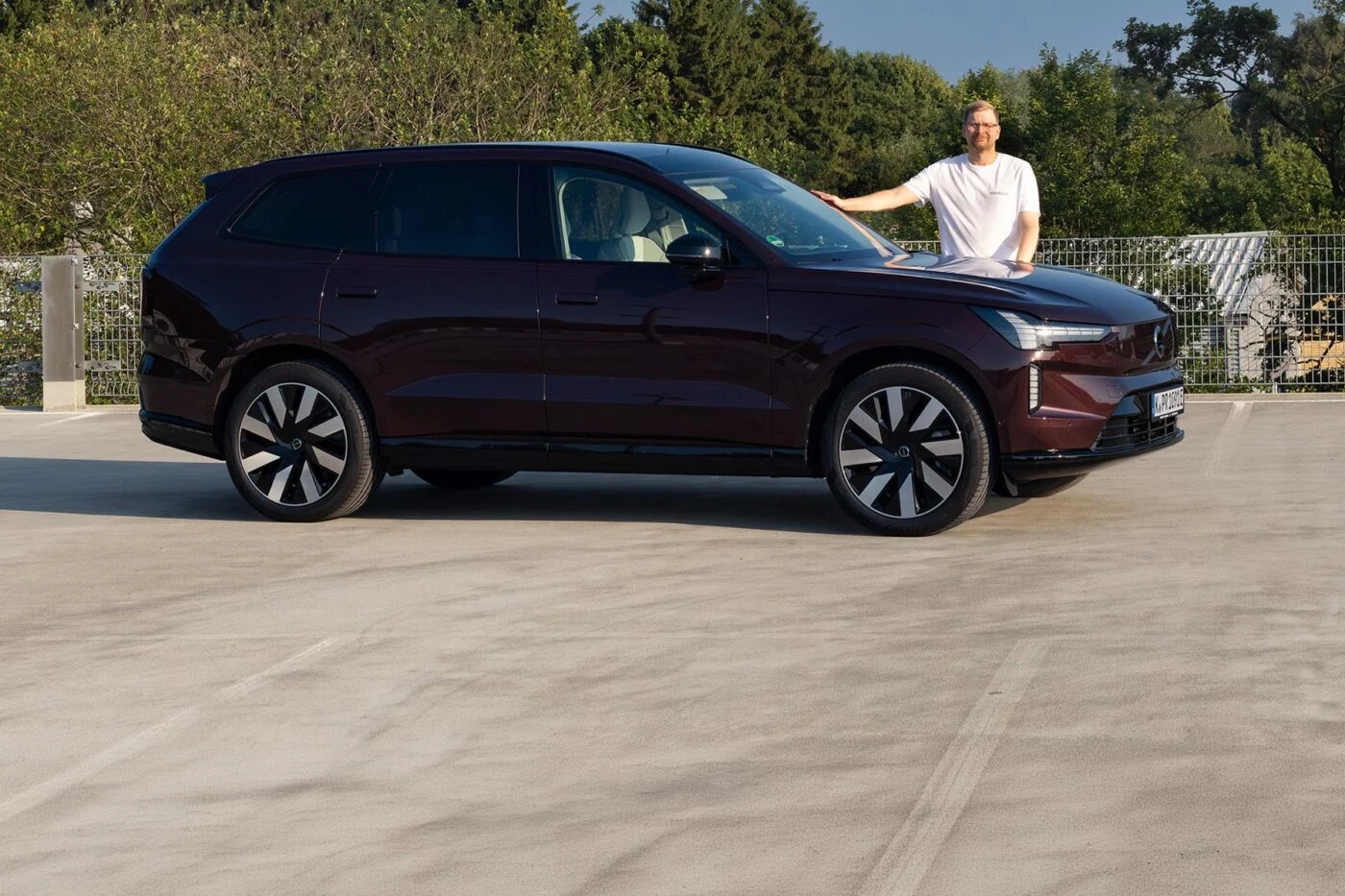
Volvo EX90: 800-volt technology makes the flagship SUV more cohesive
The flagship SUV now charges significantly faster, addressing the biggest weakness of the original version shortly after its market launch. Our test drive shows what the update delivers and where the large Swede still has its quirks.
The sequence of events is unusual: no sooner had the Volvo EX90 finally reached customers after a lengthy delay than the Swedish manufacturer unveiled its first 800-volt saloon, the ES90 – making the recently launched SUV appear slightly outdated overnight. The EX90 is now catching up. Volvo has integrated the 800-volt technology that I experienced in the ES90 on the Côte d’Azur last autumn into its flagship SUV. The question is whether the new architecture genuinely makes the EX90 a better vehicle or mainly highlights how quickly Volvo needed to introduce improvements.
A flagship under time pressure
The backstory is as much a part of this car as the lidar hump on the roof once was – though that, too, is now a thing of the past (more on that later). Nearly ten years after the second generation of the XC90, Volvo introduced the EX90 as its electric counterpart: built on the SPA2 platform, but initially with 400 volts. Unveiled in 2022, production was delayed until mid-2024 due to software issues.
No sooner had the first vehicles been delivered than the then-CEO Jim Rowan announced in March 2025 a switch to 800 volts for the next model year: “As we go forward, we’ll move everything to 800 volts.” For an SUV that had barely launched, this was a remarkable statement. Just a few weeks later, Volvo replaced Rowan as CEO and brought back long-time former CEO Håkan Samuelsson, officially citing “rapid technological change,” geopolitical uncertainties, and intensified competition. It was during this turbulent phase that the EX90 underwent its comprehensive overhaul.
As early as 2024, we noted in our first test drive that the EX90 offered too little that was new to stand out – notably, the 800-volt technology and active lidar were missing. With this update, Volvo has closed the charging gap and simultaneously upgraded the central computing platform. The lidar, however, has been removed. To see whether the update delivers on its promises, I tested the entry-level powertrain: the EX90 Single Motor Plus as a seven-seater.
A land yacht in understated Volvo design
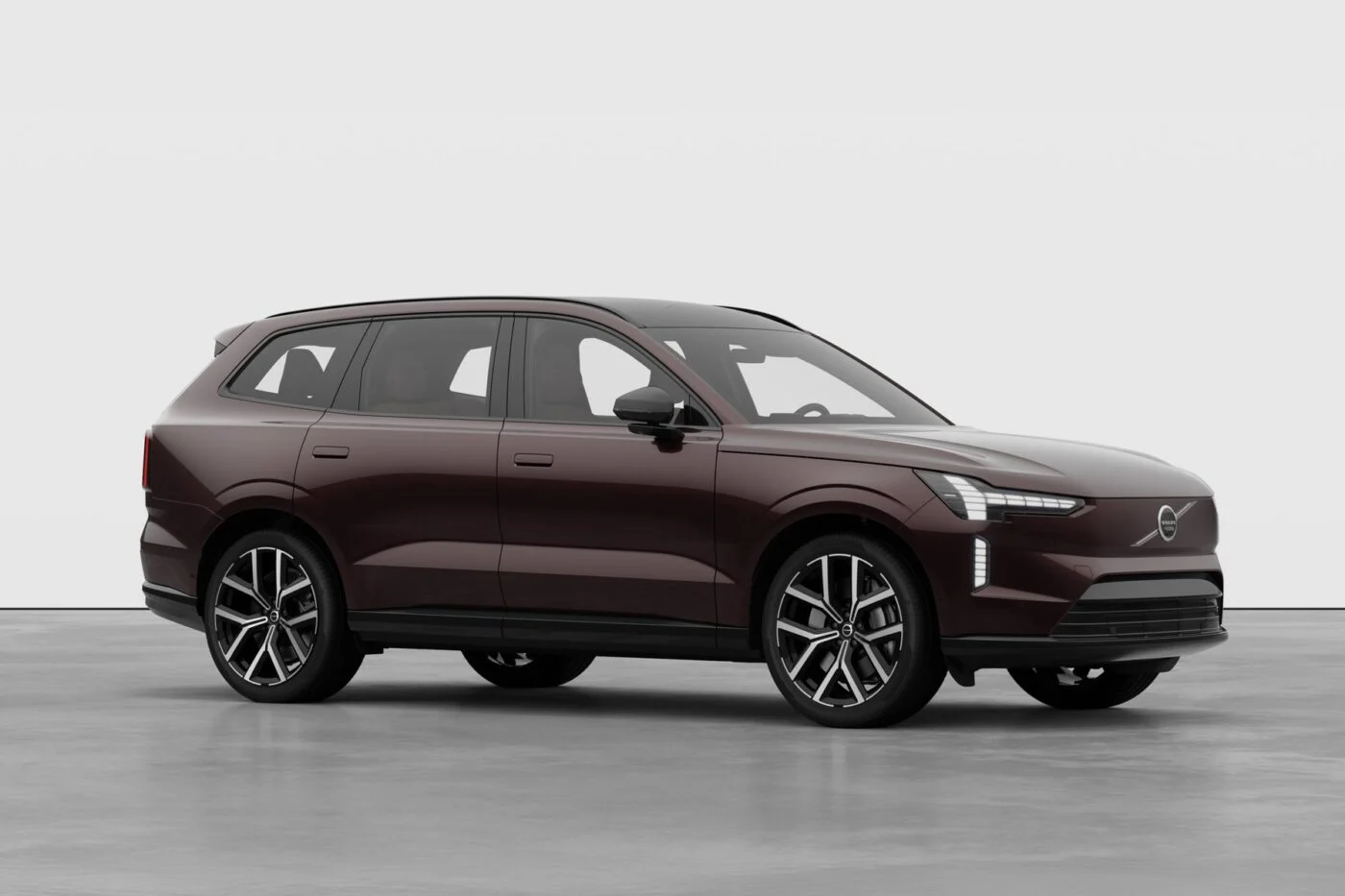
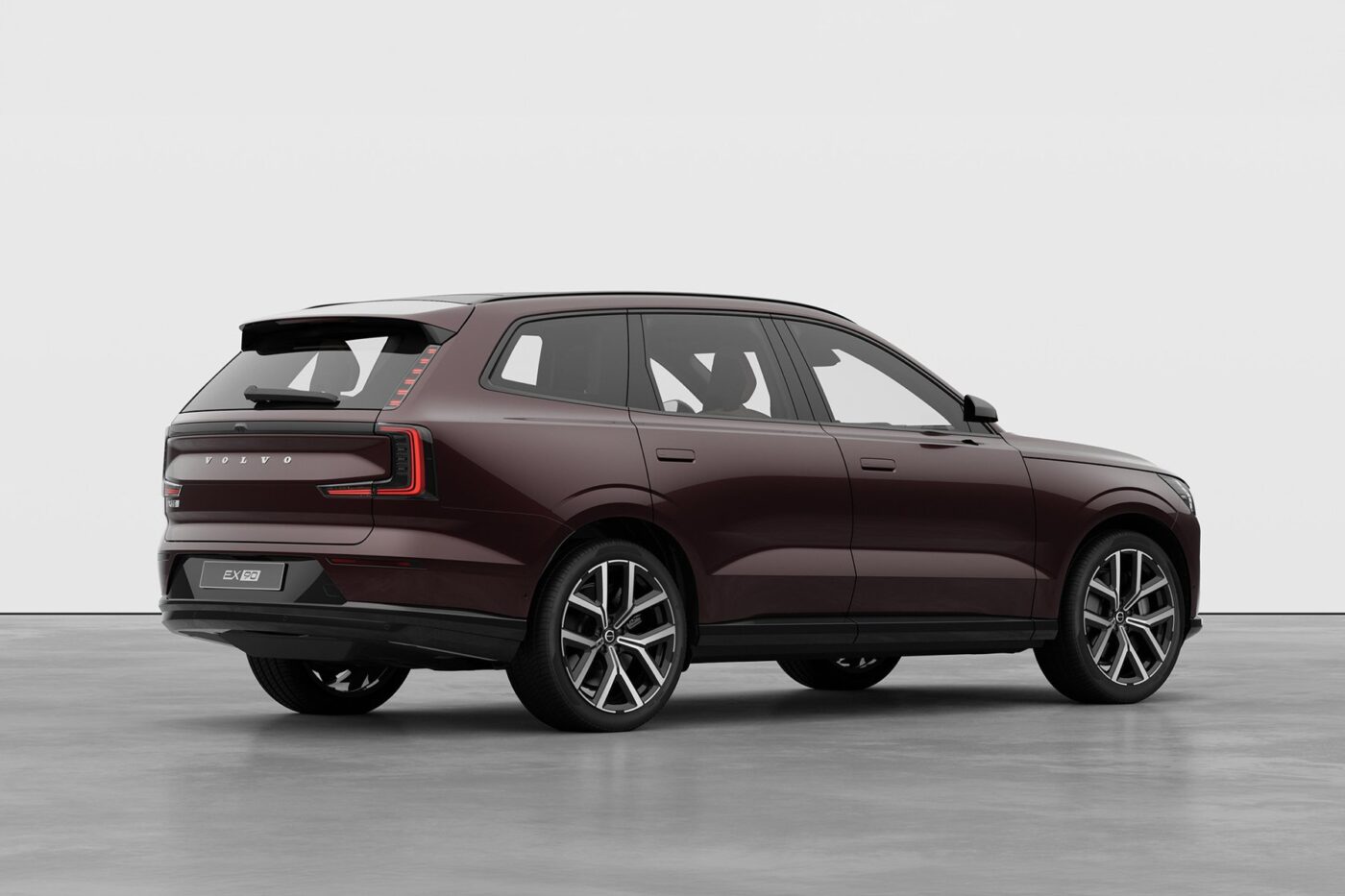
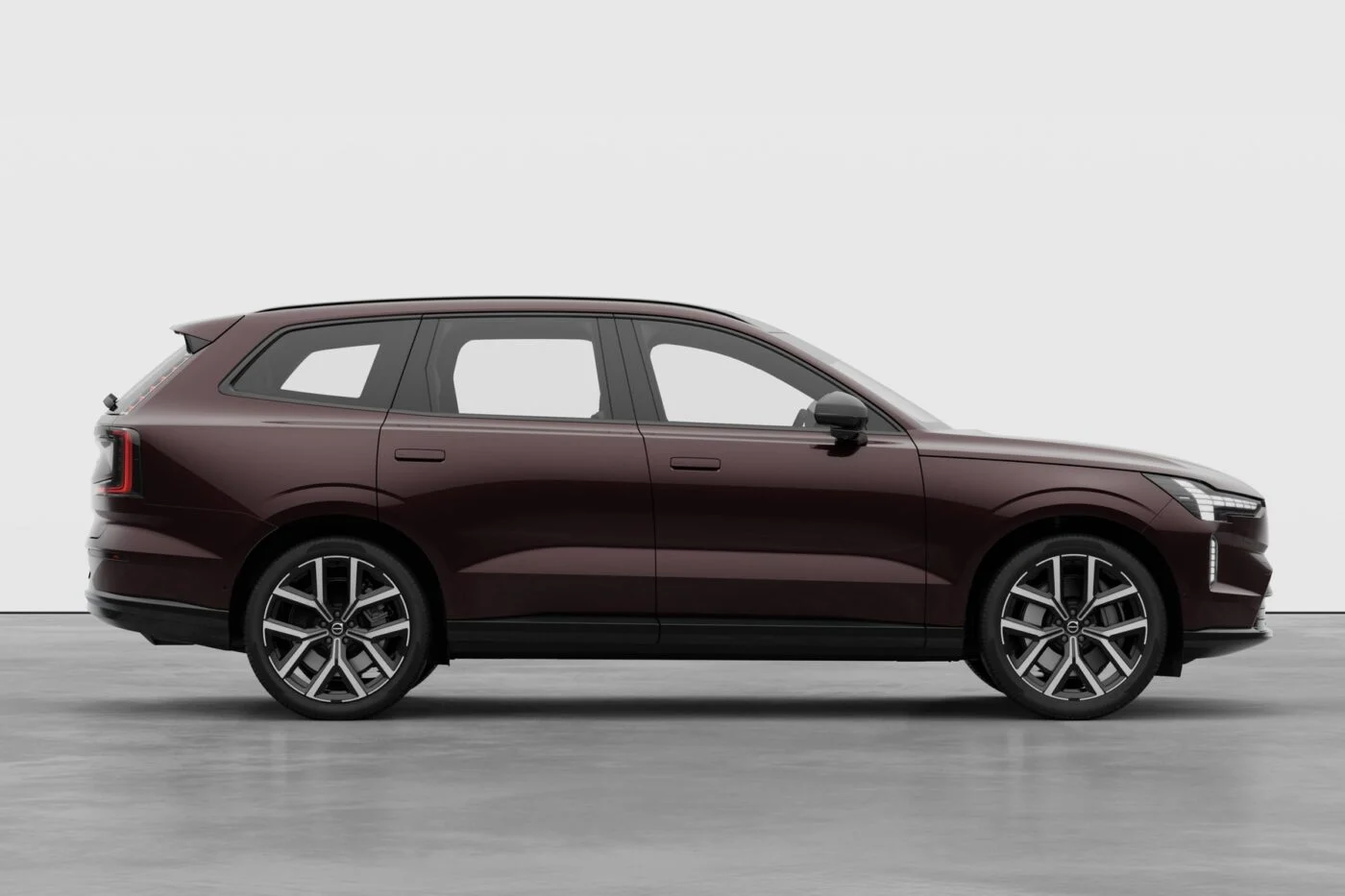
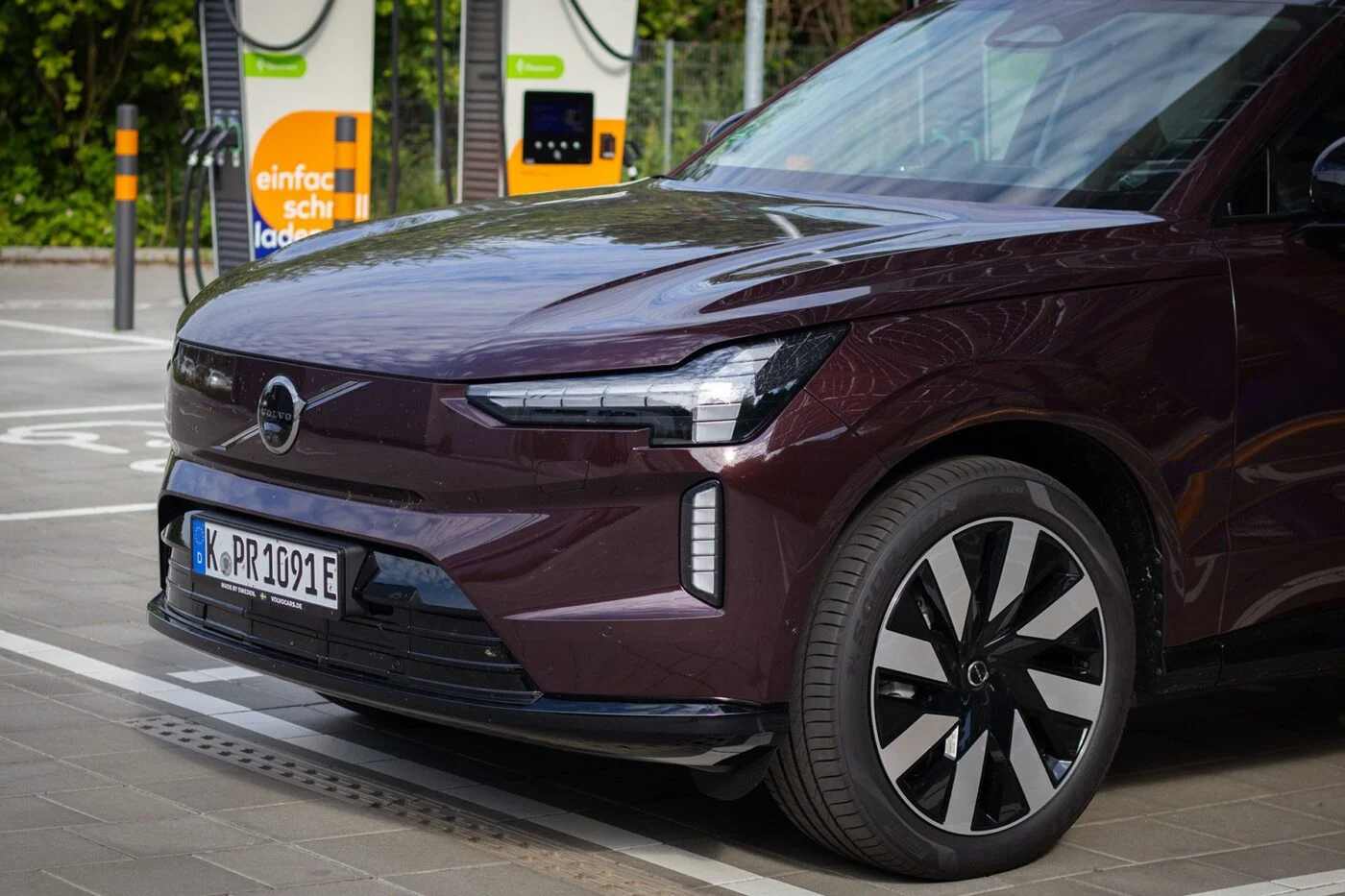
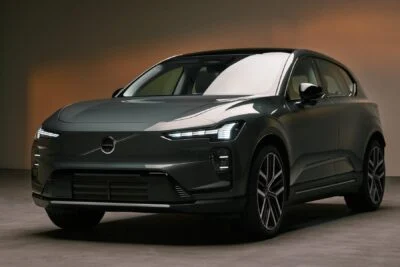
Its appearance remains unchanged, and that is no bad thing. Measuring 5.04 metres in length, 1.96 metres in width and 1.74 metres in height, the EX90 is an imposing yet understated SUV – a rolling land yacht in typical Volvo style. The closed front end, ‘Thor’s Hammer’ daytime running lights and flush door handles are all familiar features, while the drag coefficient of 0.29 is a respectable figure for a seven-seat SUV. My test vehicle was finished in Mulberry Red Metallic, a paint colour that gives the large SUV an air of elegance rather than ostentation.
There is, however, one exterior update – or rather, above it. Following its debut in the ES90, the optional electrochromatic panoramic glass roof now makes its way into the EX90, allowing it to be dimmed at the touch of a button. In the ES90, this roof impressed me on a sunny day in the south, as it neither dazzled nor overheated the interior. With this addition, Volvo addresses one of the minor but noticeable everyday criticisms of the first EX90: the glass roof can now be shaded. However, it still cannot be opened.
More power for the rear-wheel-drive model
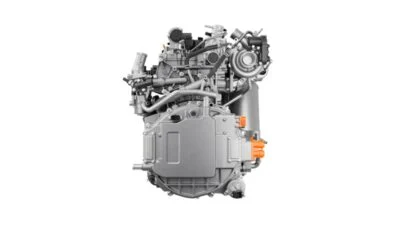
Under the bonnet, the Single Motor variant features a permanent-magnet synchronous motor on the rear axle that now delivers 245 kW, matching the output of the ES90. This enables the EX90 to accelerate from 0 to 100 km/h in 6.8 seconds. Compared to the previous Single Motor version, the output increases by 40 kW, cutting the sprint time by 1.6 seconds. At the same time, kerb weight has fallen slightly: as a seven-seater, the rear-wheel-drive model now weighs 2,585 kilograms instead of 2,607 kilograms, while payload has increased marginally to 605 kilograms.
This improvement is made possible by the new 800-volt architecture, along with revised drive and battery technology. The electric motors and battery have been made lighter, though the latter has also been downsized – more on that shortly. At the same time, power output has increased across all three variants: the Twin Motor AWD now delivers 335 kW, while the Performance version offers 500 kW, though it is currently not available for configuration. The top speed remains characteristically Volvo-limited to 180 km/h.
The additional power is not essential, but it is noticeable. In our electrive test of the previous 205 kW model, we described the acceleration as authoritative yet subjectively restrained under hard acceleration. The new Single Motor largely addresses this impression. Although maximum torque has fallen slightly from 490 to 480 Nm, power output has increased significantly – and this is particularly noticeable during mid-range acceleration beyond the initial launch. The rear-wheel-drive model puts its 2.6 tonnes on the road with strong traction, accelerates more decisively and still offers ample reserves for overtaking at motorway speeds.
However, the EX90 Single Motor does not become a sports car. It remains the relaxed entry point to the range: noticeably more powerful than before, but still clearly designed for effortless travel.
Volvo knows how to build a chassis
The ride comfort is all the more impressive because the Single Motor does not feature air suspension. Volvo continues to reserve the air suspension with Four-C chassis technology for the Twin Motor variants, meaning my test vehicle relied on steel springs. Even so, the suspension comfort matched that of the 400-volt model. The EX90 absorbed even cobbled streets with ease, with virtually no harsh impacts or vibrations reaching the cabin. Part of the credit likely goes to the chassis design, which combines double wishbones at the front, an integral-link rear axle and numerous aluminium components in the suspension. The result is a heavy SUV that deals with uneven surfaces confidently without ever feeling cumbersome.
The steering complements this character: it is light, comfort-oriented, and provides relatively restrained feedback. I previously criticised this distinctly synthetic tuning in the ES90, but in the comfort-focused EX90, it is less noticeable. Those seeking sharpness and direct feedback will not find it here.
More efficient than its reputation suggests
On paper, the Single Motor is the most efficient EX90 variant: rear-wheel drive, lower weight, and a smaller battery reduce the standardised consumption compared to the all-wheel-drive versions. My test vehicle is homologated with a WLTP range of 559 kilometres, while the best figure for the current Single Motor is around 570 kilometres. However, in a test drive, the real-world impression matters more than the standardised value.
On a 222-kilometre route with a high proportion of motorway driving at speeds of 125 to 140 km/h where conditions allowed, the onboard computer recorded an average consumption of 21 kWh/100 km. Similar figures were achieved on several other journeys. In mixed driving conditions and with a restrained driving style, consumption even dropped to 18 kWh/100 km. However, this clearly represents a best-case scenario under favourable conditions: summer temperatures, dry roads and generally favourable weather all benefited the EX90. Even so, the consumption is remarkable for an SUV measuring 5.04 metres in length and weighing around 2.6 tonnes.
In practice, this means that 90 kWh of usable battery capacity and an average consumption of 21 kWh/100 km translate into a range of around 430 kilometres. At 20 kWh/100 km, the range increases to roughly 450 kilometres, while 18 kWh/100 km would yield around 500 kilometres. Even below its WLTP range, the EX90 Single Motor remains well suited to long-distance driving. A direct comparison with the previously tested 400-volt Single Motor is only valid to a limited extent due to differences in route profile, weather conditions and vehicle specification. What is clear, however, is that the new rear-wheel-drive model appeared noticeably more efficient in everyday driving, even if the available data does not allow for a precise before-and-after comparison.
One detail remains important: Volvo did not increase the battery size for the model update but instead reduced it. The current Single Motor now lists 92 kWh gross and 90 kWh net in the specifications. At first glance, this seems like a step backward, but it is only part of the story. If we calculate the usable energy content against the WLTP range, the new EX90 Single Motor, with 90 kWh net and up to 572 kilometres, achieves around 15.7 kWh/100 km from the battery. The old model had 101 kWh net in the specifications, with up to 620 or 624 kilometres quoted depending on the data source, which translates to around 16.2 to 16.3 kWh/100 km.
The comparison is not perfect due to differing data sources and configurations, but it shows the trend: Volvo has not simply reduced range but has evidently gained efficiency – especially as the 800-volt technology significantly shortens charging stops. In practice, the combination of consumption, battery size, and charging time is what counts. And in this regard, the new Single Motor feels more cohesive than its predecessor: slightly less energy content, but lower consumption and, above all, significantly faster charging.
The centrepiece: 800 volts
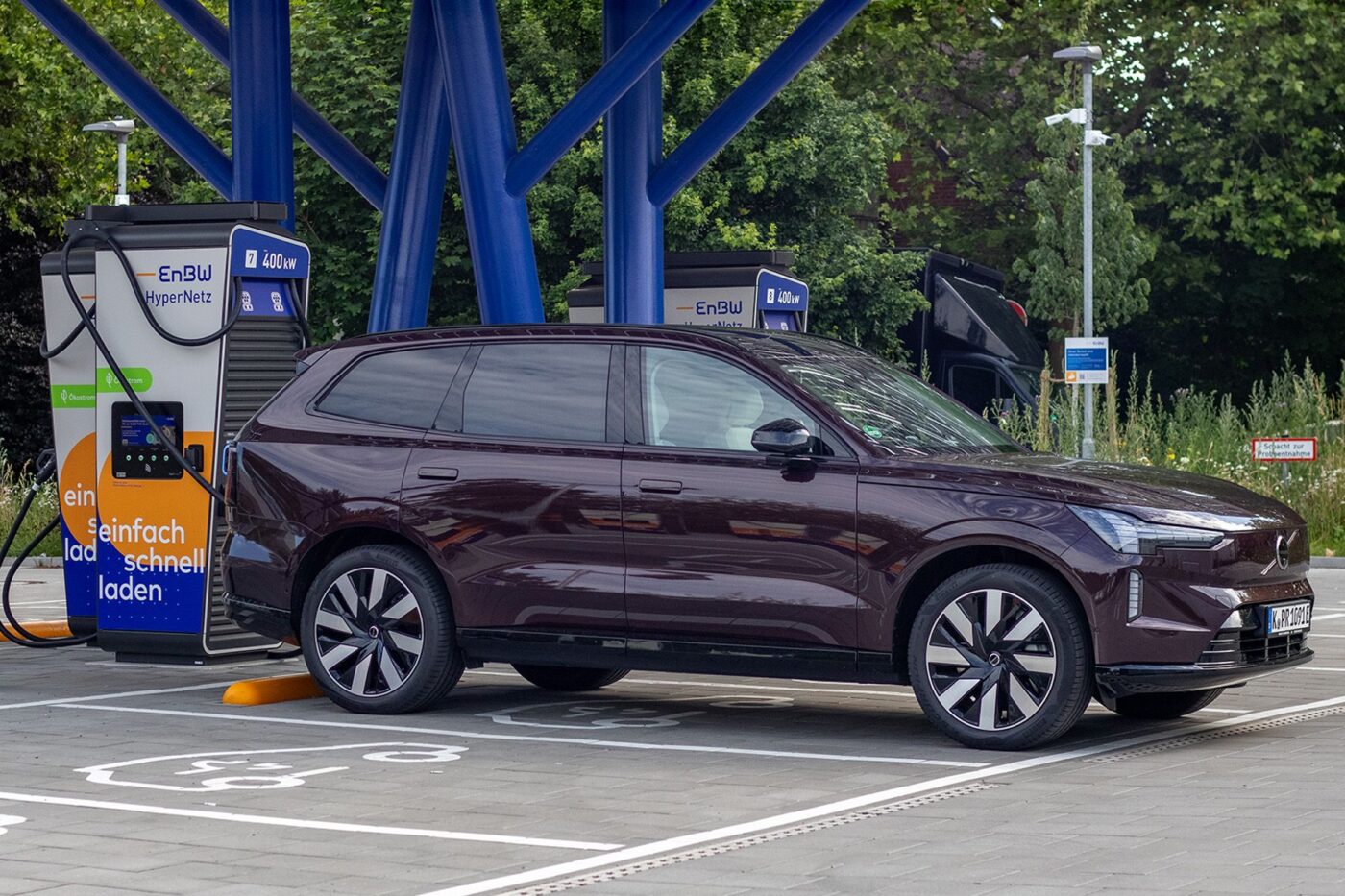
The real progress lies in the voltage level. At the same charging power, 800 volts result in lower currents, reducing losses and heat generation. The new architecture in the EX90 also enables significantly higher charging capacities: the new Volvo EX90 Single Motor can draw up to 310 kW at fast-charging stations. The standard charge from 10 to 80 per cent should take just 22 minutes for the EX90 with the smaller battery, compared to 29 minutes for the predecessor. This brings the EX90 up to speed with the 800-volt competition, which had previously outpaced it in charging.
The 800-volt promise has passed the practical test. From 8 to 80 per cent, charging took around 21 minutes with a preconditioned battery, and just ten minutes to reach 50 per cent. Since the starting level was two percentage points below the manufacturer’s specification, the charging range was even slightly larger. The EX90 thus slightly undercut the 22-minute target. The charging curve is less flat than stepped but very strong: after an initial 207 kW, the power quickly climbed to 300 kW, and between 12 and 20 per cent, it even reached 325 to 328 kW. The EX90 remained just under 300 kW until 32 per cent, after which the curve dropped more sharply. It then stabilised around 150 kW before gradually tapering off to 118 kW at 80 per cent.

In this segment, the charging time is competitive. According to the manufacturer, the Kia EV9 and Hyundai Ioniq 9 each take around 24 minutes to charge from 10 to 80 per cent. With 22 minutes, the EX90 now fares better in terms of time. However, this only applies if the battery temperatures are optimal, which is true for all models. To achieve the right temperature, the battery in the Volvo EV can be preconditioned automatically via Google Maps charging stop planning or manually. It is a shame, though, that manual preconditioning is buried deep in the menu.
For alternating current, however, the three-phase 11 kW onboard charger remains unchanged. A full charge thus takes around nine hours. A 22 kW onboard charger is still not available, even as an optional extra. This was already a point of criticism in the predecessor and remains a drawback in this price class. And what about bidirectional charging? The EX90 is said to be hardware-ready for it.
More computing power, more mature software
Alongside the charging technology, Volvo has also upgraded the core computing platform. The EX90 was already the first model to be based on Volvo’s Superset Tech Stack – a new modular system of hardware and software components now also used in the ES90. For the new model year, the SUV receives significantly more computing power. This is intended to provide the EX90 with greater reserves for safety, assistance, infotainment, and battery management functions – precisely the areas where software played a central role in the delayed market launch.
The upgrade is evident in a range of functions introduced with the model year change: Connected Safety warns networked vehicles about ice, hazards, and accident sites; the “Emergency Stop Assist” now automatically calls the emergency services after an emergency stop; the automatic emergency steering function now works in the dark; and the Park Pilot Assist now masters parallel parking. My test vehicle also featured the optional Pilot Assist package: navigation-data-based lane guidance up to 150 km/h, along with a 360-degree camera and parking assistant.
Notably generous: the processor upgrade is also available to existing customers, free of charge as part of a regular workshop visit. The 800-volt technology, however, cannot logically be retrofitted and remains exclusive to new vehicles.
For everyday use, what matters more than the computing power on paper is how much of it is already reflected in the assistance systems. During the test, the EX90 felt more mature but not revolutionary: the systems perform their tasks reliably, which is expected in this price class. However, the Volvo still showed weaknesses in traffic sign recognition. When restarting in traffic jams and in lane-keeping, the impression remains that the hardware is now capable of more than the software currently delivers in everyday use.
The vanished hump
While computing power increases, a prominent piece of sensor technology has disappeared: the distinctive lidar hump on the roof is gone. The laser scanner from Luminar scanned the road up to about 250 metres ahead and was intended to enable earlier emergency braking, with the potential for partially autonomous driving in the future. Volvo had promised up to 20 per cent fewer serious accidents. In everyday use, however, the sensor did little so far: during my ES90 test drive, it primarily collected data to improve the interaction between cameras and radar.
So why the retreat? Volvo does not cite technical reasons but aims to “limit risks in the supply chain”; supplier Luminar disagrees and is demanding compensation – the company has since filed for Chapter 11 bankruptcy. The German documents for the new model year make no mention of any of this. The immediate loss is minor, as the lidar never actively intervened. However, the promise of additional safety and automation functions is lost. Today, Volvo merely states that the EX90 and ES90 meet Volvo’s safety standards even without lidar. The all-round monitoring is now handled by radar, cameras, ultrasonic sensors – and the new Nvidia processors.
With that, the technical improvements are complete. In everyday use, the EX90 remains primarily what it was before: a very large, exceptionally comfortable SUV – with some typically modern Volvo quirks.
Almost everything via touch
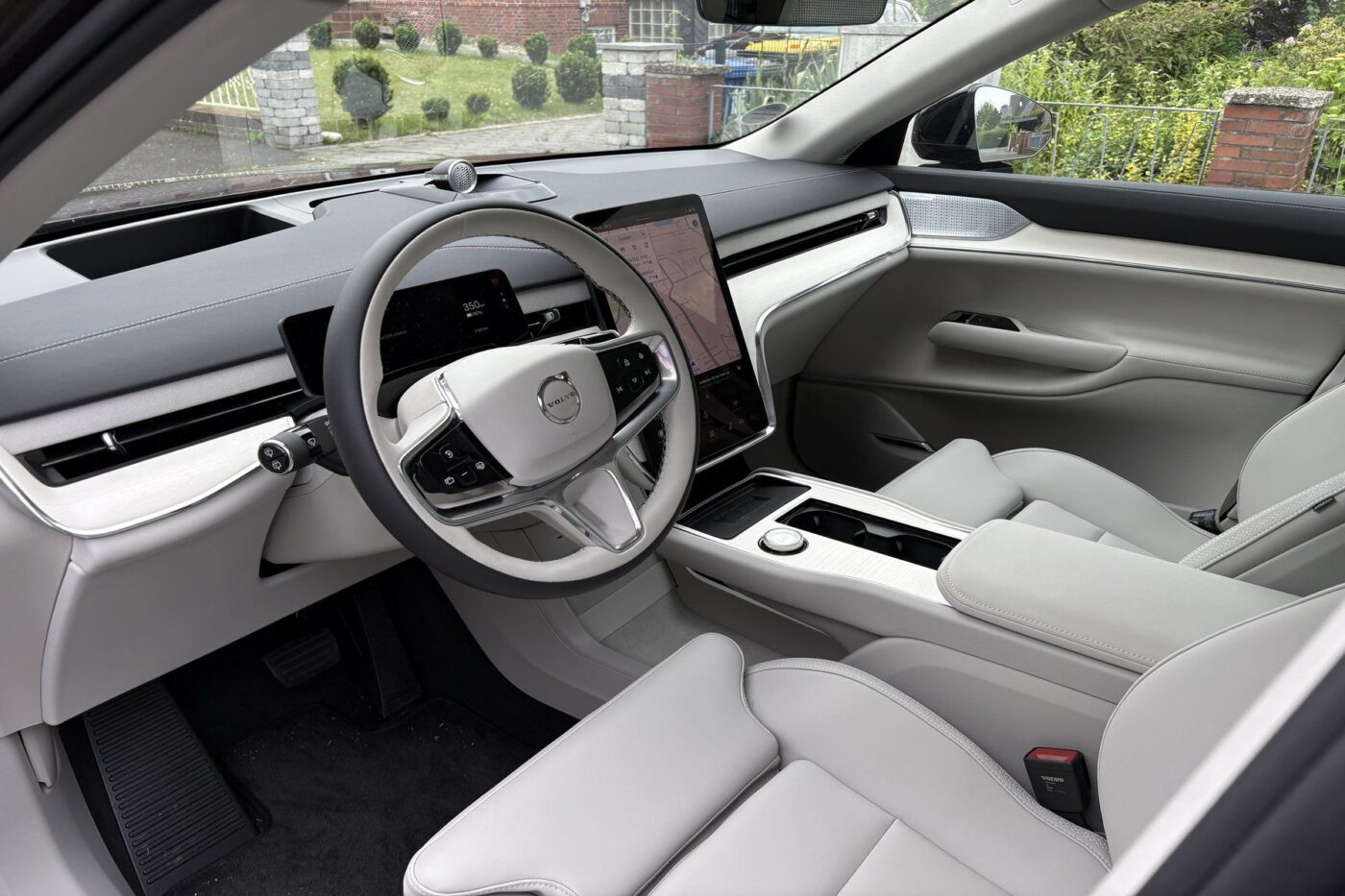
The EX90 continues to be operated almost exclusively via the 14.5-inch portrait-oriented touchscreen with Google services, with hardly any physical buttons remaining. The operating concept is fundamentally the same as in the predecessor – rather than going through every detail again, I will focus on a few quirks that stood out in everyday use. A few real buttons for the climate control would be a welcome addition. The air conditioning itself, however, works excellently: it does not simply blast air towards the occupants but distributes it pleasantly and draught-free throughout the interior.
Less fortunate are two details that weigh more heavily in a car this wide than in a narrow small car: there is no automatic mirror lowering function, so the exterior mirrors must be adjusted manually depending on the kerb side. At close range, the 360-degree camera can no longer reliably function, and this area, which is sensitive for the wheels, remains obscured. These may seem like minor details, but in an SUV of this size, they stand out more in my view.
| EX90 Single Motor | EX90 Twin Motor | EX90 Twin Motor Performance | |
|---|---|---|---|
| Drivetrain | RWD | AWD | AWD |
| Power | 245 kW | 335 kW | 500 kW |
| Acceleration | 6,8 s | 5,5 s | 4,2 s |
| Top speed | 180 km/h | 180 km/h | 180 km/h |
| Battery (net) | 90 kWh | 103 kWh | 103 kWh |
| WLTP range | 572 km | 625 km | 625 km |
| DC charging power | 310 kW | 350 kW | 350 kW |
| DC charging time (10–80%) | 22 min | 22 min | 22 min |
| AC charging power | 11 kW | 11 kW | 11 kW |
| AC charging time (10–100%) | 9 h | 10 h | 10 h |
| Boot volume | 697 l | 697 l | 697 l |
| Towing capacity (braked) | 1,5 t | 2,2 t | 2,2 t |
Seven seats and many clever ideas
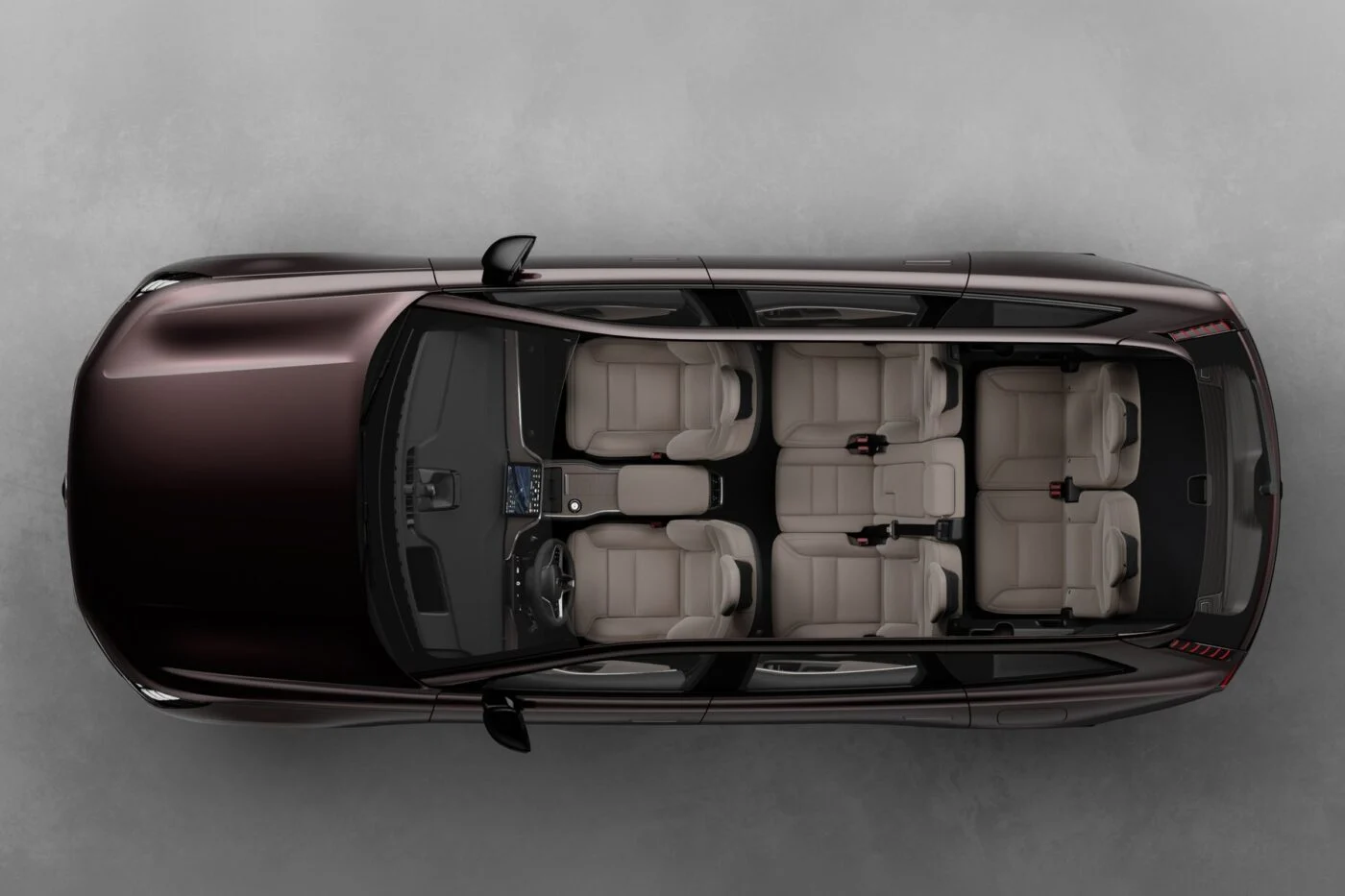
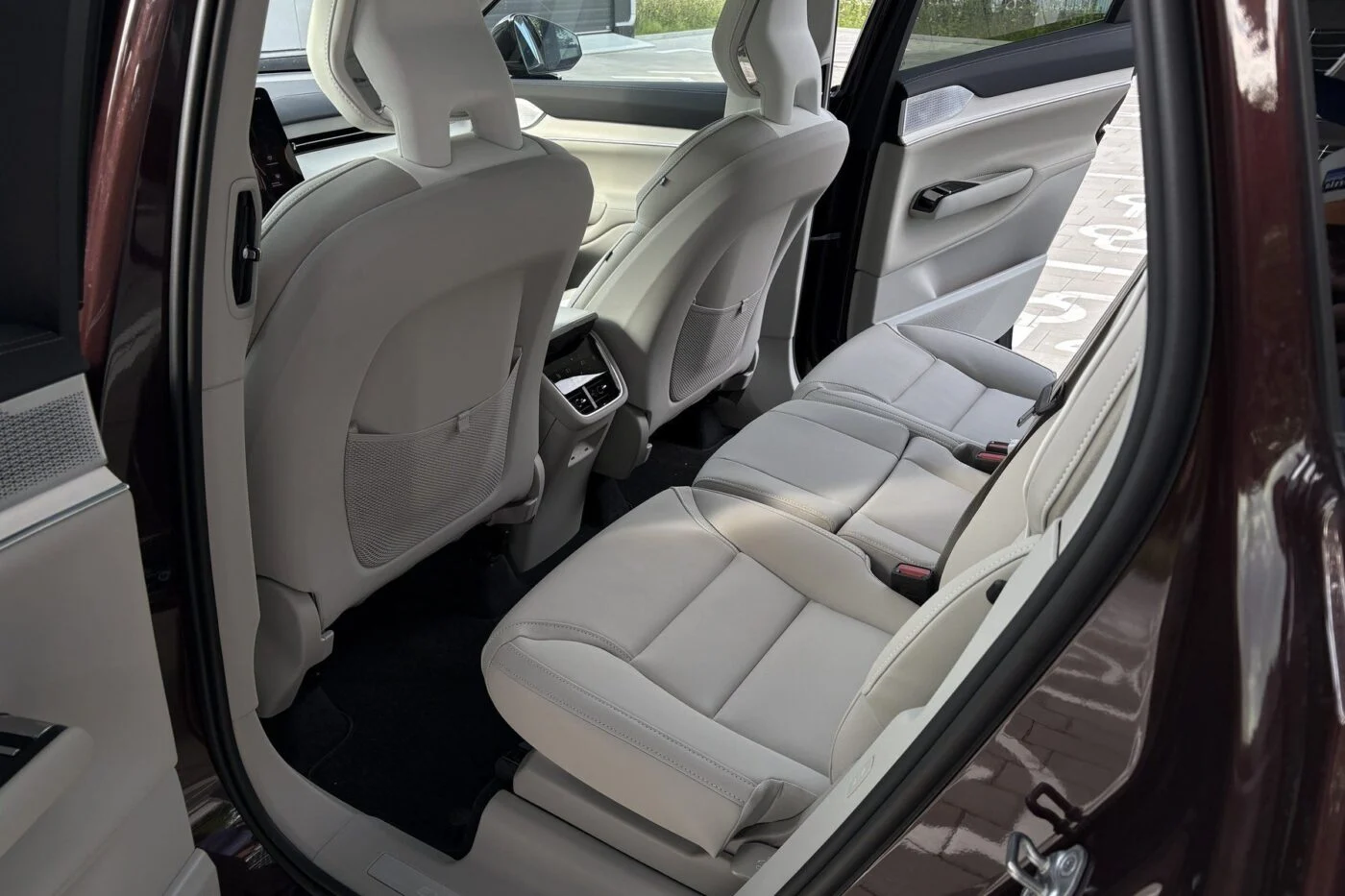
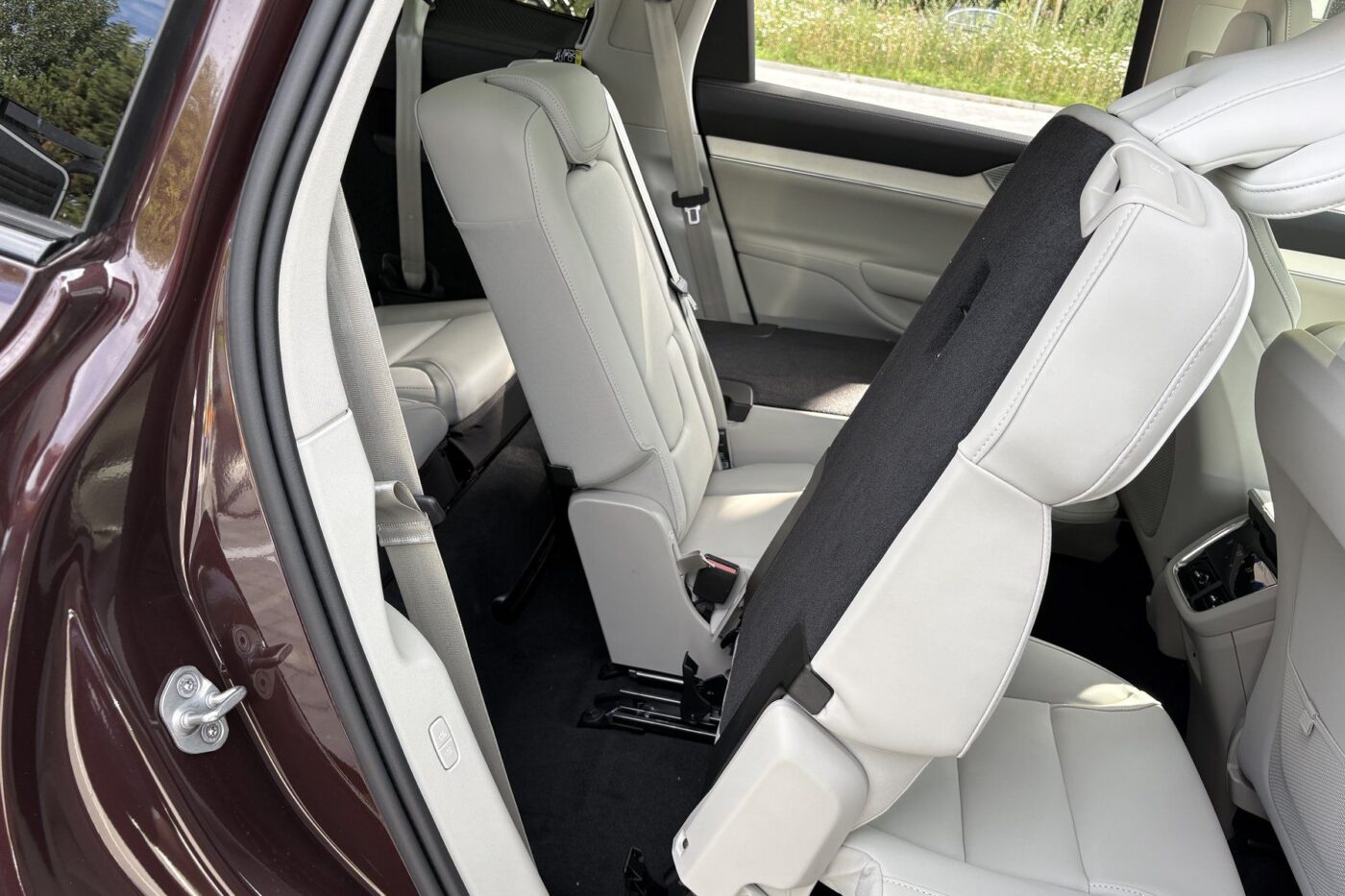
Let us stay in the interior, as this is where the EX90’s true strengths lie, beyond screens and menus: the front offers exceptional comfort even on long journeys, with plenty of space. The second row of seats is exceptionally comfortable, with ample room even for tall passengers. The climate control can be adjusted separately here. The third row, however, remains best suited for children; it is less accommodating for medium-sized or tall adults.
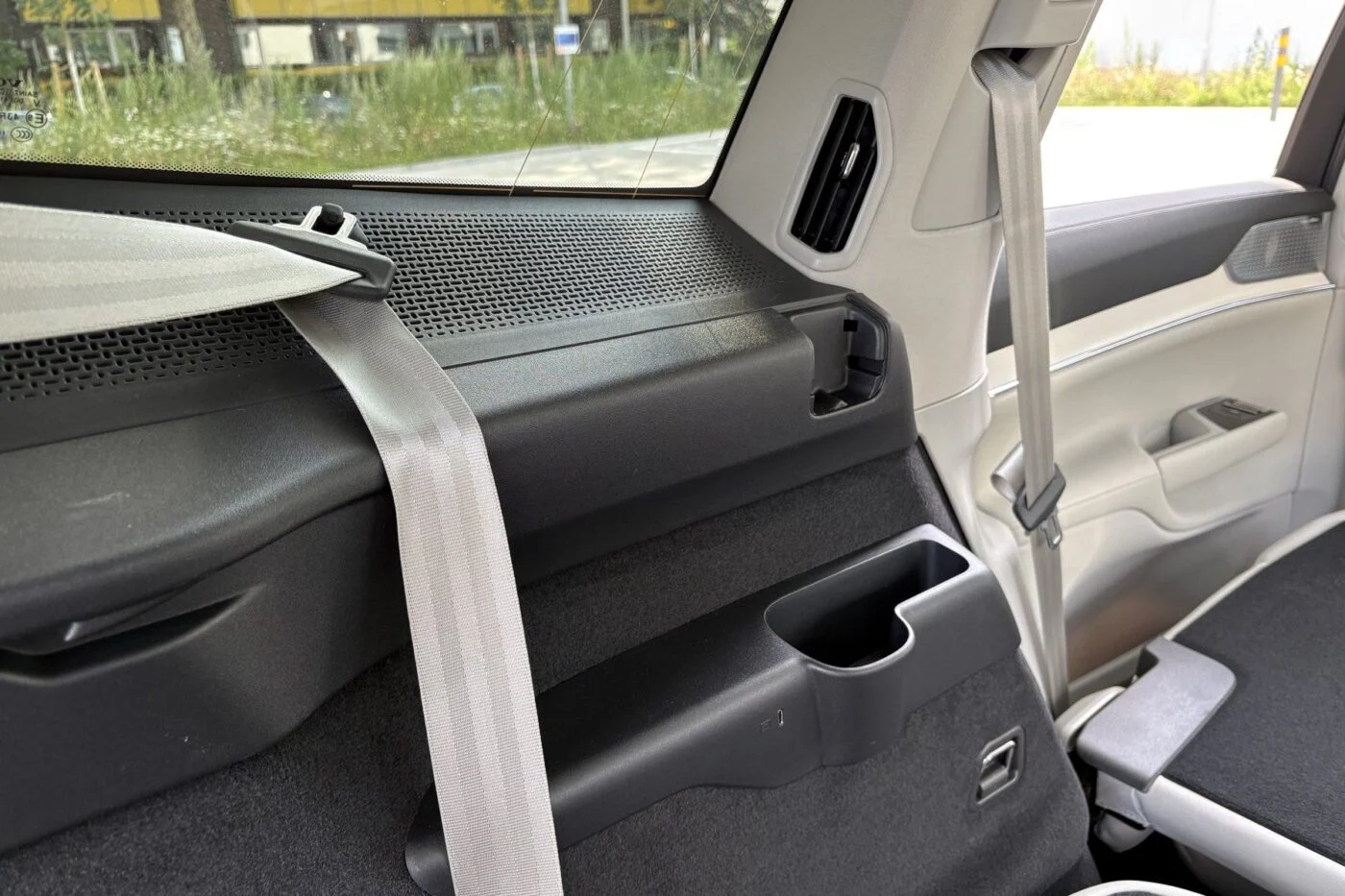
Many details are cleverly thought out: a small hook keeps the third-row seatbelt in place so it does not disappear when the seats are folded up, and USB-C ports are available even in the third row. However, the boot cover is not as well thought through: When the third-row seats are in place, the only space provided for them is under the boot cover.
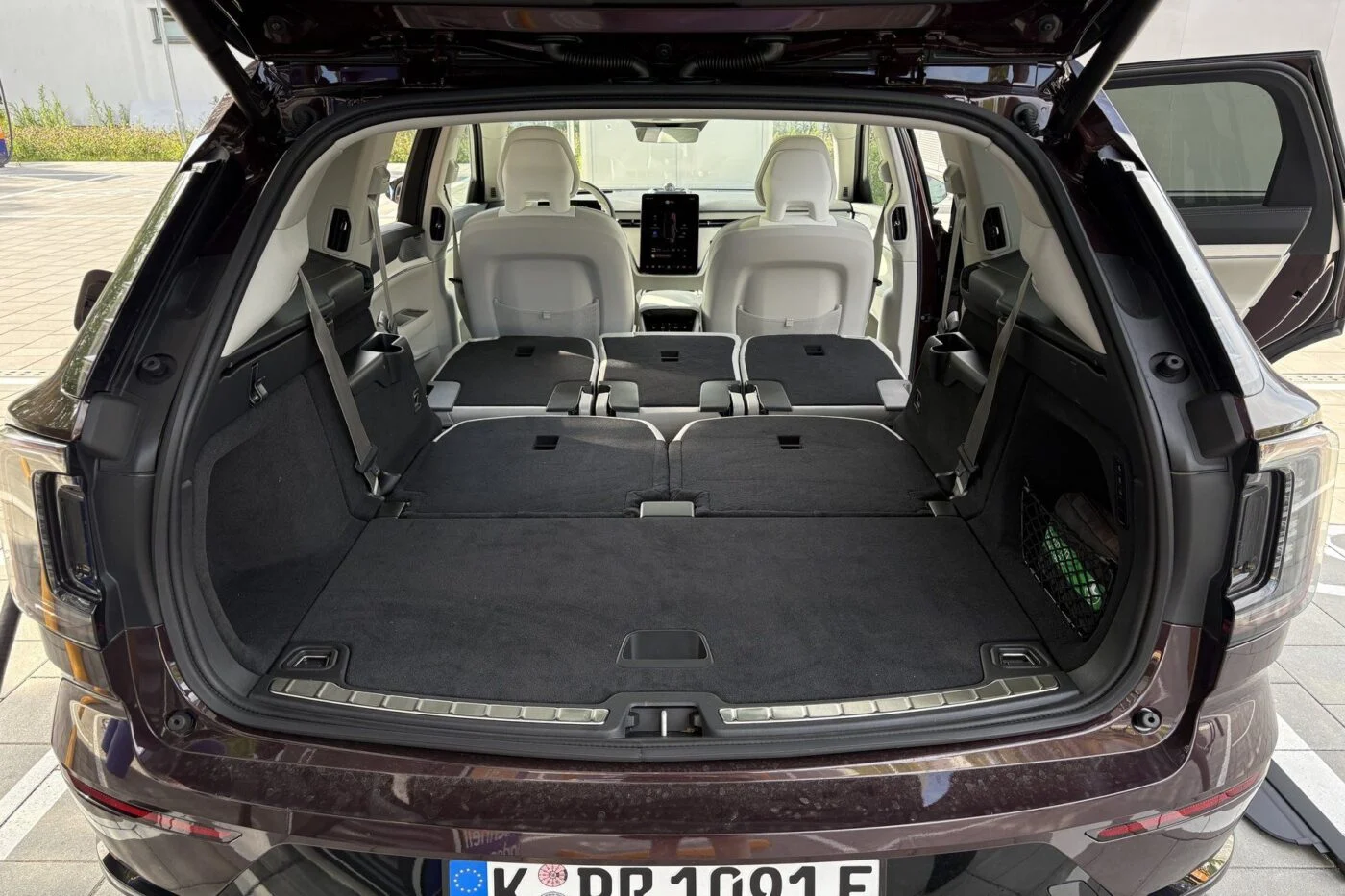
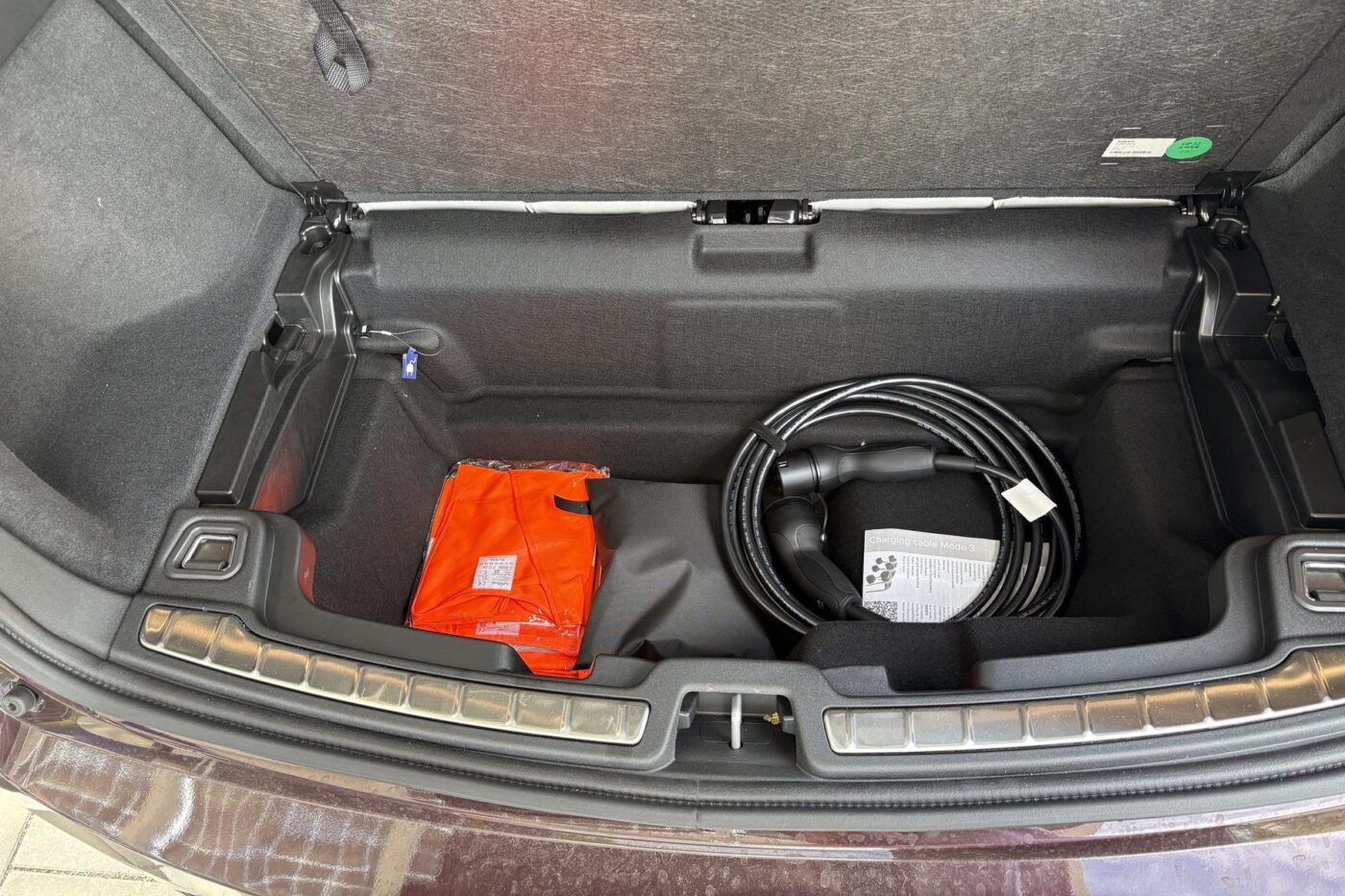
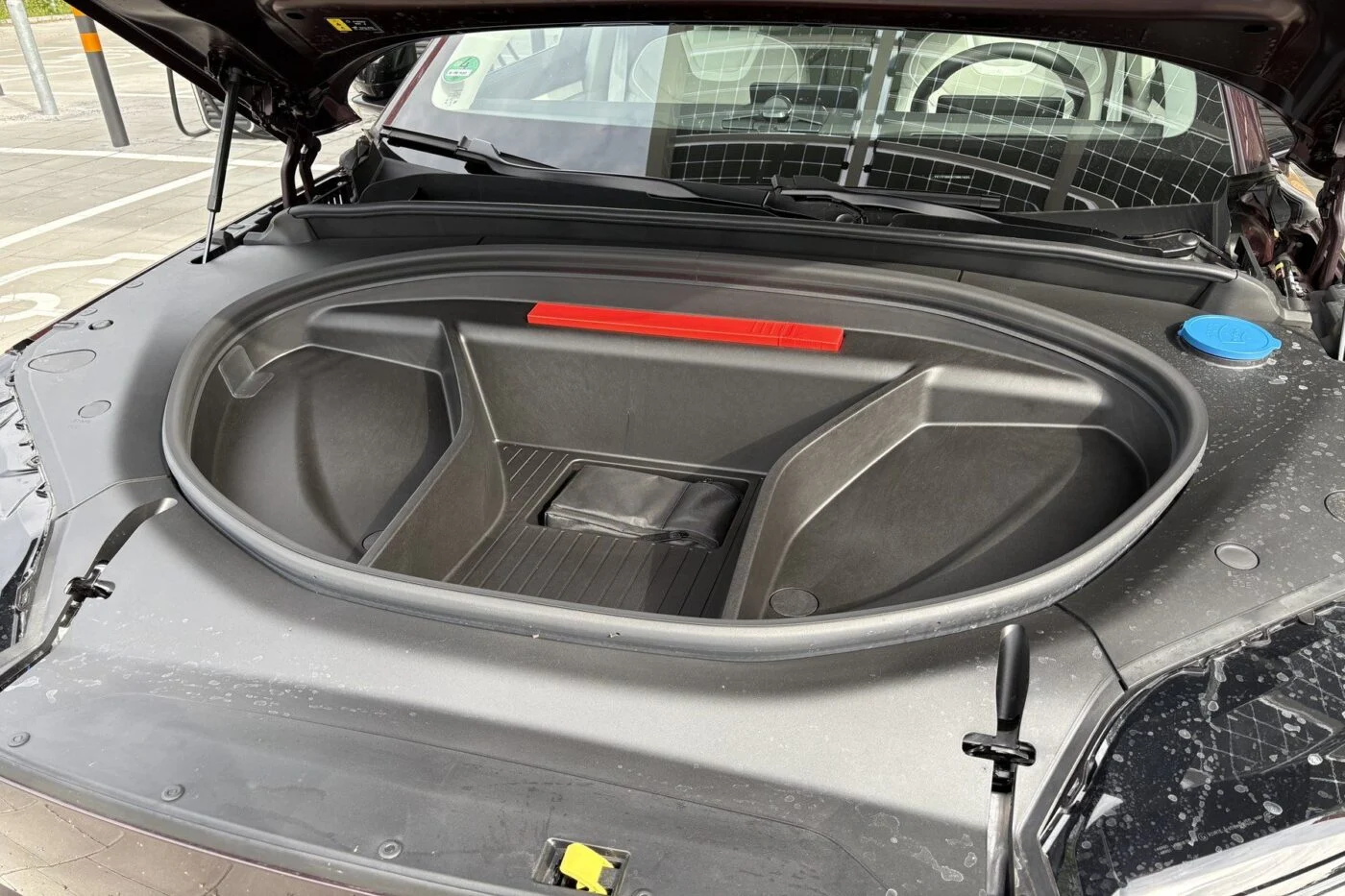
In terms of storage space, the EX90 remains a true family transporter and has even gained a little more. Behind the second row of seats, the large electric SUV offers 697 litres of boot space, up from 669 litres previously. Additionally, there is a 49-litre frunk. The towing capacity has also increased: with the technical upgrade, the Volvo EX90 Single Motor can now tow up to 1.5 tonnes braked, compared to 1.2 tonnes before. This is sufficient for many everyday scenarios. However, those who regularly tow large caravans or horse trailers are still better served by the Twin Motor, which can handle up to 2.2 tonnes.
Conclusion
Finally, the price: the EX90 currently starts at 84,190 euros for the Single Motor Core, while the Plus trim level tested here costs 89,590 euros. At the top end, the range extends to the Twin Motor Performance Ultra for 106,990 euros. This positions the Volvo alongside the BMW iX and Mercedes EQS SUV. The Kia EV9 and Hyundai Ioniq 9, also fast-charging seven-seaters with 800-volt technology, are noticeably cheaper depending on the version. The EX90 justifies its premium less through its specifications and more through its refinement, comfort, and Volvo’s premium aspirations.
And so, back to the initial question: does the 800-volt technology make the EX90 a better car, or does it primarily show how early Volvo had to make improvements? The honest answer is: both. The intervention in voltage level, battery, drivetrain, and computing platform comes unusually early after an already delayed market launch. However, it also demonstrates that Volvo took the biggest weakness of the first version seriously.
As a car, the EX90 remains what it was before: a large, quiet, sovereign, and very comfortable battery-electric SUV with a high-quality interior and plenty of space. What is new is that the technology now fits much better. The Single Motor is slightly more powerful, more efficient, and finally charges as quickly as one would expect from an electric flagship in this price class. Not everything is resolved, from the 11 kW AC charger to individual operating and assistance details. But overall, the EX90 with 800 volts feels significantly more cohesive than before – not because Volvo has turned it into a completely new car, but because the update addresses precisely where the first EX90 fell short of its ambitions.
Source link
![Range Rover’s smaller, more affordable electric SUV makes first public appearance [Images]](https://startupnews-media-2026.s3.us-east-1.amazonaws.com/startupnews-in/uploads/2026/07/rss-mrnp3yl9-g3n1ia-2.jpeg?X-Amz-Algorithm=AWS4-HMAC-SHA256&X-Amz-Content-Sha256=UNSIGNED-PAYLOAD&X-Amz-Credential=AKIAZQ3DRHCSCL44VIMT%2F20260716%2Fus-east-1%2Fs3%2Faws4_request&X-Amz-Date=20260716T182103Z&X-Amz-Expires=604800&X-Amz-Signature=1ef0335d68c145cae4f76c9098928d65ae19766ec7d6a3464108e9e2dab09b81&X-Amz-SignedHeaders=host&x-amz-checksum-mode=ENABLED&x-id=GetObject)

0 Comments