Binance introduces Agent OS, a new platform for AI agents to autonomously analyze crypto markets and execute trades, empowering users with advanced tools while emphasizing oversight.
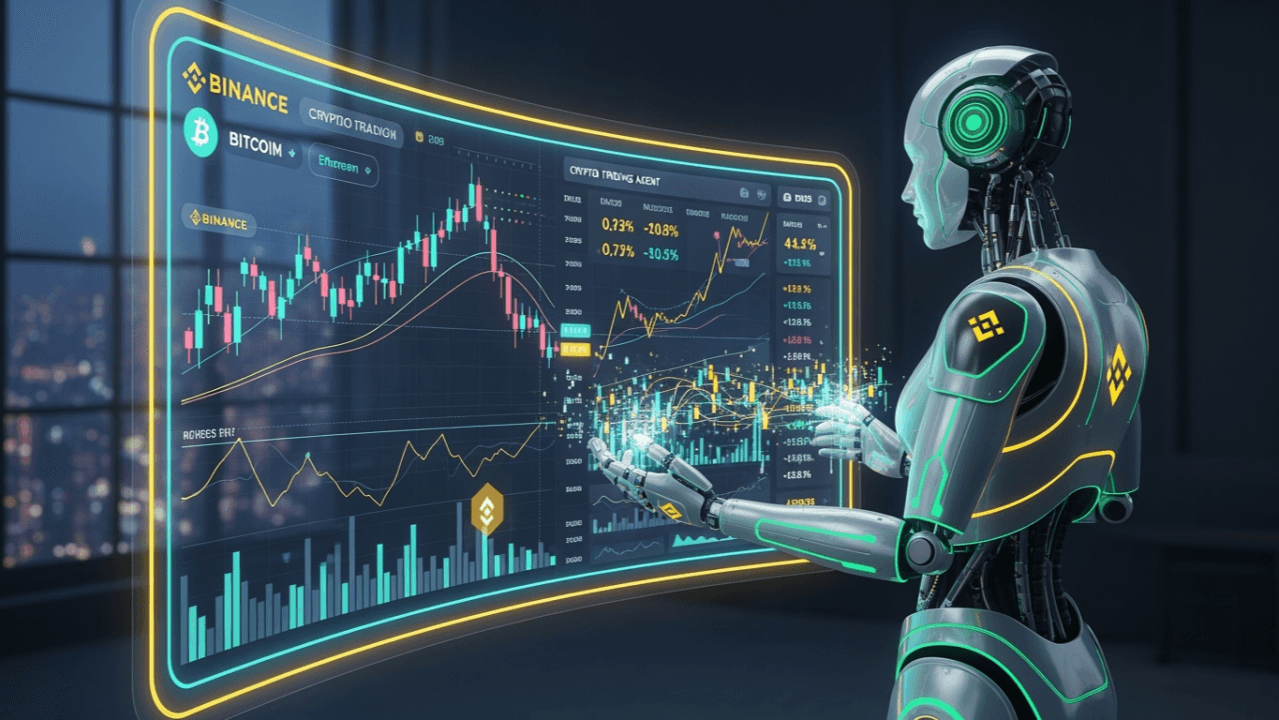
Binance has officially launched Agent OS, a platform designed to enable AI agents to autonomously analyze cryptocurrency markets and execute trades directly on behalf of its extensive user base. This strategic move by the world's largest crypto exchange firmly embeds autonomous AI into the operational fabric of real-money financial management.
For Binance, this initiative is a calculated maneuver to capture the burgeoning interest in agentic AI capabilities within the financial sector. It positions the platform as a key innovator, offering advanced automation tools to a global user base increasingly seeking sophisticated, hands-off trading solutions amidst market complexities. The Agent OS platform is designed to facilitate seamless connections with leading large language models such as OpenAI's ChatGPT and Anthropic's Claude Code for market analysis and automated trade execution.
However, Binance has made it explicitly clear that the primary responsibility for controlling these powerful AI agents, and for navigating the inherent risks they present, rests squarely with the individual user. This approach immediately sparks debate regarding the practicality of truly granular oversight in a volatile, rapidly evolving digital asset market. This launch reflects a broader industry inflection point where AI is transitioning from passive chatbots to active, decision-making agents, particularly within high-stakes financial environments. Such a shift promises unparalleled efficiency and algorithmic speed, yet simultaneously introduces entirely new paradigms for risk management that founders, engineers, and investors must confront.
My read is that this "user responsibility" framework, while a pragmatic approach to platform liability, introduces a new and significant operational risk for the average participant. Many users, even those experienced in crypto, may lack the nuanced understanding required to effectively configure and monitor complex AI agent behaviors, especially in the face of market anomalies or rapid shifts. It’s a delicate, perhaps even naive, balance between empowering users and potentially exposing them to advanced computational pitfalls.
This development undeniably signals a pronounced acceleration towards "autonomous finance," where AI agents are increasingly granted direct agency over capital. While institutional quantitative funds have long deployed similar high-frequency, algorithm-driven strategies, democratizing this capability for retail and semi-professional traders via a platform like Binance scales the potential impact exponentially. This mirrors the early days of automated trading bots, but with a new generation of vastly more intelligent and adaptive agents.
For venture capitalists, this innovation opens fertile ground for startups developing specialized AI agents tailored for specific crypto strategies, enhanced risk management protocols, or regulatory compliance solutions within these emerging frameworks. Founders, however, face the intricate challenge of balancing true agent autonomy with intuitive user controls, all while building systems robust enough to navigate the inherent unpredictability of live trading environments and adversarial market conditions.
The existing regulatory landscape for AI-driven financial agents remains largely undeveloped globally. While Binance's system offers a self-imposed, technically sound boundary, it does little to address the broader societal and systemic questions surrounding algorithmic accountability, the potential for new forms of market manipulation, or comprehensive consumer protection that will inevitably arise as these agents proliferate and grow in sophistication.
The Rise of Autonomous Financial Infrastructure
Binance’s recent deployment of the Binance Agent OS and its open-source Skills Hub represents a profound structural shift in how retail and institutional capital interacts with digital asset markets. By utilizing Model Context Protocol (MCP) servers and ready-made skill packs that plug directly into agentic frameworks like LangChain, CrewAI, or OpenClaw, Binance is transforming large language models from passive analytical tools into active, execution-ready financial operators.
This infrastructure effectively removes the technical friction of algorithmic trading. Users no longer need to write complex API scripts to automate their portfolios. Instead, a simple natural-language prompt can instruct an AI agent to execute a sophisticated multi-step workflow: discovering trending tokens, auditing smart contracts for security vulnerabilities, analyzing on-chain whale wallets, and instantly executing a spot trade.
The Redirection of Risk Management
While Binance has built the rails for this autonomous future, the strategic reality of this rollout is how it redistributes liability. By adopting an "Agentic Zero-Trust" security model, the platform places the entire burden of risk management and operational security squarely on the end user.
Granular API Control: Users are required to configure dedicated sub-account API keys, whitelist specific IP addresses, and manually disable withdrawal permissions before handing credentials over to an AI.
Human-in-the-Loop Safeguards: For live Mainnet trades, the official Binance Spot Skill forces a manual "CONFIRM" step. This ensures an autonomous agent cannot rapidly drain a portfolio due to a hallucinated prompt or algorithmic error without final human authorization.
Localized Key Storage: API keys are stored entirely on the user's local machine rather than in the AI's native cloud servers, insulating the exchange from liability in the event of a third-party data breach.
The Commoditization of Institutional Alpha
For the broader fintech and venture ecosystem, Binance’s move accelerates the commoditization of trading alpha. Historically, high-frequency, data-driven execution and complex on-chain analysis were the exclusive domain of quantitative hedge funds. By giving retail users access to tireless AI agents capable of monitoring smart money inflows and executing trades in milliseconds, the information asymmetry in crypto markets is flattening.The immediate challenge for developers and users is no longer accessing the market, but accurately constraining and directing the AI to prevent catastrophic edge-case errors in an inherently volatile environment.
Future iterations of Agent OS will likely see a push for more advanced monitoring dashboards, transparent performance metrics, and perhaps even community-driven best practices for agent deployment and oversight. The core challenge will be to harness the transformative benefits of AI automation without inadvertently amplifying systemic vulnerabilities or creating novel vectors for financial exploitation on a grand scale.
As AI agents gain increasingly direct control over real-world capital, the digital finance industry is clearly entering an uncharted and highly dynamic era. The long-term success of platforms like Agent OS will ultimately hinge on how effectively they can innovate while simultaneously establishing robust, intuitively designed guardrails, ensuring the promise of automation does not become overshadowed by unforeseen and potentially costly pitfalls.
Frequently asked questions
What is Binance's Agent OS?
Binance's Agent OS is a new platform that allows AI agents to autonomously analyze cryptocurrency markets and execute trades directly on behalf of users on the Binance exchange.
How do AI agents trade on Binance?
AI agents utilize Agent OS to analyze market data, identify trading opportunities, and execute buy/sell orders automatically, mirroring the strategies they are programmed to follow.
Who controls the AI agents on Binance?
While AI agents operate autonomously, users are ultimately responsible for setting parameters, monitoring performance, and overseeing their agents' activities, maintaining control over their investments.
What are the benefits of using AI agents for crypto trading?
Benefits include potential for automated market analysis, faster trade execution, reduced emotional trading, and the ability to execute complex strategies around the clock.
What are the risks involved with AI agent trading?
Risks include potential for technical glitches, market volatility, imperfect algorithms leading to losses, and the need for continuous user oversight to prevent unintended outcomes.
Is Agent OS available to all Binance users?
The article preview states "officially launched," implying it's broadly available, but specific regional availability or access tiers would likely be detailed in the full article.