India may soon roll out a 40 bps UPI merchant fee, with issuing banks expected to take the biggest share.
India is preparing to roll out a UPI MDR framework for businesses, with a notification likely soon for merchant payments.
The proposed fee is about 40 basis points, with issuing banks expected to retain 40% of that pool.
Third party apps such as PhonePe and Google Pay, along with the acquiring bank, may get 30% each under the current structure.
The move directly impacts merchant payments, payment gateways, and banks monetizing UPI rails.
What comes next is execution: the final notification, merchant applicability, and whether the market absorbs MDR without slowing UPI acceptance.
India’s UPI stack, the payments infrastructure used for everything from kiranas to enterprise collections, is now moving toward a business-facing merchant discount rate, or MDR, structure after years of zero-charge expansion. The UPI MDR notification likely to be issued soon will cover businesses, with discussions centering on a roughly 40 basis points fee and a three-way split that favors issuing banks. That is a meaningful policy shift for merchant payments players such as PhonePe, Google Pay, Paytm, and acquiring partners. The move marks the system’s next phase, with more monetization and a clearer incentive chain for the institutions carrying the transaction load.
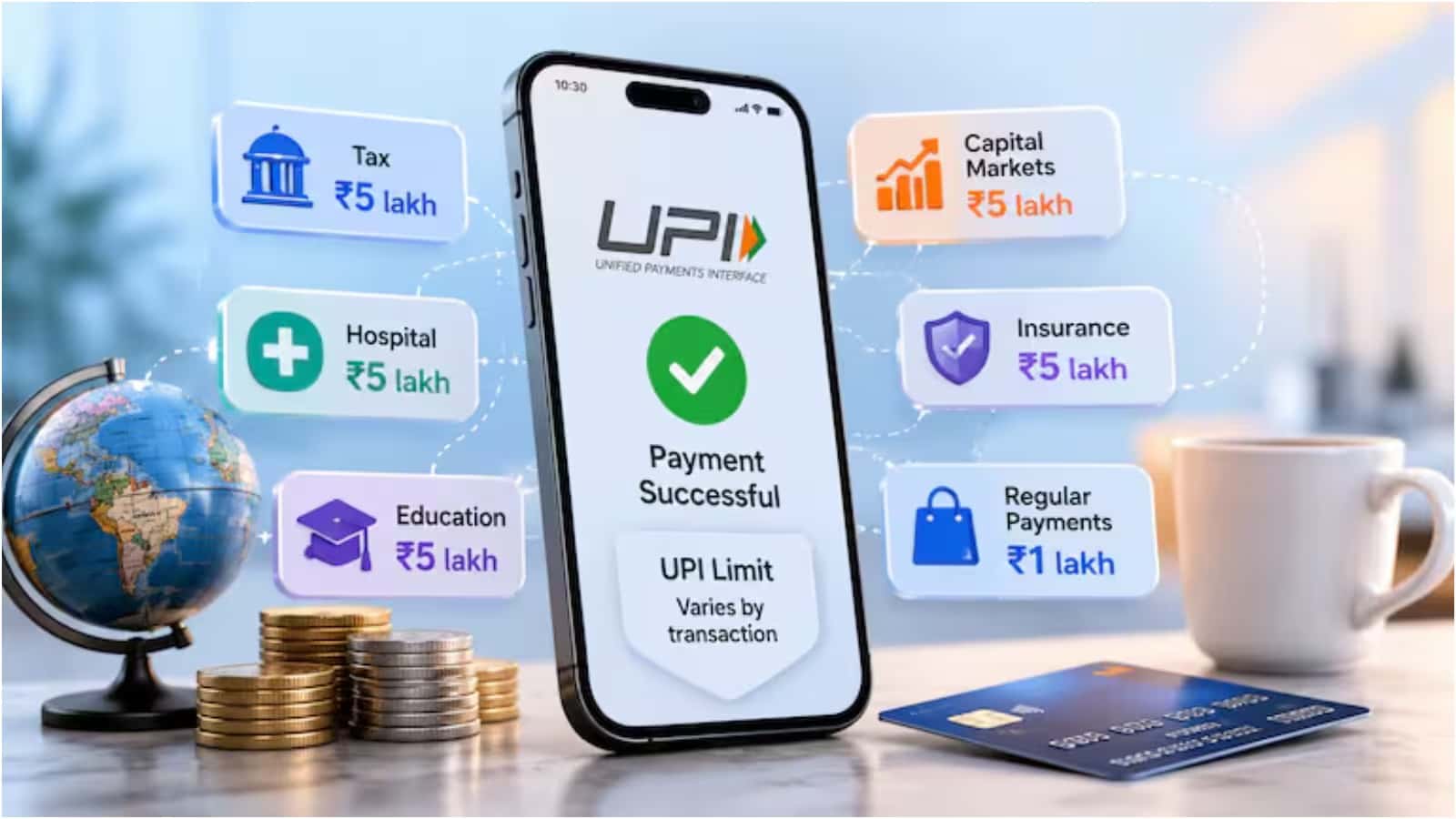
Under the structure being discussed, issuing banks would retain 40% of the fee, while third party application providers and acquiring banks would take 30% each. On a 40 bps MDR, that translates to roughly 16 bps for the bank and 12 bps each for the app and the acquirer. One basis point equals 0.01%, so the proposed 40 bps MDR works out to a fee of 0.4% on transaction value. The system appears designed to push more value toward banks, which have long argued that UPI’s scale has not been matched by a sustainable revenue model.
Proposed split on a 40 bps UPI MDR: issuing bank 40%, TPAP 30%, acquiring bank 30%.
That is the real signal here. For years, UPI became India’s most important digital public rail by removing friction for users and merchants. But free infrastructure at massive scale eventually creates pressure points, especially when banks bear issuance, risk, reconciliation, and settlement burdens while apps own customer interface and merchant mindshare. My read is that the proposed structure tries to rebalance the value chain without reopening the politically harder question of charging every user and every merchant across the board.
The likely focus on businesses matters because this is where the market can absorb pricing more rationally than peer to peer transfers. Large merchants already understand MDR from cards and other digital payment modes. For them, the question is not whether payments should cost something. It is whether UPI remains cheaper, faster, and conversion-friendly enough to stay the preferred method. At 0.4%, the answer for many categories is still likely yes, particularly when compared with legacy rails.
The Monetization of Digital Public Rails
The imminent introduction of a 40-basis-point Merchant Discount Rate (MDR) on UPI represents a profound maturation of India’s digital payments ecosystem. For over half a decade, the zero-charge mandate artificially subsidized merchant adoption, transforming UPI into an indispensable public utility. However, this hyper-growth created an unsustainable infrastructure burden for the banking sector. By introducing a commercial framework that explicitly targets large enterprise merchants while shielding consumers and small retailers, regulators are finally bridging the gap between national scale and commercial sustainability.
Incentivizing the Infrastructure Layer
The proposed revenue split, allocating 40% (16 bps) to issuing banks, and 30% (12 bps) each to Third-Party App Providers (TPAPs) and acquiring banks, is a highly calculated rebalancing act. Historically, apps like Google Pay and PhonePe monopolized the customer interface and merchant mindshare, while issuing banks absorbed the heavy capital expenditures of server uptime, reconciliation, and fraud mitigation. Directing the largest share of the MDR pool back to the issuers provides the critical economic incentive needed to upgrade legacy banking cores and maintain national-grade reliability as transaction volumes continue to compound.
The Pivot to Embedded Margins
For fintech startups and payment aggregators, this policy shift fundamentally rewrites unit economics. The ecosystem is no longer forced to use payments merely as a loss-leading acquisition channel to aggressively cross-sell lending or SaaS products. A structured MDR establishes a predictable, transactional revenue stream. The true test, however, lies in execution. The platforms that can seamlessly bundle this new 0.4% baseline fee with value-added services such as automated reconciliation, checkout analytics, and embedded credit, will successfully defend their merchant networks against friction. Ultimately, this notification signals that UPI is graduating from a subsidized inclusion project into a self-sustaining commercial rail.
Why It Matters
For startups, this is less about a new fee and more about whether UPI can finally support real payment margins. Merchant payments has produced scale in India, but not always predictability. Payment companies have spent years cross-selling lending, subscriptions, and software because core payment economics remained thin. A business MDR on UPI starts to change that equation, especially for players sitting at the intersection of merchant acceptance, software, and financial services.
It also changes the conversation for banks. If issuing banks take the biggest share, they have a direct economic incentive to support uptime, dispute handling, and broader merchant adoption with more conviction. That matters because India’s digital payments story is now less about proving product market fit and more about operating at national infrastructure quality. A system that moves enormous payment volume cannot remain permanently detached from monetization if participants are expected to keep investing in reliability and fraud controls.
On the proposed structure, 40 bps equals 0.4% of transaction value, with issuing banks receiving about 16 bps and TPAPs and acquirers about 12 bps each.
There is another layer the market should not miss. Apps such as PhonePe and Google Pay have built huge front-end presence, while banks continue to carry system responsibility. A fee split tilted toward issuers suggests policymakers want the next chapter of UPI to preserve app-led innovation without hollowing out the banking side of the stack.
For merchants, the impact will vary by segment. Enterprise merchants and digitally native sellers are better positioned to treat MDR as a payment operations cost. Small offline merchants may be more sensitive, especially those who moved aggressively to UPI because it was free and instant. If implementation starts with businesses in a more defined way, the rollout could be a test case in pricing inside digital public infrastructure, where consumer utility is preserved while commercial usage begins to pay.
What’s Next
The next trigger is the notification itself, and the exact definition of “businesses” will matter more than the headline fee. If the framework applies first to larger merchants, formal businesses, or specific payment categories, the market reaction will be measured. If it extends more broadly, payment aggregators and merchant acquirers will need to rethink onboarding, pricing, and retention playbooks quickly. This is where execution will decide whether the policy sharpens unit economics or introduces fresh friction into a system built on habit.
The move also connects to a broader trend across payment systems. Systems built for inclusion eventually confront the same operating reality: someone has to fund growth, fraud prevention, and infrastructure resilience. India delayed that reckoning longer than most because UPI’s public utility role was central to formalization and digital adoption. But once a rail becomes dominant, pricing discipline becomes less a tax and more a tool for keeping the system investable.
For venture-backed fintechs, this could reopen business model confidence in parts of the payments stack that had begun to look commoditized. Merchant acquirers, payment gateways, and software-led checkout companies may gain if they can package acceptance with reconciliation, credit, and workflow tools. The winners will likely be firms that already control merchant relationships and can treat MDR as one part of a broader monetization bundle, not the whole business. That is why the ripple effect extends beyond UPI apps to payments and embedded finance players.
No investor names are attached to this policy development, and there is no funding round at the center of this story. Still, the startup implications are clear. Payments economics influence who can subsidize growth, who can acquire merchants cheaply, and who can turn scale into operating margin. In that sense, the coming notification is not just a regulatory tweak. It is a reset in how value may be shared across India’s digital payments rail.
I think this matters because India’s fintech market has now matured beyond the phase where growth alone can explain every strategic choice. Sustainable rails need sustainable incentives. If the notification lands close to the discussed structure, banks gain, app layers get a defined revenue share, and merchants absorb a cost that still looks competitive versus older payment methods. That would place UPI on firmer commercial ground while keeping its consumer proposition intact.
The closest comparable dynamics can be seen in companies that have built around merchant acceptance and payment distribution, including Paytm, while TPAPs such as PhonePe and Google Pay remain central to the front-end flow. The next cycle in Indian payments will likely belong to the players that can combine low-friction checkout with software, credit, and retention tools. The UPI MDR notification likely to be issued soon does not close that race. It starts a more economically serious version of it.
Frequently asked questions
What is the UPI MDR notification likely to be about?
The expected UPI MDR notification is likely to introduce a merchant discount rate for business payments made through UPI in India. Reports suggest the fee could be around 40 basis points, creating a formal revenue-sharing structure for banks and payment apps.
Will consumers in India have to pay a UPI fee under this proposal?
Based on the current reporting, the proposed UPI MDR framework is aimed at merchant or business payments, not person-to-person transfers. That means everyday consumer UPI payments are not the main target of this likely fee structure.
How much could the new UPI merchant fee be?
The proposed merchant fee is about 40 basis points, or 0.40% of the transaction value. If implemented, that would mark a major shift for UPI, which has largely operated without MDR for many transactions.
Who is expected to get the biggest share of the UPI MDR fee?
Issuing banks are expected to retain the largest portion under the structure being discussed. Reports indicate they may receive about 40% of the fee pool, while third-party apps and the acquiring bank could get roughly 30% each.
How would this affect PhonePe, Google Pay, and other UPI apps?
If the proposed split is adopted, apps such as PhonePe and Google Pay could receive a share of MDR on merchant payments instead of relying mainly on indirect monetization. Even so, issuing banks may still capture the biggest slice of the total fee pool.
Why does a UPI MDR rollout matter for businesses and fintechs?
A UPI MDR rollout matters because it could change the economics of digital payments for merchants, banks, and payment platforms across India. For fintechs, it may open a clearer revenue stream, while businesses may need to factor a new transaction cost into payment acceptance.