India data center firm Yotta targets 90,000 Nvidia AI chips, aiming to become Nvidia’s biggest customer in India
Yotta Data Services planned to place a $12 billion purchase order this month for 90,000 Nvidia Vera Rubin and Grace Blackwell chips, chief executive Sunil Gupta said.
Yotta had already deployed 40,000 graphics processing units at an investment of $1.8 billion by June, Gupta said.
The combined deployments and planned order would make Yotta Nvidia’s largest customer in India, Gupta said.
Yotta was IPO-bound, according to the report citing the Hiranandani Group’s data centre arm.
Yotta Data Services planned a $12 billion order for 90,000 next-generation Nvidia chips this month, chief executive Sunil Gupta said. The planned purchase covered Nvidia Vera Rubin and Grace Blackwell, or GB300, chips, Gupta said. He said the order would be worth around Rs 1 lakh crore.
Yotta had already deployed 40,000 graphics processing units by June at an investment of $1.8 billion, Gupta said. He said the existing build-out and the proposed purchase together would make Yotta Nvidia’s biggest customer in India. The order highlighted a push by a regional data center operator to build artificial intelligence computing capacity. These chips are used to train and run AI models. The move also pointed to a race in India to secure AI infrastructure before demand outstrips supply. Companies that control computing capacity can sell access to startups, enterprises and governments that do not own such hardware.
The CapEx of Sovereign Compute
Yotta Data Services’ monumental $12 billion purchase order for 90,000 next-generation Nvidia Vera Rubin and Grace Blackwell (GB300) chips fundamentally alters the scale of India’s AI infrastructure. Historically, India has served as the downstream software and services engine for the global technology ecosystem, while upstream, high-margin compute capacity remained heavily concentrated within Western hyperscalers. By aggressively front-loading its capital expenditure by building upon a $1.8 billion deployment of 40,000 GPUs already active, Yotta is executing a massive sovereign compute play. The strategy is straightforward: intercept the explosive domestic demand for localized, latency-sensitive AI training and inference before multinational cloud providers can establish an unbreakable monopoly in the region.
The IPO Arbitrage of AI Infrastructure
The timing of this $12 billion commitment is a highly calculated pre-IPO maneuver. For a data center operator preparing to test the public markets, traditional metrics like rack space and megawatt capacity are no longer sufficient to command a premium valuation. By broadcasting its status as Nvidia’s largest customer in India, Yotta is actively re-pricing itself from a legacy real estate and colocation business into a pure-play AI utility. This procurement pipeline serves as a compelling growth narrative for institutional investors: securing the world’s most constrained hardware asset today theoretically guarantees the high-margin, recurring infrastructure revenues of tomorrow.
Execution Over Ambition
However, the true operational challenge lies far beyond securing the capital. Deploying 90,000 advanced Blackwell and Rubin chips introduces unprecedented physical friction: securing massive, uninterrupted energy blocks, pioneering liquid cooling architecture, and navigating inevitable supply chain delays. If Yotta can efficiently translate this immense hardware expenditure into reliable, monetizable compute capacity, it will successfully establish India as a primary foundational node in the global AI supply chain, proving that domestic operators can compete at the very edge of the compute frontier.
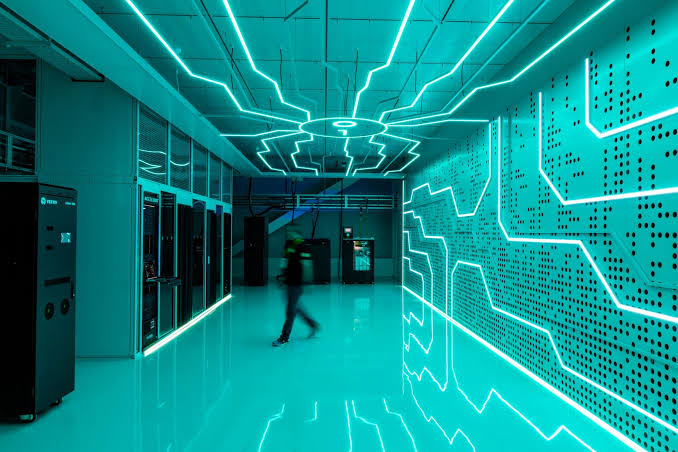
$12 billion planned order for 90,000 Nvidia Vera Rubin and Grace Blackwell chips, according to Yotta chief executive Sunil Gupta.
Background
Yotta is the data centre arm of the Hiranandani Group, according to the report. Its expansion came as Nvidia’s advanced chips became central to the AI build-out because they perform the parallel processing needed for training and inference.
For India, the significance went beyond one company. The country has long been a major software market, but AI infrastructure has remained concentrated among a small number of cloud providers. A domestic operator placing an order of this size suggested local firms were trying to build underlying compute capacity in the country. The timing also mattered because Yotta was IPO-bound, according to the report. A company preparing for a public listing often tries to show investors a clear growth path, and in data centers that can mean securing hardware before customer revenue fully arrives. That strategy carried both promise and risk. If demand for AI computing rises as expected, early capacity can become a scarce asset. If spending slows, operators can be left servicing large bills for equipment that takes time to fill.
40,000 GPUs had already been deployed at a cost of $1.8 billion by June, according to Yotta chief executive Sunil Gupta.
What analysts say
The planned order suggested the economics of AI were moving from experimentation to infrastructure, based on the scale of Yotta’s disclosed spending. A purchase measured in tens of thousands of chips is less about testing AI tools and more about preparing for sustained commercial demand from businesses building products on top of rented computing power. It also showed how Nvidia remained at the center of that build-out, based on Yotta’s chip choices. Vera Rubin and Grace Blackwell are premium systems in Nvidia’s lineup, and choosing them indicated Yotta was targeting advanced enterprise AI workloads rather than older-generation capacity.
Another implication was pricing power, based on market structure. When a domestic provider commits early to premium chips, it can position itself to serve companies that need AI infrastructure quickly but do not have direct access to global supply chains. The plan connected with a broader trend across the technology sector, based on recent AI investment patterns. Cloud providers, telecom groups and data center operators have been racing to line up power, land and chips because AI demand depends on all three. Chips alone are not enough. They need electricity, cooling and networking to run at scale. Yotta’s announcement stood out because it came from India, where high-end AI compute has been relatively limited. If the order proceeds as described, it could help attract model developers and enterprise customers that might otherwise run workloads outside the country.
What's next
The next test will be execution, based on Gupta’s plan and Yotta’s IPO status. Investors and customers will watch whether the order is placed this month, how quickly the chips are delivered and installed, and whether Yotta converts that capacity into paying demand before the cost of expansion weighs on returns.
Frequently asked questions
What is Yotta planning to buy from Nvidia?
Yotta Data Services said it plans to place a $12 billion order for 90,000 next-generation Nvidia chips. The order includes Nvidia Vera Rubin and Grace Blackwell processors, which are designed for advanced AI and data center workloads.
Why is Yotta’s Nvidia chip order important?
The planned purchase is significant because it would sharply expand Yotta’s AI computing capacity in India. Yotta’s CEO said the combined deployed and planned chips would make the company Nvidia’s largest customer in India.
How many Nvidia GPUs has Yotta already deployed?
Yotta had already deployed 40,000 graphics processing units by June, according to its chief executive. The company said that earlier deployment represented an investment of about $1.8 billion.
Which Nvidia chips are included in Yotta’s planned order?
Yotta said the order would include Nvidia Vera Rubin and Grace Blackwell chips. Both are next-generation Nvidia platforms aimed at AI training, inference, and large-scale computing in modern data centers.
Is Yotta preparing for an IPO?
Yes, Yotta is described as IPO-bound, meaning it is moving toward a public listing. The large Nvidia order signals aggressive expansion ahead of that process and may help investors gauge its AI infrastructure ambitions.
What does this mean for India’s AI and data center market?
A purchase of this size would underscore rising demand for AI infrastructure in India and could strengthen the country’s position in regional data center growth. It also highlights how major computing investments are increasingly tied to Nvidia’s latest chip platforms.