Culdcept Begins: Best Cards For Air Decks


Ryan has served multiple times on the jury for the Indie Cup awards, and has mentored many emerging writers in the games industry. He has covered some of the biggest releases of recent years, including leading the site's coverage of Baldur's Gate 3, Dragon's Dogma 2, and plenty of other massive RPGs.
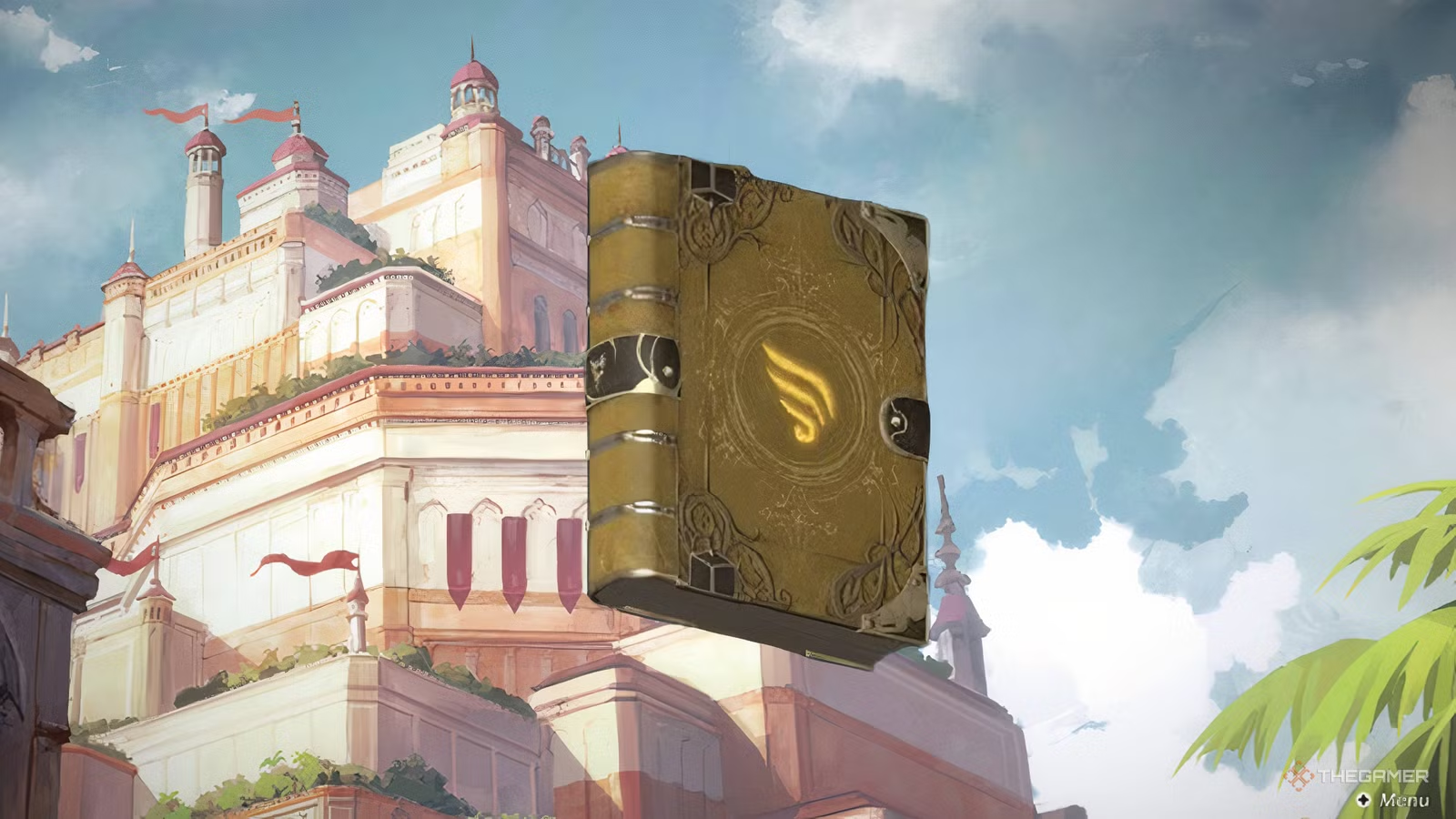
Air is the tempo element in Culdcept Begins, and it never stops moving. Its creatures are cheap and quick, and they almost always strike first, letting a fragile body kill before it can be hit. Beyond raw speed, Air brings the widest toolkit of tricks in the game, from paralysis and poison to item destruction and the movement abilities that let it reach any corner of the map.
It also holds the edge over Earth, cutting through the fortress colour's walls where other elements stall. Air splits along its land requirement like the rest, so this guide covers how the element controls the board before sorting its standouts by committed build or splash.
How Air Decks Work

Air wins on tempo. Its bodies are cheap and fast, and the near-universal Attacks First keyword means they trade up constantly, killing invaders and defenders before those creatures land a blow. Layered on top is the broadest disruption suite in the set. Air hits enemy creatures with paralysis and poison, and it tears the items clean off them, chipping away at an opponent's plan while your flyers dart around the map claiming territory.
Its sharpest trick is reach. Movement abilities let Air creatures relocate across your Air land or even onto an enemy's, so no square stays safe for long. That map control is a primary-deck payoff, alongside the land-gated threats and the go-wide Garuda. A secondary Air splash leaves the network behind and takes the cheap first-strikers and disruption instead, handing any deck a faster clock and a way through defensive walls.
The Best Air Cards

The split runs on Air land once more. The payoff cards want a committed build with an Air network to move across, while the first-strikers and disruptors slot into any deck that wants to raise its tempo. Every pick is fragile, so lean on their speed and strike before the opponent can answer.
| Card | Cost | Role | Description |
|---|---|---|---|
| Giant Bat | G20 | Early Aggro | A cheap flyer for claiming territory in the opening turns while your pricier threats come online. |
| Harpy | G50 | Tempo | Attacks First on a clean 30/30 body, trading up against slower creatures without taking damage. |
| Pegasus | G40 | Evasion | Strikes first and carries Anti-Spell plus scroll-attack negation, a nimble body that magic can't easily stop. |
| Roadrunner | G45 | Tempo | Attacks First and moves one or two spaces at a time, darting between squares to pressure the whole board. |
| Gremlin | G60 | Item Hate | Destroys the enemy Cepter's equipped item before battle, blanking a defender's expensive gear for free. |
| Knight | G80 | Anti-Tank | A 50 attack body with a Critical Hit against 50-plus MHP creatures, built to punch down the biggest walls. |
| Nike | G40 + Air Land | Disruption | Strikes first and paralyses on a hit, locking down a dangerous creature before it can retaliate. |
| Elf | G50 + Air Land | Anti-Earth | Attacks First with a Critical Hit against Earth, tearing through the fortress colour's tanks. |
| Death Worm | G50 + Air Land | Wall-Piercer | Switches off enemy attack negation and reflection, forcing damage through the defensive walls that stop everything else. |
| Wyvern | G60 + Air Land | Tempo | Attacks First and can relocate to any vacant Air land, striking from wherever your network reaches. |
| Aero Goetia | G50 + 2 Air Land | Aggro Tempo | Strikes first with a 40-damage Forbidden Art, and can leap onto an enemy's Air land to attack. |
As a primary colour, Air plays a game of movement and pressure. Develop an Air land network so Wyvern and Aero Goetia can teleport across the board, and flood cheap flyers to feed Garuda. The first-strike swarm then keeps every enemy square under threat. Death Worm is the deck's trump card, since it forces damage through the negation and reflection that would otherwise wall your fragile attackers out.
As a secondary colour, Air is a tempo injection. A splash of first-strikers and disruptors speeds up a slower deck and gives it answers to problems its main colour can't solve, whether that means a defensive wall or a key piece of enemy gear. Reach for Air when your deck can win a race but needs help starting one.
Source link