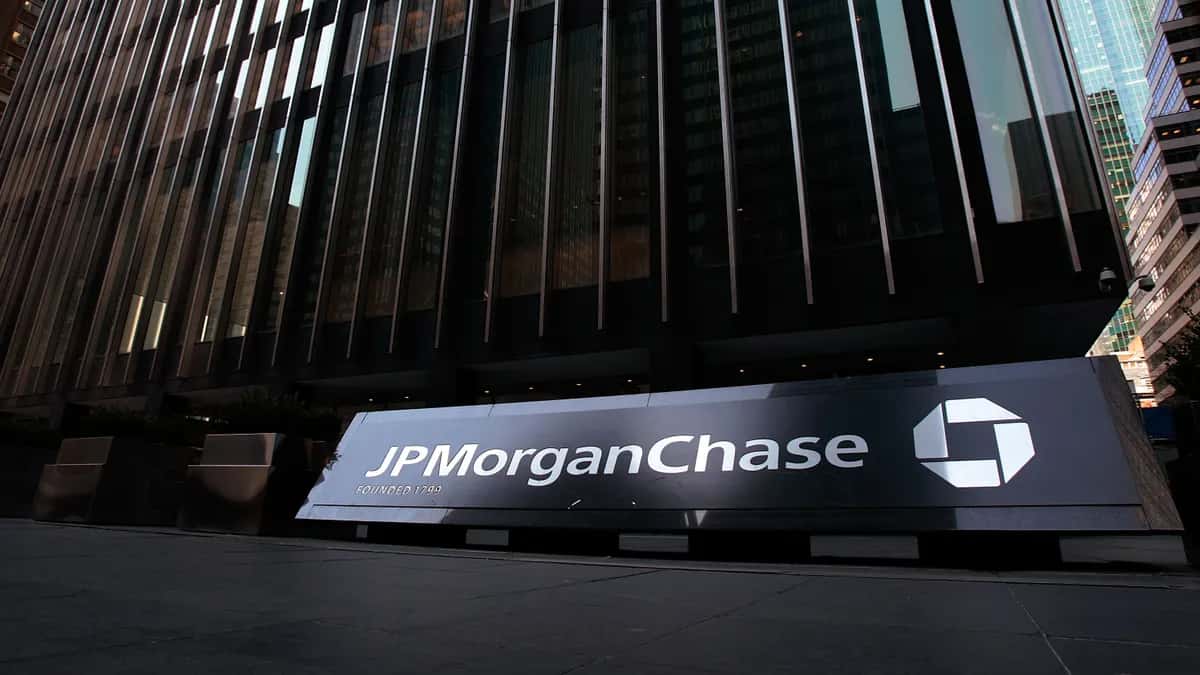
Traditional finance's caution signals major hurdles for blockchain betting platforms and decentralized innovation, impacting mainstream adoption.
JPMorgan Chase recently terminated banking services for Polymarket, the blockchain-based prediction market platform, signaling a heightened regulatory caution from traditional finance that could significantly impede the mainstream adoption and operational scalability of decentralized betting protocols. This move underscores the ongoing tension between financial innovation and stringent compliance demands, forcing emerging Web3 entities to navigate an increasingly narrow path for fiat integration. The debanking action by JPMorgan follows an observable trend of major financial institutions de-risking their exposure to entities operating in regulatory grey areas within the digital asset space. While specific details of the compliance breaches were not publicly disclosed, Polymarket, which allows users to wager on real-world events using cryptocurrency, likely triggered concerns related to Know Your Customer (KYC) protocols, Anti-Money Laundering (AML) frameworks, and the classification of its market offerings under existing gambling or securities laws. This situation exemplifies the operational hurdles startups face when bridging traditional financial systems with novel decentralized applications. Polymarket's platform has demonstrated substantial user engagement, facilitating significant capital flows across a diverse range of event outcomes, from political elections to technological breakthroughs. Its reliance on established banking rails for user on-ramps and off-ramps of fiat currency is critical for expanding its user base beyond crypto-native participants. The withdrawal of banking services by a major player like JPMorgan forces Polymarket and similar platforms to seek alternative, often smaller and less robust, financial partners, or to pivot towards more intricate, purely decentralized mechanisms for liquidity.

What Does This Debanking Imply for Prediction Markets?
My read is that this action highlights the increasing divergence between regulatory intent and technological innovation in decentralized finance. While prediction markets offer unique data aggregation and hedging mechanisms, their inherent structure often falls into a grey area concerning gambling laws, derivatives regulations, and securities classifications. The conservative stance taken by major financial institutions like JPMorgan is a significant barrier to mainstream adoption and institutional participation, forcing these platforms to operate at the fringes of the established financial system. This development could catalyze a bifurcation within the prediction market ecosystem. One segment may intensify efforts to engage with regulators, seeking licenses and restructuring operations to fit within defined legal parameters, potentially at the cost of decentralization or innovation speed. Another segment might accelerate towards fully permissionless, censorship-resistant models, embracing peer-to-peer liquidity and avoiding fiat gateways altogether. This latter path, while preserving core Web3 principles, inherently limits market reach and increases friction for users unaccustomed to crypto-only environments.
Polymarket has facilitated significant trading volume across its various markets, illustrating the significant user engagement and capital flows involved in this emerging sector despite regulatory headwinds.
Why Are Major Banks Taking This Stance?
The regulatory landscape for digital assets and decentralized applications remains highly fragmented and often punitive in the U.S. Regulators have consistently emphasized the need for existing financial laws to apply, even to novel technologies. Major financial institutions operate under immense pressure from bodies like the SEC, FinCEN, and OCC to de-risk their portfolios and avoid facilitating activities deemed non-compliant. The cost of regulatory non-compliance, often manifesting in multi-million dollar fines and severe reputational damage, far outweighs the potential revenue opportunities from supporting nascent, high-risk ventures in the current climate. This cautious approach is not new for JPMorgan, a firm that has simultaneously been at the forefront of exploring blockchain technology with initiatives like JPM Coin and Onyx, while maintaining a deeply conservative stance on broader crypto integrations. Their internal risk management frameworks are designed to err on the side of extreme caution when faced with ambiguous or rapidly evolving regulatory signals. This duality reflects the complex challenge of embracing innovation while adhering to stringent compliance duties in a system that struggles to categorize decentralized finance.
JPMorgan’s decision to quietly debank Polymarket late last year is the perfect distillation of traditional finance's current schizophrenia regarding digital assets. On one hand, the largest bank in the US terminated its banking services for the prediction market in October 2025, citing mounting regulatory fears. But behind the scenes, the relationship is far from severed. While Jamie Dimon’s compliance department was shutting down Polymarket’s checking accounts, his wealth management and investment banking arms were busy courting the company. JPMorgan invited Polymarket CEO Shayne Coplan to speak at a private client event in Miami this past February, and the bank is now actively aggressively positioning itself to underwrite Polymarket's highly anticipated IPO. This is the brutal reality of bridging Web3 and TradFi right now. Major financial institutions are terrified of crossing regulators like the CFTC and SEC, so they brutally de-risk their commercial banking portfolios by kicking crypto startups to the curb. Yet, when a platform like Polymarket achieves massive product-market fit and starts eyeing a multi-billion dollar valuation, those same banks suddenly find a way to circumvent their own moral panic in pursuit of underwriting fees. For founders in the decentralized space, the takeaway is stark. You cannot rely on legacy financial infrastructure as a permanent utility. The traditional banks will drop your operational accounts at the first sign of a regulatory headache, only to knock on your door months later asking to take you public. Until there is explicit, comprehensive regulatory clarity, Web3 startups must secure entirely separate, resilient fiat off-ramps if they want to survive the compliance whiplash.
What's the Market Consensus on Future Trajectories?
Industry observers widely acknowledge that traditional banks face an unenviable position. They are expected to innovate and serve emerging sectors but are simultaneously held accountable for preventing illicit finance, even in areas where legal definitions are fluid. For prediction markets, the prevailing sentiment suggests a continued struggle for mainstream integration as long as regulatory clarity remains elusive. Without robust fiat on/off-ramps provided by major banks, their growth may remain largely confined to crypto-native users, limiting their ability to achieve scale or impact broader financial markets. The regulatory overhang creates a perception of instability that actively deters institutional capital and broader retail adoption. The bear case for these platforms posits that the current regulatory environment will effectively stifle their ability to compete with traditional financial instruments or even regulated betting markets. Without the ability to frictionlessly onboard users from traditional finance, prediction markets face an uphill battle in terms of liquidity and market efficiency. The absence of clear guidelines creates a perpetual state of uncertainty, making long-term strategic planning and investment challenging for both platform operators and potential investors. The key dates and triggers to watch will be the progression of clear regulatory frameworks for decentralized finance and prediction markets, particularly from bodies like the CFTC and SEC. Until explicit legal certainty emerges, look for these platforms to continue exploring alternative fiat on-ramps, potentially through smaller, more risk-tolerant financial institutions, or to lean into fully decentralized, permissionless solutions to circumvent traditional banking entirely. The trajectory of upcoming legislative efforts will dictate whether innovation in this space can find a regulated path forward or remains primarily in the shadows.
Frequently asked questions
Why did JPMorgan terminate services for Polymarket?
JPMorgan Chase terminated banking services for Polymarket due to heightened regulatory caution. This action reflects the ongoing tension between financial innovation and stringent compliance demands, particularly for blockchain-based platforms.
What is Polymarket?
Polymarket is a blockchain-based prediction market platform where users can bet on the outcomes of future events using cryptocurrency.
What are the implications for DeFi?
This move signals major hurdles for the mainstream adoption and operational scalability of decentralized betting protocols, potentially slowing the growth of decentralized finance (DeFi).
How does this affect crypto banking?
It underscores the increased scrutiny and risk aversion from traditional financial institutions when dealing with crypto-related businesses, making banking services harder to secure for many.
Are other banks following suit?
While JPMorgan's action is significant, the article implies a broader trend of regulatory caution among traditional finance institutions, suggesting similar actions might follow from others.
What is a prediction market?
A prediction market is an exchange-traded market created for the purpose of trading contracts whose payoffs are linked to the outcome of future events. In Polymarket's case, it's decentralized and blockchain-based.