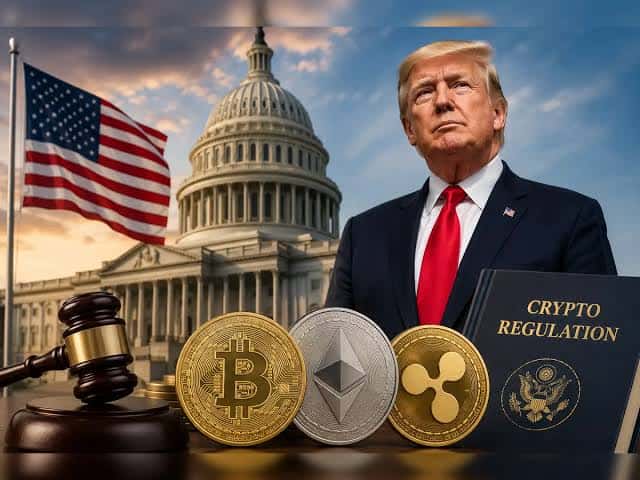
The Office of the Comptroller of the Currency has granted conditional preliminary approval for a national trust charter to World Liberty Trust Company, a move that significantly legitimizes its stablecoin operations and offers a clearer pathway for institutional engagement within the digital asset ecosystem. This regulatory milestone for the Trump-backed crypto venture signals a maturing landscape for financial innovation, potentially paving the way for wider acceptance of stablecoins as a core component of modern financial infrastructure.
World Liberty Trust Company can now manage and hold assets on behalf of customers and facilitate faster payment settlements. While this charter does not extend to traditional deposit-taking or lending services, it represents a crucial regulatory imprimatur for entities operating at the intersection of blockchain technology and conventional finance.
This shift to direct oversight under the OCC is a profound operational and reputational pivot. The firm welcomed this conditional approval as a significant step, emphasizing the commitment to continuous scrutiny from federal regulators, a factor that could bolster investor and institutional confidence in their digital asset offerings.
What It Means
From an operational standpoint, this charter significantly streamlines World Liberty’s business model. This direct regulatory engagement provides a robust framework for transparency and auditability, essential ingredients for attracting major financial players who demand certainty and compliance.
My read on this development is that it reinforces a broader trend: the measured integration of digital assets into the existing financial system. The OCC's consistent approach indicates a regulatory willingness to accommodate crypto innovation, provided it adheres to established prudential standards. This creates a critical on-ramp for capital, transforming previously opaque or fragmented crypto services into regulated, federally supervised entities. It de-risks the asset class for institutional treasuries and investment funds considering exposure to stablecoins for liquidity management or cross-border transactions.
The Context
The pursuit of national trust charters by crypto firms has intensified, driven by the desire for a unified federal regulatory framework that transcends fragmented state-level oversight. These charters allow companies to operate nationwide, offering asset custody and settlement services without navigating a patchwork of varying regulations. This consistency is particularly attractive for firms aiming to court large institutional clients who prioritize regulatory certainty and operational scalability.
Getting a national trust charter from the OCC isn't just a regulatory win for World Liberty; it’s a structural breakthrough for the entire digital asset sector. For years, crypto startups have been forced to play a grueling, fragmented game of regulatory whack-a-mole, cobbling together state-by-state money transmitter licenses and relying on skittish, traditional partner banks that could drop their accounts at a moment's notice. By bringing asset issuance, fiat reserves, and digital custody under direct federal supervision, World Liberty is bypassing those legacy banking middlemen. They get to operate with the same fiduciary gravity as traditional Wall Street custodians. But there is a larger, undeniable political subtext here. A Trump-backed firm securing a federal charter in 2026 signals a profound shift in the Washington consensus on digital assets. The era of the federal government treating crypto strictly as a shadow economy to be litigated out of existence is ending. Instead, regulators are actively laying the pipes to absorb digital assets directly into the mainstream banking system. For founders and investors watching this play out, the takeaway is absolute: the next generation of multi-billion-dollar Web3 infrastructure won't be built by evading the regulators. It will be built by becoming the regulated.
The association of World Liberty Financial with President Donald Trump has undeniably added a unique dimension to its regulatory journey. While the OCC's approval process is statutory and based on prudential standards, the political backdrop inevitably draws increased scrutiny and public attention. This highlights the ongoing convergence of technology, finance, and politics, where prominent figures' endorsements can amplify both opportunities and challenges for emerging ventures.
What Analysts Say
While the conditional approval marks a significant step, it is imperative to acknowledge the inherent limitations and potential headwinds. The trust charter, by design, restricts World Liberty from engaging in deposit-taking or traditional lending activities, differentiating it from a full-service commercial bank. This necessitates a strategic focus on its core strengths of asset custody and settlement, ensuring it carves out a defensible niche within the broader financial landscape. The conditional nature means ongoing vigilance and strict adherence to all stipulated requirements.
Moreover, the political ties, while potentially advantageous in certain climates, could also invite heightened scrutiny from future administrations or legislative bodies with differing views on digital asset regulation. This introduces a layer of geopolitical risk that sophisticated investors must factor into their assessments. The market will closely watch how World Liberty navigates these dynamics, demonstrating its ability to operate as a robust, compliant financial institution irrespective of broader political currents.
What To Watch
The immediate focus will be on World Liberty Trust Company’s execution of the stipulated conditions. Beyond these foundational steps, the market will observe the charter's impact.
Longer term, the evolution of stablecoin regulation at both federal and international levels remains a critical watchpoint. The OCC’s actions provide a template, but broader legislative initiatives, such as those concerning payment stablecoins, could further shape the competitive landscape and operational requirements for firms like World Liberty. The interplay between regulatory clarity, technological innovation, and political sentiment will ultimately determine the trajectory of digital assets within the global financial system.