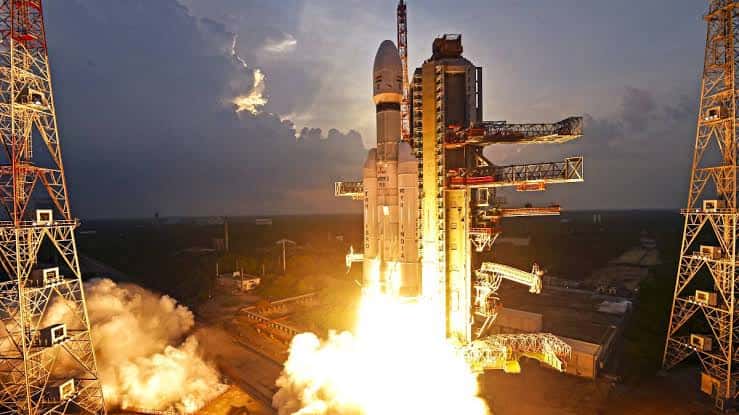
India's landmark PSLV rocket project, built by HAL-L&T for NewSpace India, faces a delay, impacting ISRO's industrialization strategy.
India's first industry-built Polar Satellite Launch Vehicle (PSLV) faces a launch delay to March 2027.
The HAL-L&T consortium is manufacturing the rocket under an estimated Rs 860-crore contract from NewSpace India Ltd.
This project signifies a strategic shift by the Indian Space Research Organisation (ISRO) to industrialize rocket production.
The delay highlights the complexities of private sector integration into advanced space manufacturing.
India's inaugural industry-built Polar Satellite Launch Vehicle (PSLV) launch date has shifted to March 2027, according to people familiar with the development. The postponement represents another schedule adjustment for the critical project. NewSpace India Ltd (NSIL), ISRO's commercial arm, awarded the contract in 2022. The Hindustan Aeronautics Limited (HAL) and Larsen & Toubro (L&T) consortium is undertaking the manufacturing. The contract value for this initiative is an estimated Rs 860 crore, an Economic Times report stated. This program aims to transition PSLV production from ISRO to private industry. The move seeks to enhance India's space launch capabilities and boost private sector participation. Such industrial scaling is vital for meeting increasing domestic and international launch demands.
Why is India's space sector moving towards private manufacturing?
India's space agency, ISRO, initiated a significant policy pivot to involve private industry more deeply in space activities. This strategic shift aims to commercialize space operations and increase launch frequency. The PSLV, often called ISRO's workhorse, has completed numerous successful missions, establishing its reliability. Transferring its production to industry allows ISRO to concentrate on advanced research and development, including crewed missions and next-generation launch vehicles. The Indian Space Policy 2023 formalized this expanded role for non-governmental entities. This policy provides a framework for private companies to engage in launch vehicle manufacturing, satellite building, and space-based services. The establishment of IN-SPACe (Indian National Space Promotion and Authorization Centre) further streamlined regulatory processes. These reforms are designed to foster a vibrant private space ecosystem within India, attracting investment and innovation.
What are the implications of this delay for industry and competition?
The delay in the first industry-built PSLV launch carries several implications for India's burgeoning private space sector. Project timelines are critical for commercial space ventures, impacting revenue projections and investor confidence. The HAL-L&T consortium, comprising established public and private sector giants, represents a major step in technology transfer and large-scale aerospace manufacturing outside ISRO's direct purview. This particular delay could indicate the inherent complexities in integrating new industrial processes and supply chains for such advanced technology products. Globally, the space industry is experiencing rapid commercialization, with companies like SpaceX and Rocket Lab demonstrating aggressive launch schedules and cost efficiencies. For India to compete effectively in this dynamic market, consistent and timely launch capabilities are essential. Delays might affect India's perceived reliability as a global launch service provider. From my perspective, this project is a test case for India's industrial capacity to absorb and scale complex space technology. It highlights the learning curve involved in moving from a state-driven model to an industrialized, commercial one.
Pushing the launch of India's first industry-built PSLV to March 2027 is a frustrating headline, but it exposes the brutal reality of technology transfer. For decades, ISRO has operated like a world-class boutique engineering firm. Their scientists and engineers built the PSLV into one of the most reliable launch vehicles on the planet, but they did it through highly specialized, hands-on integration. You cannot capture a meaningful slice of the multi-billion-dollar global commercial launch market with artisan manufacturing. You need a highly repeatable, cost-efficient factory line. That is exactly what the Rs 860-crore contract with the HAL-L&T consortium is supposed to achieve. Handing over the blueprints of a legacy rocket to private conglomerates isn't just about assembling metal; it requires rewiring an entire supply chain. Private contractors have to master the extreme quality control, material sourcing, and precise systems integration that ISRO spent half a century perfecting internally. This delay isn't a failure of Indian manufacturing; it is the inevitable friction of crossing the chasm from state-run science to industrialized aerospace. NASA went through this exact same agonizing transition when it began handing orbital taxi duties over to private contractors like SpaceX and ULA. If India wants to compete with the aggressive launch cadence of global commercial players, ISRO must successfully offload its workhorse rocket to the private sector so it can focus its own brilliant minds on deep space and human spaceflight. The timeline has slipped, but the strategic direction is absolutely correct. Delays are simply the price of admission for building a true commercial space ecosystem.
The contract for the first industry-built PSLV is valued at an estimated Rs 860 crore — Economic Times report.
The development of a robust private space manufacturing base is crucial for India's ambition to capture a larger share of the global space economy. The PSLV's shift to industry is a product-level decision with broad implications for the sector's maturity. This initiative is not merely about one rocket; it is about building an entire industrial capability that can support future space endeavors. The ability to produce multiple launch vehicles simultaneously and efficiently is vital for India's long-term strategic goals in space, including human spaceflight and deep-space missions.
What happens next for India's space program?
The PSLV remains a cornerstone of India's space launch strategy. Despite this delay, the broader commitment to private sector involvement in space manufacturing is likely to continue. The experience gained from this initial industry-built PSLV project will inform future collaborations and policy refinements. For the consortium, the focus will now shift to mitigating further delays and ensuring the rocket's successful qualification and launch by the revised target date.
The revised launch timeline for the first industry-built PSLV is now expected around March 2027 — people familiar with the matter stated.
The Indian government and ISRO will likely continue to monitor progress closely, providing necessary support to overcome technical or logistical hurdles. The successful transfer of PSLV production is seen as a stepping stone. It could pave the way for private industry to take on more complex projects, including components for heavier launch vehicles or even future human-rated spacecraft. My read is that while this specific delay is a setback, the long-term trend towards greater private participation and industrialization in India's space sector remains strong, driven by strategic imperative and market opportunity.
Frequently asked questions
Why is India's first industry-built PSLV launch delayed?
India's first industry-built PSLV launch has been delayed to March 2027, according to sources familiar with the matter. The exact reasons for the slip were not detailed in the preview, but it suggests potential complexities in the manufacturing process or project coordination by the HAL-L&T consortium.
Who is manufacturing India's first industry-built PSLV?
The HAL-L&T consortium is responsible for manufacturing India's first industry-built Polar Satellite Launch Vehicle (PSLV) under contract from NewSpace India Ltd.
What is the estimated cost of the PSLV manufacturing contract?
The contract for manufacturing India's first industry-built PSLV is valued at an estimated Rs 860-crore.
What is the significance of this PSLV project for ISRO?
This project signifies a strategic shift by the Indian Space Research Organisation (ISRO) to industrialize rocket production, fostering greater private sector involvement in India's space program.
When is the new targeted launch date for the first industry-built PSLV?
The new targeted launch date for India's first industry-built PSLV has slipped to March 2027.
What is NewSpace India Ltd.'s role in this PSLV project?
NewSpace India Ltd. awarded the manufacturing contract to the HAL-L&T consortium, playing a key role in facilitating the industrialization of rocket production and engaging private industry.