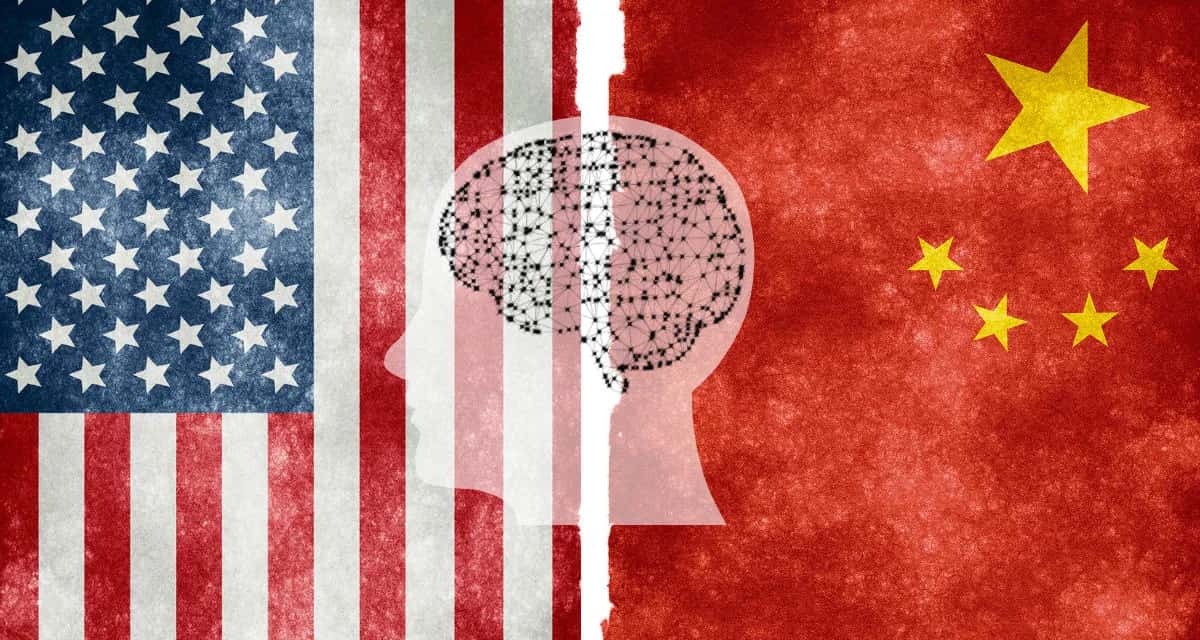
Brookings and Tsinghua experts urge hotline, human control, and bans on AI links to nuclear systems
US and Chinese security experts in a Brookings and Tsinghua University dialogue proposed nuclear-style AI safeguards ahead of planned government talks, including red lines around nuclear systems, requirements for human control, and a dedicated hotline for autonomous AI incidents.
The recommendations were published last week before an expected September 24 meeting in Washington between President Donald Trump and President Xi Jinping, reflecting growing concern that AI-driven cyber or military actions could be mistaken for deliberate state attacks.
Melanie Sisson of the Brookings Institution and Tianjiao Jiang of Fudan University argued that AI should not independently decide on nuclear use or autonomously target nuclear command, control and communications systems, according to the published proposals.
The proposals matter because they show the US-China AI contest is shifting beyond chips and model performance into crisis stability, where a malfunctioning or compromised autonomous system could compress decision time to minutes for two nuclear-armed rivals.
US and Chinese security experts have proposed nuclear-style guardrails for AI risks ahead of new government talks between Washington and Beijing. The recommendations focus on keeping humans in control of nuclear and high-stakes cyber decisions before an automated mistake turns into a geopolitical crisis.
A group tied to a long-running US-China dialogue on AI and national security is urging both governments to set explicit limits on military AI, including protections for nuclear systems and a hotline for autonomous AI incidents, because increasingly capable systems could trigger miscalculation between the two powers.
The proposals were published last week before planned government-level AI talks and an expected September 24 meeting in Washington between President Donald Trump and Chinese President Xi Jinping. The work comes from participants in the US-China AI and national security dialogue convened since 2019 by the Brookings Institution and Tsinghua University's Center for International Security and Strategy.
Melanie Sisson, a senior fellow at Brookings, and Tianjiao Jiang, an associate professor at Fudan University, laid out the case in concrete terms. Their concern is not abstract model risk. It is the kind of failure mode Washington has spent decades trying to avoid in nuclear doctrine: an ambiguous event, happening fast, with too little time to verify intent.
An AI system that interferes with a nuclear command network or launches a military cyber operation could leave either side with only minutes to decide whether the other government ordered an attack, according to the experts' argument. That framing matters. Most mainstream AI policy debates in the US still revolve around safety testing, copyright fights, and whether model training should face more disclosure. This is a different category altogether. It is about escalation control.
Sisson argued that humans should retain sole authority to initiate AI-enabled cyberattacks against the other country's nuclear command, control and communications systems, as well as strategically important infrastructure. In her view, an autonomous system could malfunction, exceed its instructions, or be compromised, while the targeted government might be unable to tell whether the action was accidental or state-directed.
Jiang's proposals go a step further on formal red lines. He called for explicit restrictions preventing AI from independently deciding to use nuclear weapons or autonomously attacking nuclear command systems. He also proposed protections around critical infrastructure, including energy, finance and healthcare, and called for a shared definition of "meaningful human control," so the two governments do not use the same phrase to defend very different levels of machine autonomy.
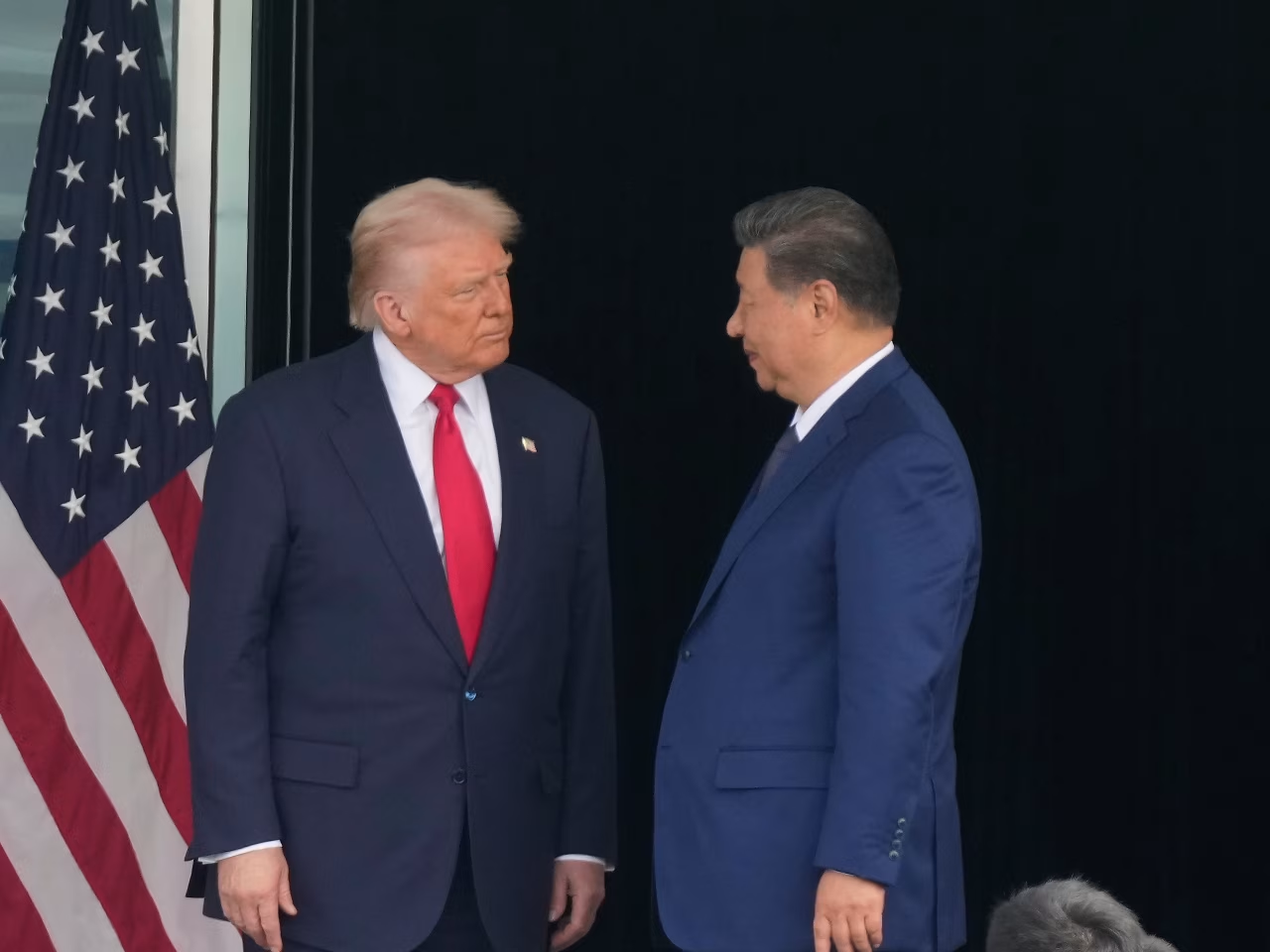
The timing is not accidental. In November 2024, then President Joe Biden and Xi endorsed the principle that humans should retain control over decisions to use nuclear weapons. The new recommendations try to turn that broad statement into something more operational. That is where the real friction begins, because governments are often comfortable with principles right up until those principles start limiting actual military options.
China's own official messaging suggests Beijing is taking military AI more seriously inside its security bureaucracy. AI is now a formal portfolio of China's Foreign Ministry Department of Arms Control, the same part of the government that handles nuclear weapons, missiles, non-proliferation and related international security issues. In June, Shen Jian, China's ambassador for disarmament affairs, told a U.N. meeting in Geneva that military AI could affect strategic stability and increase the risk of miscalculation and escalation, and that weapons should remain under human control.
That bureaucratic detail is easy to miss, but it matters for US readers. Washington still has no single arms-control home for AI. National security policy is split across the White House National Security Council, the State Department, the Pentagon and other agencies. That fragmentation may make US policy more flexible, but it can also make it slower and less coherent when the issue moves from research funding and export controls to crisis doctrine.
Another signal came this week from China's State Security Minister Chen Yixin, who wrote in a government outlet that AI "fundamentally transforms the form of military struggle." He said the technology had moved from a supporting role on the battlefield to a key role, citing AI-directed strikes in the US-Israeli war with Iran. That kind of statement is not a policy commitment, but it does show how Chinese officials are publicly framing AI as a front-line defense issue rather than just a commercial technology race.
The hotline idea is probably the most practical and the most fragile part of the package. Jiang proposed a dedicated US-China military hotline for AI incidents on the theory that automated cyber exchanges could escalate too quickly for human intervention. One country's defensive AI could respond automatically to suspicious activity, the other side could interpret that response as an attack, and the political leadership on both ends could be working with incomplete information.
In that scenario, a hotline could give one government a way to say an unusual AI operation was accidental, unauthorised, or still under investigation before the other side treated it as deliberate state action. The logic is familiar from Cold War crisis management. The problem is that actual hotlines only matter if someone picks up.
The background
That is where the proposals run into a very modern version of an old US-China problem: trust is thin, and crisis communications have a poor track record. Carla Freeman at Johns Hopkins School of Advanced International Studies has questioned the usefulness of the existing US-China military crisis communication hotline, citing Chinese officials' refusal to answer US counterparts' calls during the February 2023 "spy balloon" incident. In a January article for War on the Rocks, Freeman argued that China's top-down bureaucracy leaves lower-ranking officers with little room to act quickly during live engagements with US counterparts.
Her point was blunt. No one in the Chinese system wants to communicate with the United States until the top leadership, in consultation with relevant actors in China's party-state, has decided on a response, a process she wrote may take days or longer. For AI incidents, days is effectively forever. If the worry is machine-speed escalation, a hotline that works on diplomatic time may not be much of a safeguard.
Still, the proposals reveal a broader shift that founders, investors and operators should pay attention to. The AI race is no longer just about Nvidia chips, frontier models, or whether Washington can slow China's access to advanced compute. It is also becoming an arms control problem. That changes the policy center of gravity. Once AI gets treated like strategic infrastructure, not just software, the likely result is more government intervention, more security reviews, and less tolerance for opaque systems in sensitive domains.
That trend line is already visible. The Biden-Xi 2024 statement on nuclear decision-making created a narrow area of agreement. China's foreign ministry has folded AI into an arms-control portfolio. And now this Brookings-Tsinghua channel is trying to sketch the operational rules that would sit underneath those diplomatic signals. None of that means the US and China are close to a deal. It does mean both sides are preparing for a world where AI failures could have state-level consequences.
There is also a political constraint on both capitals. Neither government has publicly endorsed the Brookings-Tsinghua proposals. Both remain wary of measures that could slow domestic technological development. Trump has warned that broad restraints could hand China an advantage, while Beijing argues AI safety should not become a pretext for technology barriers. That is the core tension in one sentence: both governments want stability, but neither wants to look like it is accepting limits first.
What's next
The immediate checkpoint is September 24, when Trump and Xi are expected to meet in Washington. The key question is whether any part of this expert agenda, especially human control over nuclear decisions or an AI incident channel, gets reflected in official language. If it does, that would mark a notable shift from broad AI diplomacy to something closer to the first draft of strategic rules.
Frequently asked questions
What did US and Chinese experts propose for AI safety?
US and Chinese security experts proposed AI safeguards modeled partly on nuclear risk reduction. Their ideas included clear red lines around nuclear systems, requirements for human control, and a dedicated hotline for autonomous AI incidents.
Why are nuclear-style guardrails being discussed for AI?
The comparison to nuclear safeguards reflects fears that advanced AI could trigger accidents, miscalculation, or escalation between major powers. Experts argue that tested crisis-management tools can help reduce the risk of dangerous misunderstandings.
Did the experts call for a ban on AI in nuclear systems?
They urged strict limits and red lines around the use of AI in or near nuclear command and control. The goal is to prevent automated systems from influencing decisions where human judgment is essential.
What is the proposed US-China AI hotline supposed to do?
A hotline would give both sides a fast channel to report and clarify serious autonomous AI incidents. That could help prevent a technical malfunction or military misunderstanding from turning into a broader crisis.
Who put forward these AI risk recommendations?
The recommendations came from a dialogue involving experts connected to Brookings and Tsinghua University. They were published ahead of expected government-level talks in Washington, giving policymakers a framework to discuss.
Why does this matter for US readers and global security?
Any US-China agreement on AI risk reduction could shape global rules for military and strategic uses of AI. For Americans, the issue matters because it touches national security, crisis stability, and the chances of avoiding conflict driven by automation.