Indian quick-commerce apps raise holiday ad prices up to 35% as order volumes are forecast to nearly double by Diwali
Quick delivery platforms in India have raised festive season ad rates by 30% to 35% from last year for placements including banners, carousels, mastheads and interactive widgets, according to executives cited in the report.
The same platforms expect orders to surge almost 100% year over year from now until Diwali, a demand spike that is helping support higher ad pricing during a key shopping window, according to the report.
Advertisers are shifting more budget to quick commerce because the apps reach shoppers close to the point of purchase, making them a lower-funnel ad channel rather than just a delivery utility, according to executives cited in the report.
The rate increases show how retail media is becoming a profit engine for delivery apps, as commerce platforms seek to monetize sponsored placement while logistics margins remain tight.
Quick delivery platforms in India have hiked festive ad rates by 30% to 35% from last year. The increases cover premium placements such as banners, carousels, mastheads and interactive widgets as the sector heads into its busiest shopping stretch.
Quick delivery platforms hike festive ad pricing when they believe consumer demand and advertiser dependence are both strong enough to absorb it, and this year's move matters because it shows quick commerce is maturing into a retail media business, not just a logistics one.
Executives cited in the report said they expect almost 100% year over year growth in orders from now to Diwali. That is the core reason this pricing move is notable. Delivery apps can charge more for visibility when brands think shoppers are already in buying mode, and festive periods compress that behavior into a short, high-intent window.
For a US audience, the comparison is less a delivery app's early growth phase and more the retail media playbook now used by Amazon, Walmart and DoorDash. The mechanics are familiar. Once a commerce app owns customer attention near checkout, sponsored placement starts to look less like ordinary display advertising and more like shelf-space monetization with software margins. That's usually where investors want the story to go.
The placements being repriced are not subtle ones. The report says the higher rates apply to banners, carousels, mastheads and interactive widgets, which are among the most visible surfaces inside these apps. In plain English, brands are paying up for the digital equivalent of an end-cap display in a grocery store, only this one can be targeted, rotated quickly and measured against near-immediate sales.
That also helps explain why the ad budgets are following users. The report says advertisers are increasingly using quick-commerce platforms to reach consumers closer to the point of purchase, especially during high-shopping periods. That phrasing matters. It suggests marketers are no longer treating these apps as experimental awareness channels. They're treating them as conversion channels.
This is where the economics get interesting. Fast delivery is expensive to run well. Inventory positioning, rider costs, dark stores and customer acquisition all compress margins. Advertising can soften that pressure, especially when the inventory is finite and the demand is seasonal. A 30% to 35% hike in festive rates suggests these platforms think they have pricing power, at least for now.
30% to 35%
The reported year over year increase in festive advertising rates on quick delivery platforms for premium in-app placements.
US operators should pay attention because the pattern is portable. American delivery and commerce companies have spent the past few years trying to prove they are more than low-margin fulfillment networks. Instacart leaned hard into ads before and after its public offering. DoorDash has expanded merchant tools and sponsored listings. Uber has built ad products into mobility and delivery surfaces. India's quick-commerce players appear to be following a similar script, just with the urgency dialed up by a festival season and a denser convenience model.
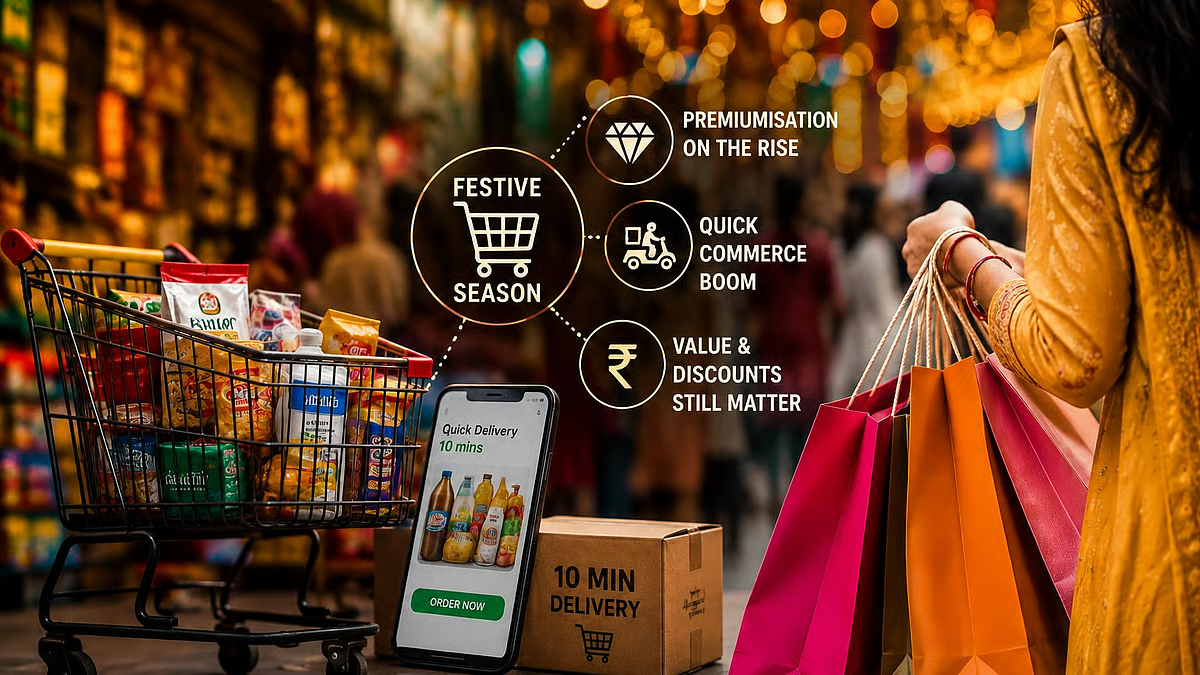
There is another signal in the source material that can get missed if you focus only on ad rates. The accompanying image caption notes that quick-commerce platforms are adding categories, including non-grocery categories such as beauty products, toys and audio accessories. That broadening matters because retail media works better when baskets diversify. A platform that sells only staples has fewer storytelling opportunities for brands than one that also carries impulse items, gifts and higher-margin discretionary products.
Once those categories expand, ad inventory becomes more valuable. Beauty brands want launch visibility. Toy makers want holiday demand. Consumer electronics accessories often need discovery and bundling help. A festive shopping season amplifies all three. In that sense, the ad rate increase is not just a pricing decision. It's a readout on category expansion and user behavior inside the apps.
The report does not name individual platforms in the body text provided, and it does not disclose exact card rates by format. Still, the broad move is revealing enough. Similar increases across multiple premium formats can point to a market where scaled players believe they can reset pricing. If inventory were loose, operators would be discounting, not raising rates into the most visible season of the year.
There's also a strategic wrinkle for brands. Sponsored placement on quick-commerce apps may look expensive on a line-item basis after a 30% to 35% jump, but marketers often tolerate that if attribution is cleaner than on open-web ads or social campaigns. In commerce media, the pitch is simple: pay for placement, then watch whether the item moves. During a festival rush, that feedback loop gets even shorter.
The background
The broader trend is that delivery platforms everywhere are inching toward becoming media businesses layered on top of fulfillment. Retail media has been one of the few bright spots in digital advertising because it ties ad spending to transaction data. That makes it especially appealing when brands are under pressure to justify every dollar. Quick commerce sharpens that proposition because the shopper is not just browsing. They are often buying within minutes.
That is why this story resonates beyond India. In the US, retail media has already become a serious business for large commerce platforms, and operators keep pushing it deeper into search results, homepage placements and recommendation modules. The Indian quick-commerce version is arguably more compressed and more intense, with shorter delivery promises and a holiday spike centered around Diwali. But the logic is the same: if an app owns intent, it can charge for priority access to that intent.
What makes the festive rate hike especially telling is the timing. Raising prices before a major shopping period is a confidence move, not a defensive one. It suggests the platforms believe brands have limited substitutes for reaching high-intent buyers in the same moment. Search ads can capture demand, and social can generate interest, but neither replicates a user already inside a basket-building flow with delivery expected quickly.
There is some reason for skepticism, of course. Advertisers accept steep seasonal increases when sales are strong, but they also remember them later. If post-festival returns don't match expectations, budget owners push back in the next cycle. And if too many placements become pay-to-play, the customer experience can degrade. That is a familiar tension in retail media: every sponsored slot is revenue for the platform, right up until the app starts feeling cluttered.
What's next
The immediate test runs through Diwali. If the nearly 100% year over year order growth projected in the report materializes, platforms will have stronger evidence that their higher festive ad rates were justified. If demand falls short, brands will have fresh ammunition in the next round of rate negotiations, and the industry's retail media ambitions may look a little less inevitable.
Frequently asked questions
Why are quick delivery platforms increasing festive ad rates in India?
Quick delivery platforms are charging more because holiday demand is rising sharply ahead of Diwali. Executives cited in the report expect orders to climb close to 100% year over year, giving platforms more leverage to raise ad prices by 30% to 35%.
How much have festive ad prices increased on quick-commerce apps?
According to the report, festive season ad rates on quick delivery platforms are up 30% to 35% from last year. The higher pricing applies to placements such as banners, carousels, mastheads, and interactive widgets.
What kinds of ads are getting more expensive on quick delivery platforms?
The price hikes cover premium in-app formats that brands use for visibility during high-traffic shopping periods. These include banner ads, carousel placements, mastheads, and interactive widgets designed to drive clicks and conversions.
How strong is festive season demand expected to be for quick delivery apps?
The platforms expect a major surge in orders from now until Diwali, with volumes projected to nearly double from a year earlier. That demand outlook is a key reason festive advertising inventory is becoming more valuable.
What does this mean for brands advertising during Diwali sales?
Brands may need to spend more to secure prominent placements during the holiday rush. At the same time, higher traffic and stronger purchase intent could make the increased ad costs worthwhile for companies seeking fast, measurable sales.
Is this ad rate increase a sign that quick commerce is becoming a bigger media channel?
Yes, rising festive ad rates suggest quick-commerce apps are evolving into stronger retail media platforms, not just delivery services. As shoppers use these apps more often during major buying periods, brands see them as useful channels for targeted, conversion-focused advertising.