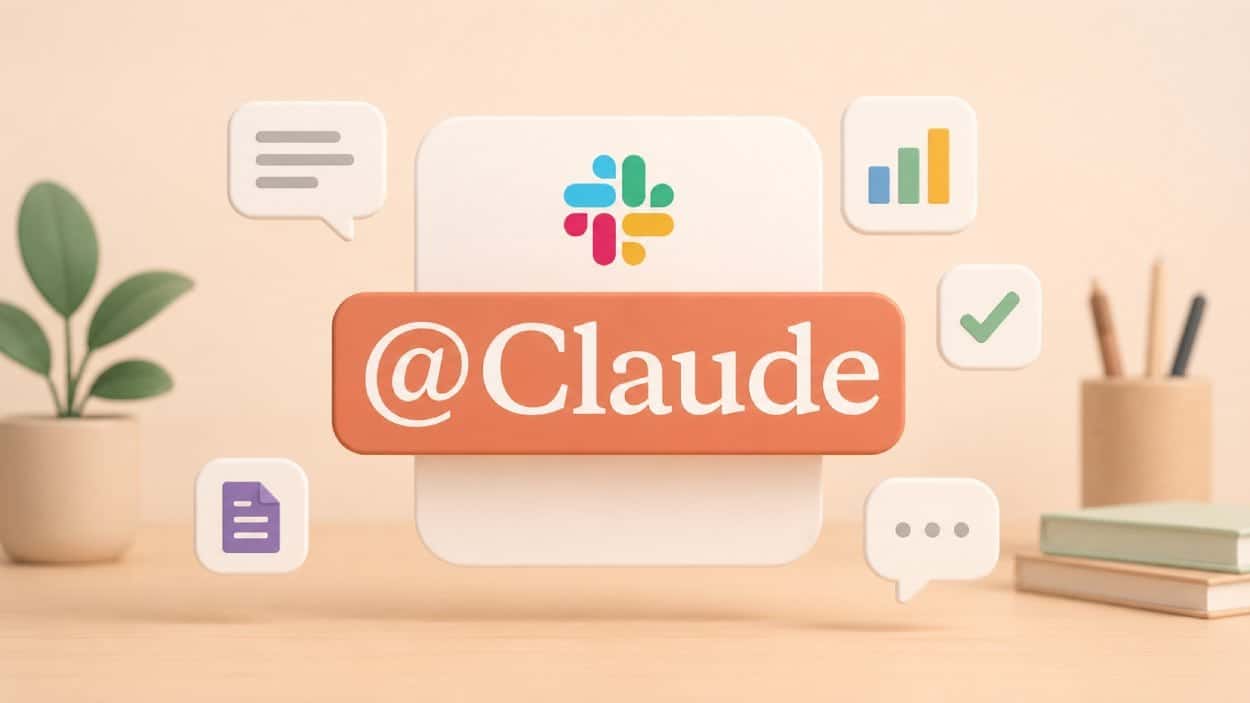
Claude AI transforms into a collaborative workspace, signaling a strategic pivot for engineering and product teams in the AI race.
Anthropic, a foundational player in the rapidly accelerating AI race, is pushing the boundaries of what its Claude AI can do, transforming it from a powerful individual assistant into a full-fledged collaborative workspace. This isn't just a routine feature update; it's a strategic pivot that could fundamentally alter how engineering and product teams interact with AI, potentially reshaping daily workflows for developers, project managers, and even enterprise decision-makers across the globe.
Here's the core of it: Claude Code is getting "collaborative projects" that essentially mimic the persistent communication and shared context features we've come to expect from established tools like Slack, but deeply integrated with AI and code repositories. This means that for the first time, multiple human developers, working seamlessly alongside Claude, can now co-create and iterate within the same AI-powered project environment, moving beyond the traditional one-to-one interaction.
The new system introduces a robust mechanism for users to attach code repositories directly during project creation, establishing a persistent, always-available context that Claude can continuously reference and understand. While the interface smartly guides users to attach only the repositories immediately essential for a given session, it also provides the flexibility to bring in additional codebases dynamically on a session-by-session basis, ensuring relevance without unnecessarily burdening the AI's processing capabilities or context window.
What makes this particularly potent is the foundational design around shared memory and persistent context that genuinely endures across multiple sessions. This means the AI "remembers" previous interactions, discussions, and the evolving state of the project, allowing for truly continuous collaboration. Furthermore, these collaborative projects support multiple, distinct threads within a single session, mirroring the way human teams manage separate sub-conversations around individual tasks or problems in any modern chat application. It's an incredibly smart evolution that thoughtfully blends the best of advanced AI capabilities with established, effective patterns of human-team collaboration.
This development significantly extends Anthropic's earlier, successful forays with "Claude Tag on Slack," where Claude was already demonstrating its ability to leverage channel and thread context alongside connected codebases. Now, the company is directly baking this collaborative intelligence and persistent understanding into Claude Desktop. This move reduces the reliance on external messaging platforms, creating a more cohesive, AI-native environment specifically designed for team-based software development, aiming for a truly integrated workflow.
The Strategic Play and What it Means for the Ecosystem
This move by Anthropic transcends mere feature addition; it's a bold and declarative statement on the future direction of software development, presenting a direct challenge to the current paradigm of AI-assisted coding. For too long, AI coding assistants, while powerful, have largely operated as individual augmentations, enhancing the productivity of a single developer working in isolation. While undeniably valuable, this approach inherently overlooks the deeply collaborative nature of modern software engineering. Anthropic is decisively stepping into this gap, envisioning a future where AI isn't merely a sophisticated pair programmer, but rather an active, integrated team member, capable of working in concert with multiple human developers on a shared, evolving project. My read is that this represents a critical strategic differentiator in an increasingly crowded and competitive AI market.
The implications for the global startup ecosystem, particularly those building developer tools, enterprise collaboration platforms, or even AI-powered project management solutions, are nothing short of profound. If Claude can effectively manage shared project context, maintain persistent memory across extended sessions, and even proactively revisit and refine project files, it begins to function less like a reactive assistant and more like an always-on, highly capable junior engineer or an intelligent project manager. This fundamentally shifts the AI's value proposition from merely generating isolated code snippets to actively participating in the entire project lifecycle, from initial ideation and architecture to debugging and deployment, all while maintaining a persistent, deep understanding of the codebase, team discussions, and evolving requirements.
This integrated collaborative offering also positions Anthropic strategically against its well-funded rivals, including OpenAI with its increasingly powerful models and Google with its vast ecosystem, all of whom are fiercely vying for enterprise adoption. While these players offer formidable raw AI capabilities, Anthropic's distinct emphasis on deeply integrated, inherently collaborative workflows could carve out a uniquely valuable niche, particularly for organizations grappling with complex, multi-developer projects where context continuity and team synergy are paramount. The ability for Claude to essentially "manage" and self-organize parts of the project, including its own context and understanding, is an important, pioneering step towards truly autonomous AI agents that can contribute meaningfully and consistently to long-term, strategic initiatives.
Anthropic isn't just updating Claude; they are fundamentally redefining what an AI coding assistant is meant to be. By introducing "collaborative projects" to Claude Code, Anthropic is shifting the paradigm from a 1-to-1 pair programmer to a multi-player AI environment. Developers can now attach code repositories to a persistent workspace where multiple humans and Claude can interact simultaneously. Because the workspace maintains a shared memory and context across sessions, Claude is no longer a reactive chatbot, it is an always-on, persistent team member. This is a massive strategic pivot. For years, the AI coding market has focused entirely on individual productivity, generating snippets, writing tests, or debugging isolated files. By integrating persistent memory and multi-thread collaboration directly into Claude Desktop, Anthropic is building an AI-native alternative to Slack and GitHub integrations. For the enterprise software market, the implications are profound. If Claude can autonomously manage project context, recall past design decisions, and track the evolving state of a codebase alongside an entire engineering team, it ceases to be just a tool. It becomes a junior project manager and an embedded engineer. As OpenAI and Google fight over raw model performance, Anthropic is quietly carving out the most defensible moat in the enterprise: owning the collaborative workflow. The future of software development isn't just AI-assisted; it is AI-integrated.
The Path Ahead for AI-Driven Development
What's particularly compelling about this development is that it moves beyond an untested concept, suggesting a robust workflow that Anthropic is now productizing for broader adoption. This provides a significant advantage, as they've likely already addressed and refined many of the practical challenges associated with integrating advanced AI into a complex, human-led team setting. The core concept of Claude itself maintaining projects, periodically revisiting and refining context files and memories, genuinely transforms the AI into a dynamic, evolving workspace rather than just a static, linear chat history. That’s a fundamentally significant shift from the current conversational AI paradigm, pushing the boundaries of AI's utility.
While a confirmed public rollout date remains unannounced, the strategic direction is unequivocally clear. This isn't merely about making Claude an incrementally better individual coding assistant; it's about embedding AI as a foundational, indispensable layer of organizational work infrastructure. The transition from AI as an individual productivity tool to AI as a collaborative team member represents a natural, and I would argue, inevitable progression in the adoption curve for sophisticated AI models. Anthropic is clearly aiming to lead this charge, and their success could redefine enterprise productivity metrics, dramatically accelerate development cycles, and unlock new modes of innovation across industries in ways we're only just beginning to truly imagine.
The vision of an "AI Super App" is gaining considerable momentum across the tech landscape, and Anthropic’s calculated moves with Claude serve as a compelling illustration of this burgeoning trend. When you strategically combine diverse capabilities with the power of persistent, collaborative project workspaces, you begin to see Claude evolving into a remarkably comprehensive platform. This platform isn't just about code; it can potentially handle initial research, cross-team communication, iterative software development, and even elements of project management, all seamlessly integrated within a single, AI-native environment. This deep integration of diverse functionalities under one intelligent AI umbrella is where the true, exponential leverage lies for enterprises striving to streamline their operations and accelerate their innovation cycles.
One of the most persistent and critical challenges in successfully deploying advanced AI within complex enterprise settings has been effectively managing its context and ensuring its sustained relevance across large, intricate, and ongoing projects. The "Claude Tag" feature, which has reportedly become far more context-aware, directly addresses this pain point. This deliberate focus on intelligent proactivity, knowing when to engage and when to remain silent, makes the collaborative project offering incredibly appealing. It demonstrates Anthropic's acute understanding that truly effective AI integration is as much about the AI's judicious restraint and silence as it is about its powerful generative capabilities.
From the perspective of the startup world, in particular, this development warrants close and continuous observation. Resource-constrained teams are perpetually searching for innovative ways to maximize their efficiency, accelerate their product development timelines, and gain a competitive edge. A comprehensive tool like collaborative Claude Code, which effectively augments an entire engineering team, maintains deep project memory, and facilitates real-time, AI-driven collaboration, could very quickly become an indispensable asset.
Frequently asked questions
What new features is Anthropic adding to Claude Desktop?
Anthropic is transforming Claude Desktop with Slack-like collaboration features, allowing it to function as a full-fledged collaborative workspace for teams, moving beyond its previous role as an individual AI assistant.
How will these new features impact team collaboration?
These features are designed to fundamentally alter how engineering and product teams interact with AI, enabling more seamless collaboration and potentially reshaping daily workflows by integrating AI directly into team communication.
Is this just a routine update for Claude?
No, the article preview indicates this is not just a routine feature update but a strategic pivot for Anthropic, aiming to push the boundaries of Claude AI's capabilities as a collaborative tool.
Which types of teams are most likely to benefit?
Engineering and product teams are specifically mentioned as the primary beneficiaries, as the updates aim to enhance their interaction with AI for development and problem-solving.
What is Anthropic's position in the AI market?
Anthropic is described as a "foundational player in the rapidly accelerating AI race," indicating its significant and influential role in the artificial intelligence industry.
Where can I find more details on these Claude features?
While this preview highlights the strategic shift, more specific details on the new collaboration features would typically be found in the full article or on Anthropic's official announcements.