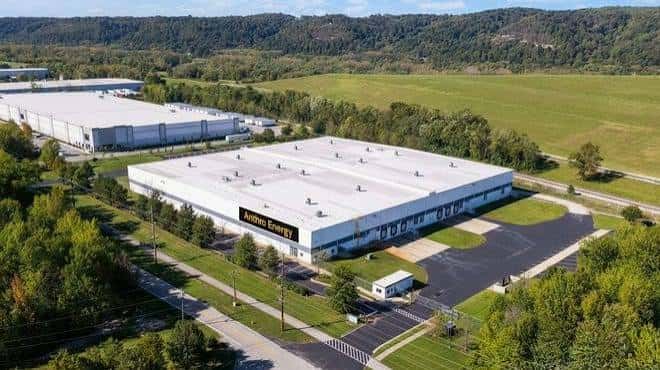
Anthro Energy's new 25 GWh Louisville plant aims to secure domestic US battery supply, diversify chains, and accelerate solid-state battery tech.
Anthro Energy has broken ground on a 25 gigawatt-hour electrolyte factory in Louisville, Kentucky, aimed at domestic US battery supply.
The facility is critical for diversifying supply chains, providing "China-free" materials, and advancing solid-state battery technology, with production slated for 2028.
Anthro Energy, a US-based startup focused on battery materials, has commenced construction on a new factory in Louisville, Kentucky, a move poised to significantly impact the global battery supply chain. This facility is engineered to produce 25 gigawatt-hours' worth of electrolytes annually, a capacity sufficient to power more than 300,000 electric vehicles. The strategic investment underscores a critical pivot towards securing domestic manufacturing for essential battery components and advancing the frontier of solid-state battery technology.
This groundbreaking comes at a pivotal moment for the industry, as battery manufacturers worldwide grapple with the complexities of establishing resilient and diversified supply chains. The increasing emphasis on materials free from "foreign entity of concern" restrictions, particularly those connected to Chinese companies, highlights a geopolitical imperative driving localization efforts. Anthro Energy’s plant, which is scheduled to begin production in 2028, is designed to help fill this pressing need for US companies, thereby bolstering the nascent domestic battery ecosystem with a guaranteed supply of high-specification materials. This development reflects a powerful global trend towards regionalizing strategic technology manufacturing, a shift with profound implications for emerging battery and EV hubs across Southeast and South Asia.
The Bigger Picture: Reshaping Global Battery Supply Chains
From my perspective as an observer of the tech and product landscape, the implications of Anthro Energy's move extend far beyond a single factory. This is a clear signal of the intensifying global race not just for battery supremacy, but for the fundamental components that power the future of mobility and energy storage. The push for domestic production in the US mirrors similar strategic drives in Southeast Asia, where nations like Indonesia and Thailand are actively cultivating their own battery and EV manufacturing capabilities, leveraging local resources and attracting foreign investment. The parallel efforts highlight a shared understanding that control over the battery supply chain is paramount for economic sovereignty and climate goals.
The strategic advantage of Anthro's location in Louisville, placing it within a 12-hour drive of 70% of existing US battery production facilities, speaks to a deeply integrated supply chain strategy. This hub-and-spoke model is vital for efficiency and reducing logistical friction, lessons that are equally pertinent for regional manufacturing clusters emerging in Southeast Asia. For instance, countries like Vietnam, with its ambitious EV maker VinFast, and Indonesia, rich in nickel, are keenly aware of the need to build out robust, localized supply chains to compete effectively. The ability to source critical materials closer to home not only reduces geopolitical risks but also streamlines the development cycle for advanced battery chemistries.
The Geopolitics of Battery Chemistry
Anthro Energy’s decision to break ground on a new advanced electrolyte manufacturing facility in Louisville, Kentucky, is less about a single startup’s expansion and more about a high-stakes, state-sponsored mandate to redraw the global supply chain.
For the past decade, the transition to electric mobility has been fundamentally bottlenecked by a harsh geopolitical reality: China dominates the refining and manufacturing of critical battery components. By establishing an electrolyte factory on US soil backed by substantial federal and state incentives, Anthro Energy is playing a direct role in the aggressive American push for domestic supply chain independence. This isn't just a clean energy initiative; it is a matter of national industrial security.
The Solid-State Holy Grail
The specific focus of this Kentucky plant, advanced electrolytes capable of supporting solid-state and next-generation battery chemistries, highlights the second critical front in the EV wars: the race beyond traditional lithium-ion.
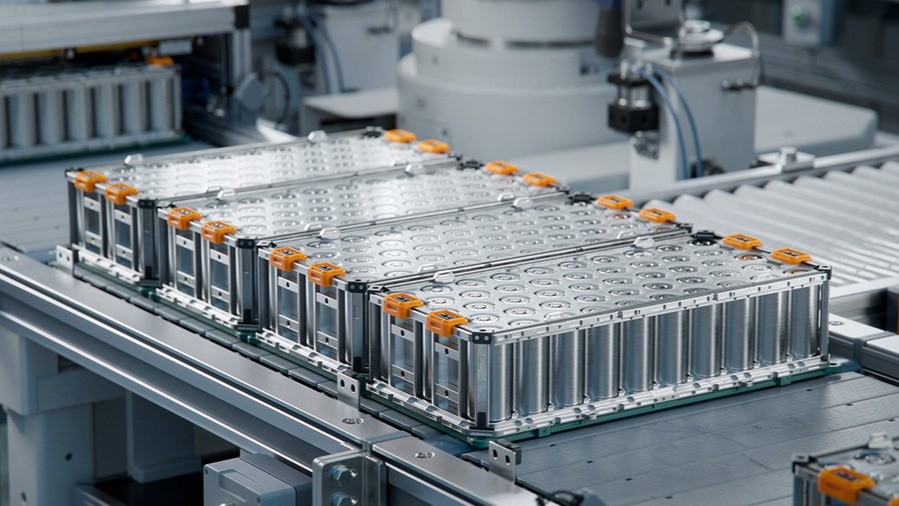
Legacy lithium-ion batteries rely on highly volatile, flammable liquid electrolytes. The industry’s "holy grail" is the solid-state battery, which replaces that liquid with a solid or semi-solid conductive material. The theoretical upside is massive: significantly higher energy density (meaning longer range in lighter packs), faster charging times, and the near-elimination of fire risk. Anthro Energy’s proprietary injectable polymer electrolyte aims to bridge the gap between traditional manufacturing constraints and next-generation performance requirements.
The Giga-Scale Reality Check
However, for investors and automakers watching the solid-state space, a healthy dose of skepticism is required. The graveyard of battery startups is filled with companies that achieved miracle chemistries in a lab but fundamentally failed at manufacturing scale. The true moat in the battery industry is not just novel chemistry, it is the ability to produce that chemistry reliably, safely, and cheaply by the millions.
Anthro Energy’s Louisville facility is a critical proving ground. The challenge isn't just formulating advanced electrolytes; it is integrating those materials into existing gigafactory infrastructure without requiring automakers to spend billions retooling their assembly lines. If Anthro can prove its "drop-in" compatibility at commercial scale in Kentucky, it won't just be an energy startup, it will be a vital geopolitical asset in the US battery supply chain.
The financial backing Anthro Energy has received from the US Department of Energy and through various tax incentives under the Bipartisan Infrastructure Law and Inflation Reduction Act is a testament to the strategic importance placed on this sector. Such government support is a potent catalyst, enabling startups to undertake capital-intensive projects that would otherwise be prohibitive. This model of public-private partnership for strategic industries is gaining traction globally, with many South and Southeast Asian governments also exploring incentives to attract and foster domestic battery and EV manufacturing. The goal is to build a resilient industrial base that can withstand external shocks and drive technological innovation from within.
Strategic IndependenceThe Louisville factory is poised to produce electrolytes free from "foreign entity of concern" issues, providing a crucial domestic alternative to current supply chains that are heavily reliant on Chinese companies. This addresses a growing geopolitical and economic imperative for nations to secure independent access to critical materials.
Government Backing & InvestmentAnthro Energy secured significant public sector investment, including a $24.9 million award from the US Department of Energy and $18.4 million in investment tax credits under the Inflation Reduction Act. Additionally, Kentucky provided $2.3 million in tax incentives, underscoring the strategic importance of this infrastructure for national interests.
Innovation for Solid-State FutureThe facility is designed with flexibility to produce a range of electrolytes, notably accommodating Anthro’s proprietary polymer product, Proteus. This "drop-in" solution aims to integrate seamlessly into existing battery production lines, potentially accelerating the commercialization of safer, higher-energy density solid-state batteries, a technology often seen as the holy grail of EV power.
As the global energy transition accelerates, the intensified push for diversified and technologically advanced battery supply chains will remain a defining feature of the industrial landscape. The ongoing progress of Anthro Energy's Louisville facility, particularly its capacity to scale next-generation solid-state electrolyte production, offers a tangible indicator of future trends and a blueprint for other nations. Its success will undoubtedly be closely watched by emerging battery players and governments in Southeast Asia, where countries like Indonesia, Thailand, and Vietnam are vying for a stronger foothold in the global EV battery landscape and seeking to leverage similar strategic investments to build out their own advanced manufacturing capabilities.
Frequently asked questions
What is Anthro Energy building in Louisville, Kentucky?
Anthro Energy is constructing a 25 gigawatt-hour (GWh) electrolyte factory in Louisville, Kentucky, which is crucial for advancing solid-state battery technology and securing domestic US battery supply.
What is the significance of this new factory?
The facility is critical for diversifying battery supply chains, providing 'China-free' materials, and accelerating the development and production of solid-state batteries in the United States.
When is the Anthro Energy factory expected to begin production?
Production at Anthro Energy's new electrolyte factory in Louisville, Kentucky, is slated to begin in 2028.
What type of batteries will this factory support?
This factory is specifically designed to support and advance the development and manufacturing of solid-state batteries.
Where is Anthro Energy based?
Anthro Energy is a US-based startup focused on battery materials.
What is the capacity of the new Anthro Energy factory?
The factory will have a production capacity of 25 gigawatt-hours (GWh) of electrolyte materials.