Tesla’s Solar Roof shutdown leaves some installers facing six-figure hits and raises new execution questions.
Tesla’s decision to stop supplying Solar Roof tiles in August is rippling beyond a discontinued product line and into the economics of its installer ecosystem, leaving some third party contractors with six figure losses and raising fresh questions about execution risk inside the company’s energy business. For investors, the move removes a small but operationally messy offering, yet it also sharpens a broader market point: Tesla appears to be narrowing its residential energy strategy around products that scale more cleanly, even if that means damaging partner trust.
The company told its network of certified installers that it would ship only conventional solar panels going forward, according to the source material, effectively ending a roof integrated solar product that Elon Musk had once pitched as a core part of Tesla’s energy story. Tesla had already determined internally that Solar Roof was not financially viable, and the product’s dedicated web page now redirects to the standard solar panel page, with Solar Roof removed from the Energy navigation menu.
That leaves contractors to absorb the stranded costs. Installers cited in the source said they had invested heavily in training, tooling and crew buildout to support the product, with some saying the expense ran into the hundreds of thousands of dollars. The certification process was unusually involved for a residential solar adjacent product: crews were sent to multi week training on the West Coast, and some contractors had to complete three supervised installations before certification. One roofing company president told a trade publication that there was substantial investment in learning the system.
The underlying throughput numbers explain why the economics broke down. Over roughly seven years, Tesla installed only about 3,000 Solar Roof systems in the US, and weekly installations peaked at just 21 to 32, more than 95% short of Musk’s repeated target of 1,000 a week by 2019 and 2020. A product that reportedly took roughly two plus weeks to install, versus about two days for a conventional rack mounted solar system, was always going to face a hard path to margin, especially once it moved from a concept story to a field operations business.
What It Means
The cleanest read here is that Tesla is choosing standardization over ambition in residential energy. Solar Roof was appealing because it tried to collapse roofing, distributed generation and premium home design into one product. The problem is that each of those categories has its own supply chain, sales cycle, permitting burden and service model. Combining them did not produce software like operating leverage. It produced custom project complexity.
That matters beyond one canceled product. Tesla has spent the past few years trying to make its energy business look more like its better performing hardware lines, where a narrower product set can drive volume and lower service friction. Powerwall and conventional solar panels fit that thesis better than a building integrated roofing system that demands specialist training and long duration installs. My read is that the company is effectively admitting that the right abstraction layer for residential energy is the electrical system, not the roof itself.
About 3,000 Solar Roof systems were installed across the US over roughly seven years, with installations peaking at 21 to 32 a week, far below the 1,000 weekly target Tesla had promoted for 2019 and 2020.
There is also a second order effect that is easy to miss. Tesla has increasingly relied on third party channels in parts of energy and service where labor is local, fragmented and lower margin. That can improve reported efficiency at the corporate level, but this episode shows the tradeoff. If installers conclude that Tesla can exit a labor intensive product after they absorb training and tooling costs, recruiting partners for the next specialized offering gets harder. In markets like rooftop solar, batteries and home electrification, channel confidence is not a soft variable. It directly affects conversion, service capacity and customer acquisition cost.
The Solar Roof Autopsy: Tesla’s Costly Pivot to Standardization
The discontinuation of Tesla's Solar Roof which is reportedly ending new orders as of August 20, 2026, is a textbook example of what happens when Silicon Valley hardware ambition collides with the hyper-localized, labor-intensive reality of residential construction. While Elon Musk once envisioned the Solar Roof as a seamless integration of premium design and distributed energy, the field reality proved fundamentally unscalable.
The Economics of Custom Complexity
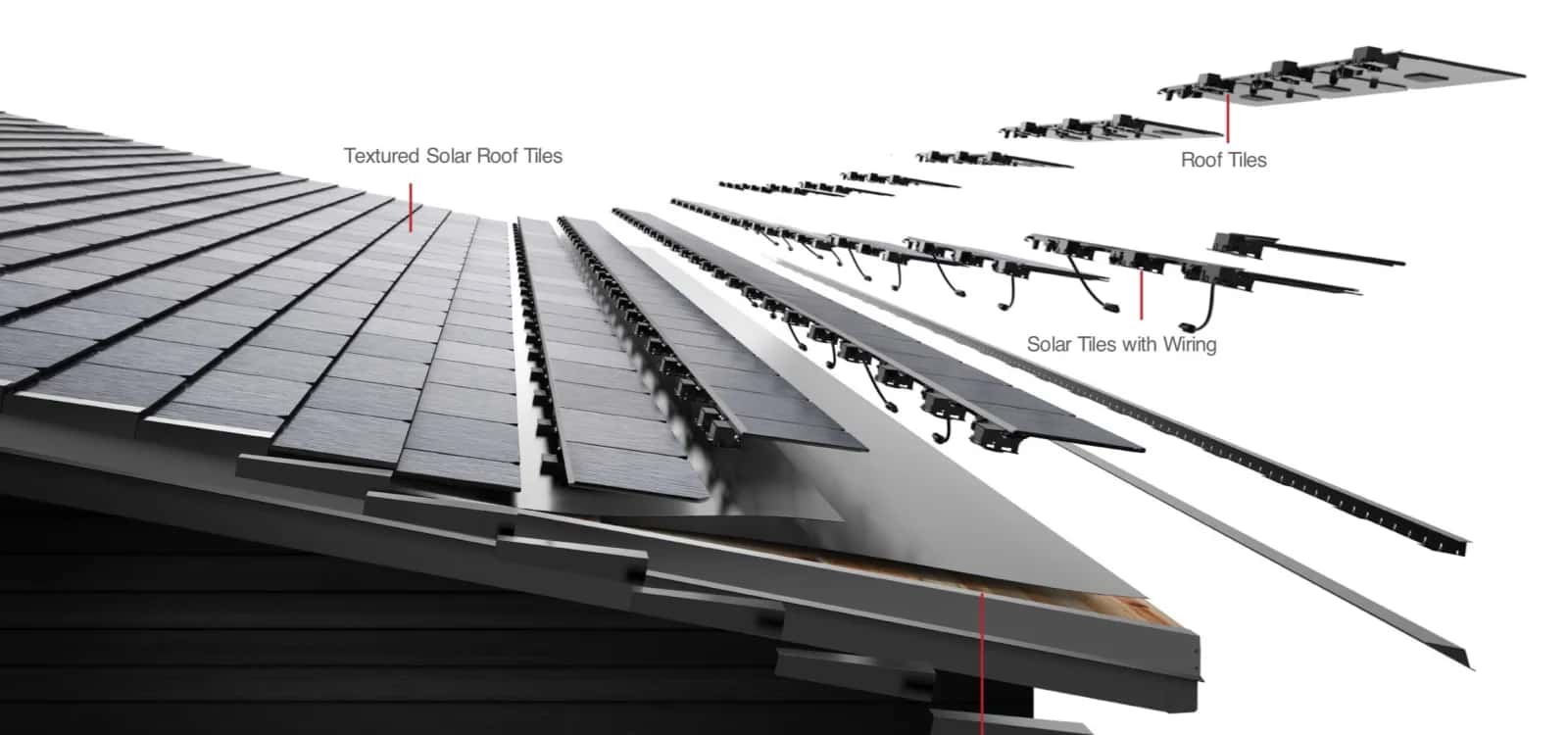
Tesla approached the Solar Roof as a piece of consumer electronics rather than a construction material. But unlike a Model Y or a Powerwall, a roof cannot be mass-standardized in a gigafactory. Every installation required custom fitting, complex flashing, and intricate electrical connections for hundreds of individual tiles.
The throughput numbers reveal the fatal flaw in the unit economics. Over roughly seven years, Tesla installed only about 3,000 systems in the US, peaking at just 21 to 32 installations a week. This is a staggering miss against Musk’s repeated target of 1,000 weekly installations, proving that a product requiring two-plus weeks of manual, highly skilled labor can never achieve software-like operating leverage. By the fourth quarter of 2023, Tesla's combined solar deployments had shrunk to just 41 megawatts, foreshadowing this exact exit.
The Stranded Channel Partners
The most damaging fallout from this decision isn't the loss of the product itself, but the erosion of channel partner trust. After initially trying to install the roofs in-house, Tesla pivoted to a certified third-party network, shifting the operational burden and low-margin labor onto local contractors.
These installers sank hundreds of thousands of dollars into specialized training, tooling, and crew buildouts for a product that has now vanished overnight. Tesla retains a manageable warranty liability on 3,000 roofs, but the contractors are left holding stranded investments, abandoned project pipelines, and the awkward job of servicing a highly complex, discontinued product for the next two decades. In the fragmented residential energy market, where channel confidence directly impacts Customer Acquisition Cost (CAC) and service capacity, burning your top-tier installers carries a heavy long-term strategic cost.
The New Energy Abstraction Layer
Ultimately, this shutdown is an act of overdue corporate discipline. Tesla is effectively conceding that the correct abstraction layer for residential energy is the electrical panel, not the roofing envelope.
By stripping the Solar Roof from its navigation menu and retreating to conventional rack-mounted solar panels and the Powerwall ecosystem, Tesla is standardizing its offering. It is trading the aesthetic differentiation of Building-Integrated Photovoltaics (BIPV) for the rapid installation cycles, simplified supply chains, and clearer unit economics that institutional investors now demand from climate hardware.
Background
Solar Roof had been on a visible decline well before the August cutoff. The source material says the product had been on life support for more than a year, and Tesla had already been phasing out its own installations in favor of certified third party installers. At the time, that looked like a logical retreat from what Tesla itself had described as a low margin, labor heavy, local business. In practice, it shifted much of the operational burden and customer relationship risk onto small regional contractors while preserving Tesla’s brand position at the top of the sales funnel.
Named installers affected by the shutdown include Elevated Roofing & Siding in Dayton, Ohio, PGT Home Energy Solutions in Tempe, Arizona, Westfall Roofing in Florida, and Saguaro Solar, Electric & Roofing in Tucson. Several contractors were described as reluctant to criticize Tesla publicly because they still sell other Tesla energy products, including solar panels and Powerwall. That detail matters because it shows the asymmetry in the relationship. The installer network remains commercially dependent on Tesla even after one of its most specialized product lines has been withdrawn.
Warranty and service liabilities now become the long tail of the decision. Tesla has said it will honor existing warranties and continue providing replacement parts for already installed systems. Contractors are skeptical that this will hold up across the 25 year life of the roofs. Greg Field, owner of PGT Home Energy Solutions, questioned long term parts availability, while Aaron Nichols of Exact Solar warned of higher labor costs for anyone needing help because the tiles are labor intensive to service and involve complex electrical connections. That is a key distinction from standard rooftop solar, where parts interchangeability and service processes are generally simpler.
What Analysts Say
The strategic line is fairly clear. Tesla is not exiting residential energy. It is exiting a product that never found product market fit at installation scale. Building integrated solar still has a future, particularly in new construction and premium housing, but the winning version likely comes from manufacturers and installers aligned on roofing reality from day one. Todd Miller of Isaiah Industries said Tesla approached Solar Roof primarily as solar technology rather than as a roofing product, and underestimated the complexity of the roofing business.
That connects to a larger trend across climate hardware. The market has become less forgiving of products that photograph well but demand extensive on site customization. Investors have been rewarding categories with clearer unit economics, faster installation cycles and repeatable channels. Solar Roof sits at the opposite end of that spectrum. The concept promised vertical integration, design appeal and energy generation in one package. The field reality was a specialized installation process, lower throughput and difficult servicing. In that sense, Tesla killing Solar Roof is leaving behind a useful case study for the broader clean tech market: hardware differentiation does not compensate for operational drag forever.
The next thing to watch is how Tesla manages the installed base and the partner network it still needs for solar panels and Powerwall. Near term, the trigger is service execution on existing Solar Roof systems and whether replacement parts remain available over time. The other signal is commercial, whether contractors continue to back Tesla’s remaining residential energy products after absorbing losses from a program that, for some, ended with abandoned pipelines, stranded investment and a product support obligation that could stretch for two decades.
Frequently asked questions
Why is Tesla ending Solar Roof tile supply?
Tesla is reportedly stopping Solar Roof tile supply in August, effectively winding down a product that remained niche and operationally complex. The move suggests Tesla may be prioritizing simpler energy products over a difficult-to-scale roofing business.
How much are installers losing from Tesla killing Solar Roof?
Some third-party installers are reportedly facing six-figure losses tied to inventory, project commitments, and business disruptions. The exact amount varies by installer, but the financial hit appears material for smaller contractors.
What does Tesla killing Solar Roof mean for customers with projects in progress?
Customers with projects underway could face delays, redesigns, or cancellations depending on tile availability and contract terms. They may need to work with installers on refunds, substitute materials, or alternative solar systems.
Is Tesla Solar Roof being discontinued entirely?
The reported halt in tile supply strongly indicates Tesla is effectively ending the current Solar Roof offering for outside installers. While Tesla could still support limited existing obligations, the broader third-party rollout appears to be shutting down.
Why does this matter to Tesla investors?
For investors, Solar Roof was a small revenue contributor, but its shutdown highlights execution risk inside Tesla’s energy segment. It also raises questions about product strategy, partner relations, and the costs of scaling complex hardware businesses.
What is the bigger impact on Tesla’s energy business?
The immediate financial impact may be modest, but the reputational and operational effects could be more meaningful. Pulling back from Solar Roof may simplify Tesla’s energy lineup, yet it can also undermine confidence among installers and customers.