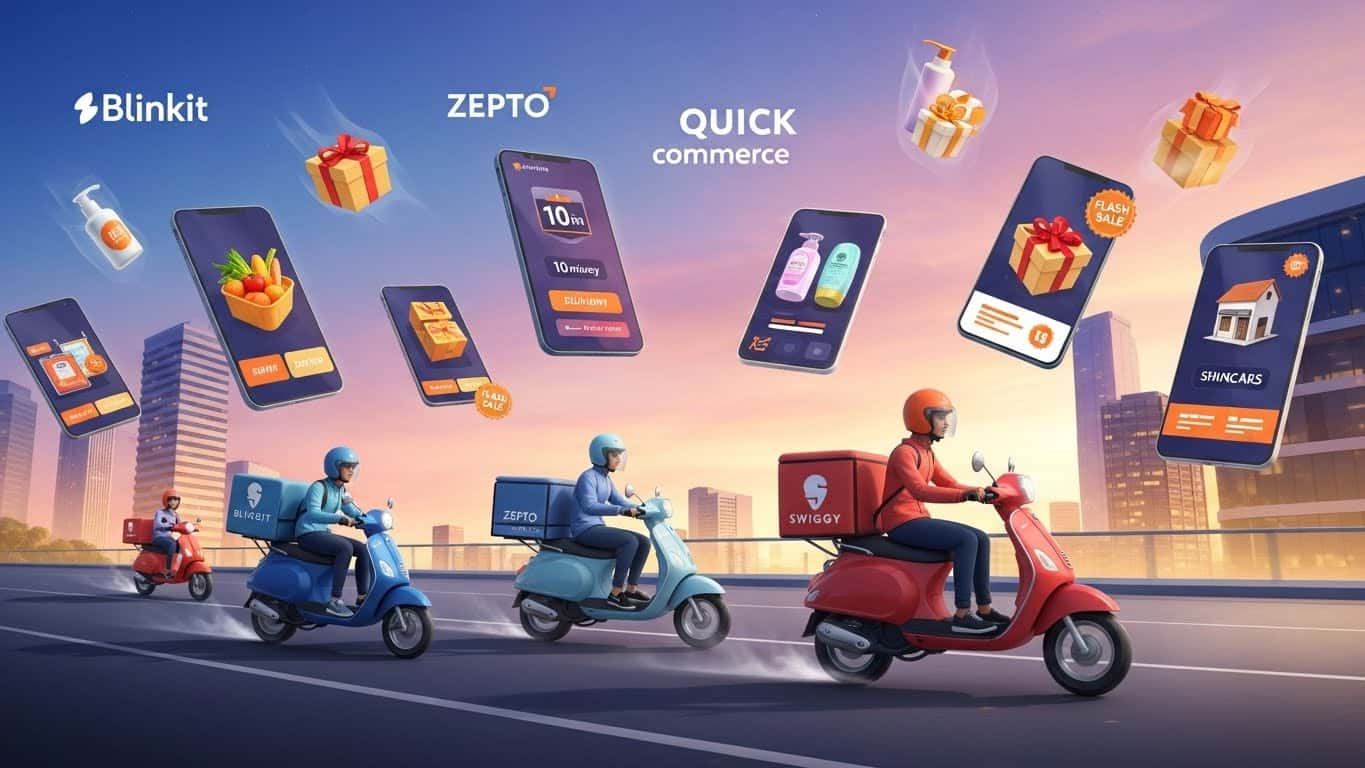
Discover how quick commerce platforms leverage dark store strategies to meet surging festive demand, transforming retail and brand engagement.
Beyond the Blink: Why Quick Commerce's Festive Stock-Up Strategy is a Marketing Masterclass
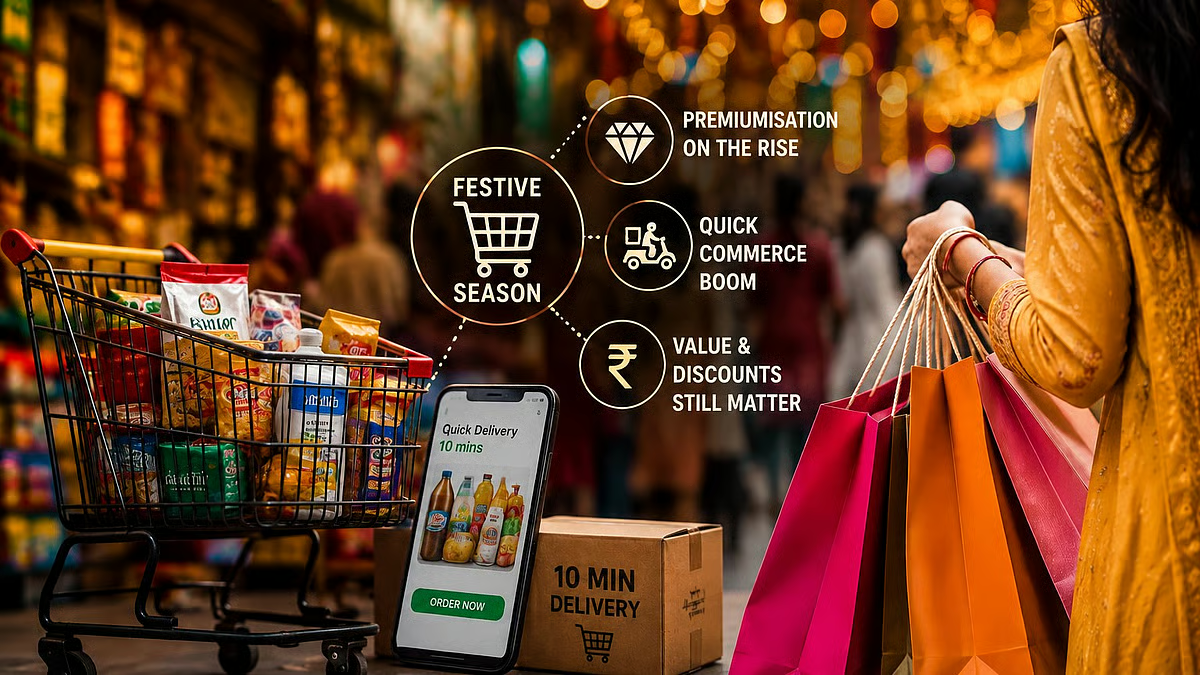
As the festive season sweeps across global markets, quick commerce platforms are preparing for an unprecedented surge in demand, fundamentally reshaping how consumers shop and how brands engage with their audience. This isn't just about faster deliveries; it's a strategic pivot that positions these platforms as crucial players in the marketing and distribution ecosystem, altering our very perception of convenience. At the heart of this transformation are "dark stores," the hidden micro-warehouses that power instant delivery. These facilities are undergoing massive transformations, with operators often significantly increasing inventory levels to ensure they can meet the expected rush for everything from last-minute gifts to festive groceries. This aggressive stocking up strategy is a clear signal of the industry's intent to dominate the peak consumption period. Companies in the quick commerce sector are leaving no stone unturned, leveraging sophisticated predictive analytics and artificial intelligence. They're crunching historical sales data and real-time trends to forecast exactly what consumers will want, down to the specific neighborhood. This data-driven approach allows them to optimize everything from warehouse layouts to delivery routes, all aimed at maintaining their promise of ultra-fast delivery. The sheer scale of preparation involves not just inventory, but also significant investments in logistics infrastructure and an expanded network of delivery riders, ensuring seamless operations even under immense pressure. The product mix for these festive periods is also evolving. While groceries remain a core offering, quick commerce platforms are expanding into higher-margin categories like gourmet foods, home decor, electronics, and even fashion accessories. This diversification allows them to capture a larger share of the consumer's festive spending, positioning themselves as a one-stop-shop for immediate needs and spontaneous purchases.
The New Battleground for Brands and Consumers
From a marketing and brand perspective, this festive stock-up by quick commerce players is far more significant than just an operational exercise. It signals a profound shift in how brands, particularly direct-to-consumer (D2C) brands, can reach and convert customers. These platforms are becoming powerful new marketing channels, offering unparalleled access to consumers who prioritize instant gratification. For a D2C brand, getting listed and prominently displayed on a quick commerce app during the festive rush can be as impactful as a prime-time ad slot, offering immediate sales conversion that traditional advertising can't match. The dark store model, while invisible to the end-user, enables hyper-local targeting and demand fulfillment that traditional retail struggles to replicate. It essentially provides brands with numerous mini-storefronts spread across urban landscapes, each stocked with products tailored to the immediate vicinity's preferences. This hyper-localization allows brands to penetrate specific demographics and respond with agility to micro-trends, making the quick commerce app a discovery engine for the latest and most relevant products. My read on this is that the convenience factor offered by quick commerce during festive periods isn't just about saving time; it's about fundamentally resetting consumer expectations. Brands that master this rapid distribution channel will not only capture immediate sales but also cultivate a new kind of consumer loyalty, where speed and accessibility become as important as product quality or price. This puts immense pressure on brands to adapt their supply chains and marketing strategies to fit this new paradigm, or risk being outmaneuvered by more agile competitors.
What This Means for the Future of Retail
The global quick commerce landscape has been a rollercoaster, seeing massive investment inflows followed by a re-evaluation of unit economics and a push towards profitability. Festive seasons are critical stress tests, proving whether these aggressive delivery models can scale efficiently and sustainably. The ability to manage immense inventory, large volumes of orders, and a fluctuating workforce of delivery partners during peak times provides invaluable data and operational experience that will shape the industry's long-term viability. This rapid scaling for festive demand also highlights a broader, undeniable trend: the increasing convergence of online and offline retail. Dark stores are the physical manifestation of digital demand, creating a seamless, often invisible, bridge between brands and consumers. It's retail, reimagined for instant gratification, blurring the lines between browsing online and purchasing in a physical store. This hybrid model, often dubbed "phygital," is not just a temporary solution but a foundational shift in how goods are distributed and consumed globally.
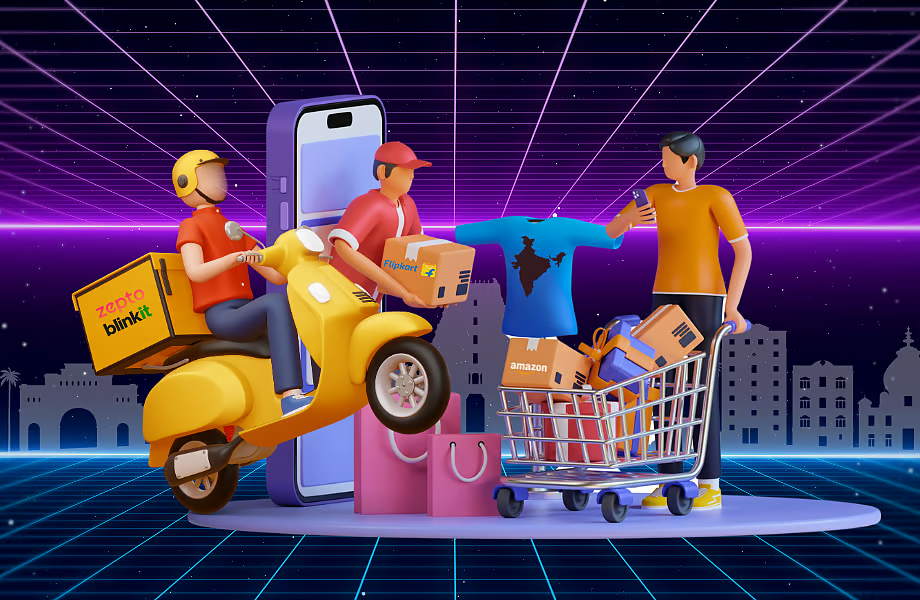
The festive season is exposing a structural shift in global retail: quick commerce is no longer just a premium delivery service, it is the most critical bottom-of-funnel marketing channel for brands today. In India alone, the quick commerce marketled by Blinkit with a 46% share, followed by Swiggy Instamart at 24% and Zepto at 22%is projected to hit $40 billion by 2030. For direct-to-consumer (D2C) and FMCG brands, this demands a complete rewrite of traditional digital marketing playbooks. The customer journey on these platformsfrom opening the app to checkoutoften concludes in under 10 minutes. Consequently, the focus is shifting from "top of mind" brand awareness to "top of cart" immediate conversion. However, the defining rule of this new era is that digital visibility is entirely tethered to physical supply chains. Advertising algorithms on quick commerce platforms are strictly inventory-led; if a product is out of stock in a specific neighborhood's dark store, ads for that SKU simply will not run in that pin code. You cannot outbid a stockout. This dynamic turns festive stock-up strategies into a high-stakes operational masterclass. Brands must leverage predictive analytics to maintain 9598% product availability across thousands of micro-warehouses. Those who master this physical-digital convergence aren't just capturing seasonal salesthey are securing prime digital real estate and long-term loyalty in a market where speed is the ultimate currency. Advertising on these platforms is now a massive business in its own right, with platforms like Blinkit and Zepto crossing ₹1,000 crore in annual ad revenue.
Moreover, the quick commerce ecosystem is ripe for integration with the creator economy. Imagine influencers showcasing festive products, with a direct link to purchase for rapid delivery. This direct path from discovery to instant purchase, facilitated by quick commerce, creates an incredibly powerful marketing loop for brands. Platforms that can effectively tap into this by building native creator tools or partnerships will unlock a new level of consumer engagement and sales velocity, especially during high-stakes shopping seasons. However, the challenges are equally immense. Managing perishable goods, ensuring quality control across many SKUs, and maintaining high customer satisfaction during peak loads test the limits of operational excellence. The pressure on delivery partners, often working under tight schedules, also needs careful consideration to ensure ethical and sustainable practices. As quick commerce platforms continue to mature, balancing rapid growth with robust, ethical operations will be key to long-term success. Ultimately, the festive season will be a critical litmus test for these quick commerce giants, demonstrating their true ability to innovate, scale, and deliver on their ambitious promises. Their strategies are not just about fulfilling immediate orders; they are about fundamentally setting new benchmarks for consumer convenience, pushing the boundaries of brand-consumer interaction, and shaping the future of retail and marketing for years to come.
Frequently asked questions
What is a dark store festive stock-up strategy?
It's an operational approach where quick commerce platforms pre-position popular festive items in strategically located micro-warehouses (dark stores). This allows for rapid fulfillment and delivery during peak holiday demand.
How do dark stores benefit quick commerce during holidays?
Dark stores enable quick commerce platforms to handle high volumes of orders efficiently, significantly reducing delivery times for festive goods. They optimize inventory management and reduce last-mile delivery costs, enhancing customer satisfaction.
Why is this strategy considered a marketing masterclass?
It's a marketing masterclass because it directly addresses consumer desires for instant gratification during the busy holiday season. By ensuring fast availability of popular items, platforms build strong brand loyalty and capture a larger market share.
What types of products are typically stocked in dark stores for the festive season?
Dark stores stock high-demand festive items such as seasonal groceries, last-minute gifts, party supplies, beverages, and other convenience goods. The selection is usually data-driven, based on anticipated consumer preferences.
How does this strategy impact consumer shopping habits?
This strategy fundamentally reshapes consumer shopping habits by making instant access to holiday essentials a new expectation. It encourages more spontaneous purchasing and reduces the need for traditional, planned shopping trips.
What challenges do quick commerce platforms face with dark store festive stock-ups?
Challenges include accurate demand forecasting to prevent overstocking or stockouts, efficient inventory rotation, managing a large network of micro-warehouses, and maintaining rapid delivery speeds amidst increased traffic and demand.