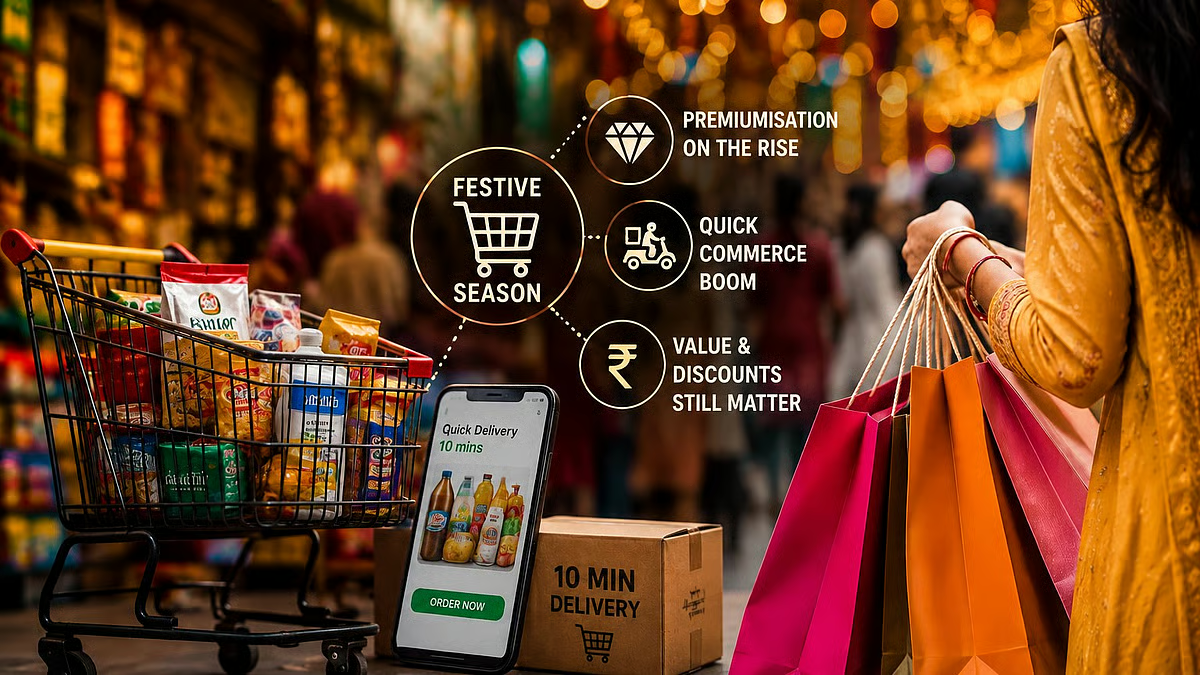
Flipkart's Big Billion Days shift impacts Walmart's Q3 growth guidance by 100 basis points, despite strong Q2 performance from Indian e-commerce.
Walmart anticipates a 100 basis point reduction in its Q3 growth guidance due to Flipkart's flagship Big Billion Days sale shifting from Q3 to Q4.
Walmart's Indian ecommerce entities were primary drivers of Walmart International's operating income growth in Q2, as the India business drove growth in Walmart International's operating income.
Flipkart's advertising revenue demonstrated robust performance, significantly contributing to Walmart International's financial health.
The Indian ecommerce giant is aggressively scaling its quick commerce arm, Flipkart Minutes, which crossed 1,000 dark stores in June, and is planning further expansion.
This strategic timing adjustment underscores the evolving dynamics of India's competitive ecommerce landscape and its increasing influence on global retail earnings.
Walmart, the global retail behemoth, recently disclosed that a strategic recalibration by its Indian ecommerce subsidiary, Flipkart, is set to temper its Q3 growth projections. The shift of Flipkart's crucial Big Billion Days (BBD) sales event from the third to the fourth quarter is expected to shave over 100 basis points from Walmart's next quarter's growth guidance. This move, while tactical for market positioning, highlights the intricate interplay between localized growth strategies and global financial reporting, underscoring the formidable influence of India's vibrant digital marketplace on international corporate performance.
Despite this anticipated Q3 headwind, Walmart’s second-quarter results, ending July 31, painted a robust picture for its Indian operations. India emerged as a significant growth engine for Walmart International, particularly in operating income and advertising revenue, demonstrating the profound value that Flipkart and its fashion arm, Myntra, bring to the parent company. This performance is a testament to the patient capital Walmart has deployed in the Indian market, focusing on long-term value creation beyond mere gross merchandise value. Flipkart's advertising business, in particular, demonstrated robust performance. This surge in advertising revenue contributed substantially to Walmart International's overall operating income. The India business drove the growth of Walmart International’s operating income and advertising revenue.
Walmart International's operating income in Q2 was significantly bolstered by its India operations. Flipkart's advertising revenue also showed strong performance, showcasing a critical income stream.
Alongside its established horizontal ecommerce and fashion platforms, Flipkart is making aggressive inroads into the burgeoning quick commerce sector. Its arm, Flipkart Minutes, is expanding its services. This expansion is critical for maintaining competitiveness and capturing a larger share of the urban consumer base in India's hyper-competitive digital landscape.
The India Anchor: Walmart’s Shifting Center of Gravity
Walmart’s recent Q2 earnings report clearly illustrates that its international growth engine is now heavily indexed to the Indian consumer. The decision to absorb a 100-basis-point (bps) headwind in Q3 guidance due to the timing of Flipkart's Big Billion Days (BBD) is a striking example of a multinational retailer prioritizing localized market dynamics over smoothed, quarter-by-quarter Wall Street optics.
The Strategic Sacrifice of Q3
Shifting the Big Billion Days sale from Q3 to Q4 is not merely an operational tweak; it is a critical defensive and offensive maneuver in the Indian e-commerce landscape.
Cultural Alignment: Indian festive spending is entirely dictated by the lunar calendar, with Diwali shifting dates annually. Aligning the BBD event closer to the actual festival captures peak consumer liquidity and intent.
Willingness to Absorb Hits: By intentionally projecting a Q3 growth reduction to accommodate this shift, Walmart is signaling that protecting Flipkart’s market share against Amazon India and local conglomerates is more important than artificially propping up its immediate global quarterly numbers.
Inventory Optimization: A Q4 placement allows sellers and brands on the platform to clear late-year inventory with aggressive discounting, maximizing total gross merchandise value (GMV) for the year.

The Dark Store Imperative
Flipkart's aggressive expansion of its quick commerce arm, Flipkart Minutes, crossing 1,000 dark stores by June 2026, proves that 10-to-30-minute delivery is no longer a niche service, it is an ecosystem requirement.
In India's hyper-competitive digital market, frequency of use is the ultimate moat. Traditional e-commerce relies on low-frequency, high-ticket purchases (smartphones, appliances), which leaves gaps in daily user engagement. By scaling quick commerce, Flipkart is not immediately prioritizing profit; it is executing a strategy of "encirclement." If a consumer relies on Flipkart Minutes for their daily groceries, they are significantly less likely to migrate to a competitor's app when it is time to buy a high-margin electronic device.
Advertising: The Hidden Margin Engine
The capital expenditure required to build and run 1,000+ dark stores is immense. However, Walmart’s Q2 data reveals the economic engine subsidizing this expansion: advertising. With Flipkart Ads driving a reported 20% year-over-year growth in Walmart International's advertising business, the strategy becomes clear. High-frequency interactions generated by quick commerce provide vastly more real estate to serve ads to consumers. Brands are willing to pay a premium to place their products in front of users who are making immediate purchasing decisions, effectively allowing the advertising margins to underwrite the logistical costs of the dark store network.
How Does Flipkart's Big Billion Days Timing Impact Walmart's Global Strategy?
The Big Billion Days sale is more than just a promotional event for Flipkart; it is an annual benchmark that often dictates market share shifts and sets the tone for the entire festive season in India. Shifting this mega-event from Q3 to Q4 is a strategic manoeuvre, likely aimed at aligning with peak consumer spending around major Indian festivals like Diwali, which typically fall in the latter part of the calendar year. This timing can maximize sales volumes, optimize inventory cycles, and potentially secure a stronger competitive advantage against rivals.
From a seasoned operator's lens, this timing adjustment reveals a nuanced understanding of market movements over rigid calendar adherence. While it creates a short-term headwind for Walmart's Q3 financial reporting, the long-term play is clear: optimize for maximum impact in the Indian market, even if it means uneven quarterly growth for the parent company. It signifies a strategic decision to prioritize local market dynamics and competitive positioning over smoothing out immediate global earnings reports, which is a mature approach in a high-stakes market like India.
The decision also speaks to the growing maturity of India's ecommerce sector. Mega-sales events like BBD have become pivotal battlegrounds for customer acquisition and retention. By timing BBD for optimal consumer engagement, Flipkart aims to consolidate its market leadership, particularly against well-funded competitors. This aggressive stance is necessary to navigate a market where consumer loyalty can be fleeting, and pricing, alongside speedy delivery, remains paramount.
What Role Does Quick Commerce Play in Flipkart's Future Growth Strategy?
Flipkart's aggressive expansion of its quick commerce offering, Minutes, is a direct response to the escalating demand for rapid delivery and the fierce competition in India's hyperlocal segment. Having already surpassed 1,000 dark stores in June, Flipkart is expanding this network. This expansion is not merely about convenience; it's a strategic imperative to capture daily essential purchases and deepen customer engagement, moving beyond periodic large-ticket purchases. The quick commerce sector in India is characterized by intense competition.
While this segment often entails higher operational costs and significant capital burn, it is becoming indispensable for any serious ecommerce player looking to build a comprehensive ecosystem. My read is that for Flipkart, Minutes is less about immediate profitability and more about strategic encirclement – ensuring they are present across all consumer touchpoints, from planned purchases to spontaneous needs. This aggressive push into quick commerce reflects a broader trend in emerging markets where convenience and speed are increasingly non-negotiable for urban consumers. For Walmart, integrating quick commerce capabilities through Flipkart strengthens its competitive moat in India, allowing it to cater to a wider spectrum of consumer needs and solidify its position in one of the world's fastest-growing digital economies. It bridges the narrative of long-term strategic investment with immediate execution on evolving consumer behaviors.
Frequently asked questions
What caused Walmart's Q3 growth guidance reduction?
Walmart's Q3 growth guidance was reduced by 100 basis points primarily because Flipkart's flagship Big Billion Days sale shifted from the third quarter to the fourth quarter. This strategic timing change impacted expected revenues for the quarter.
How did Walmart's Indian entities perform in Q2?
Walmart's Indian e-commerce entities were significant drivers of growth, specifically contributing to Walmart International's operating income increase in Q2.
What is the "Big Billion Days" sale?
The Big Billion Days is Flipkart's annual flagship sale event, known for offering substantial discounts and driving significant e-commerce traffic and revenue in India.
How does the Big Billion Days shift affect Walmart's finances?
The shift moves expected revenue from the Big Billion Days sale out of Q3 and into Q4, directly impacting Walmart's Q3 financial projections and growth guidance.
What was Flipkart's advertising revenue performance?
The article preview states that Flipkart's advertising revenue demonstrated robust performance, indicating strong growth in that segment.
Why is India important for Walmart International?
India is a crucial market for Walmart International, with its e-commerce businesses being key contributors to its overall operating income growth and strategic expansion.