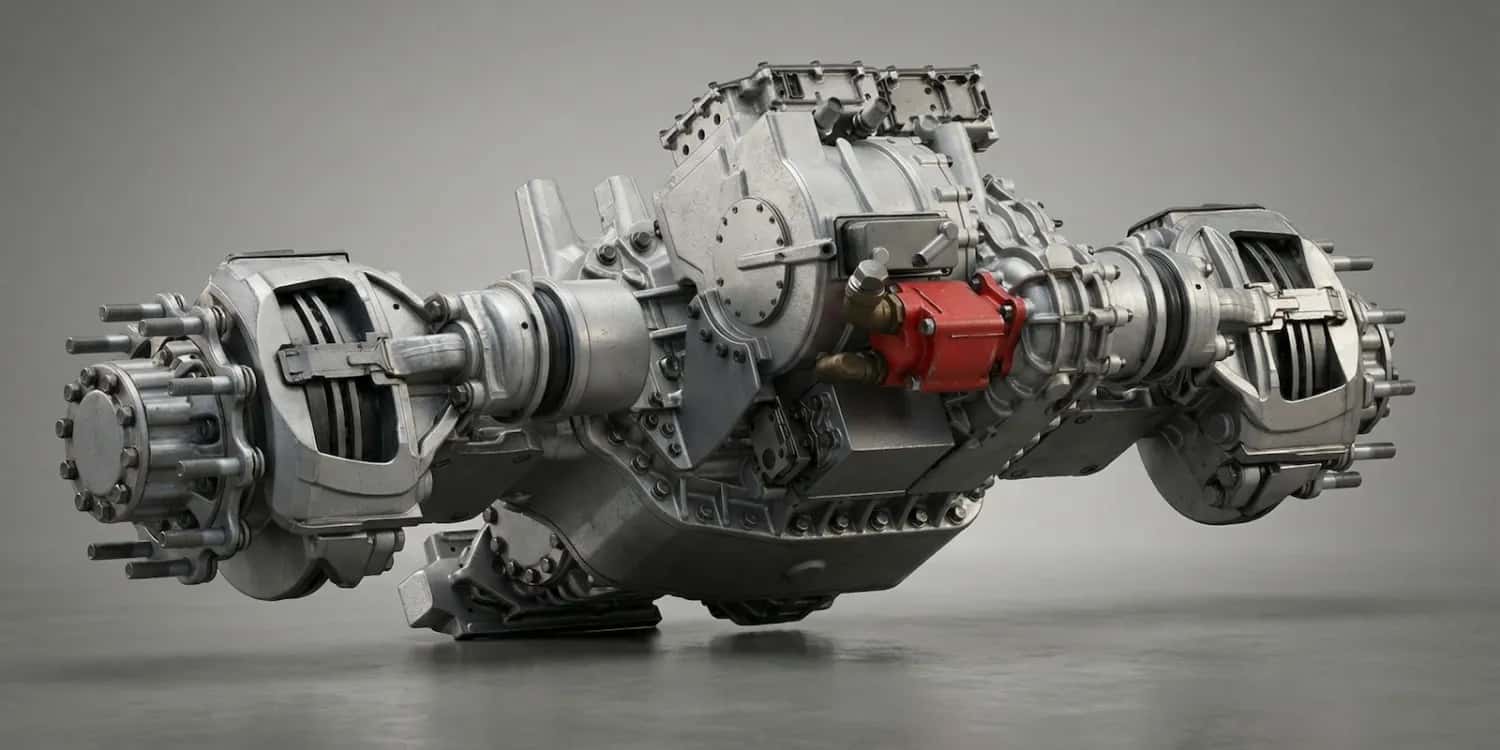
Windrose unveils a compact 70 kW electric PTO for EV car haulers needing high auxiliary trailer power
Windrose, an electric semi truck maker, has developed an iPad sized 70 kW electric power take off module integrated into its proprietary e axle.
The new EPTO is aimed at vehicle transport fleets, a commercial EV use case where trailers need substantial auxiliary power for ramps and racks.
Founder and CEO Wen Han said the company built the system in house after failing to find a suitable available EPTO to power the ramp and rack.
The product runs on Windrose’s 800V high voltage platform and is positioned as a zero emissions replacement for diesel driven PTO systems.
The company is presenting the EPTO as a way to expand electric truck use into freight equipment categories that still rely on mechanical or hydraulic power from diesel trucks.
Windrose has unveiled a surprisingly compact piece of electric trucking hardware: an iPad sized 70 kW electric power take off system that could solve a very unglamorous but commercially important problem in heavy transport. For an industry still focused on headline range numbers, this is a reminder that the next phase of electric truck adoption may be decided by auxiliary equipment, not just by batteries and charging.
Antwerp based Windrose, which builds electric semi trucks and has drawn attention around its R700 platform, is using the new EPTO to target vehicle carrier fleets whose specialized trailers require significant onboard power. The company said the module is directly integrated into its own designed e axle and works off its 800V architecture. Founded to build long haul electric trucks, Windrose is now trying to extend that proposition from line haul movement into equipment heavy logistics, a move that matters if electric trucks are to replace diesel across real fleet workflows rather than only in demonstration routes.
Wen Han, founder and CEO of Windrose, said the company believed EVs and all other cars should be moved by an electric truck, but could not find the right available EPTO solution to power the ramp and rack, so it built its own. That comment points to a wider supply gap across commercial electrification: the truck itself may be ready, but the surrounding hardware stack often is not.
Key product data: 70 kW output, 800V high voltage platform, packaged in an iPad sized module integrated into Windrose’s proprietary e axle.
In conventional diesel trucks, a PTO draws power mechanically from the transmission or engine to operate external equipment such as dump bodies, plows, cranes, cherry pickers, or car hauler hydraulics. Battery electric trucks do not have an idling combustion engine to feed that system, which means power has to be pulled from the battery and converted through motors and electronics to run the accessory. That sounds straightforward, but it becomes harder in trucks built around independent electric motors without a conventional transmission, precisely the architecture many next generation EV makers favor.
That is why this launch deserves more attention than it may initially get. Windrose is not just adding a feature, it is addressing one of the friction points that slows real world electrification in commercial fleets. My read is that these integration layers will increasingly separate serious truck OEMs from companies that can produce a compelling prototype but not a fleet ready workhorse.
The "Swiss-Army" Semi: Windrose and the Unglamorous Reality of Fleet Electrification
This analysis targets the exact chokepoint that separates glossy EV prototypes from actual commercial fleet deployment. While the industry has been fixated on battery size and aerodynamic drag, Antwerp-based Windrose is tackling the unglamorous, heavy-duty integration layers that actually run logistics operations.
By engineering an iPad-sized 70 kW electric Power Take-Off (ePTO) module directly into its proprietary e-axle, Windrose is bypassing a massive structural hurdle for next-generation electric trucks.
The Missing Mechanical Link
In legacy diesel trucking, a Power Take-Off (PTO) is a mechanical necessity. It is essentially a geared output mounted to the side of a traditional transmission, siphoning physical rotational energy from the idling diesel engine to drive the high-pressure hydraulic pumps required for dump trailers, concrete mixers, or the complex multi-level ramps on car haulers.
The architecture of a modern, ground-up electric semi inherently breaks this mechanism:
No Central Transmission: Trucks like the Windrose E700 don't use a central drivetrain. They use localized e-axles with independent electric motors. There is no central, rotating driveshaft to attach a mechanical PTO to.
The Inverter Bottleneck: To power external hydraulic gear on an EV, you must tap the truck's massive high-voltage battery (in Windrose's case, a 705 kWh LFP pack running at 800V) and run it through a dedicated inverter to spin a separate electric motor for the pump.
By building this 70 kW ePTO module directly into the e-axle, CEO Wen Han is offering a "plug-and-play" solution that allows fleets to keep their millions of dollars worth of specialized, legacy trailers while swapping out only the tractor.
The Fleet Economics of the Edge Case
This development highlights a critical strategic pivot. Early electric truck adoption was driven by simple "dry van" logistics—pulling a standard box trailer from a warehouse to a distribution center. However, the most lucrative and sticky commercial contracts often involve specialized, power-hungry trailers.
Car Haulers: Vehicle transport requires immense auxiliary power to operate the hydraulic lifts that stack cars safely.
Refrigerated Freight (Reefers): Transporting food or pharmaceuticals requires continuous, high-draw electrical power.
Legacy OEMs like Volvo and Mack had an early advantage here because they often built their first-generation EVs by simply ripping the diesel engine out of an existing chassis and dropping an electric motor in front of a traditional transmission, allowing them to keep standard PTO interfaces.
Windrose is proving that a clean-sheet EV design does not have to sacrifice application versatility. If they can successfully commoditize the ePTO, it transforms their truck from a narrow long-haul solution into a highly adaptable "Swiss-Army Knife" capable of penetrating the most asset-heavy, difficult-to-electrify corners of the freight market.
Why It Matters
The most useful way to read this development is as a sign that commercial EVs are entering a more mature phase. The first phase was about proving an electric truck could move heavy loads over meaningful distance. Windrose had already gained visibility after one of its trucks hauled a 75,000 lb. combined load for more than 578 miles between Colton, California and Buckeye, Arizona along the I-10 freight corridor. The second phase is about whether the truck can serve specialized fleet jobs without forcing operators to redesign the rest of their equipment ecosystem.
That distinction is relevant beyond North America or Europe. Freight markets are often asset intensive and dependent on add on systems including refrigeration, hydraulics, lifting gear, and loading mechanisms. Fleet managers do not buy a truck in isolation, they buy uptime across an entire operating setup. A compact EPTO therefore has implications beyond Windrose’s immediate positioning.
There is also a competitive angle. Legacy truck makers such as Volvo and Mack have had a somewhat easier path in some applications because existing driveline architectures can better accommodate electric PTO solutions. Volvo, for instance, has added an electric PTO to the VNR Electric semi lineup, while Mack has worked on utility truck applications. EV truck companies using different powertrain designs have faced a tougher integration challenge, and that has limited their addressable market.
Context point: Windrose’s R700 platform previously completed a run carrying a 75,000 lb. combined load for more than 578 miles on the Colton to Buckeye route.
In that sense, Windrose is chasing a broader strategic advantage. If it can make its truck a viable base for car hauling today, it opens the door to adjacent applications that still depend on diesel PTO systems. Ken North, an emerging technologies consultant for the North American Council for Freight Efficiency, said an EPTO has the potential to turn an electric highway truck into a Swiss-Army-Knife of application possibilities, especially in Canada. I think the point travels well beyond Canada.
What’s Next
There is still a gap between an elegant technical solution and scaled fleet deployment. Windrose has been polarizing as a company, with critics in recent years questioning both its positioning and staying power, while road tests of its truck have often produced favorable reactions. That tension makes every practical product release more significant, because commercial buyers will judge the company less by online narratives and more by whether it solves expensive operational pain points.
For the broader market, this is part of a recognizable trend line. Electric trucking is moving from proving propulsion to proving compatibility. More attention has already gone to electric PTOs in segments such as utility trucks, concrete pumps, and regional heavy duty applications. Similar moves by Volvo in electric semis, the Mack and Terex Utilities partnership on electric bucket trucks, and electric pumping equipment entering field use all point in one direction: specialized work functions are no longer an afterthought in vehicle electrification.
That matters in startup terms too. Climate and mobility startups often talk about replacing legacy infrastructure, but the more durable companies tend to fit themselves into the existing industrial stack first. Windrose’s EPTO does exactly that by trying to work with the established ecosystem of trailers, hydraulic pumps, and accessory equipment instead of asking fleets to wait for a fully redesigned future. That is a more disciplined play, and in this cycle, discipline tends to travel farther than spectacle.
The open question now is whether Windrose can convert technical interest into customer traction across multiple duty cycles. If it does, the company may gain an edge not because its trucks are electric, but because they can do the awkward, equipment heavy jobs diesel has long monopolized. In commercial mobility, that is often where the real market opens up.
Frequently asked questions
What is Windrose's iPad-sized 70 kW electric PTO?
Windrose's new electric PTO is a compact 70 kW power take-off module built into the company's proprietary e-axle. It is designed to supply high auxiliary power for trailer functions without relying on a conventional diesel-driven PTO system.
Why does a car hauler trailer need a 70 kW electric PTO?
Vehicle transport trailers use powered ramps, lifts, and rack systems that can demand substantial auxiliary energy. A 70 kW electric PTO gives fleets enough power to operate that equipment on an electric truck platform more efficiently.
How small is Windrose's new electric PTO module?
Windrose says the module is roughly iPad-sized, which makes its power density a key talking point. That compact form factor can help fleets save space while still getting enough output for demanding trailer operations.
Who is the Windrose electric PTO built for?
The system is aimed primarily at vehicle transport fleets, especially operators moving cars on multi-level trailers. It fits a commercial EV use case where reliable onboard auxiliary power is critical to daily loading and unloading.
Did Windrose develop the 70 kW electric PTO in-house?
Yes, Windrose developed the unit in-house after failing to find an off-the-shelf solution that met its needs. That suggests the company wanted tighter integration with its own e-axle and better performance for specialized fleet applications.
Why is an integrated e-axle electric PTO important for commercial EVs?
An integrated e-axle electric PTO can reduce packaging complexity and create a more streamlined power delivery system for auxiliary equipment. For commercial EV fleets, that can mean better efficiency, simpler installation, and a solution tailored to real-world trailer workloads.