From urban air taxis to military innovations, discover the groundbreaking VTOL aircraft poised to revolutionize how we travel and transport goods.
Futuristic Vertical Takeoff and Landing (VTOL) aircraft are rapidly transitioning from conceptual designs to operational prototypes, targeting urban mobility, cargo, and military applications.
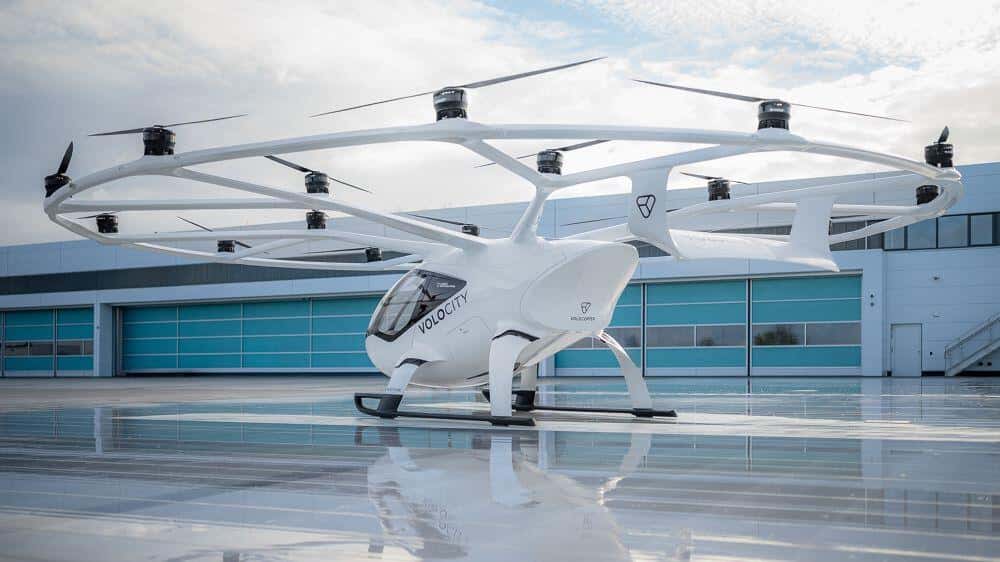
The Electric VTOL (eVTOL) segment, led by companies like Joby Aviation, Volocopter, and Lilium, is revolutionising urban air mobility (UAM) with electric propulsion and autonomous capabilities.
The global Urban Air Mobility market is projected for substantial growth, driven by the imperative to alleviate traffic congestion and demand for expedited logistics and emergency services.
Widespread commercial adoption hinges on overcoming significant regulatory hurdles, developing robust vertiport infrastructure, and ensuring public safety and acceptance.
India presents a compelling future market for VTOL technology, particularly in addressing last-mile logistics challenges and enhancing regional air connectivity in congested metropolitan areas.
The global aerospace landscape is witnessing a significant paradigm shift with the accelerated development of Vertical Takeoff and Landing (VTOL) aircraft, moving beyond military applications into civilian domains like urban air mobility (UAM) and critical cargo operations. This transformative wave, predominantly driven by advancements in electric propulsion and autonomous systems, promises to redefine inter-city travel and logistics. Companies worldwide are investing heavily in these next-generation air vehicles, aiming to alleviate ground congestion and unlock new transportation efficiencies. Pioneers in the electric VTOL (eVTOL) space, such as California-based Joby Aviation and Germany's Volocopter and Lilium, are making substantial progress with their multi-passenger designs. These firms are actively engaged in extensive flight testing and certification processes, envisioning a future where quiet, zero-emission air taxis offer a novel solution for urban commuting. Their focus remains on safety, operational efficiency, and integrating seamlessly into existing air traffic control frameworks, marking a critical phase in aviation's evolution. Beyond passenger transport, the VTOL ecosystem is diversifying into personal aerial vehicles and enhanced cargo solutions. Companies like LIFT Aircraft, with its single-seat Hexa, and Sweden's Jetson Aero, with the personal eVTOL Jetson ONE, are exploring individual ownership and recreational flight. Meanwhile, established players and defense contractors continue to innovate military-grade VTOLs, exemplified by the robust V-22 Osprey and advanced unmanned combat air vehicles like the X-47B, pushing the boundaries of aerial logistics and strategic deployment.
The global Urban Air Mobility (UAM) market is projected for substantial growth over the next decade. This growth is attracting significant venture capital and strategic investments into Aerospace Tech startups globally.
Why is Urban Air Mobility a Critical Emerging Sector?
The impetus behind the surge in UAM development stems from pressing global challenges, notably escalating urbanisation and the resultant traffic congestion that chokes economic productivity and quality of life. VTOL aircraft offer a compelling solution by leveraging the third dimension for transport, drastically reducing travel times for commuters and enabling rapid delivery of critical goods. For densely populated nations like India, where infrastructure often lags urban growth, UAM presents a strategic pathway to leapfrog traditional transit bottlenecks. This sector's emergence is also a testament to a confluence of technological breakthroughs across multiple disciplines. Significant advancements in battery energy density, electric motor efficiency, and lightweight composite materials have made eVTOL flight feasible, safe, and increasingly economical. Furthermore, the integration of sophisticated AI for flight control, navigation, and autonomous operations is pivotal, promising a future of highly automated and intelligent aerial networks. My read is that these synergistic innovations are what truly make this moment distinct from previous attempts at flying cars.
The electric vertical takeoff and landing sector is finally moving past the rendering stage and into real airspace. We are seeing major milestones this year, most notably Joby Aviation’s integration into the White House backed eVTOL pilot program across ten states. With developers aiming for their first commercial passengers by late 2026, the global urban air mobility market is undeniably shifting from science fiction to a tangible operational rollout. Building the aircraft, however, is only half the battle. The true bottleneck lies in physical ground infrastructure. Recent partnerships designed to build multimodal vertiports highlight that without dedicated landing zones and high capacity charging networks, these zero emission air taxis have nowhere to go. For India, this evolving sector presents a massive opportunity. While domestic hardware manufacturing might currently lag behind Western or Chinese giants, the subcontinent's dense urban centers and complex logistics networks make it a prime deployment ground. The real potential for the Indian deep tech ecosystem lies in building the crucial ancillary layers, from advanced battery management software to autonomous air traffic control systems. The flying car race has started, but the ultimate winners will be those who master the infrastructure.
What are the Roadblocks and India's Potential Role?
While the technological promise of VTOL is undeniable, the path to widespread commercialisation is fraught with formidable challenges, primarily regulatory and infrastructural. Aviation authorities globally are grappling with crafting new frameworks for air traffic management, certification standards for novel aircraft, and safety protocols for urban airspaces. The absence of adequate vertiport infrastructure for takeoff, landing, and charging, coupled with the high initial operational costs, presents significant hurdles for scaling these operations. Despite these global challenges, India offers a unique and potentially fertile ground for VTOL adoption, particularly for cargo and emergency services in its mega-cities and remote regions. While India has yet to see a major domestic eVTOL manufacturer, the country's burgeoning startup ecosystem could play a vital role in developing ancillary technologies, such as advanced avionics, battery management systems, or air traffic control software. The sheer scale of India's logistics market and the urgent need for efficient urban transport suggest that while manufacturing may initially be imported, the operational and service layers could foster significant indigenous innovation and investment, making India a crucial adopter and innovator in the long run.
Frequently asked questions
What are VTOL aircraft?
VTOL stands for Vertical Takeoff and Landing, referring to aircraft capable of hovering, taking off, and landing vertically. These aircraft don't require traditional runways, making them ideal for urban environments and diverse operational needs.
What is an eVTOL?
An eVTOL is an electric Vertical Takeoff and Landing aircraft, utilizing electric propulsion systems for quieter, more sustainable, and often autonomous flight, primarily for urban air mobility.
Which companies lead the eVTOL market?
Key players in the eVTOL market include Joby Aviation, Volocopter, and Lilium, among others, actively developing and testing prototypes for commercial use.
How will VTOLs transform urban mobility?
VTOLs will introduce urban air mobility (UAM) services like air taxis, reducing traffic congestion and offering faster travel options within cities.
What are the military applications of VTOLs?
In military contexts, VTOLs can be used for rapid deployment, reconnaissance, cargo transport in difficult terrain, and enhanced combat support without traditional airfield reliance.
When can we expect commercial VTOL flights?
While prototypes are active, commercial VTOL flights are anticipated to begin in select urban areas within the next few years, pending regulatory approvals and infrastructure development.