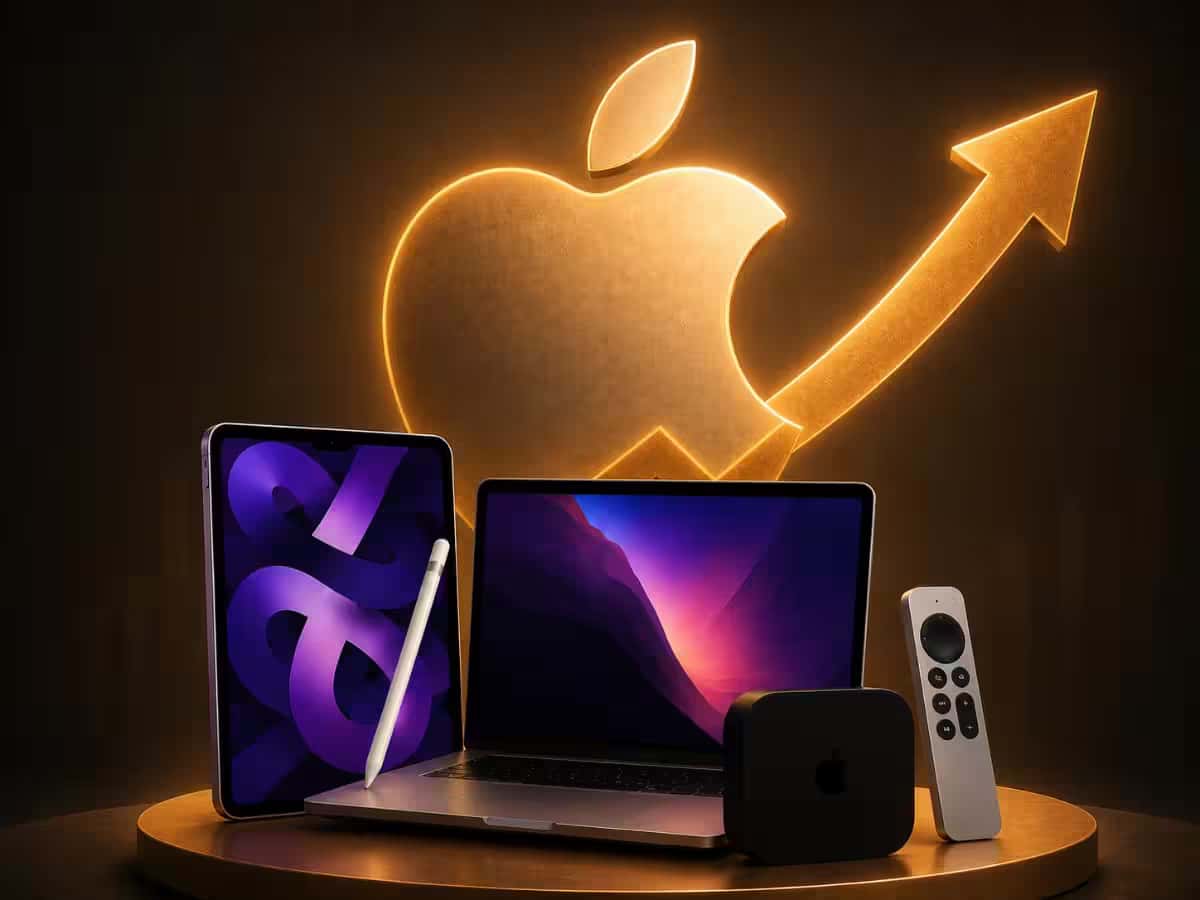
Recent price increases on iPad Air, MacBook Pro, and Apple TV challenge Apple's value proposition amidst a global memory crisis and static updates.
Apple has recently implemented substantial price increases across several popular products, including the iPad Air, M5 MacBook Pro, and Apple TV.
The price hikes, which range significantly, are attributed by Apple to an ongoing global memory crisis and escalating component costs.
For instance, the iPad Air's price rose from $599 to $749, the M5 MacBook Pro increased from $1699 to $1999, and the Apple TV climbed from $129 to $199.
Industry experts are scrutinizing whether these elevated price points will compel Apple to accelerate its product development cycles and introduce more significant hardware upgrades.
This move tests Apple's long-standing strategy of premium pricing and incremental innovation amidst a tightening global economy and increased consumer scrutiny of value.
Apple, the Cupertino-based technology giant established in 1976, has recently enacted significant price increases across a range of its popular consumer electronics, including the iPad Air, M5 MacBook Pro, and Apple TV. These adjustments, which the company attributes to the persistent global memory crisis and broader inflationary pressures, represent substantial percentage jumps that are now reshaping the value proposition of some of its most sought-after devices. The move has ignited a critical debate among consumers and industry observers regarding the long-term implications for Apple's market strategy and customer loyalty. The scale of these price adjustments is noteworthy; for example, the iPad Air saw its base price jump from $599 to $749. Similarly, the M5 MacBook Pro now starts at $1999, up from $1699. The Apple TV also experienced a significant hike, moving from $129 to $199. These are not minor inflationary tweaks but rather strategic shifts that challenge the traditional balance of Apple's incremental hardware improvements against its premium pricing. For years, Apple has skillfully maintained its market dominance through a potent combination of strong brand loyalty, a robust ecosystem, and often subtle, yet effective, hardware refinements. However, with prices now substantially higher, the company faces renewed pressure to justify these costs with more tangible enhancements, particularly for products that have seen relatively few transformative changes in recent generations.
The iPad Air moved from $599 to $749. The M5 MacBook Pro's base model now costs $1999 from its previous $1699.
Consider the iPad Air, a device lauded for its blend of performance and portability. In an increasingly competitive tablet landscape, relying predominantly on chip upgrades may no longer be sufficient to drive sales at these elevated price tiers. Especially when the robust used market for "yesterday's tech" offers compelling alternatives at significantly lower prices, the perceived value of a new iPad Air at $749 becomes a much harder sell for many consumers. The imperative for Apple is clear: deliver more compelling value. While major redesigns are not always necessary for every product cycle, strategic component upgrades could significantly enhance the user experience and help alleviate the sticker shock of these new prices. Imagine devices finally incorporating a MiniLED display, offering superior contrast and brightness, or integrating a 120Hz ProMotion display for noticeably smoother scrolling and responsiveness across more product lines. These types of enhancements, while perhaps not revolutionary, offer tangible benefits that could help users feel better about their investment at the new, higher price points.
How Do Global Economic Headwinds Impact Apple's Strategy?
The backdrop to these recent price adjustments is heavily influenced by a complex global economic environment, most notably the ongoing memory crisis. The global technology industry has navigated a challenging few years, grappling with persistent supply chain disruptions, escalating raw material costs, and a pervasive inflationary environment that has impacted nearly every sector. While Apple's vast scale, sophisticated supply chain expertise, and significant capital reserves often shield it from the worst of these pressures, even a titan like Cupertino is not immune to fundamental shifts in the cost of doing business globally. The semiconductor industry, in particular, has seen fluctuating demand, exacerbated by geopolitical tensions and capacity constraints, which has directly driven up prices for critical components like memory chips. This broader economic climate introduces a new dimension to Apple's pricing strategy. Consumers in major markets like the United States and across Europe are increasingly mindful of discretionary spending amidst rising interest rates, persistent inflation, and a general tightening of household budgets. In such an environment, the value proposition of a premium device, already a significant investment, becomes even more intensely scrutinized. This heightened consumer caution presents a notable challenge for Apple, as its products occupy the higher end of most consumer technology segments. Competitors in the Windows PC space, such as Dell and HP, continue to offer a wide array of laptops across various price points, often with competitive specifications that appeal to budget-conscious buyers. Similarly, Android tablet manufacturers, including Samsung, are pushing high-end devices that offer premium features at what might be perceived as better value compared to a newly-priced iPad Air. This competitive pressure, coupled with a more discerning consumer base, means Apple's traditional reliance on brand prestige and ecosystem lock-in might face a tougher test than in previous cycles.
Apple has officially broken its unspoken pact with consumers, initiating steep price hikes across its core hardware lineup. The iPad Air just jumped from $599 to $749, while the base M5 MacBook Pro surged to an eye watering $1999. The culprit is a massive global memory crisis, heavily exacerbated by the artificial intelligence data center boom hoarding available chip supply. For years, Apple maintained a delicate balance of premium pricing justified by tight ecosystem integration and incremental hardware refinements. This sudden price inflation disrupts that equilibrium. When consumers are asked to pay significantly more for devices that rely on largely unchanged industrial designs, brand loyalty faces a severe stress test. For the broader hardware and startup ecosystem, this move signals that even the most resilient supply chains are vulnerable to the current semiconductor squeeze. Competitors in the Windows and Android spaces now have a rare opening to capture market share by offering aggressive value propositions. Moving forward, Apple must accelerate its product development cycles to justify these luxury price tags or risk alienating a consumer base already exhausted by inflation. The era of comfortable incremental innovation is over.
From my perspective as an observer of the technology market for many years, these price hikes represent a critical inflection point for Apple. For a long time, the company has masterfully balanced incremental innovation with premium pricing, cultivating a loyal customer base willing to pay a significant premium for the Apple ecosystem and its renowned user experience. However, the magnitude of these recent increases, coupled with the relatively static hardware of some core products like the iPad Air and Apple TV, challenges that delicate equilibrium. The risk is not just a slowdown in sales velocity but a more profound shift where customers, faced with substantially higher costs for what feels like largely the same product, might extend their upgrade cycles or, more significantly, begin to explore alternatives outside the Apple walled garden. This isn't merely about component costs; it is fundamentally about the perceived return on investment for the consumer. Apple's long-term strategy has hinged on not just selling hardware, but selling an integrated experience that inherently justifies its cost. When the hardware improvements lag behind such significant price increases, that justification becomes increasingly difficult for the average consumer to make. It could lead to a subtle but significant erosion of the premium perception, making future product launches more challenging to position at aspirational price points.
What's Next for Apple's Product Roadmap and Pricing Power?
Apple's historical approach has always been to command premium prices, rarely engaging in aggressive price wars that might dilute its brand value. This strategy has been incredibly successful, fostering strong profit margins and a pervasive perception of aspirational quality and superior user experience. However, the current economic pressures, forcing such significant increases across core product lines, could inadvertently push the company into a new tactical dilemma. Will Apple lean into its premium status even further, making its products more exclusive and feature-rich to command these higher prices, or will it be forced to make concessions to maintain its broader market appeal? The tension between maintaining high price points and consistently delivering perceived value is highlighted by potential concessions Apple might make to offset higher component costs. While such measures could keep entry prices lower, they might also represent a step backward in terms of baseline offerings, particularly in an era where digital content and apps demand ever-increasing storage and processing power. Looking ahead, Apple has a few products with impending overhauls, such as the MacBook Pro and iPad mini, which could provide crucial opportunities to re-establish compelling value at these new, higher price points. The M5 MacBook Pro already saw an increase, suggesting that its forthcoming iteration, likely with the next generation of Apple Silicon, will need to deliver genuinely significant performance and feature gains to justify its near-$2000 starting price. For products without such imminent overhauls, like the current iPad Air, the challenge is more acute. It requires Apple to either accelerate its plans for more substantial updates or risk a slowdown in sales velocity for those models, particularly as consumers tighten their belts. Ultimately, the current situation presents a fascinating test of Apple's pricing power and its relationship with its deeply loyal customer base. The company has a clear opportunity to respond to these new economic realities by demonstrating that its higher prices come with genuinely better value, whether through advanced displays, improved battery life, innovative new features, or a compelling combination thereof. Failing to do so could lead to longer upgrade cycles among its existing customers and, more importantly, potentially open doors for competitors who are more aggressively pursuing a strong value-for-money proposition. The coming product cycles will reveal whether Apple chooses to double down on delivering compelling new features to match its new pricing, or if these price hikes signal a more fundamental and enduring shift in its strategy for navigating a tougher global economy.
Frequently asked questions
Why has Apple increased prices on its products recently?
Apple attributes recent price hikes to an ongoing global memory crisis, escalating raw material costs, and general inflationary pressures impacting the technology industry's cost of doing business.
Which Apple products have seen significant price increases?
Popular products like the iPad Air (from $599 to $749), M5 MacBook Pro (from $1699 to $1999), and Apple TV (from $129 to $199) have seen substantial price adjustments.
How do these price increases impact Apple's product development?
The elevated prices put renewed pressure on Apple to accelerate product development cycles and introduce more substantial upgrades, rather than incremental improvements, to justify the higher costs.
What kind of hardware enhancements could justify the new Apple prices?
Tangible enhancements like MiniLED or 120Hz ProMotion displays, improved battery life, and other strategic component upgrades could help users feel better about their investment.
How is the broader economic climate affecting Apple's pricing strategy?
Rising interest rates and tighter household budgets mean consumers scrutinize discretionary spending more, making the value proposition of premium devices like Apple's even more critical.
What is the risk for Apple if it fails to justify the price hikes with better value?
If Apple fails to deliver genuinely better value, customers might extend their upgrade cycles or explore alternatives from competitors, challenging Apple's long-held premium pricing power.