Kia expands its electric lineup with a long van built for passengers, cargo, and fleet demand
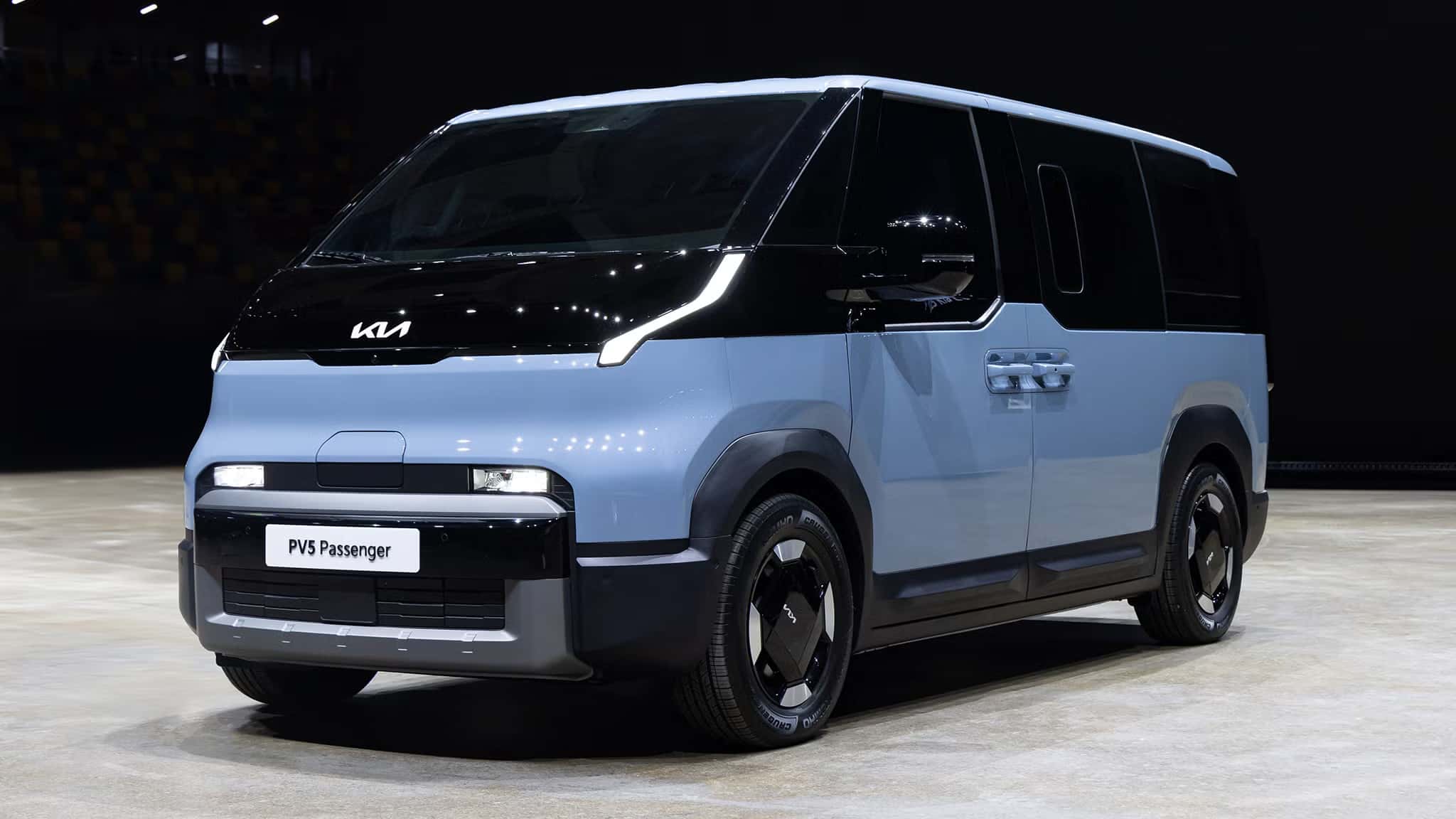
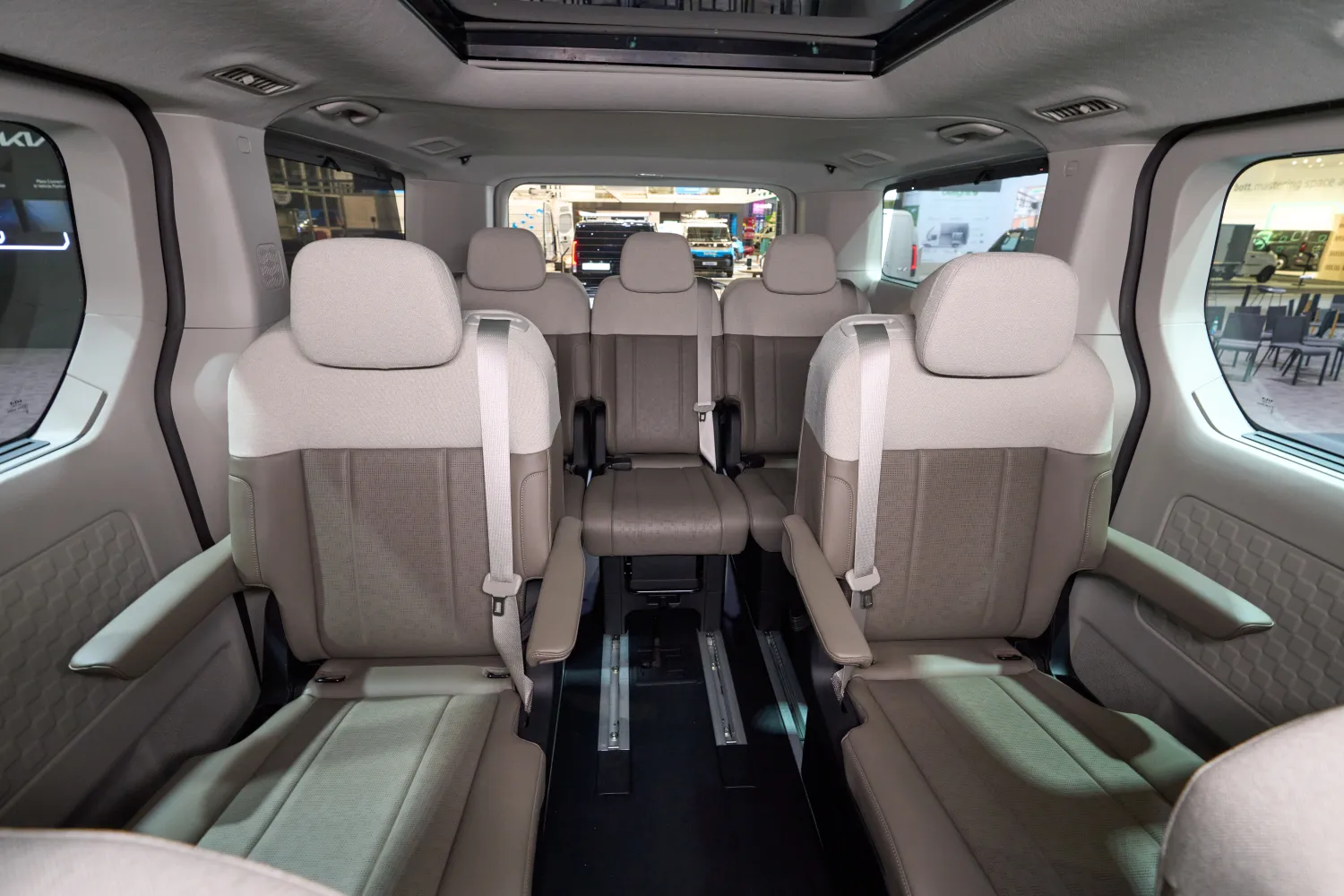
Kia’s new EV van is over 17.5 ft long and is configured to carry up to 9 people or a large cargo load, signaling that the automaker is pushing deeper into the electric van market with a product aimed beyond consumer SUVs.
The new van matters in the US because electric work vehicles remain a relatively open market, with automakers and fleet buyers still looking for practical options that can move people or goods.
Kia’s move expands its purpose-built vehicle strategy into a category where size, interior flexibility and operating costs matter more than consumer styling, which could make the van more relevant to shuttle, delivery and business fleet buyers than to typical retail EV shoppers.
The debut also points to a broader shift in the EV market, where automakers are increasingly pursuing commercial use cases alongside passenger EVs.
Kia’s new EV van is over 17.5 ft long. That alone makes it stand out in a US electric market still dominated by crossovers, pickups and expensive lifestyle vehicles rather than big, battery-powered people movers. Kia has revealed a large electric van that can seat as many as 9 passengers or be configured for cargo, a sign that the company sees opportunity in practical fleet-style EVs as well as family SUVs. For US buyers watching the sector, the move matters because commercial EVs remain one of the few areas where the market is still up for grabs.
The headline detail is the size. At more than 17.5 ft long, Kia’s new EV van lands in a category that is closer to a real work tool than a design exercise. The company is positioning it to handle either people-hauling or freight duty, which gives it a wider market than a niche passenger van would. In plain terms, that means the same core platform can be sold to shuttle operators, hotels, airports, delivery businesses and service fleets, not just families. That flexibility is the point. In EVs, battery costs are still high enough that automakers need products with strong utilization to justify the economics. A van that runs regularly, whether moving passengers or packages, has a cleaner business case than a consumer EV that sits parked for most of its life. That is one reason the commercial segment keeps drawing attention even as broader EV demand has become choppier in the US.
Kia has already talked up a broader push into purpose-built vehicles, and this van fits that thesis. Instead of trying to compete only in software or lifestyle branding, Kia appears to be betting that large, configurable EVs can carve out a more defensible lane. It is a pragmatic strategy. Businesses usually care less about dashboard theatrics and more about uptime, cargo room and route economics. The US context makes the timing notable. Ford has the E-Transit, and Mercedes-Benz has spent years pitching electric vans globally. Other companies have also tried to enter the same opening, but scale and service networks still matter a lot when the customer is a fleet manager rather than an early adopter. Kia, backed by the Hyundai Motor Group’s manufacturing and distribution footprint, has a plausible shot at turning a van like this into more than a concept headline.
17.5 ft
That is the standout figure attached to Kia’s new EV van, putting its size at the center of the pitch for passengers, cargo and fleet use.
Kia is expanding beyond passenger crossovers into commercial mobility with a large electric purpose-built vehicle (PBV) measuring over 17.5 feet in length. Built to handle dual roles, accommodating up to 9 passengers or reconfiguring for bulk cargo delivery—the vehicle targets commercial fleets, shuttle operators, and last-mile delivery services rather than traditional retail SUV buyers.
Kia is expanding beyond passenger crossovers into commercial mobility with a large electric purpose-built vehicle (PBV) measuring over 17.5 feet in length. Built to handle dual roles—accommodating up to 9 passengers or reconfiguring for bulk cargo delivery—the vehicle targets commercial fleets, shuttle operators, and last-mile delivery services rather than traditional retail SUV buyers.
Strategic Shift: Why Fleet EVs Matter Now
Factor | Consumer EV Market | Commercial Fleet EV Market |
Buying Motivation | Lifestyle, styling, performance, brand prestige | Total Cost of Ownership (TCO), uptime, route efficiency |
Asset Utilization | Sits parked ~95% of the time | High daily utilization; faster payback on battery capital costs |
Route Predictability | Variable (road trips, changing commutes) | Fixed depot-to-depot or predictable urban loops |
Charging Model | Relies heavily on fragmented public infrastructure | Centralized overnight depot charging |
By targeting commercial operators, Kia bypasses slowing consumer EV adoption rates and enters a segment driven strictly by fleet economics.
Competitive Landscape in the US
The commercial electric van market in the United States is less crowded than consumer segments, but barriers to entry are high:
Ford E-Transit: The current benchmark in the US market, benefiting from Ford Pro's massive nationwide service network and commercial telematics infrastructure.
Mercedes-Benz eSprinter: A premium global platform aimed at higher-end shuttle fleets and specialized delivery setups.
Rivian Commercial Van (RCV): Transitioning from Amazon exclusivity to open fleet sales, offering deep software integration.
Kia's Edge: Backed by Hyundai Motor Group’s scalable EV architectures, high-volume manufacturing capabilities, and competitive cost structures.
Key Watchpoints for Market Success
Size and configurable seating provide a strong headline, but commercial viability depends on metrics Kia has yet to fully disclose:
Payload vs. Battery Weight: Heavy traction batteries can cut into Gross Vehicle Weight Rating (GVWR) limits, restricting cargo payload capacity.
Depot Charging Speeds: Turnaround time during shift changes requires high-throughput DC fast-charging support or predictable Level 2 overnight charging metrics.
Fleet Management Integration: Fleet operators require native telematics API access, route-management tools, and reliable parts availability to minimize downtime.
Size alone does not guarantee demand, of course. Large electric vans have to make the math work on charging, payload and total cost of ownership, and those details are usually where the real market separates from the marketing. The source material here focuses on length and interior use cases, not pricing or battery specifications, which leaves open some of the most important questions for US buyers. If the vehicle is too expensive, or if charging downtime cuts into route efficiency, fleet operators will quickly move on.
Still, the product direction is telling. Automakers are increasingly looking for EV segments where they do not have to win a style war. Vans are a good example. The buyer often wants a box on wheels that can be customized for a job, and electrification can help on fuel and maintenance if the routes are predictable. That logic has already pushed delivery van programs into the spotlight, and it helps explain why carmakers keep circling back to commercial formats even as some consumer EV launches lose momentum. There is also a branding angle here. Kia has spent the last few years moving upmarket in the US, especially in SUVs and EVs, but a large van broadens the story. It suggests the company wants to be seen not only as a retail automaker with a few well-reviewed electric models, but as a supplier of business mobility products. For competitors, that is the more interesting signal. Margins on fleet vehicles can be tough, but repeat orders and platform reuse can make the category strategically valuable.
Another wrinkle is that vans can open doors to adjacent services. A vehicle that carries 9 people can serve hotel transfers, airport shuttles, ride-hail pooling or specialized transit. A cargo version can work in last-mile delivery or mobile service operations. If Kia eventually pairs the hardware with fleet management tools, financing packages or charging partnerships, the opportunity gets bigger than the van itself. That is where a lot of EV competition is heading, even if companies do not always say it plainly at launch.
The background
Kia’s move comes as automakers rethink where EV demand is strongest and most durable. Consumer adoption in the US has held up better in some premium and crossover categories than in others, but price sensitivity remains a real constraint. Commercial vehicles are different. The purchase decision is often more spreadsheet-driven, and buyers can justify a higher upfront cost if operating savings and utilization make the numbers pencil out.
That is why the van category has become a quiet battleground. Ford’s E-Transit gave US fleet buyers an early mainstream option. Mercedes-Benz has kept building out electric van offerings for business users. Kia entering with a vehicle that is over 17.5 ft long and able to switch between a 9-passenger layout and cargo duty suggests the company sees the same opening: practical EVs may offer a more bankable route to volume than the next flashy sedan.
The competitive challenge, though, is execution. Fleet customers want service support, dependable supply and clear route planning. They are less patient than consumers with software glitches or delayed parts. In that sense, the van business can be brutally simple. Either the vehicle saves time and money, or it does not. A large EV van from Kia could resonate in the US, but only if the company can back the pitch with a real operating proposition.
What's next
The next trigger is straightforward: Kia will need to disclose the missing details, especially range, charging, price and market rollout plans, before US buyers can judge whether the van is a serious fleet contender or just an intriguing addition to its EV lineup. Until then, the most important fact is also the simplest one: Kia’s new EV van is over 17.5 ft long, and the company clearly thinks utility, not novelty, is where the next EV fight will be won.
Frequently asked questions
How big is Kia’s new electric van?
Kia’s new EV van is over 17.5 feet long, making it notably larger than many electric SUVs on the market. That size gives it room for either a multi-row passenger setup or a larger cargo area for commercial use.
How many people can Kia’s new EV van carry?
The van can be configured to carry up to nine people. That makes it suitable for shuttle duty, family transport, ride-hailing, or business fleet use where passenger capacity matters.
Is Kia’s new EV van meant for cargo or passengers?
It is designed for both, depending on configuration. Kia is positioning the vehicle as a flexible electric van that can work as a people mover or as a cargo hauler for commercial buyers.
Why does Kia’s new EV van matter in the US market?
The US electric van segment is still relatively open, especially for practical work vehicles and fleet models. A larger EV van from Kia could attract businesses looking for alternatives to gas-powered cargo vans and people carriers.
Who is most likely to buy Kia’s new electric van?
Fleet operators, delivery companies, shuttle services, and businesses needing a versatile electric vehicle are the most likely customers. Buyers who need more space than an SUV offers may also see it as a useful option.
Is Kia focusing more on commercial EVs with this van?
Yes, the new van suggests Kia is pushing further into electric vehicles aimed at business and utility use, not just consumer crossovers and SUVs. Its size and flexible layout indicate a stronger play for commercial and fleet demand.