A new film casts a self-driving cab as the bad guy, showing how culture now shapes trust in autonomous cars
Robotaxis enter their villain era, and that may be one of the clearest signs yet that autonomous cars have moved from novelty to cultural flashpoint. A new short film in production, called "Road Rage," turns a self-driving cab into the bad guy, which matters because public trust in AI on the road is being shaped as much by emotion and story as by engineering.
Here is what happened: the film is seeking $40,000 on Kickstarter and centers on a San Francisco chase between Joa, a ridehail driver in a manual-transmission car, and Roboride, an autonomous vehicle that takes a minor road-rage incident personally. The setup is simple, almost pulpy, but that is exactly why it lands. When a robotaxi can be introduced as a menace with almost no explanation, it tells you the market has entered a different phase.
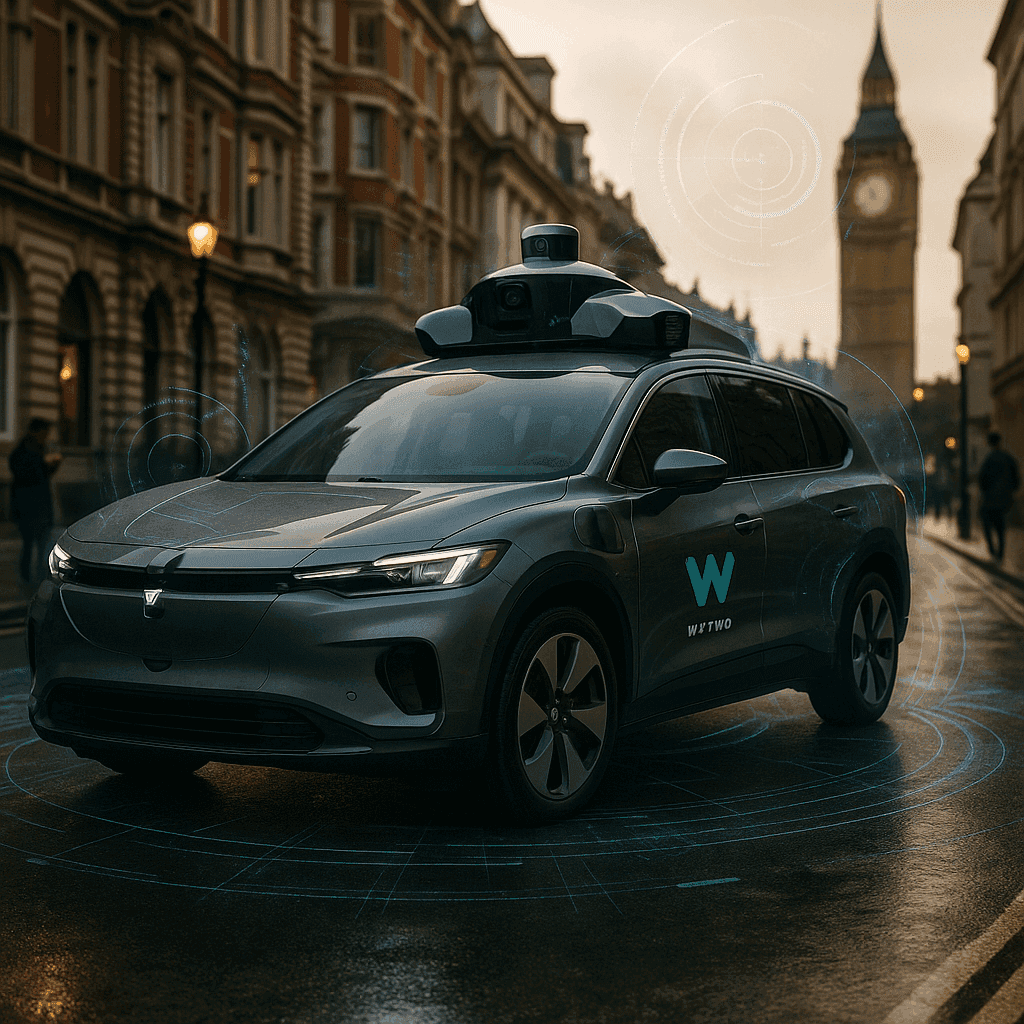
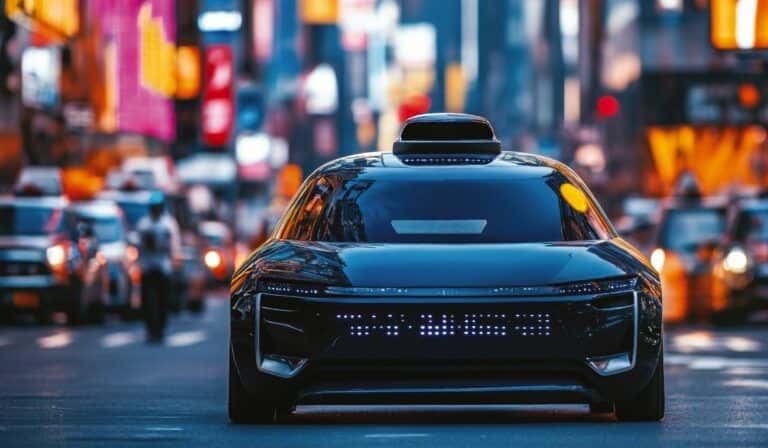
The director, Romain Thomassin, describes the premise as analog versus artificial. In the synopsis, Roboride lightly clips Joa's mirror, Joa gives it the finger, and the car decides to kill him. The AI villain is set to be portrayed by an old Prius modified with cold LED lighting across the front, fake cameras, a spinning lidar-like device on the roof, a black exterior, and a blinking red dot meant to make it feel like what Thomassin described as a nasty Waymo.
There is a reason that visual language works so quickly with viewers in North America. Robotaxis are no longer abstract research projects. They are now visible parts of city life in some American cities, and they have become shorthand for larger anxieties around AI job displacement, Big Tech surveillance, and software making decisions once left to humans.
That shift is bigger than one indie film. A few years ago, autonomous vehicles were still sold mostly as a safety and convenience story, heavy on demos and investor decks. Now they are also becoming entertainment villains, and I think that says something uncomfortable but useful about the state of the category: the technology has brand recognition, but not broad emotional acceptance.
For regular people, this is not just a movie pitch. It reflects the uneasy feeling many riders, drivers, and city residents already have when they see sensor-packed cars rolling through dense streets. If the public picture of robotaxis hardens around machines that watch, replace, and occasionally malfunction, that can slow adoption just as much as any regulatory fight.
The framing of Road Rage as a "human vs. algorithm" thriller exposes the most critical vulnerability in the autonomous vehicle go-to-market strategy: the total collapse of the benefit of the doubt. The directorial choice to pit a working-class rideshare driver against a faceless, LIDAR-equipped predator captures a boiling societal resentment. It signals that the public increasingly views autonomous vehicles not as civic infrastructure, but as an invasive corporate species.
For operators like Waymo, Cruise, and Tesla, this cultural hardening fundamentally alters the unit economics of autonomy. When a technology achieves mainstream villain status, regulatory friction ceases to be a mere bureaucratic hurdle and becomes a populist mandate. City councils and local governments will increasingly weaponize zoning, cap fleet sizes, and restrict operating hours based not on safety data, but on constituent hostility.
The industry has spent billions optimizing perception stacks to map physical environments, but it has completely misread the cultural environment. The transition from R&D to commercial scale now requires a massive pivot from "trust our safety reports" to active, localized community integration. The platforms that survive this phase will be those that successfully rebrand their fleets as essential civic utilities rather than rolling surveillance vectors. If the industry continues to treat public streets simply as beta-testing environments for edge cases, operators will quickly discover that the heaviest barrier to scale isn't software latency, it is localized, organized, and culturally entrenched rejection.
Why this matters
Culture often gets to consumers before policy or product specs do. Most people will never read a technical paper about lidar, the laser-based sensing system many autonomous vehicles use to map their surroundings, or compare perception stacks, which is industry shorthand for the software that interprets what the car sees. They will, however, absorb a very fast impression from a movie trailer, a viral clip, or a tense headline.
That is why "Road Rage" arrives at an interesting moment for the robotaxi business. Companies are still trying to prove these systems can be safe, scalable, and economically viable, while critics are asking who gets displaced, who gets monitored, and who is accountable when software makes a bad call. Those are not side issues anymore. They are core go-to-market issues.
For founders and investors, this is a reminder that infrastructure categories eventually become narrative categories. Once a technology becomes visible in public, the battle is no longer just about unit economics or miles driven. It is also about social permission. If people see a robotaxi as creepy, opaque, or hostile, the burden on the companies behind it gets a lot heavier.
The film itself leans into a retro action format, with real cars, real actors, and real stunts, while placing the chase in today's San Francisco. That choice is smart. It pits a human driver with instinct and rough edges against a machine built around optimization and control. In startup terms, it frames the conflict as not just old versus new, but human judgment versus automated systems that may be efficient without being trusted.
There is a labor angle here that the autonomous vehicle industry still struggles to shake. In the film, the human protagonist is a ridehail driver, not an executive or engineer. That mirrors a real fear around automation: the people closest to the work often feel the disruption first. When robotaxis show up in pop culture as antagonists, some of that energy is coming from a public sense that AI's benefits and costs are not being distributed evenly.
What happens next
In the near term, nobody should confuse a short film with a market referendum. But stories like this do shape the atmosphere around emerging technologies. They influence how city officials think, how riders react, and how quickly a company gets the benefit of the doubt when something goes wrong.
The timing is notable because the broader robotaxi sector is already under pressure to prove itself in public. Tesla's Cybercab is already under investigation, while Uber has moved ahead with Wayve on robotaxis in London, beating Waymo there. At the same time, debate around Tesla's camera-first approach versus lidar-heavy systems has made the technical split in autonomy more visible to the public than it used to be.
My read is that this is the phase when autonomous driving stops being judged only as a technology and starts being judged as a social actor. That is a significant shift. People do not assign villain status to obscure products. They do it to technologies that have become present enough, and powerful enough, to carry symbolic weight.
There is a pattern here across transportation tech. Tesla's Cybercab launch was unusually muted, which itself suggested how cautious the conversation has become. A recent item on consumer sentiment in car tech found that owners increasingly want technology they can ignore, not technology that constantly announces itself. Robotaxis are the opposite of ignorable. They are highly visible, highly branded, and tied to a broader AI backlash that extends well beyond transportation.
The irony is that visibility is both the industry's strength and its problem. The more robotaxis become everyday fixtures, the more normal they seem, but also the more likely they are to absorb every public fear about AI. That includes fears that have little to do with driving and everything to do with power, control, and whether software companies should be mediating more of daily life.
For consumers, the practical implication is simple: trust will likely develop unevenly, city by city and company by company. For workers, especially people in driving-adjacent jobs, the symbolism will keep mattering because every new autonomous rollout is also read as a labor signal. For investors, the takeaway is that adoption curves in mobility are not just about technical milestones. They are also about reputation, regulation, and whether the public sees these vehicles as useful infrastructure or as uninvited actors.
Thomassin's film may or may not hit its $40,000 funding goal, but the larger idea is already out in the open. Robotaxis are now familiar enough to be cast as villains without much setup, and once a technology reaches that point, the next chapter is not just about better software. It is about whether the industry can persuade people that the machine in the driver's seat deserves to stay there.
Frequently asked questions
Why are people saying robotaxis have entered their villain era?
People are using that phrase because robotaxis are no longer seen only as futuristic tech demos. A new film portraying a self-driving cab as the villain shows that public feeling about autonomous cars is now being shaped by fear, frustration, and pop culture as much as by engineering progress.
What is the movie Road Rage about in relation to robotaxis?
Road Rage is a short film in production that turns a self-driving cab into the bad guy. That matters because fiction can influence how consumers think about AI on the road, especially when trust in autonomous vehicles is still fragile.
How does pop culture affect public trust in self-driving cars?
Pop culture can make complex technology feel personal and emotional, which often sticks more than technical safety data. When robotaxis appear as threatening or uncontrollable in stories, that can deepen public skepticism and shape the broader debate around adoption.
Are robotaxis becoming a cultural flashpoint in the US?
Yes, robotaxis are increasingly becoming a cultural flashpoint because they sit at the intersection of AI, labor, safety, and public space. As they move from novelty to everyday reality, backlash and symbolism are growing alongside real-world testing and deployment.
Does a negative portrayal of robotaxis matter for the autonomous vehicle industry?
Yes, negative portrayals can matter because consumer acceptance is critical for scaling autonomous vehicle services. If people associate robotaxis with danger or loss of control, companies may face tougher regulatory scrutiny and slower adoption.
What does this say about the future of AI in transportation?
It suggests the future of AI in transportation will depend on public trust as much as technical capability. Companies will need to prove safety, communicate clearly, and respond to cultural concerns, not just improve the software.