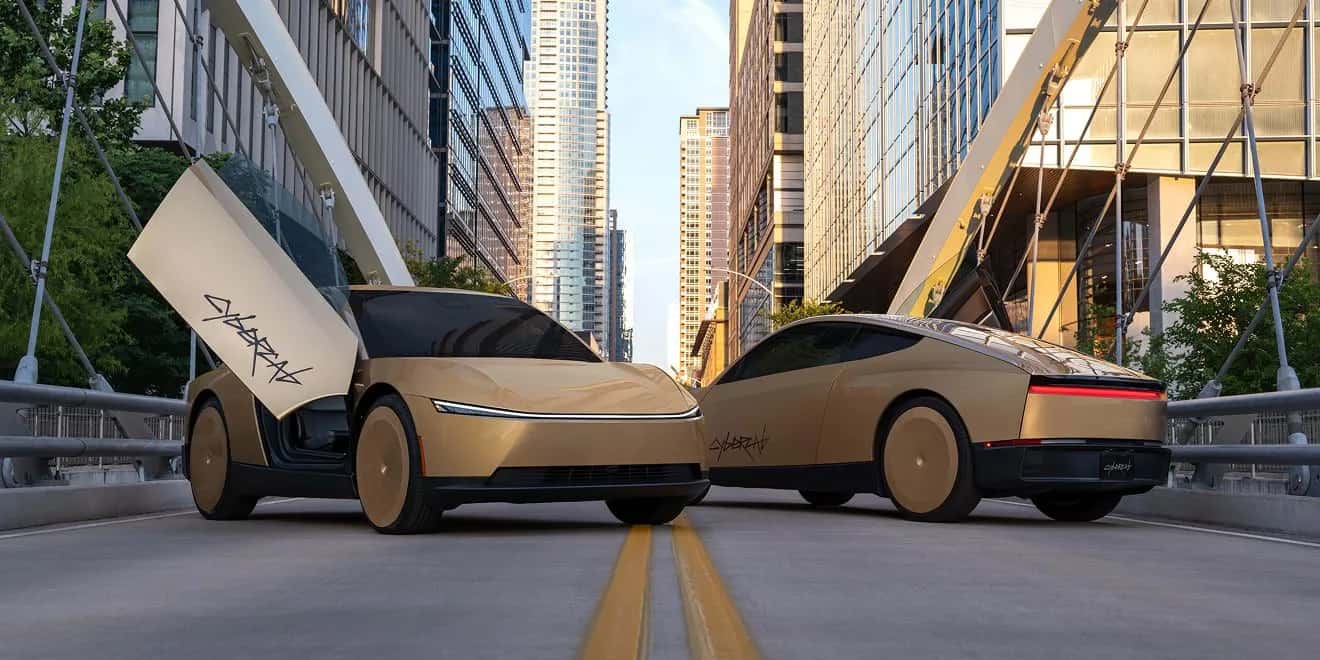
Tesla seeks Cybercab fleet partners while FSD owners remain excluded from robotaxi revenue plans
Tesla opens search for Cybercab fleet buyers, quietly widening its robotaxi ambitions beyond its own balance sheet. The move matters for a simpler reason too: people who bought Full Self-Driving on the promise of future passive income are still not being let into that business. The company has begun circulating a Robotaxi interest form that asks businesses to register for future opportunities tied to the Cybercab and the broader network around it. For operators, infrastructure partners, and local mobility players, this looks like an early signal that Tesla wants third parties to help finance distribution and deployment. The form itself is straightforward. It asks for contact details, company name, region, and one of four interests: Cybercab fleet vehicle purchasing, mobility hubs and infrastructure, event collaboration, or other. That is a notable shift in framing, because it is the clearest public sign yet that non-Tesla entities may eventually be allowed to make money from Tesla’s robotaxi software, even as retail owners who paid up to $15,000 for FSD still cannot.
There is tension here. Tesla is opening a door for fleet economics while leaving longtime customers outside it. That makes this bigger than a product update. In mobility, who owns the asset and who captures utilization is the business model. Tesla now appears to be experimenting somewhere in between, and founders should pay attention to that. The timing is revealing. Tesla’s Cybercab event was supposed to mark a meaningful public step for its steering-wheel-less, two-seat autonomous taxi, but the launch arrived with unusually little of Tesla’s usual hype machine attached. No livestream, little public detail, and limited visibility into scale tends to mean commercialization is still more tentative than the branding suggests. So the interest form becomes the real news. When a company is genuinely ready to deploy at volume, it usually talks in operating metrics, city count, utilization, or partner commitments. Here, Tesla is still collecting leads. That is not nothing, but it is also not proof that autonomy is ready for broad market handoff.
Tesla has been expanding its robotaxi service slowly, using Model Ys with geofenced versions of FSD. The company has highlighted new cities, while tracking cited in the source has shown that the number of active cars in those markets can remain very small over time. That gap between launch optics and real operational density is where enthusiasm often runs into fleet reality. The Cybercab is supposed to change that equation. Tesla has pitched the vehicle as purpose-built for autonomy, with less space than a Model Y but far higher efficiency, including a cited figure of 165 Wh/mi. If that efficiency holds up in live operations, the unit economics could be compelling. But low operating cost only matters after reliability, safety, charging workflow, cleaning, dispatch, and city by city compliance are solved.
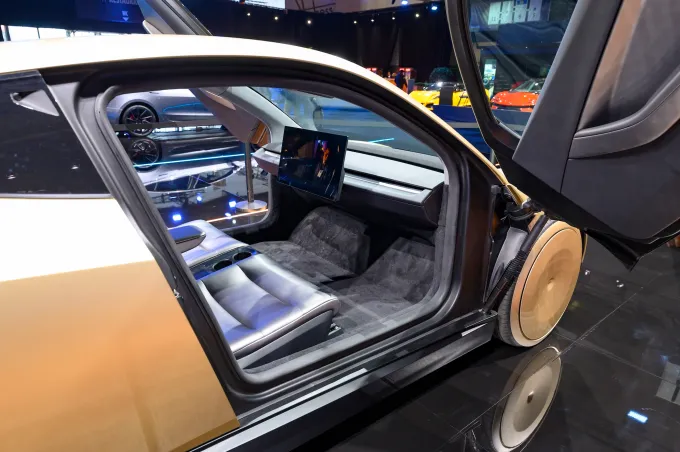
The CapEx Arbitrage of Autonomy
The decision to solicit third-party infrastructure partners exposes the underlying unit economics of scaled ride-hailing. Operating a robotaxi network is brutally capital intensive. By targeting B2B fleet buyers and mobility hub operators, Tesla is executing a classic CapEx offload. The strategic goal is to retain the high-margin software licensing and network dispatch take-rates, while forcing local partners to absorb the low-margin physical realities of fleet management: acquiring real estate for staging, managing daily interior cleaning, deploying rapid charging infrastructure, and handling localized vehicle maintenance.
The Hardware Deficit and the Retail Pivot
This enterprise pivot quietly sidelines the retail customer base that effectively crowd-funded Tesla’s AI development. For a decade, the core consumer pitch was that a privately owned Model 3 or Model Y would transform into a revenue-generating robotaxi via an over-the-air update, justifying the $15,000 FSD price tag. By redirecting the actual commercialization pathway toward purpose-built Cybercabs managed by dedicated fleet operators, the company is implicitly acknowledging a hard operational truth: consumer-grade hardware and the erratic, decentralized geographic distribution of private owners cannot reliably support a high-availability transit network.
Bridging the Execution Gap
Ultimately, an interest form is a lead-generation tool, not an operational milestone. The pivot to a franchise-lite partnership model suggests a deep internal realization regarding the massive leap from solving software edge cases to solving physical infrastructure bottlenecks.
The long-term winners in the autonomous space will not necessarily be the first to achieve unsupervised Level 5 software, but those who can successfully integrate automated driving systems with scalable, localized depot infrastructure. Tesla’s new outreach indicates it has finally accepted that it cannot—and from a margin perspective, should not—build that physical operating system entirely on its own balance sheet. My read is that Tesla is trying to solve capital intensity as much as technology. Running a large robotaxi network in-house is expensive. Selling vehicles to fleet operators, or recruiting outside partners to build charging and staging infrastructure, shifts some of that burden outward while preserving software and network control. For Tesla, that is a much lighter model if it works.
It also creates an uncomfortable historical loop. Tesla spent years telling buyers that their vehicles would become appreciating assets because autonomy would let them earn money while not in use. The company has been making versions of that argument for roughly a decade, and it sold FSD with that upside embedded in the story. Yet after more than a year of taking fares for robotaxi rides itself, no private owner has been allowed to participate in that revenue opportunity. That is the strategic contradiction. Early FSD buyers effectively financed part of Tesla’s autonomy push, but the first serious monetization pathway now appears aimed at fleets and partners instead of those retail customers. For a company that built enormous loyalty through mission and product belief, that is not a small trust issue.
There is a hardware angle too, and it matters more than it may seem. Tesla has still not provided some owners with the hardware needed to run the autonomy capability they were told their cars would eventually support. In a software business, delayed feature delivery is one thing. In a hardware-software stack sold years in advance, it becomes a liability in customer confidence and platform credibility. The infrastructure checkbox on Tesla’s form may be the most interesting part of all. The company is looking for interest not only in fleet vehicle purchasing, but also in mobility hubs and related infrastructure. That lines up with a practical bottleneck that many autonomy companies eventually hit: vehicles are only one piece of the service. Charging, parking, cleaning, queueing, maintenance, and peak-time positioning become the hidden operating system of the whole network.
Tesla has already shown some uncertainty on that front. It had planned a downtown San Francisco parking garage lease that would have been developed into a Supercharger site serving both human-driven vehicles and robotaxis, then abruptly dropped the effort the same day a planning meeting was scheduled. Since then, others have moved into the space, including Hubber, a UK company launched by former Tesla employees focused on urban charging hubs designed with robotaxis in mind. That shift says something important about where value may accrue. If Tesla ends up outsourcing chunks of physical infrastructure while retaining software and customer access, a broader supplier ecosystem could emerge around robotaxi operations. That creates opportunity for charging, fleet software, depot management, insurance, cleaning automation, and municipal integration startups. It also means Tesla may be less interested in owning every hard asset than many assumed.
There is still a big caveat. Tesla has not solved autonomy, despite years of saying broad deployment was close. The current rollout remains constrained to small numbers of Tesla-owned vehicles in specific urban zones, geofenced and pre-mapped with LiDAR, even though Tesla’s public thesis has long emphasized vision-only neural-net autonomy that could scale widely. That gap is not just technical. It is a go-to-market constraint.
For founders and investors, this is the pattern to watch. The autonomy market is moving from demos to infrastructure-heavy commercialization, and that tends to separate software narratives from operating truth. Other robotaxi companies have shown that scale ambitions can collide with safety, regulatory pressure, or the costs of a narrower service footprint. Tesla wants the software multiples of a platform company with the real-world footprint of transportation. That is a very hard combination to execute.
There is another pattern here, one that gets missed in consumer coverage. The winners in autonomy may not be the first companies to offer driverless rides, but the ones that figure out partner structure without losing control of quality. Tesla is now signaling that partner-financed rollout may matter too, especially as it seeks fresh growth stories after EV delivery softness. The company’s own language on the form reinforces that this is also a funnel. At the bottom, Tesla notes that submitting authorizes contact about the request and more information about Tesla products, services, and regional events. That looks like ordinary CRM plumbing, but in this case it also suggests Tesla is happy to use robotaxi interest to widen its enterprise and commercial lead list while it works through the slower reality of autonomous deployment.
I think that is the clearest way to read this moment. Tesla is not just testing fleet appetite for Cybercab. It is testing how much of its next chapter can be pre-sold before the underlying autonomy stack is truly ready at scale. That is a sensible business move, but it is also why some skepticism is warranted. The near-term next step is not hard to guess. Tesla will likely keep seeding small deployments, court infrastructure partners in select regions, and use each incremental city or fleet move to reinforce the robotaxi narrative. Whether that turns into a durable network, or just another long incubation cycle dressed as inevitability, depends on execution that still has to be proven.
For now, Tesla opens search for Cybercab fleet interest at exactly the moment its earliest FSD believers are still waiting for the business case they were sold. The market will treat those as two separate stories for a while. Eventually, they become the same one.
Frequently asked questions
What does it mean that Tesla opens search for Cybercab fleet buyers?
It means Tesla is actively looking for business customers that may want to buy or operate Cybercab vehicles in fleet form. The move suggests Tesla is exploring a broader robotaxi strategy that could extend beyond vehicles owned solely by Tesla itself.
Can Tesla Full Self-Driving owners join the Cybercab robotaxi business now?
No, Tesla owners who bought Full Self-Driving still do not appear to have access to the robotaxi business described by this fleet outreach. That matters because Tesla previously promoted the idea that autonomy could eventually let owners generate passive income from their cars.
Why is Tesla asking businesses about Cybercab fleet opportunities?
Tesla is likely testing demand from commercial operators, partners, or large buyers that could help scale a future robotaxi service faster. Fleet deals could reduce Tesla's capital burden while expanding deployment in markets where operating at scale matters most.
Is Tesla selling Cybercabs to the public or only to fleet buyers?
Based on this outreach, Tesla is signaling interest in business and fleet demand rather than opening broad public sales tied to robotaxi operations. The key takeaway is that institutional buyers may get a path that ordinary FSD owners still do not have.
Why are FSD owners upset about Tesla's Cybercab fleet plan?
Many FSD buyers expected that autonomy would eventually unlock income opportunities through a Tesla network. Seeing Tesla court fleet buyers first may reinforce concerns that those earlier expectations are still unresolved or being deprioritized.
How could Tesla's Cybercab fleet strategy affect the robotaxi market?
If Tesla succeeds in adding fleet partners, it could accelerate robotaxi expansion by using outside capital and operational support. It could also shift the competitive landscape by moving Tesla closer to a platform model instead of relying only on company-owned vehicles.