Verlinvest-led funding highlights investor confidence in India’s branded footwear and D2C sneaker market
For a consumer brand, shoes are the product. For an investor, they are also a distribution bet. D2C sneaker brand Comet has raised around Rs 100 crore in a Series B round led by Verlinvest, according to the company’s funding announcement, and the move matters beyond startup deal flow because it signals that investors still see room in India’s branded footwear market for newer labels that want to build both online demand and offline presence.
Here’s the core of it: existing backers Elevation Capital and Nexus Venture Partners also joined the round, alongside angel investors including Urban Company cofounder Abhiraj Singh Bhal, Snap global chief business officer Ajit Mohan, and Bhaane founder Anand Ahuja. The round values Comet at around Rs 535 crore, as per estimates cited in the coverage, which is more than three times its post-money valuation of around Rs 167 crore after its Series A round in 2024.
That kind of valuation jump is notable because it comes at a time when consumer internet investors have become more selective about what they fund. My read is that Comet’s pitch is not just about sneakers as a category, but about proving that a digitally native brand can turn demand into stores without losing margin discipline too quickly. In plain English, investors appear to be backing the idea that a focused footwear brand can become a habit brand, not just a social media brand.
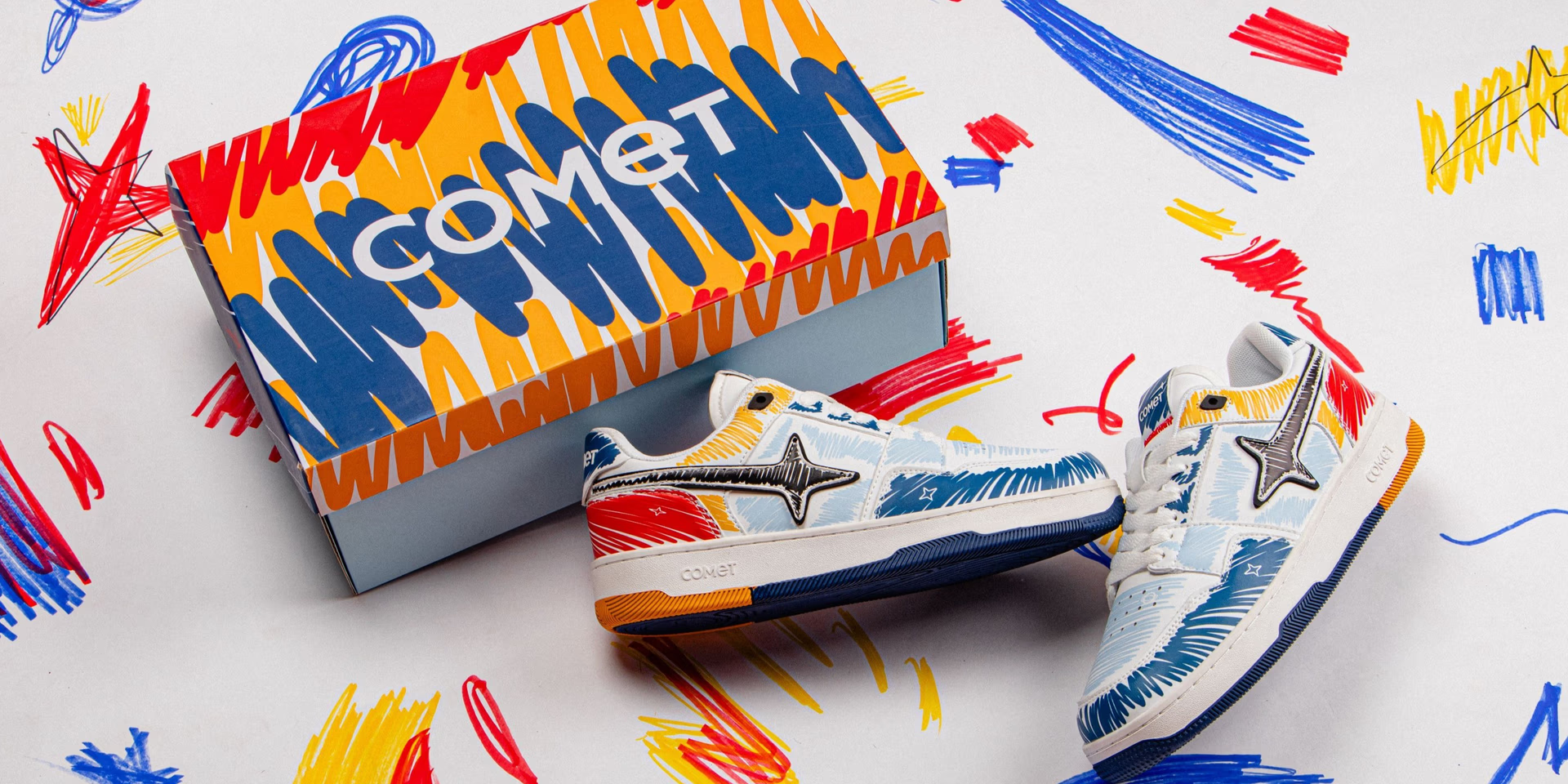
The company said it plans to use the fresh capital to accelerate retail expansion, product development, technology capabilities, and research and development. It is also developing its own sole moulds and tooling for new footwear models, which may sound technical but is commercially important: owning more of the product-development stack can help a brand differentiate fit and feel, reduce dependence on generic components, and build a more defensible identity in a category where lookalike products are common.
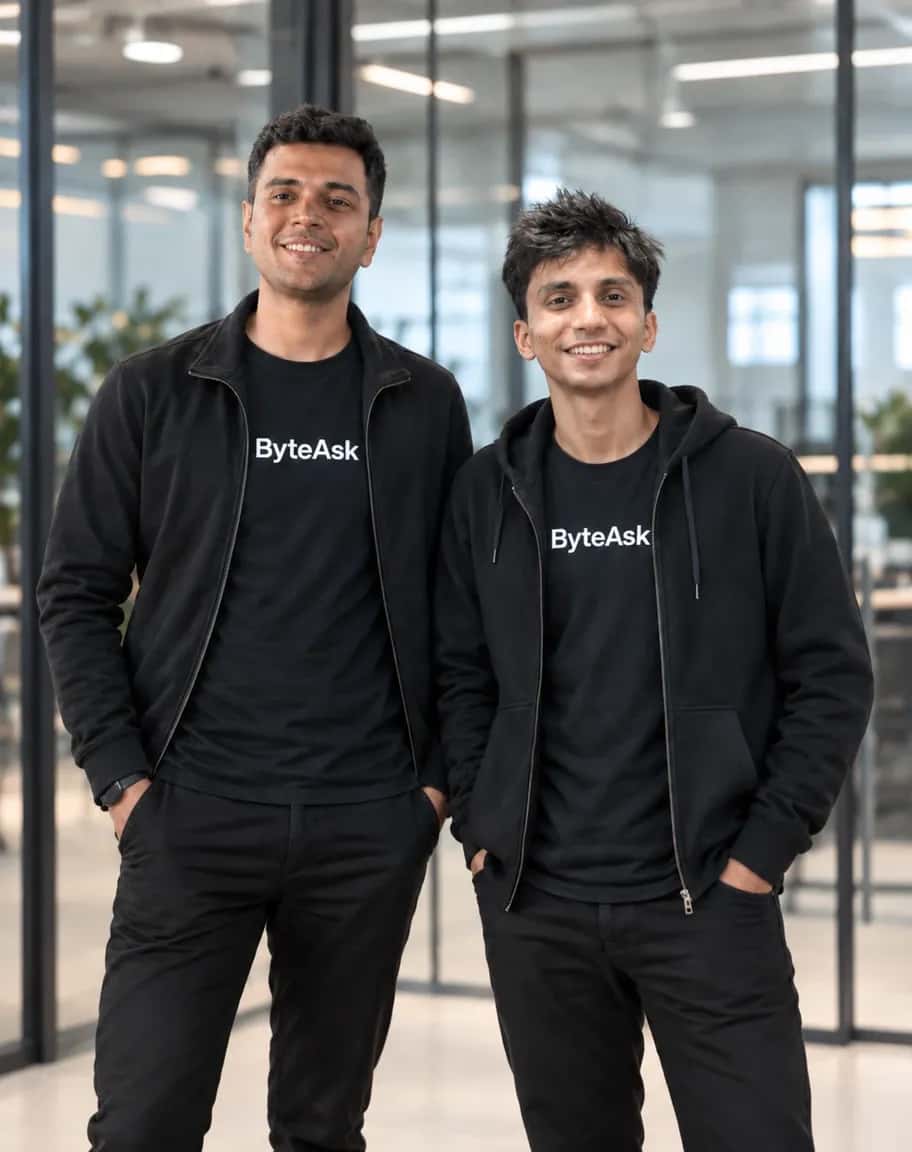
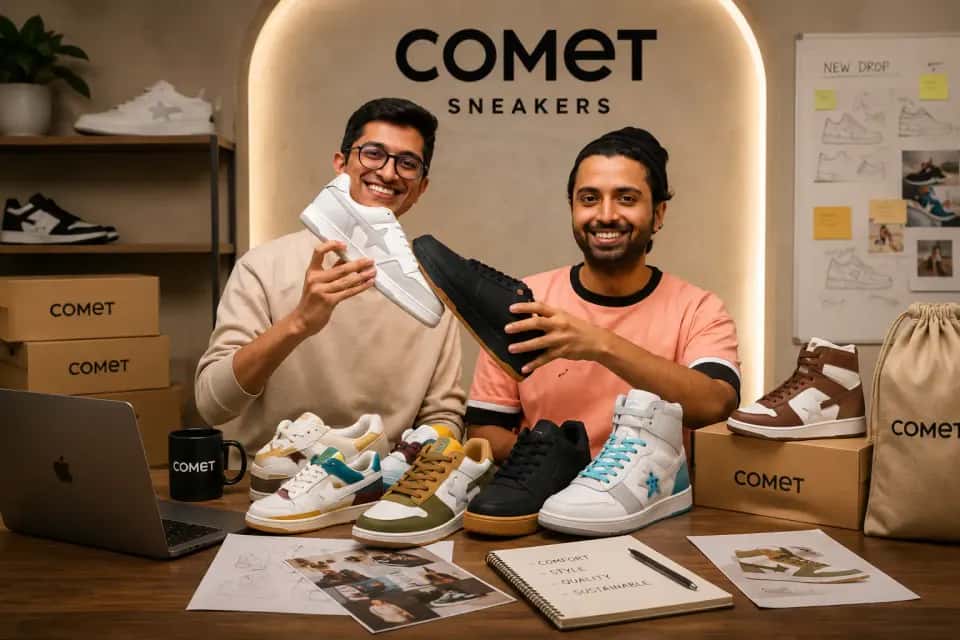
Founded in 2023 by Utkarsh Gupta and Dishant Daryani, Bengaluru-based Comet currently has four footwear models and plans to double that portfolio to eight models by the end of next year. It is also preparing to launch a women-focused model backed by dedicated sole tooling, a detail that points to a bigger consumer-brand lesson, category expansion works best when it is built into the product architecture, not just tacked onto marketing creative.
Comet’s operating numbers help explain why investors were willing to write another check. The company has grown its revenue ninefold since its previous institutional fundraise and is set to reach 10 stores this month. In FY25, its revenue rose nearly fourfold to Rs 29 crore, while its loss widened to Rs 4.39 crore. The company has yet to file its FY26 financials.
The Architecture of Defensibility
Comet’s ₹100 crore Series B and its aggressive 3.2x markup to an estimated ₹535 crore valuation is not merely a bet on Indian sneaker culture, it is a bet on structural defensibility. In the current consumer venture environment, paying a hardware-like premium (roughly 18x trailing FY25 sales) is only justified if a brand can escape the white-label trap. By directing fresh capital into proprietary sole moulds and custom tooling, Comet is actively securing its intellectual property. This vertical integration allows the brand to control fit, construction, and aesthetic DNA, transitioning from a generic sourcing model to true product differentiation.
Omnichannel as a Margin Engine
The pivot to physical retail by targeting 20 stores by FY27, which highlights the new reality of D2C unit economics. Online Customer Acquisition Cost (CAC) has become prohibitively expensive for single-category apparel brands. Physical stores, while capital-intensive upfront, serve as high-converting, experiential billboards that ultimately drive down blended CAC and lock in sizing trust for repeat digital purchases.
However, the execution window is exceptionally narrow. While Comet managed to quadruple its FY25 revenue to ₹29 crore while keeping losses constrained at ₹4.39 crore, expanding the SKU count from four to eight models and doubling the retail footprint simultaneously introduces severe inventory risk. Verlinvest and Elevation Capital are essentially fronting the equity to see if Comet can manage the brutal working capital cycles of an omnichannel footwear retailer without crushing the unit economics that made them attractive in the first place. The ultimate test is whether they can mature from a culturally relevant digital phenomenon into a structurally sound retail operation.
Why this matters
For shoppers, this sort of funding often translates into a very visible shift: more stores, more inventory depth, faster launches, and more targeted product drops. For incumbents and rival startups, it is another sign that the next phase of D2C is less about simply acquiring customers online and more about building what retail operators would call density, enough stores, enough product breadth, and enough brand recall to make marketing spend work harder.
That matters in footwear because shoes are one of the categories where online discovery and offline conversion often reinforce each other. Consumers may first see a pair on Instagram, a creator, or a friend, but sizing, comfort, and repeat purchase still benefit from physical retail. Comet plans to expand its retail network to 20 stores by the end of FY27. That is a significant shift for a company founded in 2023, and it suggests management sees stores not as a vanity channel but as a brand engine.
I think the more interesting angle is the product and brand architecture behind the round. In beauty, luggage, and eyewear, newer Indian brands have already shown that a D2C label can use digital distribution to create awareness, then use stores to deepen trust. Footwear is harder because sizing, construction, and comfort can quickly expose weak product fundamentals. Comet’s investment in sole moulds and tooling suggests it understands that differentiation in sneakers cannot rest on storytelling alone.
There is also a broader capital-markets read here. Verlinvest has a history of backing consumer businesses, and participation from Elevation Capital and Nexus Venture Partners indicates continuity, not rescue financing. That distinction matters. In the current funding environment, follow-on support from existing investors usually implies the company has hit enough of its internal milestones to justify scaling the playbook rather than rewriting it.
What happens next
The obvious test is whether Comet can translate fresh capital into durable retail productivity. Opening stores is the easy part on paper. Making each location efficient, keeping inventory fresh, and expanding from four footwear models to eight without diluting the brand are the harder parts. The women-focused model will also be worth watching, because new customer cohorts can broaden a brand’s reach, but only if the product feels purpose-built rather than opportunistic.
There is also a profitability question hanging over the category. Comet’s loss widened to Rs 4.39 crore in FY25 even as revenue rose nearly fourfold to Rs 29 crore. That pattern is not unusual for young consumer brands entering expansion mode, but investors will likely want to see that losses are tied to growth investments such as store rollout and product development, not weak unit economics. In consumer terms, every new store and every new silhouette has to improve the brand’s long-term economics, not just its visibility.
Comet is part of a wider crop of homegrown sneaker labels including Gully Labs, Neeman’s, ARCs and Doc Sneakers. Seen together, these brands reflect a bigger trend in Indian consumer markets: founders are no longer only chasing broad lifestyle positioning, they are trying to own narrower, more identity-driven categories with stronger repeat behavior. That has echoes of what investors and operators have watched in digitally native consumer brands for years, where the winners usually combine product credibility, disciplined expansion, and a clear audience strategy.
For now, the strongest takeaway is that capital is still available for consumer brands that can show traction, narrative clarity, and a path to distribution scale. Comet’s new round gives it more room to test whether a modern sneaker brand can build that flywheel in India. The next chapter will depend less on raising money and more on whether it can turn stores, product development, and brand recall into a business that looks durable a few years from now.
Frequently asked questions
What is Comet and how much did it raise in its latest funding round?
Comet is a direct-to-consumer sneaker brand in India. The company said it raised about Rs 100 crore in a Series B funding round led by Verlinvest.
Who led Comet’s Series B round?
Verlinvest led Comet’s Series B raise, according to the company’s funding announcement. That makes the round notable because Verlinvest is backing a branded consumer play in India’s footwear market.
Why does Comet’s funding matter to investors and the sneaker industry?
The deal suggests investors still see room for new branded footwear companies in India, especially those built with a D2C model. It also signals that distribution, brand recall, and customer acquisition remain important investment themes in consumer startups.
What does D2C mean in Comet’s business model?
D2C stands for direct to consumer, meaning the brand sells directly to shoppers rather than relying only on third-party retailers. That model can help brands control pricing, customer data, and brand experience more closely.
What does a Series B round usually indicate for a consumer brand like Comet?
A Series B round usually means a startup has moved beyond early product-market fit and is raising capital to scale. For a consumer brand, that often includes expanding distribution, marketing, operations, and product lines.
What does Comet’s raise say about India’s branded footwear market?
Comet’s funding points to continued investor interest in India’s branded footwear segment despite a selective startup funding environment. The raise implies there is still demand for newer labels that can build a strong brand and distribution engine.