AI startup Manus is said to be closing a $500 million round after Beijing halted its planned sale to Meta
Manus, a Singapore-based AI startup founded in China, is close to raising US$500 million at a US$4 billion valuation, according to people familiar with the talks.
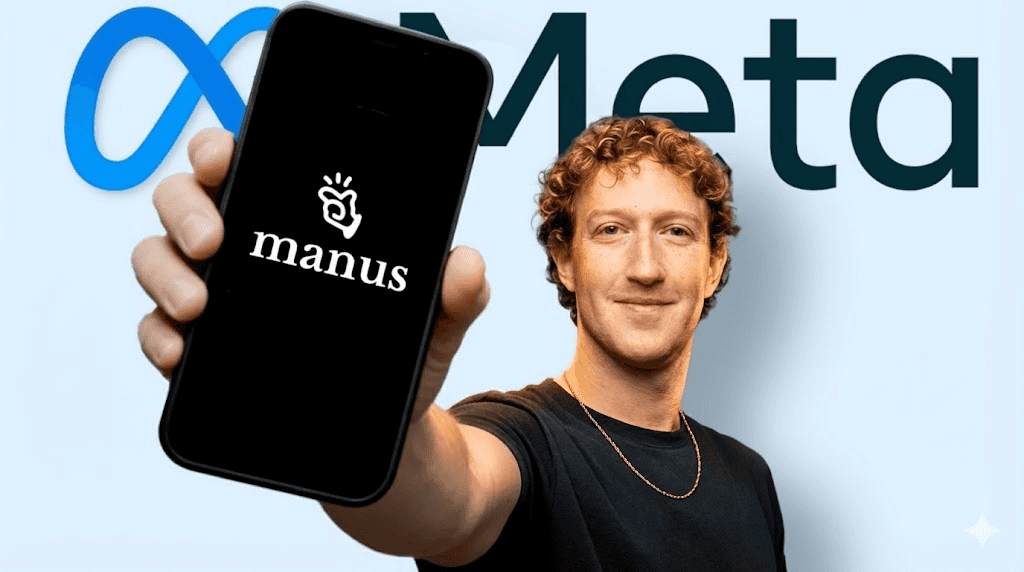
The financing would be Manus' first since Beijing forced it to unwind a sale to Meta that had been agreed in December over concerns about sensitive technology transfer, according to the same people.
Manus said it resumed independent operations after completing its split from Meta in May, a reset that matters because it shows how cross-border AI deals are running into sharper political and regulatory scrutiny.
Existing backers include Tencent, HSG, and ZhenFund, and the proposed round would signal that AI capital is still flowing even as geopolitical risk shapes who can buy what.
Manus is nearing a US$500 million fundraise after its planned sale to Meta fell apart. For startup investors and acquirers, the message is blunt: in AI, capital can still move fast, but strategic exits are getting harder when China's sensitive-tech rules get involved.
Manus nears US$500 million after the company tried to reestablish itself as an independent AI player after Beijing blocked Meta's agreed December acquisition and forced a separation completed in May. The episode matters beyond one startup because it highlights a new friction point for global AI deals, where product momentum and investor appetite can collide with national technology controls.
People familiar with the talks said Manus is close to raising US$500 million at a US$4 billion valuation, though terms could still change and the new investors were not identified. Existing shareholders include Tencent, HSG, and ZhenFund, giving the company a cap table that already reflects Chinese tech and venture backing.
The startup describes itself as Singapore-based, though it was founded in China and has been described as a cross-border company. That identity is part of the story here, not background color. Manus said it offers an AI agent for product management and research, a category that sits inside the current scramble to build software that can do more than generate text and instead execute multi-step work.
Meta had agreed to buy Manus in December, according to people familiar with the matter, but Beijing blocked the deal over concerns about sensitive technology transfer. Manus later said it resumed independent operations after completing its split from Meta in May. For US readers, that sequence looks less like a one-off corporate detour and more like part of a broader trend: a startup may be attractive to a US platform company and still become difficult to acquire because of political and regulatory barriers.
US$4 billion
That is the valuation Manus is discussing in the new financing, according to people familiar with the talks.
That's a striking number for a company after a failed sale. In many markets, a blocked acquisition can leave a startup wounded, with employees unsettled and buyers wary. In AI, at least for now, investor demand appears to be offsetting some of that damage. Investors still appear willing to pay up for teams building agentic software, even when the ownership history is messy and the regulatory backdrop is worse than it was a year ago.
The US angle is hard to miss. Big American tech companies have spent the last two years buying talent, taking stakes, or signing commercial tie-ups to secure AI capabilities without always pursuing full acquisitions. The Manus case shows why. A company tied to Chinese founders, talent, or models can be commercially attractive to a US buyer and still become politically difficult before the deal closes. That raises the value of structures that stop short of outright ownership, especially when the target touches research workflows, product development, or other functions regulators could view as strategically important.
China has tightened control over overseas deals involving AI and talent transfers, increasing scrutiny of foreign acquisitions of sensitive technology companies. That is the immediate explanation for why Meta's transaction unraveled. The bigger implication is that founders who once saw a move to Singapore as a clean workaround may find that geography alone does not settle questions about where technology was developed, where teams sit, or who ultimately controls the intellectual property.
For Silicon Valley dealmakers, Manus is a reminder that "AI startup" is no longer a simple software label. It can now trigger the kind of review once reserved for semiconductors, telecom equipment, or defense-adjacent infrastructure. The category shift matters. Product management and research agents may sound like enterprise software, but governments increasingly read AI systems through the lens of strategic capability, talent concentration, and data access.
The financing also says something about the state of the private market. New investors were not identified, but a round of this size would place Manus back into the upper tier of venture-backed AI companies, at least by valuation. That gives the company breathing room after the Meta unwind and could help stabilize recruiting, customer conversations, and infrastructure spending. It also lets current backers avoid a startup being forced into a defensive round immediately after a failed exit.
The background
Manus has said it offers an AI agent for product management and research, two use cases that map onto what enterprise buyers are testing right now. US startups and incumbents alike are trying to move from chatbot novelty to tools that can draft plans, summarize markets, synthesize internal docs, and take action across software stacks. That makes Manus strategically relevant even if it is not yet a household name in the US.
Its cross-border path also mirrors a broader pattern among Chinese-founded AI companies that have tried to establish operations in Singapore while serving global markets. For a while, that structure looked like a practical compromise: international headquarters, regional hiring flexibility, and some distance from the most obvious geopolitical flash points. The Manus saga suggests the buffer is getting thinner. When a buyer as prominent as Meta cannot get a deal through after agreeing to terms in December, founders and investors have to price in a harsher view of cross-border M&A from the start.
There is a second-order effect here for US venture capital. If strategic acquisitions become harder, late-stage investors may need to underwrite these companies for longer as standalone businesses rather than assuming a quick sale to a platform giant. That changes the math. A US$4 billion valuation can make sense in a market obsessed with AI agents, but only if the company can keep growing independently and not just as an acquisition target waiting for a regulator's blessing.
What's next
The next concrete marker is whether Manus actually closes the round on the terms now being discussed, since people familiar with the talks cautioned that terms could still change. After that, the real question for US investors and acquirers is whether Manus becomes a test case for independent global AI scale after its May split from Meta, or another example of how geopolitics can permanently cap exit options even when the funding market stays open.
Frequently asked questions
What is Manus raising after the Meta deal fell apart?
Manus is reportedly close to raising $500 million in new funding. The round would value the Singapore-based AI startup at about $4 billion, according to people familiar with the talks.
Why did Manus unwind its planned sale to Meta?
The sale was reportedly reversed after Beijing raised concerns about sensitive technology transfer. That intervention forced Manus to unwind the deal that had been agreed in December.
What valuation is Manus seeking in its new funding round?
Manus is said to be nearing a financing round at a $4 billion valuation. If completed, it would mark the company's first major fundraise since the Meta transaction was abandoned.
Is Manus a Singapore company or a Chinese company?
Manus is based in Singapore, but it was founded in China. That cross-border structure helps explain why regulatory scrutiny around technology transfer became a central issue in its Meta deal.
Has Manus resumed operations after the Meta sale was canceled?
Yes, Manus said it resumed independent operations after the sale was unwound. The reported fundraising suggests the company is now seeking capital to continue growing on its own.
Why does the Manus funding story matter for the AI industry?
The case shows how geopolitics and technology controls can shape AI dealmaking as much as product potential or investor demand. It also highlights that major AI startups may still attract large funding rounds even after cross-border acquisitions break down.